Six AI Coding Tools in an All-Out War: The Ecosystem Battle Between Cursor, Claude Code, and Antigravity

Six AI coding tools compete for dominance in agent orchestration and ecosystem control.
The AI coding tool market is undergoing a paradigm shift from "coding assistants" to "agent command centers," with six major players competing for ecosystem control. Cursor pursues lock-in by pushing its own models and surcharging third-party access; Devin Desktop rewrites its core in Rust and opens the ACP protocol to become a neutral multi-agent platform; Claude Code ditches the GUI entirely for a headless terminal embedded in CI/CD pipelines; and Google Antigravity builds in a Chrome environment for a seamless generate-to-run loop. The market is bifurcating between enterprise compliance and a struggling open-source camp. For developers, the key skill is no longer mastering a specific editor but adopting an agent management mindset.
The era of typing code by hand and copy-pasting AI responses is drawing to a close. An industry analysis from YouTube points out that the race for desktop-grade AI coding tools has broken into a full-scale battle among six major players — and the decisive factor is no longer basic code completion, but agent orchestration efficiency and ecosystem control.
This article distills the core dynamics of this rivalry based on that source, with further analysis of the logic behind each player's strategy. Note that some acquisition figures and valuations cited here come from the original source — readers are encouraged to verify against official information.
Capital and Ecosystem Lock-in: Cursor's Double-Edged Sword
According to the source, Cursor was reportedly acquired at a staggering valuation of $60 billion, riding high on a wave of investor enthusiasm. But capital tends to come with strings attached — in this case, ecosystem lock-in. Cursor has begun aggressively pushing its own Grok model, and users who call on competing models face additional charges.
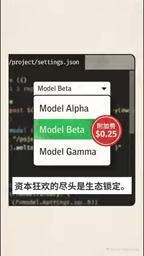
This is a classic platform play: attract users with cheap or even free proprietary models, then monetize by marking up access to third-party models, gradually binding developers to the in-house ecosystem. In the short term, this boosts monetization efficiency. Long term, however, developers are highly sensitive to model freedom — and unlike consumer apps, switching costs aren't prohibitively high. The tension between ecosystem lock-in and developer autonomy is the biggest risk in Cursor's strategy.
Rewriting the Core and Opening the Protocol: Devin Desktop's Breakout Play
A different path is represented by Devin Desktop. According to the source, after absorbing WindSurf, it completely rewrote its core engine in Rust, pursuing deep optimization of performance and stability.
What's even more noteworthy is its protocol strategy: it opened the ACP protocol and hosts competing agents directly inside its own editor. This stands in sharp contrast to Cursor's closed approach. By opening the protocol, Devin Desktop positions itself as an "agent container" rather than a gateway to a single model. Whoever can become the neutral platform for multi-agent collaboration may well occupy a pivotal role in an increasingly fragmented market.
ACP (Agent Communication Protocol) is an open protocol standard designed to govern how AI agents communicate and collaborate with one another. Much like HTTP is to web services, ACP aims to solve the interoperability problem in multi-agent systems: how do agents built by different vendors discover each other, invoke one another, and pass context? Today's AI coding tool market is highly fragmented — agents from different vendors operate in silos with incompatible interfaces, forcing developers to manually transfer code and context between tools. By opening ACP and hosting competing agents, Devin Desktop is essentially trading platform openness for ecosystem traffic. Even if a user is calling a rival's agent, the collaboration substrate and data still reside within Devin Desktop's editor. The risk: if a hosted competitor's agent delivers a far superior experience, users may bypass the host platform entirely, reducing it to a mere relay layer.
The Hardcore Headless Route: Claude Code's No-GUI Gamble
Claude Code (referred to as "Cloud Code" in the source) takes a counterintuitive approach — abandoning the graphical interface entirely, running on nothing but a hardcore headless terminal — and reportedly pulling in over $2.5 billion in annualized revenue.
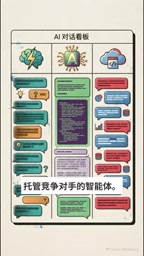
The point of a headless terminal is repositioning: it turns a coding tool from an editor you stare at into infrastructure you orchestrate, script, and embed in CI/CD pipelines. For experienced developers and engineering teams, the command line inherently means automation and batch processing. This approach validates a broader trend: when AI capabilities are strong enough, a heavy interaction layer becomes a burden — a minimal interface scales better.
Headless architecture means a program runs without a graphical user interface; all interaction happens via the command line, API calls, or scripts. In DevOps and CI/CD (Continuous Integration/Continuous Deployment), headless tools are standard in automated pipelines — servers typically have no display, and scripts need to run unattended in batch. Claude Code's headless terminal means it can be embedded directly into platforms like GitHub Actions or Jenkins, automatically triggering code review, test generation, or documentation updates on each commit — no manual intervention required. For engineering teams managing large codebases, this "set it and forget it" capability is far more valuable than a polished visual interface, which explains how it achieves significant commercial revenue despite a seemingly counterintuitive product form.
Structured Output and a Built-in Browser: Google Antigravity's Experiment
Google's Antigravity (referred to as "Anti-Gravity" in the source) attempts to put an end to boring walls of generated code. It outputs structured, formatted artifacts directly and even embeds a Chrome environment, letting generated apps run as live demos right inside the tool.
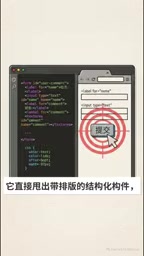
The value of a built-in browser environment is the closed loop it creates: code generation, execution, and visual verification all happen within the same tool, eliminating the constant back-and-forth between editor and browser. This points toward a "generate and see instantly" development experience — especially well-suited for frontend work and rapid prototyping.
A Bifurcating Market: Enterprise Compliance vs. Open-Source Struggles
The source predicts the market is heading toward a split. On one end is the enterprise compliance route, exemplified by AWS's approach, which emphasizes process rigor — don't touch the code until the architecture document is written — integrating AI coding into an auditable, governable engineering system.
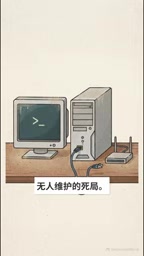
On the other end is the open-source camp struggling to keep up. The source specifically calls out the open-source tool Aider (referred to as "Ader"), which can run offline with zero cost, but has reportedly gone unmaintained for over a year. This reflects a common challenge for open-source AI coding tools: without sustained funding and labor, it's hard to match the iteration pace of closed-source giants.
In software engineering, enterprise compliance refers to requirements that code generation, changes, and deployments meet auditability, access control, and data privacy standards — typically aligned with security certification frameworks like SOC 2 and ISO 27001. AWS's insistence on writing architecture documents before touching code ensures that AI-generated changes have a fully traceable decision chain — a hard requirement in regulated industries like finance, healthcare, and government. The plight of open-source tools like Aider reveals a new tension in the AI era: traditional open-source software can evolve slowly through volunteer contributions, but the core competitiveness of AI coding tools lies in model capability and prompt engineering — both of which require ongoing financial investment to keep pace with rapidly evolving foundation models. Community contributions alone can't sustain the same iteration velocity as well-funded closed-source products.
The Very Definition of Programming Is Being Rewritten
This battle sends a clear signal: the future of programming is no longer about how fast you can type — it's about who can command an army of AI agents.
The competition has shifted from "writing code" to "orchestrating agents" — how to get multiple agents to collaborate, how to ensure outputs are verifiable, and how to deploy compliantly in enterprise environments. These are the real differentiators. Whether through closed ecosystems, open protocols, headless terminals, or structured output, every player is ultimately competing for the same position: becoming the command center from which developers direct their AI armies.
For developers, rather than agonizing over which tool to pick, the more valuable investment is developing an "agent manager" mindset — clarifying architecture, breaking down tasks, and validating outputs. These skills will outlast familiarity with any specific editor.
Related articles

Felix Rieseberg Personal Homepage
Felix Rieseberg's personal homepage sparks attention on Hacker News. This article covers the Slack engineer's technical background, the rise and fall of nativefier, and the value of a developer homepage as a tech calling card.

@ai-sdk/vue 3.0.306 Patch Release Syncs with [email protected] Update
@ai-sdk/vue 3.0.306 released, synced with [email protected]. A routine patch release for the Vercel AI SDK ecosystem with no public API changes; the Vue adapter layer stays version-aligned with the core package.

Gemini 4 Argon API Launches: The Era of Million-Token Output Begins
Google launches Gemini 4 Argon with sparse MoE architecture, up to 1M output tokens, and a 68.90% Vals Index score, available across API, AI Studio, and the Gemini app.