Slackbot Brings AI to the Whole Team: A Full Breakdown of the Salesforce Keynote

At Dreamforce, Slack argued that AI should move from solo tools to a collaboration layer covering the whole team, unveiling Slackbot and Slack Code.
At Salesforce Dreamforce, the Slack team argued that AI's next stop is a collaboration layer covering the entire team, not a more powerful solo tool. Slack GM Rob Seaman used data like 1 billion human-agent messages per day and 1.5 million Slackbot monthly actives to argue that Slack is the "context layer" and "multiplayer interface" bookends of the enterprise AI stack. Anthropic's Boris Cherny revealed 90% of code is written in Slack, demoing Claude autonomously joining channel discussions and producing designs. On the product side, Slackbot upgraded from personal assistant to channel member, supporting dynamic interface generation and two-way voice; Slack Code lets non-engineers participate in building by auto-creating code channels. Stripe and AI thought leader Allie K. Miller showed two paths: scaled deployment and AI twins. The article concludes that the compounding multiplayer narrative depends on organizational culture being willing to open up conversations and workflows.
Slackbot Brings AI to the Whole Team: A Full Breakdown of the Salesforce Keynote
At Salesforce's annual Dreamforce event, the Slack team delivered an information-dense keynote that made one clear argument: AI's next stop isn't a more powerful solo tool, but a collaboration layer that covers the entire team. The keynote opened with Slack General Manager Rob Seaman, followed by product leads taking turns on stage, with customers like Anthropic and Stripe sharing their stories. The core thread was singular—put agents into channels and switch AI from "single-player mode" to "multiplayer mode".
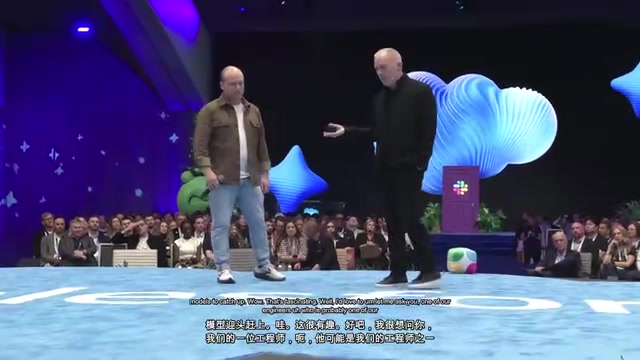
From Single-Player to Multiplayer: The New AI Paradigm Slack Is Betting On
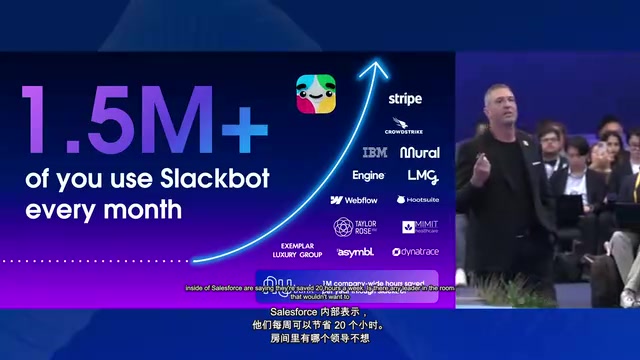
Rob Seaman shared some striking numbers: users and agents send over 1 billion messages through Slack every day, Slack has become the fastest-growing product in the Salesforce ecosystem, adding over 100,000 customers this year alone, 1.5 million people connect to Slack's MCP servers through custom agents each week, and 1.5 million people use Slackbot every month.
Behind these numbers is a product philosophy. Rob calls most AI tools "single-player mode"—one person using AI against a terminal or a SaaS chat box. He cited Shopify's Tobi to point out the hidden risk of this mode: the AI learned, that person learned, but the colleague sitting next to them, the person in the same role in another region, and even the whole company learned nothing. What frontier labs are doing is bringing AI "down" into multiplayer collaboration interfaces.
This is also an extension of the "AI Force" philosophy Salesforce is pushing: every user should have the right to choose where they use technology. Slack wants to be that default entry point.
The Two "Bookends" of the AI Tech Stack
Rob used a metaphor to explain Slack's position. Most enterprises' AI stacks include foundation models, data lakes, MCP servers, compliance guardrails, and various employee-facing applications and agents. But most companies are missing the "bookends" at both ends of the stack.
The first bookend is the context layer. The most valuable conversations in an enterprise—discussions about important projects, teams, product trade-offs, M&A decisions—all happen in Slack. He cited Alex Karp and Chamath, calling this the company's "alpha", the source of differentiation. Injecting this conversational context into AI tools creates a structural advantage over competitors.
The second bookend is the multiplayer interface. When AI enters a channel, the company's overall AI literacy rises—people can see how colleagues use AI, and the "exhaust" of every interaction settles into shared context, becoming a knowledge asset for others and context fuel for other agents. This loop runs repeatedly, and human and AI intelligence compound together.
Rob calls this combination "the new operating system for work in the AI era", emphasizing that Slack is the only place where AI becomes multiplayer. This judgment is corroborated by customers across industries: retail's Remarkable, fintech's Robinhood, software's Intuit, and automotive's Rivian are all moving more AI workloads into Slack.
MCP (Model Context Protocol) is an open standard proposed by Anthropic at the end of 2024 for letting AI models securely and standardizedly connect to external data sources and tools. You can think of it as the USB port of the AI world: in the past, every AI application connecting to BigQuery, Datadog, or internal systems needed a custom integration layer; with MCP, models can discover and invoke these external capabilities through a unified protocol. For Slack, the significance of MCP servers is that agents can not only read conversations in channels but also proactively query databases, monitoring systems, and other enterprise internal resources—this is exactly the technical basis for the keynote demo where Claude automatically called BigQuery and Datadog to locate a problem. The fact that 1.5 million people connect to Slack's MCP servers each week shows that MCP is becoming the de facto standard for enterprise AI integration.
Anthropic's Evidence: 90% of Code Written in Slack
The most persuasive segment of the keynote came from Boris Cherny, creator of Anthropic's Claude Code. He revealed that 90% of his code is written in Slack, not in an IDE.
Anthropic's usage has several key prerequisites: everyone uses Slack—not just engineers, but marketing, sales, and business people too; Claude itself is a Slack member; and the company deliberately "speaks as publicly as possible", using fewer DMs and more public channels so Claude can access all conversations.
A real screen recording was played on stage: Boris complained in a product feedback channel that two icons looked too similar and he kept forgetting which one to click. Without waiting to be @-mentioned, Claude judged that it should step in, queried BigQuery and Datadog, connected to internal systems via MCP to locate the problem, and then, following Boris's one-line request "make me a mockup", produced a design—"exactly the same as what a designer would make". Then a designer who wasn't in that domain saw the discussion in the channel and jumped in directly to contribute.
Boris emphasized that this experience depends on the model's "judgment", and only truly worked on Claude's new model—while the product experience itself had been built six months earlier. The team waited six months for the model to catch up. He mentioned a detail: Dan, a marketing colleague who isn't an engineer, also uses Claude to submit code for the product.
When asked "if you had a magic Claude, what feature would you add to Slack", Boris's answer was unexpected: no features, remove features, because "taking things down is harder than building them".
Claude Code is Anthropic's command-line/agentic coding tool. Unlike traditional code-completion plugins, it is a coding agent that can autonomously plan tasks, call tools, read and write files, and execute commands. Users can issue tasks in natural language, and Claude Code will reason through multiple steps, run tests, and modify the codebase in the local environment. As its creator, Boris Cherny's demo scenario is exactly about embedding Claude Code in Slack channels: the agent receives context from the channel (product feedback, discussion records), autonomously decides whether to step in, and then completes the task by connecting to internal systems via MCP. This usage places extremely high demands on the model's "judgment"—the agent needs to decide when to proactively participate and when to stay quiet, which is why Boris emphasized that "the product was built six months ago, but only worked once the model caught up".
Slackbot: From Personal Assistant to Channel Member
Slack CMO Ryan Gavin took over and turned the topic to Slackbot. The numbers he shared: Slackbot launched in January this year, is the fastest-growing feature in Salesforce's history, has 1.5 million monthly active users, saves enterprises 1 million hours per year, and the most active users say it saves them 20 hours a week.
There are three product evolution directions worth noting. The first is Slackforce Surfaces: users can generate dynamic interfaces connected to enterprise data with a single natural-language sentence in Slack. In the demo, a product lead asked Slackbot to summarize release feedback from a channel, categorize it by theme, combine it with data from Jira and Linear, and generate a pre-release issue checklist; a marketing team used it to directly generate a branded interactive web page, replacing traditional slides.
The second is two-way voice. The presenter conversed with Slackbot in a conversational way—"I just met with a customer, the meeting went well, help me update next steps, pull in Polly, and give me some ideas for handling a price war"—and Slackbot broke down the tasks itself, updated records, pulled people in, and offered strategic suggestions.
The third is Slackbot entering channels. Previously a personal assistant, it can now be @-mentioned in channels to answer team questions. Ryan's framing: when one person learns, only one person gets smarter; when a team learns, the whole company improves—this is exactly where the compounding advantage comes from.
Slack Code: Turning Coding Agents into Team Members
The third chapter of the keynote focused on Slack Code. The product launched just a few weeks ago, with partners including Anthropic, OpenAI, GitHub, Vercel, and Cognition.
Slack Code's core mechanism is the "code channel": when you @-mention a coding agent in Slack (the demo used Cognition's Devin) and assign a task, it doesn't just reply with a message—it automatically creates a dedicated channel, pre-fills the context and relevant colleagues, and the whole team and the agent build together in that channel. The agent can generate HTML artifacts and preview build results; engineers can open a code diff tab to review code; non-technical members give feedback in natural language; when the task is done, the agent creates a PR, records the changes in a Canvas, pushes a summary back to the channel, and then archives the channel.
Presenter Katie Steigman emphasized that she herself is not an engineer but participated in the entire website update—"code is now accessible to everyone". More importantly, all conversations, decisions, and code stay in Slack and are 100% searchable by the organization—individual learning becomes team learning.
Coding agents in Slack Code (such as Cognition Devin used in the demo) are fundamentally different from ordinary chatbots. Devin is designed as an AI software engineer with autonomous execution capabilities: it can run code in a sandbox, browse the web, operate a terminal, create PRs, and record the execution of multi-step tasks in the collaboration interface. Slack Code's innovation isn't the agent itself, but the collaboration container—the automatically created dedicated channel gathers task context, relevant colleagues, the agent's execution process, and artifacts all in one place. Engineers can review diffs, non-technical members can give feedback in natural language, and the agent handles PR creation and archiving. This design transforms the coding process that originally belonged to a personal IDE into a public event that is visible, searchable, and participatory for the team, making "code accessible to everyone" a product mechanism rather than a slogan.
Stripe and the "AI Twin": Two Paths to Implementation
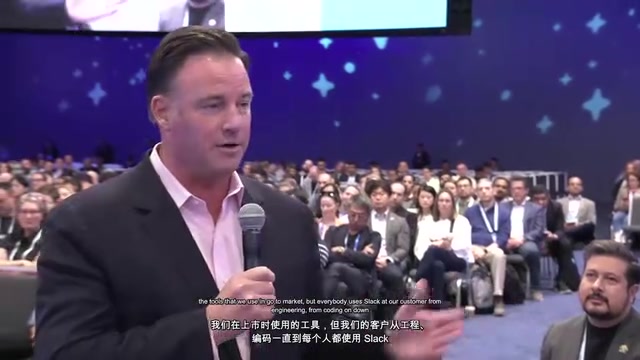
Stripe's enterprise sales lead John Williams shared a sample of scaled deployment: over 1,300 channels, 3,900 sales and cross-functional team members collaborating in Slack, and over 62,000 messages sent to Slackbot each week. He mentioned a specific scenario—going to Boston next week to meet a customer, he simply asked Slackbot to summarize all account information and meeting plans, "no need for a briefing meeting, because we can do it asynchronously in Slack".
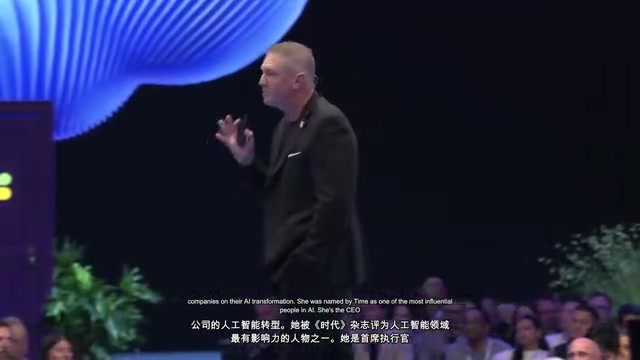
AI thought leader Allie K. Miller showed a more radical experiment. Her company Open Machine has Claude scan all meeting transcripts every 30 minutes, "encoding" all work so everything is readable to agents; the team talks to "ghost agents", marking tasks with a trigger word (she uses "pineapple"), and the agents execute automatically. She also built the "Allie Loop"—an AI twin representing herself that team members can ask questions, with the twin responding on her behalf, provided guardrails are in place. She admitted this approach isn't yet suitable for direct adoption in large enterprises.
On how to move forward, she offered a framework of "raise the floor, raise the ceiling": frontier squads (2 to 8 people) get higher budgets and independent channels to experiment with new features, turning breakthrough experiences into the company-wide starting point.
AI twin (digital twin agent) refers to an agent built using a specific individual's knowledge, style, and decision preferences as training material, capable of responding on their behalf. Allie K. Miller's "Allie Loop" is this kind of experiment: team members ask questions to her AI twin, and the twin responds. Its difference from a general assistant lies in personification and authorization boundaries—the twin needs to know which questions it can answer, which must be forwarded to the person, and which information must not be disclosed. Technically, this usually relies on retrieval-augmented generation (RAG) using the individual's past conversations and documents as context, combined with guardrail rules to limit the scope of behavior. Allie admits this approach isn't yet suitable for direct adoption in large enterprises precisely because permissions, privacy, and accountability quickly become complicated at organizational scale: when the twin says something wrong, whose responsibility is it? This goes beyond the tool level and touches governance and legal boundaries.
What This Keynote Is Really Saying
Putting the whole thing together, Slack's argument comes down to three layers. At the product layer, Slackbot upgrades from a personal assistant to a team-level agent entry point, Surfaces solves dynamic interface generation, and Code solves collaboration between multiple people and coding agents. At the ecosystem layer, companies like Anthropic, OpenAI, and Cognition both run on Slack and build their products into Slack; the ecosystem of 2,600 apps is the moat. At the business layer, Slack CRM becomes Salesforce's front door to small businesses, and Slackbot becomes the conversational entry point to Salesforce data—officially, 90% of salespeople already use Salesforce within Slack.
Worth noting are the implicit trade-offs. Boris's line "don't add features, remove features" forms a subtle contrast with Slack's constantly accumulating new capabilities. The compounding narrative of multiplayer collaboration is compelling, but its premise is that organizations are willing to make conversations public and workflows transparent—for most enterprises this is a cultural challenge, not a tooling problem. Allie's "ghost agent" experiment also hints at the other side: when an AI twin speaks for you, permissions, privacy, and accountability boundaries quickly become real problems.
The tools are in place; the remaining question is whether organizations are ready to change how they work.
Related articles

A Single Prompt Triggers a Global PHP Security Storm: Is AI a Savior or a Hidden Risk?
A single AI prompt triggered a global PHP security crisis affecting Wikipedia and the Internet Archive. This article reviews the incident, analyzes the OpenAI-Amazon controversy, and explores the security paradox of lowered vulnerability discovery barriers in the AI era and developer response strategies.

When AI Is Taken Away: How Reliance on Shortcuts Undermines Your Problem-Solving Resilience
A study of 1,222 people found that after using AI to answer questions, once AI was removed, people gave up on more problems than a control group that never used AI. The article analyzes the impact of AI reliance on learning resilience and metacognition, and explores design implications for AI learning tools.

Carta and NewView Partner to Let Startup Employees Cash Out Equity Early
Carta and NewView Capital partner to simplify startup tender offers, helping employees sell equity early. Analysis of the mechanism, liquidity pain points, and impact.