smart #2 Global Premiere: An Immersive Launch Beneath Canton Tower
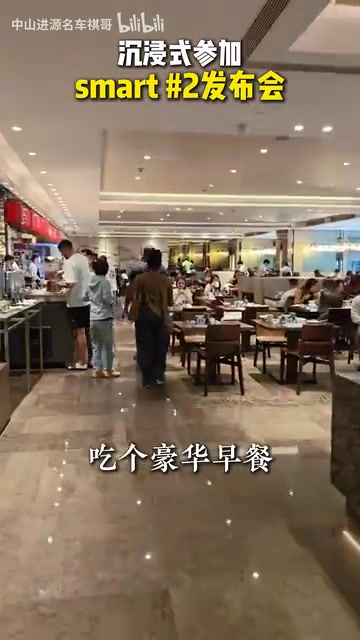
smart #2 launches beneath Canton Tower, with 99,900 yuan pricing and a companionship narrative in the spotlight.
This article recounts the smart #2 global premiere from an owner's perspective. Held beneath Canton Tower, the event felt more like a car-club gathering than a traditional launch, using a "four-ton duck" body-rigidity demo for safety and lyrics and monologues instead of spec sheets to emphasize companionship. The 99,900 yuan price is seen as a key threshold-lowering signal.
A launch event for the community
When the invitation to the smart #2 global premiere arrived, I agreed almost without hesitation. From handing over the keys and setting off, to checking into the hotel, opening blind boxes, and strolling through Swan City, the whole process felt more like a gathering of car enthusiasts than a traditional new-car launch. The event was scheduled for the evening, leaving the daytime for city walks and casual chats with fellow owners — a rhythm that is very smart.
By the time I reached the base of Canton Tower, darkness had fallen. The first thing to catch the eye on the venue's outskirts was a Photobooth — snap a photo and get it printed in ten seconds, with plenty of owners queuing up to take part. Further in, a top livestreamer's dance stream had already kicked off, igniting the atmosphere ahead of schedule.
Hardcore showcase: body rigidity and the four-ton duck metaphor
Before the launch began, a rather intuitive installation was set up on site: a body-rigidity demonstration. Staff used "four tons of ducks" as a reference point to visually showcase the body structure's load-bearing capacity. Though the metaphor carries a touch of humor, the message was clear — the #2 has put real effort into safety.
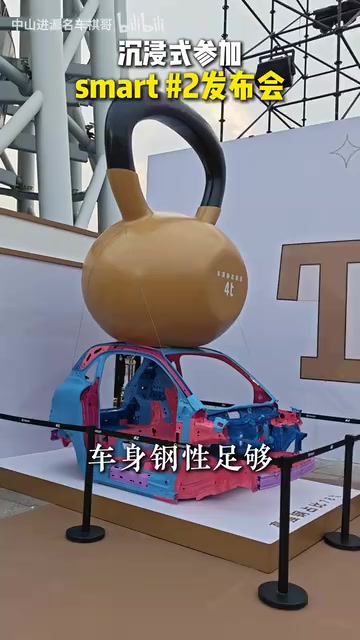
"See that? Now that's what I call professional," a fellow owner remarked while filming a video. Then the music played and the dancing continued, and the atmosphere transitioned naturally from technical showcase to brand storytelling.
Body rigidity is one of the core metrics for a car's passive safety, typically referring to the structure's ability to resist elastic deformation under load. For EVs, because a heavy battery pack is placed underneath, body rigidity not only concerns crash safety but also directly affects handling stability and NVH performance. The industry commonly quantifies this with torsional stiffness (measured in N·m/deg); the higher the value, the less the body deforms under dynamic impact. The launch's use of "four tons of ducks" as a reference essentially translates an abstract stiffness figure into a perceptible visual metaphor — using weight to intuitively convey load-bearing capacity and lower the barrier to public understanding.
Emotional storytelling beneath Canton Tower
The real highlight began in the evening. The stage was set up right at the base of Canton Tower, and when the lights came on, the whole space had a wonderfully eclectic feel — the modernity of the landmark architecture layered with smart's signature urban agility.
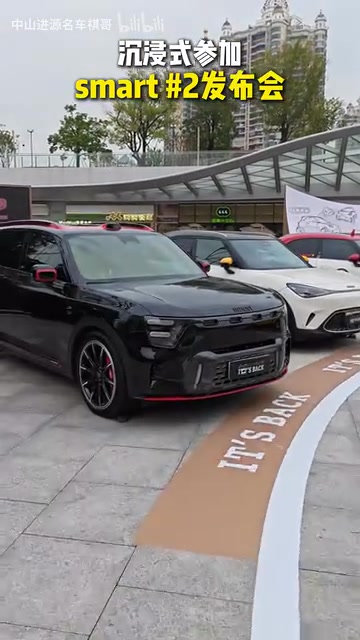
The launch's messaging didn't pile on specs but took a more emotional route. "I'm not here to teach you, I'm here to walk this journey with you," "You're not alone — ahead there's a blazing sky" — these lines were written into the lyrics and, paired with the on-site atmosphere, struck a chord with many longtime owners.
When a line from the classic poem "Ten years, life and death so vast" was quoted, the venue fell silent for a few seconds. The host mentioned a phone number that could no longer be reached, pulling the product launch back to the emotional connections between people and cars, and between people and people.
"No umbrella in the rain, so I'll walk slowly; neither wind nor rain, nor sorrow nor joy" — this was interpreted as a kind of dignity for the middle-aged: not forcing yourself, not retreating either. smart's twelve years in China happen to have followed a similar path: from the quirky compact cars of the gasoline era, to the #1 series in the electric era, and now to the #2.
The smart brand was born in the 1990s, originally a collaboration between Swatch and Mercedes-Benz on an urban microcar project, known for its ultra-compact body and personalized design. In 2019, Geely and Mercedes-Benz formed the joint venture Smart Automobile, driving smart's full transition to electrification. In 2022, the first all-electric model, the #1, launched, built on Geely's SEA浩瀚 architecture, marking the brand's shift from two-door microcars of the gasoline era to the compact all-electric SUV market. The "twelve years" mentioned in the text roughly corresponds to smart's complete cycle in the Chinese market, from imported gasoline sales to localized electric production, and also explains why longtime owners have a stronger generational perception of the brand's transformation.
Price and the actual car: the two questions owners care about most
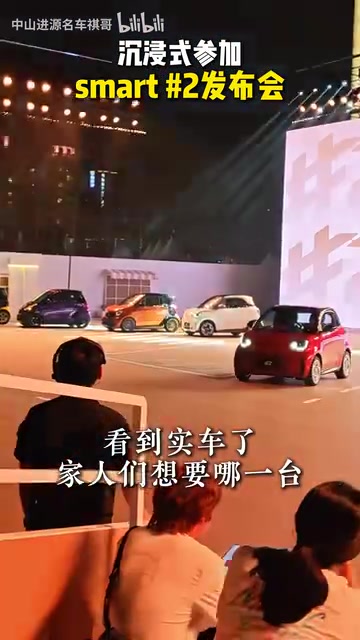
After the car was unveiled, the most-discussed topic on site was "which one do you want." Color, configuration, space — owners had their own preferences. And when the price was announced, the figure of 99,900 yuan was repeatedly mentioned — for a small EV wearing the smart badge, this threshold has indeed been lowered considerably.
One owner chatted at the end of the event about his own smart journey: his first gasoline smart in 2014, which he later had recolored several times; a switch to the #1 in 2023; and now standing at the #2 global premiere in 2026. Twelve years, three generations of products — one user's trajectory happens to mirror the brand's transformation in China.
The SEA浩瀚 architecture is a dedicated EV platform Geely spent years developing, supporting multi-category vehicle development from A-segment to E-segment, from sedans to MPVs, emphasizing decoupling at the hardware, system, and ecosystem layers. The smart # series is built on the compact branch of this architecture, meaning the #2 shares underlying technology with other models on the same platform in terms of electronic/electrical architecture, battery layout, and full-vehicle OTA capabilities. For consumers, the direct benefit of platformization is a higher parts commonality rate and relatively controllable maintenance costs; for the brand, it allows controlling R&D and manufacturing costs while maintaining personalized design — an important engineering backdrop that makes the 99,900 yuan price point viable.
A few observations
Watching the entire launch, smart didn't try to convince anyone with exaggerated specs but instead focused on a sense of "companionship." From the car-club-style schedule, to the emotional storytelling beneath Canton Tower, to the 99,900 yuan pricing strategy, the signal the brand wants to send is clear: the #2 isn't out to overturn anyone — it wants to stay in the lives of those longtime users.
Whether the product itself can sustain that companionship will depend on how it performs after deliveries begin. But at least on this evening, the atmosphere beneath Canton Tower was genuine.
Related articles

Why Learn Python in the AI Era? A Deep Dive with the Author of 'Python Crash Course'
Eric Matthes, author of 'Python Crash Course', discusses why Python remains essential in the AI era, the democratization and risks of AI coding tools, and the value of human creators.

Convex Skill Allegedly Uploads User App Ideas to Remote Servers Without Consent
Convex backend skill allegedly sends user app ideas to remote servers without disclosure, sparking Hacker News debate. We analyze the privacy risks and transparency issues.

The Coding Data Market Booms: How Frontier Labs Buy Training Data
The coding data market is rapidly expanding, with frontier labs as major buyers. This article analyzes the types of data traded, labs' procurement logic, and concerns such as licensing compliance and data contamination.