smart Elf #2 Test Drive: How a 2.75-Meter Body Disrupts Urban Mobility

The smart Elf #2 pushes urban commuting agility to the extreme with a 2.75m body and 3.35m turning radius.
The smart Elf #2 redefines the agility limit of urban small cars with a 2.75m body length, 3.35m turning radius, and rear-motor rear-wheel-drive layout. A Bilibili creator's test shows it completes a one-shot U-turn at a T-junction, handles narrow roads effortlessly, and its 2.75m length exactly covers a standard parking space width, allowing vertical parking in tight corner spots. Power comes from a 60 kW motor delivering 0-50 km/h in 3.8 seconds, covering the most common daily range; the chassis uses a five-link independent rear suspension and 50:50 weight distribution, a quality rarely seen in microcars. Similar in size to the Wuling Hongguang MINI EV but positioned higher, it suits narrow urban commutes and frequent short trips, though its size becomes a limitation on highways and when carrying large items.
Title
smart Elf #2 Test Drive: How a 2.75-Meter Body Disrupts Urban Mobility
The arrival of the smart Elf #2 gives the concept of a "small car" a new meaning. A 2.75-meter body length, a 3.35-meter turning radius, and a rear-motor rear-wheel-drive layout—stacked together, these figures point to one clear goal: pushing the flexibility of urban commuting to the extreme. In this hands-on test video, the Bilibili creator uses a series of real-world scenarios to verify just how "counterintuitive" this car really is.
Extremely Small, Absurdly Agile
The most immediate impact of the Elf #2 comes from its size. With a body length under 3 meters, the four wheels sit almost at the four corners of the body, and the front and rear overhangs are as thin as a sheet of paper. The direct benefit of this layout: the front and rear of the car are extremely close to the driver, making it exceptionally easy to judge positioning. In the video, the creator marvels that sometimes it even feels like the car behind has already merged into their own—a sense of distance that is completely unimaginable in a conventional vehicle.
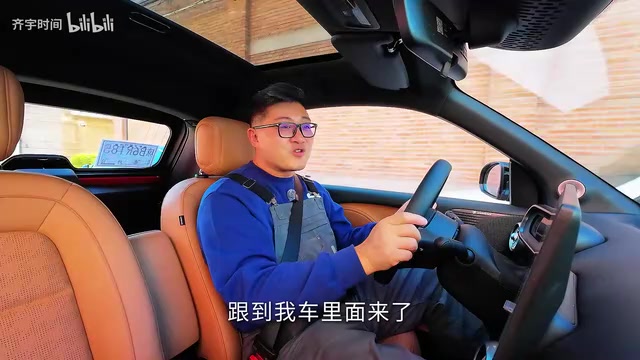
With a turning radius of 3.35 meters, it's only slightly longer than the car itself. At a T-junction blocked by a van, the Elf #2 completed a U-turn in a single turn of the wheel. The creator notes that driving this car involves many "counterintuitive" trajectories—because the car is so short and the turning radius so small, the lines it draws on the road often defy driving habits built up over years. This agility feels effortless on narrow park roads, to the point where the road seems "too wide"; only when you reach the hutong alleys inside the Second Ring Road can you truly squeeze out its advantage.
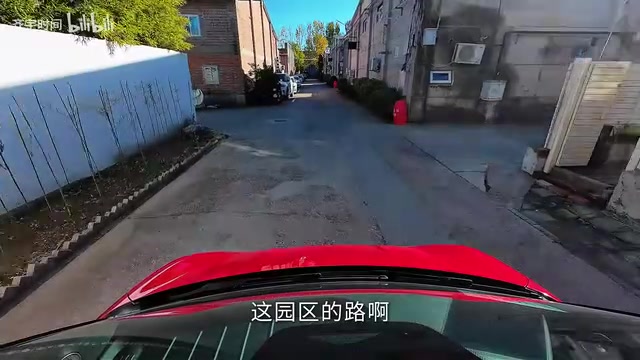
Turning radius usually refers to the radius of the circle traced by the outer front wheel when the steering wheel is turned to full lock, and is a key metric for a vehicle's low-speed agility. The minimum turning radius of an ordinary compact sedan is generally above 5 meters, and even microcars known for agility are mostly around 4.5 meters. A turning radius of 3.35 meters means this car can complete a one-shot U-turn on a road less than 7 meters wide, whereas ordinary vehicles often need to back up once. The turning radius mainly depends on the wheelbase, the maximum steering angle of the front wheels, and the front overhang length. The Elf #2's design of pushing all four wheels to the corners of the body and greatly shortening the front and rear overhangs is precisely aimed at optimizing this metric.
Parking: Horizontal or Vertical, Either Way
The parking logic of the Elf #2 is completely different from that of ordinary cars. At 2.75 meters long, it happens to cover the width of a standard parking space (spaces are usually close to 3 meters wide). This means it can drive straight in vertically, with the front end right on the yellow line. In the video, the creator demonstrates this "correct way to park"—many tight corner spots that other cars can't enter can be slid into sideways.
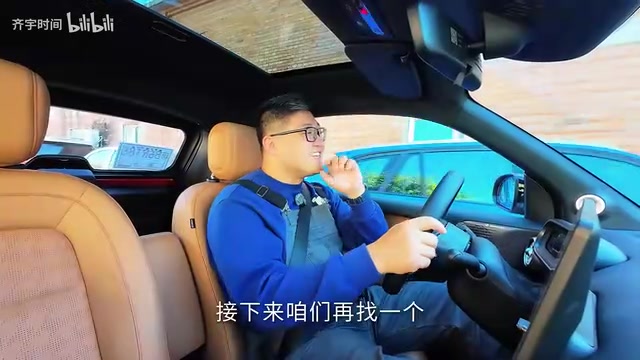
This parking convenience is built on the size advantage, but only if the driver is willing to break conventional parking thinking. For those headache-inducing narrow parking spots in the city, the Elf #2 offers an almost "cheat-like" solution.
Power and Chassis: A Quality Small Cars Shouldn't Have
A 60 kW rear-mounted rear-drive motor—the on-paper figures really aren't large. But the creator points out that 0-50 km/h acceleration in 3.8 seconds covers exactly the most commonly used range in daily driving—traffic-light launches and merging into gaps—and the power response is entirely sufficient.
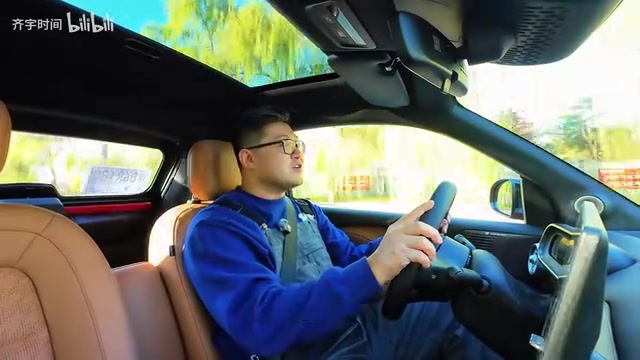
The chassis is where this car least resembles a small car. The rear suspension uses a five-link independent layout, with a 50:50 front-to-rear weight distribution. Going over speed bumps and manhole covers, the motions are crisp, and the feel is solid rather than loose. During rapid lane changes, the body sways only slightly from side to side—thanks in no small part to the low center of gravity and higher chassis rigidity brought by the battery layout. In the microcar segment, this level of chassis specification and tuning is quite rare.
Weight distribution refers to the ratio of weight borne by the front axle versus the rear axle; 50:50 means the front and rear weights are perfectly balanced. This ratio is revered as the gold standard for sports cars, because balanced weight distribution allows more rational allocation of grip across all four tires, enabling the front and rear wheels to reach their adhesion limits simultaneously during cornering, making body dynamics more predictable and neutral. Most front-engine front-wheel-drive family cars have the engine and transmission pressing down on the front axle, so their weight distribution is often close to 60:40, making them prone to understeer (push). The Elf #2 adopts a rear-motor rear-wheel-drive layout, placing the motor on the rear axle, and together with the battery pack arranged in the chassis floor, achieves a near-50:50 weight distribution—this is also the physical basis for its driving fun.
A five-link independent suspension is a form of multi-link suspension in which the rear wheels are connected to the body through five separate links, each controlling forces in a different direction. Compared with the torsion-beam non-independent suspension commonly found on microcars (where the left and right wheels are rigidly connected by a crossbeam), the five-link allows the two rear wheels to independently handle road undulations—when one side runs over a manhole cover, it won't drag the other side along—and enables more precise control of wheel alignment angles, balancing comfort and handling stability. The trade-off is a complex structure, large space occupation, and high cost, which is why it is almost never seen in the microcar segment; the Elf #2's adoption of this configuration is a clear step above its class.
Compared with the Wuling Hongguang MINI EV, Which to Choose?
In the video, the Elf #2 encounters a Wuling Hongguang MINI EV in the park. Viewed from the front, the Elf #2 looks sturdier; from the side, the two are basically the same length; from front and rear angles, the Elf #2's solidity is more apparent. The creator also points out the key differences: different quality feel, different design, and probably different price points.
This is a multiple-choice question with no standard answer. The Hongguang MINI EV wins on extreme cost-effectiveness and a massive market base, while the Elf #2 is clearly a notch above in chassis specification, powertrain layout, and overall refinement. If your budget allows and you have requirements for driving quality, the Elf #2 offers an experience closer to a "normal car"; if you just need a mobility tool to shelter you from the weather, the Hongguang MINI EV remains hard to avoid.
Who Is This Car Really For
The Elf #2's positioning is very clear: people who commute on narrow city roads, make frequent short trips, and have a strong need for parking convenience. Its agility is a dimensionality-reduction-level presence in hutong alleys, old town districts, and crowded parks. But the creator also candidly admits that this agility requires the driver to spend time adapting—the body is so short that trajectory judgment and distance perception differ from conventional cars.
The rear-drive layout plus 50:50 weight distribution gives it a foundation of driving fun retained among microcars. The five-link rear suspension is even a class-above configuration. If what you need is a small car that moves freely through crowded cities, parks without effort, and doesn't feel cheap to drive, the Elf #2 currently has almost no direct rival. But if you frequently drive on highways or need to carry large items, its size advantage becomes a limitation.
With a 2.75-meter body length and a 3.35-meter turning radius, the smart Elf #2 redraws the upper limit of agility for urban small cars. It doesn't try to please everyone, but instead dissects the "urban commuting" scenario to the extreme—from judging positioning to U-turns to parking, every step leverages its size. Combined with the rear-drive layout and five-link rear suspension, it offers a rare high-spec chassis solution in the microcar category. Whether this car is worth buying depends on how much you need that freedom to "park sideways."
Related articles

The AI Agent Era: Building a New Product Paradigm with Evals
AI Agents are becoming the next users of products. This article explains how to use Evals to observe Agent usage behavior, test changes before launch, and compare new model performance, helping product teams establish a development methodology for the Agent era.

Microsoft Global Email Outage Leads to Chlorine Leak at German Hotel, Injuring 15
A Microsoft 365 and Outlook global outage prevented a chlorine safety alert from reaching a German Phantasialand hotel, injuring 15 guests and exposing the fragility of cloud-dependent safety systems.
iPhone Duo to Support Face Unlock Using Only the Front Camera
Apple is developing front-camera-only face unlock for the iPhone Duo, now testing in the iOS 27.3 beta. We analyze the technical approach, user experience, and security trade-offs.