Sonnet 5.5 in Action: 3D Games and Simulators Built in Just Days

Developers used Claude Sonnet 5.5 to build 3D apps and playable games in days using only prompts.
Anthropic's Claude Sonnet 5.5 has drawn wide attention after a YouTube creator's team built a 3D ocean physics simulator, Unreal Engine-level San Francisco city rendering, fully playable Fall Guys and Age of Empires clones, and a LEGO creator with step-by-step assembly guides — all via prompts in just a few days. The demos showcase the model's coordinated breakthroughs across spatial reasoning, physics logic, game systems, and structured instruction generation. The article also cautions that these results come from a single source, and that the gap between a demonstrable prototype and a production-ready product remains significant.
What Makes Sonnet 5.5 So Impressive
Since Anthropic's latest release, Claude Sonnet 5.5, developers have wasted no time putting it through some jaw-dropping experiments. One YouTube creator and his team built multiple 3D applications and playable games in just a few days — using nothing but prompts — covering everything from physics simulations to full-scale game clones.
These demos aren't just about showing off. They reflect a genuine leap in what large language models can do when it comes to code generation and complex system building. Projects that once required a professional team working for weeks or months can now yield a working prototype in a day or two, thanks to AI assistance. As the creator put it at the end of the video: "3D has been solved. This model is insane."
From Ocean Simulation to City Rendering
The first demo the team showcased was described as "the most advanced 3D ocean simulator I've ever seen." Users can control waves, lighting, ships, and wind in real time — the kind of output you'd expect from a professional-grade physics engine.

Even more impressive was a 3D rendering of San Francisco generated inside Unreal Engine. According to the creator, every building, thousands of pedestrians, and vehicles were all processed, with realistic dynamic behavior including traffic flow and character movement.

Taken together, these examples demonstrate that Sonnet 5.5 can now produce substantially complete outputs when dealing with spatial relationships, physics logic, and large-scale scene organization — not just scattered code snippets.
Unreal Engine is a top-tier commercial game engine developed by Epic Games, renowned for its cinematic real-time rendering capabilities. In traditional workflows, building a city-scale scene with complete building clusters, traffic systems, and pedestrian AI typically requires a team of dozens working for months. The fact that AI-assisted code generation can now output runnable scene configurations directly in a tool like Unreal Engine represents a shift from "writing code" to "generating systems" — the model must not only understand the engine's API and blueprint logic, but also coordinate multiple subsystems including geometry, materials, lighting, and behavior scripts.
Game Clones: From Fall Guys to Age of Empires
The most crowd-pleasing part of the video was a series of playable game clones. These included a complete Fall Guys recreation with 60 levels and extensive customization options — all generated "from a single prompt."
Also notable was an Age of Empires clone. The creator emphasized that it's "actually playable," supports multiplayer, and is genuinely fun to play — he even promised to include a playable link in the video description.
The team also recreated portions of Batman: Arkham City. The creator kept returning to one key point: all of this "only took a day or two" and wasn't particularly difficult. He went further to suggest that given a few weeks or months, it would be entirely possible to build a fully polished 3D game.
LEGO Creator: More Than Just Image Generation
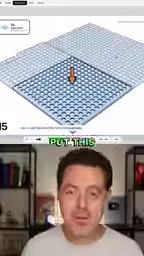
Of everything shown, the creator's personal favorite was a LEGO Creator tool. Its logic goes well beyond simple image generation: users just type in the LEGO creation they want, and the model designs it using "real brick parts."

More importantly, it automatically generates a step-by-step assembly guide explaining how to build the model brick by brick. This means the model didn't just understand the visual form — it decomposed it into physically executable build steps. That's a complete pipeline from creative idea to real-world implementation.
What makes the LEGO Creator particularly impressive is that it involves a complex task known as "procedural constraint reasoning." Real-world LEGO bricks have fixed dimensional standards (measured in "LEGO units"), connection rules, and a limited parts catalog. The model must map a user's natural language description to a valid three-dimensional structure under these physical constraints, then further decompose that spatial structure into an ordered linear sequence of steps. This is fundamentally different from generating an image that looks like LEGO — it requires the model to have a genuine understanding of physical feasibility and operational sequencing, not just visual style imitation. This kind of complete reasoning chain from "creative idea to executable instructions" is one of the most closely watched dimensions in current large language model capability evaluation.
What These Demos Actually Mean
It's worth being clear-eyed here: these results come from a single creator's showcase video, with no independent replication or detailed technical disclosure. Claims like "a complete game from a single prompt" typically leave out significant iteration, debugging, and asset integration work. The real development process is likely more complex than what the video portrays.
But even with that caveat, the capability boundaries Sonnet 5.5 demonstrates are worth paying attention to. It brings together 3D rendering, physics simulation, game logic, and structured instruction generation — previously separate challenges — into a single conversational workflow. For indie developers and small teams, this kind of rapid prototyping capability is meaningfully lowering the barrier between a creative idea and a working demo.
As the creator summed it up: "Anthropic is cooking." The pace of progress in model capability genuinely makes you wonder what development workflows will look like next.
It's worth noting that there's a fundamental gap between "rapid prototyping" and "production-ready product." A prototype validates core logic and visual feasibility; an actual game or application still requires performance optimization, edge case handling, cross-platform compatibility, security auditing, and extensive UX polish. Current AI-assisted development toolchains have shown significant acceleration in the former, but the latter remains highly dependent on human engineering judgment. The more accurate framing is this: Sonnet 5.5 dramatically compresses the time cost of going "from zero to demo," making creative validation extremely cheap and changing how indie developers manage iteration speed and resource allocation — not that it signals the end of traditional software engineering.
Related articles

JobRunner MCP Server: AI Agents Can Now Fix Failed Java Jobs
JobRunner launches an open-source MCP server enabling AI agents to view cluster status, diagnose failures, and recover Java jobs—incident response from any cloud coding environment or existing agent.

MLAI Digital Launches 9 Security Agents: MCP Server Safeguards the Full Lifecycle of Agentic AI
MLAI Digital launches Security MCP Server with nine built-in specialized security agents covering vulnerability discovery, attack simulation, prompt injection detection, API and infrastructure assessment, and accelerated remediation—embedding security validation across the full Agentic AI lifecycle from development to production.

Running Isaac Lab on H100 GPUs: Exploring Better Approaches
Exploring optimization methods for running Isaac Lab on NVIDIA H100 GPUs, including MIG configuration, mixed precision, TensorRT acceleration, and community experience to improve robotics simulation and reinforcement learning efficiency.