SpaceX Eyes the Telecom Industry: Three Formidable Hurdles Behind the Ambition

SpaceX wants to be a wireless carrier, but telecom always comes down to three hard things: build, equip, and sell.
Viewed through nearly two decades of telecom history, SpaceX's ambition to become a wireless carrier breaks down into three fundamentals: building expensive infrastructure, achieving device compatibility, and winning and retaining customers. Sprint's fatal WiMAX bet and T-Mobile's customer-experience-driven comeback show each layer can be decisive. SpaceX faces a triple challenge: stacking satellite and ground network costs, fighting back incumbent carrier promotions, and inheriting all the consumer frustration that comes with being a carrier — while risking that telecom's transparent metrics like monthly fees, speeds, and churn quietly deflate the company's space-age mystique.
SpaceX wants to become a mainstream wireless carrier. That sounds thrilling — satellites beaming signals directly to your phone, disrupting a century-old telecom order. But when an analyst with nearly two decades of telecom industry coverage breaks down this business, the romantic space narrative gradually gives way to commercial reality: telecom is actually not a complicated business. It has only three core components. And to win, SpaceX must clear all three at the same time.
The Three Fundamentals of the Telecom Business
Running a telecom company ultimately comes down to three things: build the network, get on the devices, and acquire the customers.
First, there's the expensive infrastructure — cables buried underground, cell towers scattered everywhere, and now, in SpaceX's case, satellites deployed in orbit. Second, there are the devices — mainstream terminals like iPhones must be able to run on the network. Third, there's customer management: you need to acquire customers, retain them, reduce churn, and convince them to pay more over time for the same service — because you have to pay for all that expensive infrastructure.
This logic sounds simple, but over the past few decades, countless players have tried to differentiate on one of these fronts, with mixed results.

Lessons from History: Bet on the Wrong Technology and You're Out
Betting on network technology is a high-risk path. Sprint rode its digital network (versus legacy analog) to fame in the 1990s with its iconic "pin-drop" ads. But when 4G arrived, Sprint bet on WiMAX instead of LTE — a fatally wrong call that ultimately led to its demise and acquisition by T-Mobile.
T-Mobile's ability to pull off that acquisition wasn't built on technology — it was built on an obsessive focus on customers. When CEO John Legere took over, he repositioned the company as the "Uncarrier," treating users with genuine respect rather than the way AT&T and Verizon treated them: as problems to be managed.
Competition at the device layer, meanwhile, is ancient history. The analyst recalls his early days as a blogger at Engadget, when exclusive device deals were the fiercest battleground: AT&T's exclusive launch of the iPhone lured waves of switchers, Verizon fired back with an exclusive BlackBerry Storm, and Sprint bet big on the Palm Pre. Today, nobody competes on device exclusivity anymore.
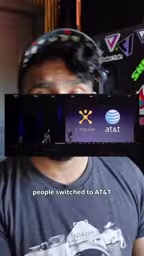
These stories reveal a brutal truth: technology bets, customer experience execution, and device ecosystem lock-in — each one can make or break a carrier. SpaceX now has to face all three at once.
The WiMAX vs. LTE battle stands as the most textbook case of a failed technology bet in mobile communications history. WiMAX (Worldwide Interoperability for Microwave Access) was championed by Intel and, in theory, offered superior spectral efficiency — Sprint poured billions of dollars into it. LTE (Long-Term Evolution), meanwhile, was driven by the 3GPP standards body and backed by virtually every major equipment vendor, including Ericsson, Nokia, and Qualcomm. The scale economics of the device ecosystem ultimately decided the outcome: LTE chipsets were far cheaper, handset choices were far richer, and carriers worldwide were far more willing to deploy it. Sprint found itself running alone down an increasingly narrow track, falling behind on both coverage and user experience, with no way to recover. The lesson this case reveals is an iron law of the telecom industry: the technical merits of a technology often aren't the deciding factor — the degree of supply chain alignment and ecosystem scale are. As SpaceX pushes satellite Direct-to-Cell, it faces the same fundamental question: can it rally enough device manufacturers behind it?
The Three Mountains in SpaceX's Path
Mountain One: The enormous cost of running two networks simultaneously. SpaceX plans to launch as many as 15,000 satellites to underpin this network — that alone is a staggering cost. But satellites can't cover every scenario, and wherever signals fall short, ground-based infrastructure will be needed — the company has already acquired substantial spectrum for this purpose. In other words, SpaceX isn't building one network; it's building "one network in the sky plus half a network on the ground," with costs stacking up alarmingly. There are also unresolved technical questions: will phones constantly connected to satellites drain their batteries faster?
Mountain Two: Winning customers. Existing carriers won't sit still. They'll roll out promotions and incentives to hold onto their subscribers. That's great for consumers — healthy market competition at work. But when the dust finally settles, SpaceX will have to answer one fundamental question: how much should it charge to sustainably operate a telecom company?

Mountain Three: The fate of becoming a "normal" carrier. The moment SpaceX truly becomes a wireless carrier, it inherits every emotion people typically feel toward carriers. Open the Starlink subreddit and it's full of complaints about deteriorating service quality, slower speeds, and rising prices — "everyone is leaving Starlink, just like everyone is leaving New York."
Direct-to-Cell technology faces challenges far more complex than those of terrestrial cellular networks. The distance between a ground-based cell tower and a phone is typically a few hundred meters to a few dozen kilometers; low Earth orbit satellites, by contrast, fly at altitudes of roughly 550 to 1,200 kilometers, which means longer signal paths and dramatically higher path loss. To allow ordinary smartphones (rather than specialized terminals) to receive signals, satellites must be equipped with extremely large phased-array antennas to compensate for the limited antenna gain of a handset. SpaceX's Starlink V2 satellites significantly increased antenna area for precisely this reason. Furthermore, low Earth orbit satellites travel at roughly 7.5 kilometers per second, meaning phones must frequently hand off between satellites to maintain a connection — placing stringent demands on signal continuity and power consumption. Today, Direct-to-Cell primarily supports text messaging and low-speed data; voice calls and high-speed data remain in testing, and replacing terrestrial cellular networks is still a considerable distance away.
When the Space Narrative Returns to Earth
There's a subtler risk lurking here. SpaceX is a massive company with many lines of business, most of which don't make money. The one that actually does? Starlink.
Many people are dazzled by the physical spectacle of rocket launches or the eye-popping numbers of AI deals — but telecom is a business everyone can understand. Once SpaceX becomes a carrier, ordinary people will suddenly grasp its "nuts and bolts" — monthly fees, download speeds, customer service, churn rates. That level of clarity might be precisely what drags a mythology-wrapped company back down to earth.

Making a telecom business "sexy" is both exciting and ambitious. SpaceX has real advantages nobody else can match — a satellite asset base and a cost structure that constitute genuine moats. But what it ultimately has to win is the most unglamorous of tasks: build the network, get on the devices, acquire the customers. And history tells us that none of those three things has ever been simple.
Starlink is one of the few SpaceX businesses to have achieved commercial profitability, with reported annual revenue exceeding $6 billion and a subscriber base surpassing 4 million. That scale makes it a critical cash flow engine funding SpaceX's high-burn activities like rocket development and Starship. However, satellite broadband and mobile carrier services are fundamentally different business models. The former primarily serves remote areas or fixed-broadband replacement needs where customers are relatively price-insensitive and mobility requirements are low. The latter requires head-to-head competition with established operators like AT&T and T-Mobile in densely populated urban markets, where price war pressure, the cost of building out customer service infrastructure, and regulatory compliance expenses multiply dramatically. The moment Starlink transitions from "the satellite service solving connectivity in remote areas" to "a phone plan option for city dwellers," its pricing logic and user expectations will shift fundamentally — a serious structural challenge to sustaining its margins.
Related articles

JobRunner MCP Server: AI Agents Can Now Fix Failed Java Jobs
JobRunner launches an open-source MCP server enabling AI agents to view cluster status, diagnose failures, and recover Java jobs—incident response from any cloud coding environment or existing agent.

MLAI Digital Launches 9 Security Agents: MCP Server Safeguards the Full Lifecycle of Agentic AI
MLAI Digital launches Security MCP Server with nine built-in specialized security agents covering vulnerability discovery, attack simulation, prompt injection detection, API and infrastructure assessment, and accelerated remediation—embedding security validation across the full Agentic AI lifecycle from development to production.

Running Isaac Lab on H100 GPUs: Exploring Better Approaches
Exploring optimization methods for running Isaac Lab on NVIDIA H100 GPUs, including MIG configuration, mixed precision, TensorRT acceleration, and community experience to improve robotics simulation and reinforcement learning efficiency.