Spending $300/Month on 4 AI Tools — An Honest Experience Report

A developer shares their $300/month AI subscription combo for coding, search, and knowledge work.
This article shares a power user's AI subscription setup: GitHub Copilot Pro Plus for coding (calling multiple models via OpenCode to bypass Anthropic's regional restrictions), Perplexity Max ($200) for high-accuracy search and investment intelligence monitoring, Grok for multi-Agent orchestration, and Gemini for Google ecosystem integration and NotebookLM knowledge management — totaling ~$300/month across the full pipeline of coding, search, analysis, and knowledge management.
As a developer and investor who uses AI tools extensively, how do you choose the best subscription combo from the sea of AI products? This article shares a power user's real AI subscription setup — GitHub Copilot Pro Plus, Perplexity Max, Grok, and Gemini — totaling about $300/month, covering the full pipeline of coding, search, analysis, and knowledge management.
GitHub Copilot Pro Plus: The Reluctant Best Option for Coding
The core reason for choosing GitHub Copilot is actually quite practical: you can call various models through Copilot in OpenCode.
Many people ask, why not just use Cursor or Claude Code? The answer is simple — Anthropic's crackdown on restricted regions is getting increasingly aggressive. It's not just IP restrictions anymore; they've added identity verification, and the signal is crystal clear: Anthropic will use every means possible to block users from restricted regions. Rather than constantly working around access solutions and risking a sudden ban that disrupts your work and mood, it's better to plan ahead.
OpenCode and the AI Coding Tool Ecosystem
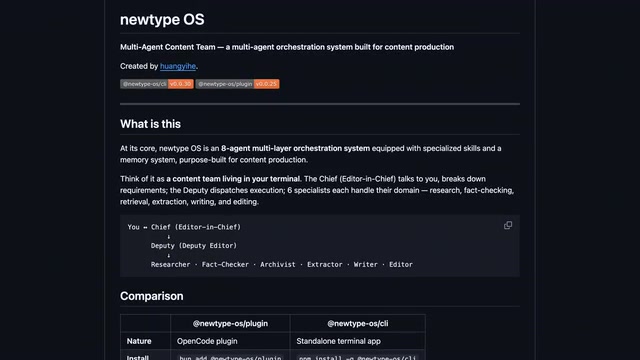
OpenCode is an open-source AI coding assistant framework whose core design philosophy is "model agnosticism" — through a unified API interface layer, it allows developers to freely switch between underlying large language models without being locked into any single vendor. This stands in stark contrast to products like Cursor and Claude Code that are deeply tied to specific models. OpenCode's architecture is essentially a plugin-based coding agent system that supports model calls through GitHub Copilot, OpenAI API, and various other channels, giving it a unique advantage in environments with regional access restrictions. OhMyOpenAgent is an extension plugin ecosystem built on OpenCode, providing specialized Agent capabilities like task decomposition, code review, and documentation generation, further enhancing the automation of coding workflows.
The author switched to OpenCode several months ago, pairing it with the OhMyOpenAgent plugin for development, and the experience is on par with Claude Code. His project NewTypeOS is also built on OpenCode — it's essentially a plugin itself, and he even integrated OpenCode directly for convenience.
Regarding model selection, Anthropic and Google explicitly don't support third-party calls, while OpenAI and GitHub have officially announced their partnership, making a GitHub Copilot subscription the best path to accessing more model options. The Pro tier's quota is no longer sufficient, and while Pro Plus is also tight, at least you can add budget to continue using it after hitting the limit. Although Copilot's models have some context window limitations, there's genuinely no better alternative when you consider everything together.
Perplexity Max: A $200 Productivity Tool Worth Every Penny
If Copilot is the coding workhorse, then Perplexity is the core of information retrieval and decision support.
Why Is Perplexity More Accurate?
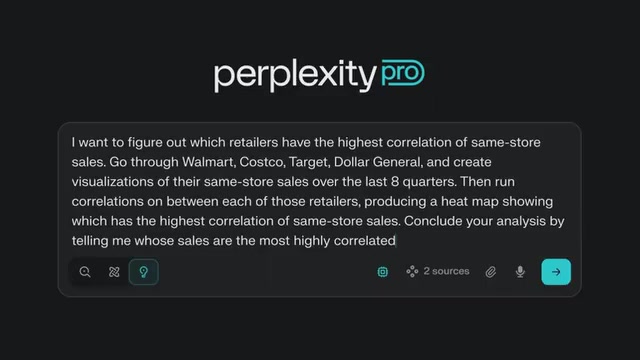
The reason Perplexity outperforms traditional AI search products in accuracy comes down to its more mature RAG (Retrieval-Augmented Generation) architecture. Unlike OpenAI's SearchGPT or Google AI Overview, Perplexity fetches multiple authoritative sources in real-time for every query and enforces citation of original sources when generating answers, dramatically reducing the probability of hallucination. Its Computer feature is essentially an AI Agent with web access and local operation capabilities, able to execute multi-step information gathering tasks and output results in structured formats like Markdown. This makes it a critical tool connecting "information retrieval" and "content production." For scenarios demanding high information accuracy, such as quantitative trading and investment research, this architectural advantage is particularly pronounced.
The author's assessment is very direct: If you're doing serious work — like submitting a work report or making investment decisions — you definitely need Perplexity. Its accuracy and rigor are clearly superior to search products from OpenAI, Google, and other competitors. Some quantitative traders have also given positive feedback after using it.
Beyond search, Perplexity's Computer feature sees heavy use across scenarios including:
- Investment intelligence monitoring: For example, U.S. military actions against Iran — having it conduct comprehensive research and schedule monitoring of the latest developments
- Development assistance: When building automated trading bots for prediction markets, having it gather research and provide development recommendations, then taking the generated Markdown documents into OpenCode for execution
- Personal Computer feature: Perplexity's newly launched "local operation" capability, bridging local operations with cloud-based model calls

A single Max subscription covers search, monitoring, development assistance, and multiple other scenarios — the $200 monthly fee is genuinely worth it. This reflects an important usage philosophy: The value of AI tools isn't in any single feature, but in how many workflows they can chain together.
Grok: Underestimated Multi-Agent Orchestration Capabilities
Very few people in China use Grok, but Elon Musk's AI product has made notable progress recently, especially the multi-Agent orchestration feature introduced in version 4.2.
Technical Principles of Multi-Agent Orchestration
The multi-Agent orchestration system introduced in Grok 4.2 represents an important technical trend in current AI products — shifting from a single large model handling all tasks to a "Mixture of Experts" collaborative architecture. The system's design draws from the "Single Responsibility Principle" in software engineering: the Task Management Agent handles decomposing complex problems into subtasks and integrating final results, the Information Verification Agent ensures factual accuracy through real-time search, the Logical Reasoning Agent focuses on structured math and code problems, and the Creative Generation Agent handles open-ended writing tasks. The four Agents run in parallel, and a coordination layer merges their outputs, theoretically maintaining reasoning depth while significantly improving response quality. This architecture forms an interesting technical divergence from OpenAI's o3 series models, which perform multi-step reasoning within a single model, and represents a concrete implementation of the current AI field's "Test-Time Compute Scaling" approach.
This system features four specialized Agents working in parallel:
| Agent Role | Responsibility |
|---|---|
| Task Management | Task decomposition and result synthesis |
| Information Verification | Real-time search and fact verification |
| Logical Reasoning | Math, code, and logical reasoning |
| Creative Generation | Creative writing and content |
In practice, the collaboration effects of this Agent orchestration are impressive. Additionally, Grok has two unique advantages: first, it can access exclusive data from the X platform, and second, it can read web content from GitHub and other sites, providing differentiated value in information retrieval.
Gemini: Ecosystem Integration Is the Real Moat
Honestly, Gemini has been experiencing quality degradation recently, and usage frequency has dropped. But the author still chooses to maintain the subscription for one reason: Google's ecosystem integration is simply too good.

NotebookLM and the Paradigm Shift in Knowledge Management
NotebookLM is a Google research tool centered around "knowledge sources," with a design philosophy fundamentally different from general-purpose chatbots: it requires users to actively upload documents, web pages, audio, and other materials as a "knowledge base," and all AI responses are strictly generated based on these materials with precise citations from the original text. This "closed knowledge base" model dramatically reduces information distortion risk in scenarios like academic research and competitive intelligence analysis. The bidirectional integration between Gemini and NotebookLM effectively builds a complete knowledge pipeline of "discover → accumulate → deep research": users conduct broad exploratory conversations in Gemini, save valuable content to NotebookLM with one click, and then perform deep structured analysis on those materials within NotebookLM. This workflow design solves the long-standing pain point of AI tools where "conversations disappear," making genuine knowledge accumulation possible.
The most noteworthy change is
Related articles
 Product Reviews
The Programmer's Desk Setup Guide: Building a Workspace That Feels Like Home
Discover how programmers build productive, comfortable workspaces. From multi-monitor setups to ergonomic design, explore the desk philosophy that drives focus and flow.
 Product Reviews
Qoder vs Cursor Real-World Comparison: Which $20/Month AI IDE Is Better?
Hands-on comparison of Qoder vs Cursor AI IDEs: Agent autonomy, human interaction count, and architecture decisions. Qoder needed only 2 interactions vs Cursor's 8.
 Product Reviews
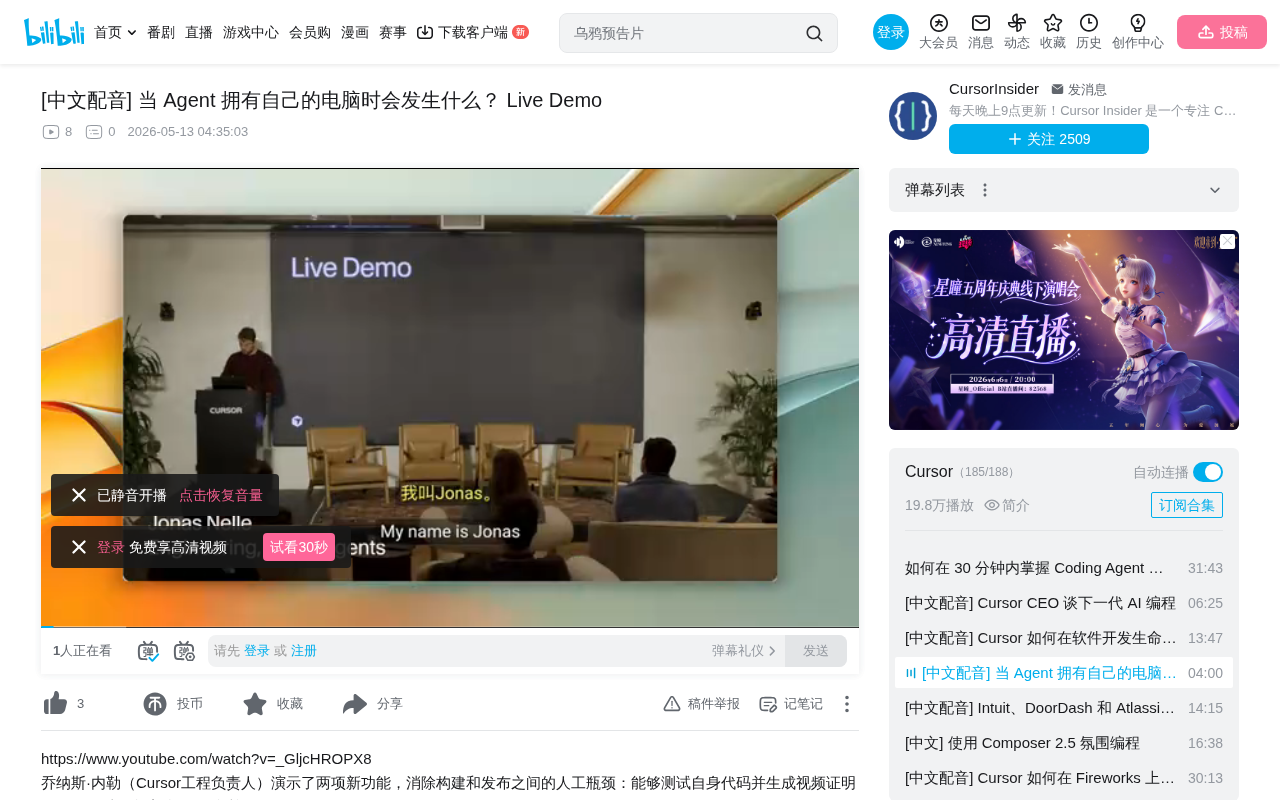
Cursor Cloud Agent Demo: Eliminating Bottlenecks Across the Entire Software Development Lifecycle
Deep analysis of Cursor's Cloud Agent demo showing how cloud VMs, automated test artifacts, and a full-chain control plane systematically eliminate human bottlenecks across the software development lifecycle.