Steam Review Backlog Delays Indie Game Launches

Steam review backlog causes indie games to miss launch windows, exposing platform review efficiency and transparency issues.
Recently, multiple indie developers have reported unusually long wait times for Steam game reviews, causing some titles to miss planned launch windows. Studio Daimon's Food Devils is a typical case, forced to adjust its release schedule. Indie teams have limited resources, and release dates are tightly bound to marketing rhythm and cash flow, so delays trigger chain reactions. The backlog exposes structural conflicts: under a surge in game volume, human review resources are strained and the queue mechanism is opaque. Developers are forced to choose between early submission and compressed testing, and may reassess platform-dependence strategies by exploring simultaneous multi-platform or staggered releases. The community is calling on Steam to improve review transparency and efficiency, which will affect its long-term appeal.
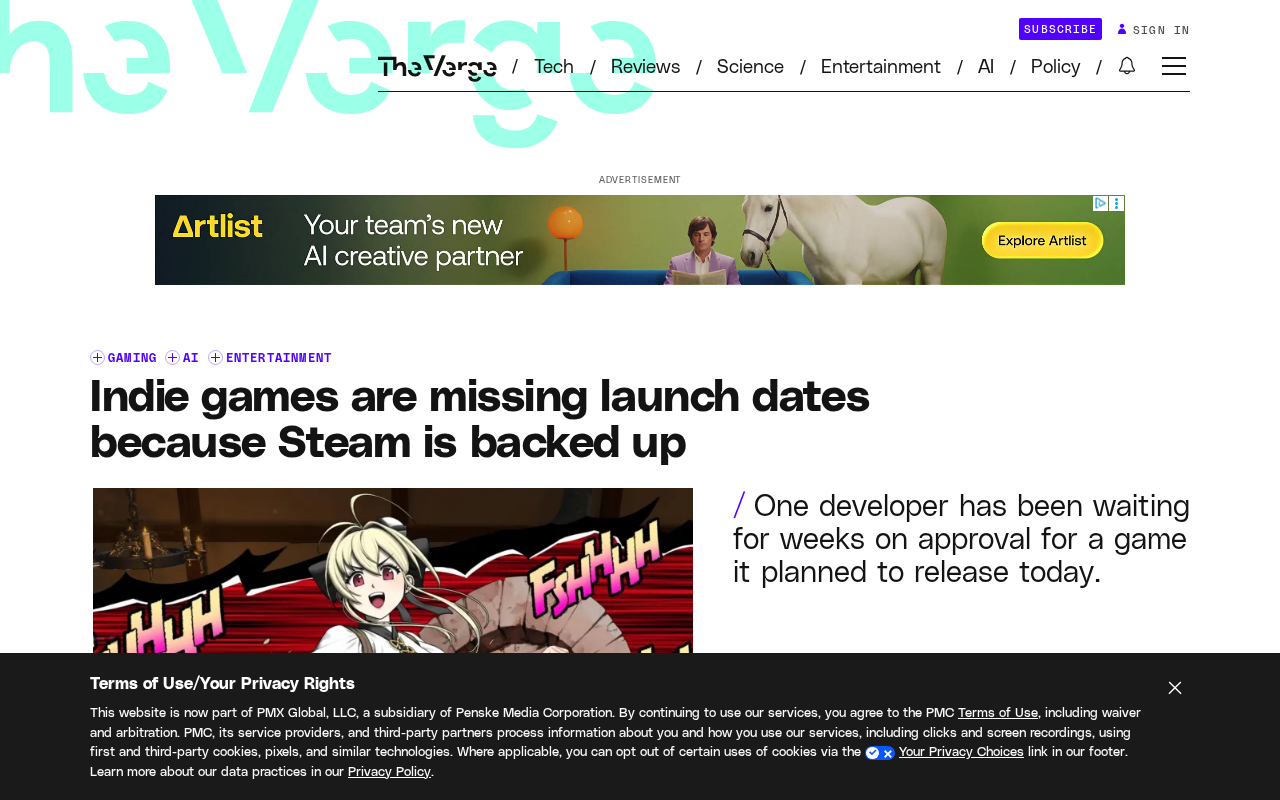
Recently, multiple indie game developers have reported on social media that wait times for game submissions on Steam have become unusually long, with approval delays directly causing some developers to miss their planned launch windows. According to an RSS source, Food Devils, developed by Studio Daimon, is one of the affected titles—the team had originally planned to release the game at a specific time but was forced to adjust its schedule due to the review backlog. This phenomenon has sparked widespread discussion in the indie developer community, exposing a structural conflict between the platform's review process and developers' expectations.
Specific Manifestations and Impact of Review Delays
According to developer feedback, Steam's review queue has become noticeably congested. Studio Daimon's case is not an isolated one—multiple indie teams have described similar experiences on social media: after submitting their games, wait times far exceed expectations, with little clear progress feedback. For indie developers with limited resources, release dates are often tightly bound to marketing campaigns, community hype, and cash flow. Once a scheduled window is missed, subsequent marketing rhythm and cash flow are hit in a chain reaction.
Steam's review process is commonly referred to in the developer community as "Steam Review." It is not a single step but includes multiple stages such as store page review, build review, and content compliance checks. Compared with certification processes on console platforms (such as PlayStation, Xbox, and Nintendo Switch), Steam's review has historically been known for being relatively lenient and fast. However, in recent years, as the volume of game submissions has surged, the volatility of the review queue has increased significantly. After submitting a game, developers typically only see a "pending review" status, with no granular information such as an estimated completion time or queue position. This opacity amplifies the uncertainty of waiting. For indie teams that tie their release date closely to Steam page launch, wishlist accumulation, and media exposure, review delays mean the starting point of the entire distribution chain is pushed back, which in turn affects pre-sales, community activities, and cash flow timing.
Structural Dilemmas for Indie Developers
Indie game teams are usually small and have weak risk resilience. For them, certainty around release dates is not just an operational issue—it is a matter of survival. As the core channel for PC game distribution, Steam's review efficiency directly affects the rhythm of the entire indie ecosystem. When review backlogs become the norm, developers are forced to choose between "submitting early and waiting" and "compressing testing time," and both choices can harm final product quality or market performance.
Challenges Facing the Platform's Review Mechanism
Steam's review process involves multiple stages, including content compliance and technical compatibility. As the number of games on the platform continues to grow, human review resources are under pressure. This backlog incident reflects that, against the backdrop of a surge in game volume, the platform needs more transparent queue mechanisms and more efficient review tools to balance quality control and release efficiency. For developers, it also highlights the need to build buffer time for platform review when planning release strategies.
In Steam's review mechanism, content compliance is mainly based on the platform's terms of service and the prohibited content list in the Steamworks documentation, while technical compatibility involves runtime verification across different operating systems such as Windows, macOS, and Linux, as well as hardware environments like Steam Deck. As the Steam Direct policy replaced the earlier Greenlight voting mechanism, the barrier to listing games was lowered, and the number of works submitted for review each year has grown substantially, increasing the load on the human review team. Review backlogs often occur during periods of concentrated submissions, such as around major sales events or the year-end release season. If the platform introduced more transparent queue status, estimated time windows, or automated pre-check tools, it could alleviate developers' anxiety to some extent, but balancing quality control and release efficiency remains a long-term challenge.
Implications for the Indie Game Ecosystem
If review delays persist, some developers may be prompted to reassess their platform-dependence strategies and explore the feasibility of simultaneous multi-platform releases or staggered launches. At the same time, calls from the developer community for greater review transparency are growing. How Steam responds to this demand will affect its long-term appeal in the indie game space.
Simultaneous multi-platform launch refers to a game launching on the same date across Steam, console platforms, mobile, and other channels to concentrate marketing resources and expand first-launch exposure. Staggered release, by contrast, intentionally staggers release dates across platforms to spread review risk and operational pressure. For indie developers, both strategies have pros and cons: simultaneous launch can generate greater market buzz but requires all platforms' reviews and certifications to pass at the same time, concentrating risk; staggered release reduces the impact of a single point of delay but may weaken the aggregate effect of the launch. In addition, some developers have begun to look at PC distribution channels beyond Steam, such as Epic Games Store, GOG, and Itch.io, to reduce dependence on a single platform. These strategic adjustments reflect the indie game ecosystem's growing sensitivity to the certainty of platform review.
One-line Summary
Steam review backlog causes indie games to miss launch windows, exposing issues with platform review efficiency and transparency.
Paragraph Summary
Recently, multiple indie developers have reported unusually long wait times for Steam game reviews, causing some titles to miss their planned launch windows. Studio Daimon's Food Devils is a typical case, forced to adjust its release schedule. Indie teams have limited resources, and release dates are tightly bound to marketing rhythm and cash flow, so delays trigger chain reactions. The backlog exposes structural conflicts: under a surge in game volume, human review resources are strained and the queue mechanism is opaque. Developers are forced to choose between early submission and compressed testing, and may reassess platform-dependence strategies by exploring simultaneous multi-platform or staggered releases. The community is calling on Steam to improve review transparency and efficiency, which will affect its long-term appeal.
Related articles
 Tech Frontiers
Gemini Omni 1.2 Flash: AI Video Moves Toward Draft-Style Editing
Google's Gemini Omni 1.2 Flash update enables conversational, draft-style editing of the same video—swap scenes while keeping products, adjust lighting while keeping characters. Clips up to 15s, 720p costs 30% less than the previous Flash—ideal for e-commerce ads, previs, and short-asset production.

Codex Tutorial: One-Command Install and Run Your First Task
Codex tutorial: one-command install and run your first task. Covers the four Codex forms, sandbox and approval guardrails, AGENTS.md and MCP configs, cloud network policy, and the iron rule of human review—everything you need to get started with this autonomous coding agent.
 Tech Frontiers
Localix: An Open-Source Agentic Development Environment with Multi-Model and Local AI Integration
Localix is an MIT open-source Agentic Development Environment (ADE) supporting seamless Claude Code plugin loading, multi-model cloud and local execution, Mini Apps extensions, and agent context management—an open AI collaboration workbench for developers.