Step 3.5 Flash Deep Dive: How a 196B Parameter Open-Source Model Beat Gemini

StepFun releases open-source Step 3.5 Flash, beating Gemini 3 Flash with efficient MoE architecture.
Chinese AI company StepFun released the open-source Step 3.5 Flash model featuring MoE architecture (196B total parameters, only 11B activated), MTP3 multi-token prediction, and hybrid attention mechanisms, achieving 350 tokens/sec inference speed and a 256K context window. Designed for AI Agent scenarios, it outperforms Google Gemini 3 Flash on coding benchmarks like SWE-Bench, while being completely free, open-source, and locally deployable.
Chinese AI company StepFun recently released an open-source model that has turned heads across the entire AI community — Step 3.5 Flash. This model boasts 196 billion parameters yet activates only 11 billion during runtime, beating Google's Gemini 3 Flash across multiple benchmarks. More importantly, it's completely open-source, free, and can even run on local hardware.
StepFun was founded in 2023 by Jiang Daxin, former Microsoft Global Vice President, and is headquartered in Shanghai. The company quickly completed multiple large funding rounds after its founding, with investors including tech giants like Tencent and Alibaba. Its valuation exceeded several billion dollars, making it one of the leading startups in China's AI foundation model space. StepFun had previously released several versions of its Step series models, covering multimodal capabilities including text, image, and video generation. The release of Step 3.5 Flash as fully open-source is seen as a strategic move to compete for influence in the global open-source AI ecosystem, continuing the trend of Chinese AI companies (such as DeepSeekAd and the Qwen team) actively participating in open-source competition during 2024-2025.
What Is Step 3.5 Flash?
Step 3.5 Flash is an open-source AI foundation model released by StepFun in 2025. Unlike ordinary chatbots, this model was purpose-built from the ground up for AI Agent scenarios.
An AI Agent doesn't simply answer questions — it can autonomously plan steps, invoke tools, and execute tasks without requiring users to provide hand-holding guidance throughout. AI Agents represent one of the most important directions in current AI development. Unlike traditional large language models (LLMs) that only engage in single or multi-turn conversations, AI Agents possess complete closed-loop capabilities: perceiving the environment, making autonomous decisions, planning actions, and executing tasks. A typical AI Agent workflow includes: receiving a user goal → decomposing it into subtasks → selecting and invoking appropriate tools (such as search engines, code executors, databases) → evaluating execution results → adjusting strategy based on feedback → delivering final results. Leading companies like OpenAI, Google, and Anthropic shifted their strategic focus from "smarter chatbots" to "more capable AI Agents" during 2024-2025, a transition widely regarded as the critical leap from models that "can talk" to models that "can do." Step 3.5 Flash is exactly this kind of model — one that doesn't just talk, but takes action.
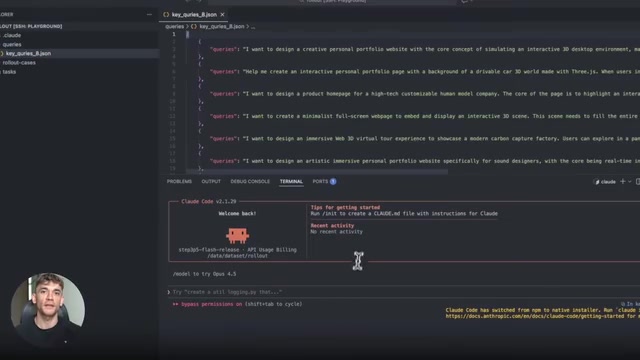
Its code and weights are fully public — no paywall, no subscription barrier, just download and use. In an era dominated by closed-source models, this level of openness is particularly rare.
Core Technology: Mixture of Experts Architecture and Multi-Token Prediction
MoE Architecture: 196B Parameters, Only 11B Activated
The most significant technical highlight of Step 3.5 Flash is its Mixture of Experts (MoE) architecture. The model has a total of 196 billion parameters, but when processing any single task, only approximately 11 billion parameters are activated.
Here's an analogy: imagine you have a team of 200 experts, but each time you only send the 11 most relevant ones into action while the other 189 consume zero resources. This means you get large-model-level intelligence while only bearing small-model-level computational costs. This is the core secret behind Step 3.5 Flash being both smart and fast.
MoE is not an entirely new concept — its theoretical foundation dates back to the seminal 1991 paper by Michael Jordan and Robert Jacobs. However, it was Google's Switch Transformer in 2022 that truly brought MoE into the mainstream for large models. The core idea of MoE is to split a massive feed-forward neural network into multiple "expert" sub-networks, where each input token is routed through a Gating Network to the most relevant few experts for processing. This sparse activation mechanism allows models to maintain enormous parameter capacity (meaning stronger knowledge storage capability) while keeping actual computation per inference at a relatively low level. Models like Mistral's Mixtral 8x7B, Google's Gemini series, and DeepSeek-V3 all employ MoE architecture — it has become one of the dominant paradigms in current large model design.
MTP3 Multi-Token Prediction: Generating 350 Tokens Per Second
On top of MoE, Step 3.5 Flash also incorporates MTP3 (Multi-Token Prediction 3) technology. During each inference step, the model simultaneously predicts 3 tokens instead of the traditional one-at-a-time generation. This isn't a post-hoc optimization patch — it's a core capability deeply integrated from the very beginning of training.

Traditional autoregressive language models use a "token-by-token generation" approach: each step predicts only the next token, which then becomes part of the input to predict the following token, and so on. This serial generation method is the fundamental bottleneck limiting inference speed. Multi-Token Prediction (MTP) technology adds multiple prediction heads to the model architecture, enabling the model to simultaneously predict multiple future tokens at each step. Meta's 2024 research paper systematically demonstrated that MTP not only accelerates inference but also improves the model's ability to learn long-range dependencies during training. DeepSeek-V3 also adopted a similar MTP strategy. Step 3.5 Flash's MTP3 means predicting 3 tokens simultaneously per step, theoretically boosting generation speed by nearly 3x, though actual improvement also depends on speculative decoding acceptance rates and hardware parallelism capabilities.
The speed gains from this design are compounding — every generation step is accelerated, ultimately achieving an impressive 350 tokens per second on coding tasks. Compared horizontally with most open-source and closed-source models under real workloads, this number is quite remarkable.
256K Context Window and Hybrid Attention Mechanism
Step 3.5 Flash supports a 256,000-token context window. In plain terms, this is like handing the model an entire book and having it remember every single page.
The context window determines how much content a model can "see" at once. Early GPT-3 supported only about 4,000 tokens (roughly 3,000 English words), while 256K tokens is approximately equivalent to a 500-page book. The core challenge of extending context windows lies in the standard self-attention mechanism in Transformer architecture having O(n²) computational complexity — doubling the context length quadruples the computation.
For AI Agents, this is crucial. Agents executing complex tasks need to continuously track large amounts of context — long documents, large codebases, and various details across multi-step projects. The 256K context capacity provides Agents with ample "working memory" space.

The model also employs a Hybrid Attention system: it uses Sliding Window Attention for quick processing of short content, and switches to full attention for long content requiring global understanding. Sliding Window Attention reduces computation by limiting each token to only attend to tokens within a fixed range around it, suitable for content with strong local dependencies; full attention lets each token attend to all positions in the text, suitable for scenarios requiring global understanding. This hybrid design draws from approaches used in models like Mistral and Jamba, dynamically switching attention modes based on content characteristics. Whether the task involves two sentences or 200 pages, the model adaptively adjusts, achieving a delicate balance between efficiency and depth of understanding without wasting compute where it's unnecessary.
Step 3.5 Flash vs Gemini 3 Flash: Benchmark Comparison
This is the question everyone cares about most: Can Step 3.5 Flash really beat Gemini 3 Flash?
On specific benchmarks, the answer is yes.
- On coding tests (such as SWE-Bench), Step 3.5 Flash performs excellently, scoring higher than Gemini 3 Flash
- On AI Agent tasks and reasoning challenges, it matches closed-source models with far more parameters
- It activates only 11 billion parameters per inference yet competes head-to-head with fully-running large models
It's worth noting that SWE-Bench is a software engineering benchmark introduced by a Princeton University research team in 2023, widely regarded as one of the "gold standards" for measuring AI models' practical programming capabilities. Unlike traditional code generation benchmarks (such as HumanEval) that only require models to write standalone functions, SWE-Bench extracts thousands of real bug-fix tasks from actual GitHub open-source projects, requiring models to understand the entire repository's context, locate the issue, and generate correct fix patches. This testing approach more closely mirrors real software development scenarios, making it a key indicator for evaluating AI Agent practicality in the coding domain.
Of course, no model wins across all benchmarks. Gemini 3 Flash remains strong in areas where it excels, such as multimodal understanding. But the key point is: Step 3.5 Flash is open-source, free, and competitive. It's the combination of these three qualities that truly generates attention.
In a landscape where closed-source models monopolize high-end performance, an open-source model going toe-to-toe with top closed-source models in AI Agent scenarios is itself a significant milestone.
Local Deployment Guide: Hardware Requirements and Data Privacy
The question many developers care about most: Can Step 3.5 Flash run on your own machine?
The answer is yes. StepFun released the model in GGUF format with an INT4 quantized version, dramatically compressing file size and making local deployment a reality.
GGUF (GPT-Generated Unified Format) is a model file format developed by Georgi Gerganov, creator of the llama.cpp project, specifically optimized for local inference. It packages model weights, tokenizer, and metadata together, allowing users to run large models on consumer hardware without complex environment configuration. INT4 quantization is a model compression technique: original models typically store weights using FP16 (16-bit floating point) or BF16, with each parameter taking 2 bytes; INT4 quantization compresses them to 4-bit integers, with each parameter taking only 0.5 bytes, shrinking model size to roughly one-quarter of the original. While quantization introduces some precision loss, modern quantization algorithms (such as GPTQ, AWQ) can keep losses within acceptable ranges. For MoE models like Step 3.5 Flash, INT4 quantization is particularly important — because although only 11 billion parameters are activated per inference, all 196 billion parameters' weights still need to be loaded into memory, and quantization dramatically reduces memory requirements.

Verified Hardware Configurations
- Apple Mac Studio (M4 Max chip) — suitable for individual developers and independent creators
- NVIDIA DGX systems — suitable for enterprise-scale deployments
- AMD AI Max hardware — provides additional hardware flexibility
Access and Deployment Methods
Access is very convenient: you can download model files directly from Hugging Face to run locally, or call the model online through API platforms like OpenRouter. Both approaches have their use cases, and developers can choose flexibly based on their needs.
Core Advantages of Local Deployment
The significance of running AI models locally extends far beyond the technical level:
- Data privacy protection: All data stays entirely on your device — no third party can access it
- Zero dependency risk: No reliance on anyone's servers, unaffected by service outages or price increases
- Complete autonomy and control: Your data, your machine, your rules
For enterprises and individual developers who prioritize data security, Step 3.5 Flash's local deployment capability is exactly the option they've been waiting for.
Step 3.5 Flash Practical Use Cases
Based on Step 3.5 Flash's technical characteristics, it has significant advantages in the following scenarios:
1. Building Autonomous AI Agents
Autonomously researching topics, drafting content, planning steps, and executing tasks without human micro-management at every step. This is Step 3.5 Flash's design purpose and its fundamental difference from ordinary chat models.
2. Software Development and Code Generation
With 350 tokens per second inference speed and a 256K context window, many developers are already using it for code planning, debugging, and project building. Its ability to understand large codebases holistically is a standout advantage.
3. Long Document Analysis and Processing
The 256K context window enables it to process complete lengthy reports, legal documents, or technical documentation without "forgetting" earlier content. It's particularly suited for summarization, translation, and review tasks requiring full-text understanding.
4. Privacy-Sensitive Industry Applications
Local deployment capability makes Step 3.5 Flash particularly suitable for healthcare, finance, legal, and other industries with strict data privacy compliance requirements. Sensitive data never needs to be uploaded to the cloud, dramatically reducing compliance risk.
Conclusion and Outlook
The emergence of Step 3.5 Flash represents a significant breakthrough for open-source AI foundation models. It proves that through elegant architectural design — MoE + MTP3 Multi-Token Prediction + Hybrid Attention — open-source models can absolutely compete with top closed-source models in specific scenarios like AI Agents and coding.
More importantly, it lowers the barrier to using AI Agent technology: no expensive cloud services needed, no subscription fees — just a reasonably configured local device to run it. This trend of technology democratization is redefining AI accessibility.
When a 196-billion-parameter open-source model can compete with the strongest closed-source models by activating only 11 billion parameters, we have good reason to believe that the efficiency revolution in AI models has only just begun.
Related articles
 Tech Frontiers
A Rare Quiet Day in AI: Recursive Self-Improvement Stirs Beneath the Surface
A rare quiet day in AI sees multiple sources go silent simultaneously. Behind the calm, Recursive Self-Improvement (RSI) research continues. What this means for the industry.
 Tech Frontiers
Reve 2 vs. Ideogram 4: A Deep Dive into Layout Control in AI Image Generation
A deep comparison of Reve 2 and Ideogram 4's layout control capabilities, covering technical approaches, real-world use cases, and industry trends for designers and creators.
 Tech Frontiers
In the Weights: Check Your Influence Score in the AI World
In the Weights is an AI influence search engine that quantifies your presence in the AI world with a score. Explore how it evaluates practitioners and what it means for digital identity.