Stop Waking Up All Your AI Agents: The Token Trap of Multi-Agent Collaboration

Waking all AI agents in response to the same message causes reply races, logical chaos, and runaway token costs.
The article argues that waking up all AI agents whenever a new message arrives is a seemingly natural but terrible choice. 100 agents simultaneously reading the thread and competing to reply leads to half replying while the other half are confused, with each redundantly consuming tokens for context. This overhead is not one-time and repeated execution quickly exhausts token budgets. The article calls "waking everyone" a lazy option and argues that viable solutions require refined routing or triggering. It offers three insights: tie agent wake-up to message relevance, coordinate concurrency conflicts at the architectural level, and treat token budgets as first-class citizens.
When a new message is added to a channel or thread, a seemingly natural approach is to wake up all AI agents, have them read the discussion, and respond. But as pointed out in a technical sharing session, this "simple option" is actually a bad idea (That is not a good idea).
Why Waking Everyone Up Doesn't Work
Suppose you have 100 AI agents. A new message comes in, you wake up all agents, they all read the thread, and then they almost simultaneously start scrambling to reply. The result might be that half of them send replies, while the other half see that others have already replied and fall into confusion—they don't know whether they should continue speaking, or which version of the context they should act on.

This "race-style replying" not only causes logical chaos but also results in massive redundant work. Every awakened agent consumes tokens to read the thread, understand the context, and generate a response. 100 agents doing the same thing means 100 duplicate reading costs.
The Avalanche Effect of Token Consumption
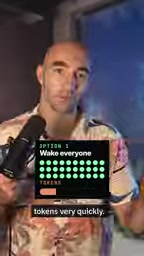
The more serious problem lies in the cost. Waking up 100 agents and having them all read the thread will consume a large number of tokens very quickly.

And this is not a one-time expense. If you do this every time a message comes in, your token reserves will quickly run dry. The original warning is direct: you will basically run out of all your tokens in no time.
From an engineering perspective, this exposes a core contradiction in multi-agent system design: the more agents there are, the more "powerful" the system appears, but every collaboration involving all agents brings linear or even exponential cost growth. The collaboration cost of 100 agents is not simply 100 times that of 1 agent, because there are additional overheads from concurrency conflicts, duplicate replies, and context synchronization.
In language model services, tokens are the basic unit for billing and context windows: input text is split into tokens and fed into the model, and output is also billed by token. Context windows have hard limits; exceeding them results in truncation or errors. In multi-agent systems, each agent reading the thread means submitting the complete conversation history as input tokens once again—N agents means N copies of input cost. In addition, the replies generated by agents themselves consume output tokens, and concurrent replies further inflate the context for subsequent agents. Therefore, the cost of broadcast-style wake-up grows linearly with the number of agents and compounds due to context accumulation—this is precisely why token reserves are rapidly depleted.
The Design Misconception Behind the Simple Solution
This sharing session points out a common thinking inertia: when a system needs to respond to an event, the first reaction is to "let all relevant parties know." In a human organization, this is equivalent to convening a full meeting every time someone speaks. No one does this in reality because meeting costs are too high and decision-making efficiency is too low. The same applies to AI agent systems.
Interestingly, the original text calls "waking up all agents" one of "the simple options beyond those specific bits of logic." This implies that truly viable solutions require more refined routing or triggering mechanisms—such as only waking up agents relevant to the message, or having agents subscribe on demand rather than passively receiving all events. But these mechanisms require additional design and cannot be glossed over with lazy solutions like "wake everyone up."
There is a classic concept in event-driven architecture called "fan-out," which refers to distributing an event to multiple consumers. Fan-out itself is not the problem; the problem is whether the fan-out strategy is broadcast or routing. Broadcast fan-out pushes events to all subscribers and lets them filter on their own—simple to implement but cost scales with the number of subscribers. Routing fan-out filters recipients based on topic, tag, or relevance rules before distribution, moving the filtering cost forward to the cheap matching stage. The wake-up strategy of a multi-agent system is essentially a choice between these fan-out approaches. "Wake everyone up" corresponds to broadcast fan-out, while the refined triggering mechanisms hinted at in the original text correspond to routing fan-out—a trade-off long matured in message queues and publish-subscribe systems.
Implications for Multi-Agent Architecture
Although this brief sharing only describes one anti-pattern, it has practical guiding significance for building multi-agent systems.
First, agent wake-up strategies need to be tied to message relevance. Whether a message is worth processing by a particular agent should be determined before waking it up, not by letting the agent decide after being awakened.
Second, conflicts from concurrent replies need to be handled at the architectural level. In the scenario described in the original text, half the agents reply and the other half fall into confusion, indicating that the system lacks a coordination mechanism for "who should reply."
Third, token budgets are first-class citizens in multi-agent systems. As the number of agents grows, the total token consumption triggered by each event must be considered simultaneously; otherwise, the system will become unusable at scale due to runaway costs.
The original text does not provide a complete alternative solution, but clearly states "We can't just wake everyone." This negative conclusion itself is a valuable architectural constraint: when designing multi-agent collaboration, broadcast-style wake-up should be excluded by default.
One-line Summary
Waking up all AI agents to respond to the same message leads to reply races, logical chaos, and runaway token costs.
Paragraph Summary
The article points out that waking up all AI agents whenever a new message is added to a channel or thread is a seemingly natural but terrible choice. 100 agents simultaneously reading the thread and scrambling to reply creates a competitive situation where half have already replied and the other half are confused, while each agent redundantly consumes tokens to read the context. This overhead is not one-time; repeated execution will quickly drain the token budget. The article calls "waking everyone up" a lazy option beyond specific logic and argues that truly viable solutions require more refined routing or triggering mechanisms. It offers three insights: agent wake-up should be tied to message relevance, concurrent conflicts need architectural coordination, and token budgets should be treated as first-class citizens in multi-agent systems.
Related articles
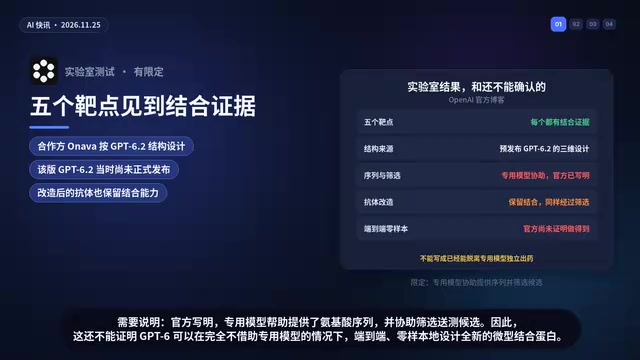
GPT-6 Designs Proteins, Claude Creations Become Apps with One Click, DeepMind Releases New Benchmark
OpenAI says GPT-6 can design protein 3D structures, Anthropic lets Claude creations install as desktop apps, DeepMind's HIP benchmark tests stability on simple questions, Google Workspace opens agent MCP interfaces.
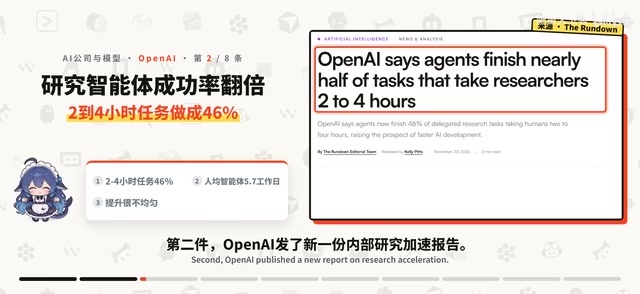
OpenAI Weekly Roundup: GPT-6.2 Rolls Out to ChatGPT, GPT-6 Designs Proteins
OpenAI's week: GPT-6.2 rolls out to ChatGPT, GPT-6 claims independent protein design, agent research share surges, perplexity proposed as a shared metric, and internal safety concerns surface.

Is the Crypto Industry About to "Turn Blue"? The Truth Behind Tech and Politics' Shifting Allegiances
Vergecast discusses whether the crypto industry will shift from the right to the Democrats, revealing the pragmatic nature of tech's politics and the costs of a crypto pivot.