Storm Summoner: A MIDI Controller Built Specifically for Guitar Effects Pedals

Storm Summoner is an open-source MIDI controller designed to centrally manage guitar effects pedals.
Storm Summoner is a DIY, open-source MIDI controller built to give guitarists programmable, centralized control over their effects pedals. By leveraging MIDI's Program Change and Control Change messages, it enables precise preset switching and parameter adjustment—offering a customizable, budget-friendly alternative to commercial solutions from Boss, RJM, and others, while reflecting the broader trend of falling barriers in DIY audio hardware.
When Guitar Effects Pedals Meet MIDI Control
In the world of electronic music and modern guitar performance, effects pedals have always been essential tools for shaping tone. However, traditional pedal control methods—stomping footswitches or turning knobs by hand—have clear limitations when it comes to live performance and complex tone switching. The Storm Summoner project, which recently sparked discussion on Hacker News, addresses this exact pain point with a purpose-built MIDI controller designed specifically for effects pedals.
This project represents an enduring area of interest within the DIY audio hardware community: how to use modern digital interfaces to more flexibly control analog or digital audio equipment.
How MIDI Control Works with Effects Pedals
For readers unfamiliar with audio gear, let's clarify a few core concepts. Effects pedals are signal processing devices placed between an instrument (such as an electric guitar or synthesizer) and an amplifier, producing tonal effects like distortion, delay, reverb, chorus, and more. MIDI (Musical Instrument Digital Interface) is an industry-standard protocol dating back to the 1980s, used to transmit performance and control data between electronic instruments.
The MIDI protocol was proposed by Dave Smith and Ikutaro Kakehashi in 1981 and officially released in 1983. At its core, the protocol uses digital messages rather than audio signals to convey musical information. A typical MIDI message consists of a status byte (such as Note On/Off or Control Change) and data bytes (such as pitch, velocity, controller number, and value). MIDI communicates at a serial baud rate of 31.25 kbaud via a 5-pin DIN connector. A typical MIDI message might read: "Play middle C on channel 1 with velocity 64." In 2020, the MIDI 2.0 standard was released, offering higher resolution and bidirectional communication. However, MIDI 1.0 remains the industry mainstay due to its simplicity and broad compatibility.
Bringing MIDI into effects pedal control means performers can precisely switch pedal parameters, toggle on/off states, or even swap entire tone presets using programmed presets, external footswitches, or a computer. In the context of effects control, the most commonly used messages are Program Change (for switching presets) and Control Change (for adjusting parameters). For guitarists who need to frequently switch tones during a performance, this is enormously valuable.
Storm Summoner's Design Philosophy and Technical Architecture
From a positioning standpoint, Storm Summoner aims to serve as a bridge between effects pedals and the MIDI ecosystem. It doesn't replace the pedals themselves—instead, it acts as a central control hub that enables previously independent pedals to be managed in a unified, programmable way.
MIDI effects pedal controllers of this type typically incorporate several key technical elements:
- MIDI signal reception and parsing: The controller must read commands from other MIDI devices or software
- Control signal conversion and output: Translating MIDI messages into physical control signals that pedals can understand (such as relay switching, voltage control, etc.)
- Preset management system: Allowing users to save and recall different tone configuration combinations
When it comes to the physical connection between a MIDI controller and effects pedals, there are two primary control methods. Relay switches use electromagnetic coils to control contact closure, simulating the mechanical action of a footswitch—commonly used for bypass (on/off) control. Modern projects typically use compact 5V solid-state relays or optocoupler relays, which offer fast response times and long lifespans. The other method is analog voltage control (CV), which uses a DAC (digital-to-analog converter) to output 0–5V or 0–10V signals that simulate the rotational position of a knob, controlling parameters like gain, frequency, reverb depth, and more. Some high-end pedals support expression pedal inputs, which essentially receive this type of voltage signal. In projects like Storm Summoner, a microcontroller receives MIDI messages and then drives relay arrays via GPIO pins or outputs control voltages through PWM filtering or dedicated DAC chips—converting digital commands into physical tonal changes.
Storm Summoner vs. Commercial Solutions
On the commercial market, mature MIDI effects control solutions (from brands like Boss, Line 6, RJM, etc.) often come with hefty price tags, ranging from several hundred to over a thousand dollars. The professional MIDI effects controller market is dominated by a handful of manufacturers. The Boss ES-8 is an eight-loop audio switcher with MIDI control and USB connectivity, priced at around $500. RJM Music's Mastermind series represents the high-end segment, featuring color touchscreens and sophisticated preset programming capabilities, with prices ranging from $800 to $1,500. Disaster Area Designs' DMC series targets compact form factors, priced between $300 and $600. And while Line 6's Helix series is technically a comprehensive modeling processor, its powerful MIDI control capabilities make it a viable choice as a system hub.
Open-source and DIY projects like Storm Summoner offer a viable alternative path for budget-conscious independent musicians and hobbyists. These commercial solutions share common strengths—high stability, user-friendly preset management, and support for complex MIDI routing—but their downsides include closed ecosystems, fixed feature sets, and steep prices. DIY solutions typically cost between $50 and $150 (depending on the number of relays and enclosure quality), but require an investment of learning time and debugging effort.
More importantly, DIY hardware projects offer a level of customizability that commercial products simply can't match. Users can tailor the control logic to their specific gear and playing habits, add or remove features, and even integrate the controller into a larger live performance system.
The Technical Barrier to DIY Audio Hardware Is Dropping
The emergence of Storm Summoner reflects a broader trend: as microcontroller platforms like Arduino, Raspberry Pi, and Teensy mature and become widely accessible, the barrier to entry for DIY audio hardware is rapidly falling.
Arduino is an open-source hardware platform based on Atmel AVR microcontrollers, launched in Italy in 2005 with the goal of enabling non-engineers to quickly prototype electronics. It provides a simplified C++ programming environment and extensive library support. Teensy, developed by PJRC, is a high-performance microcontroller board based on ARM Cortex-M processors that offers greater computational power and more I/O pins compared to Arduino. Teensy is particularly well-suited for audio applications thanks to its built-in USB MIDI support and audio processing libraries. The typical development workflow for these platforms includes: connecting to a computer via USB, writing code in an IDE, uploading firmware through a bootloader, and debugging via a serial monitor.
MIDI control solutions that once required a professional electronics engineering background can now be built by ordinary hobbyists, thanks to open-source firmware, mature development libraries, and active community support. This "plug-and-play" development experience, combined with tens of thousands of open-source project examples on GitHub, has brought audio hardware DIY from the professional domain into the maker community. This democratization of technology is enabling more and more creative ideas to move from the lab to personal studios and live stages.
Collaboration and Iteration in the Open-Source Community
The fact that projects like this surface on tech communities like Hacker News is itself telling. A community primarily composed of software engineers and tech entrepreneurs maintains a sustained interest in hardware DIY projects.
As a tech community, Hacker News' attention to hardware projects reflects a distinctive cultural characteristic. Founded by Y Combinator, the platform originally focused on software startups but has gradually evolved into a discussion hub covering all forms of technical innovation. Hardware projects on HN typically spark three types of discussion: technical implementation details ("Which microcontroller are you using?" "How do you handle MIDI latency?"), alternative solution recommendations ("You might be interested in Pure Data's hardware implementation"), and explorations of commercialization potential. The community's members, predominantly software engineers, are often drawn to hardware out of cross-disciplinary creative needs (such as music production) or a pursuit of "tangible computing."
Comment sections frequently feature detailed technical approaches, links to open-source repositories, and comparisons with similar projects, creating a feedback loop of knowledge sharing and collaborative improvement. This culture has given rise to a wealth of niche but beautifully crafted hardware projects, from open-source synthesizers to DIY oscilloscopes. Community discussions typically include technical exchanges among like-minded enthusiasts, recommendations for related projects, and detailed questions about specific implementation choices—the hallmark pattern of how open-source hardware communities foster collaboration and iteration.
A Niche but Valuable Exploration in Audio Hardware
Storm Summoner may never become an industry-disrupting hit product, but it embodies the spirit of tech enthusiasts using engineering to solve real-world creative challenges. For electronic music producers, independent guitarists, and developers interested in MIDI audio hardware, projects like this offer invaluable reference and inspiration.
In an era where audio equipment is increasingly software-driven, there remains a dedicated group of people committed to controlling their sound through hardware, through MIDI, and through controllers they've built with their own hands. This insistence on physical interaction and creative control is itself a unique and beautiful facet of tech culture.
Note: The descriptions of Storm Summoner's specific technical implementation in this article are based on the general architecture of MIDI effects pedal controllers. Readers are encouraged to consult the project's original page for detailed hardware specifications and firmware information.
Related articles

How Short-Form Video Creators Are Using AI Video Generation Tools
Exploring the real-world application of AI video generation tools in short-form video creation. From Seedance to Runway, how do creators integrate AI assets? Revealing the gap between demos and production use.

Home Data Center Setup Guide: A Complete Self-Hosted Private Cloud Implementation
Deep dive into building a home data center: hardware selection, software architecture, cost analysis, and operational challenges. From data sovereignty to technical implementation, build your private cloud infrastructure and control your digital assets.
Engrim: A Local Memory Engine Solution for AI CLI Tools
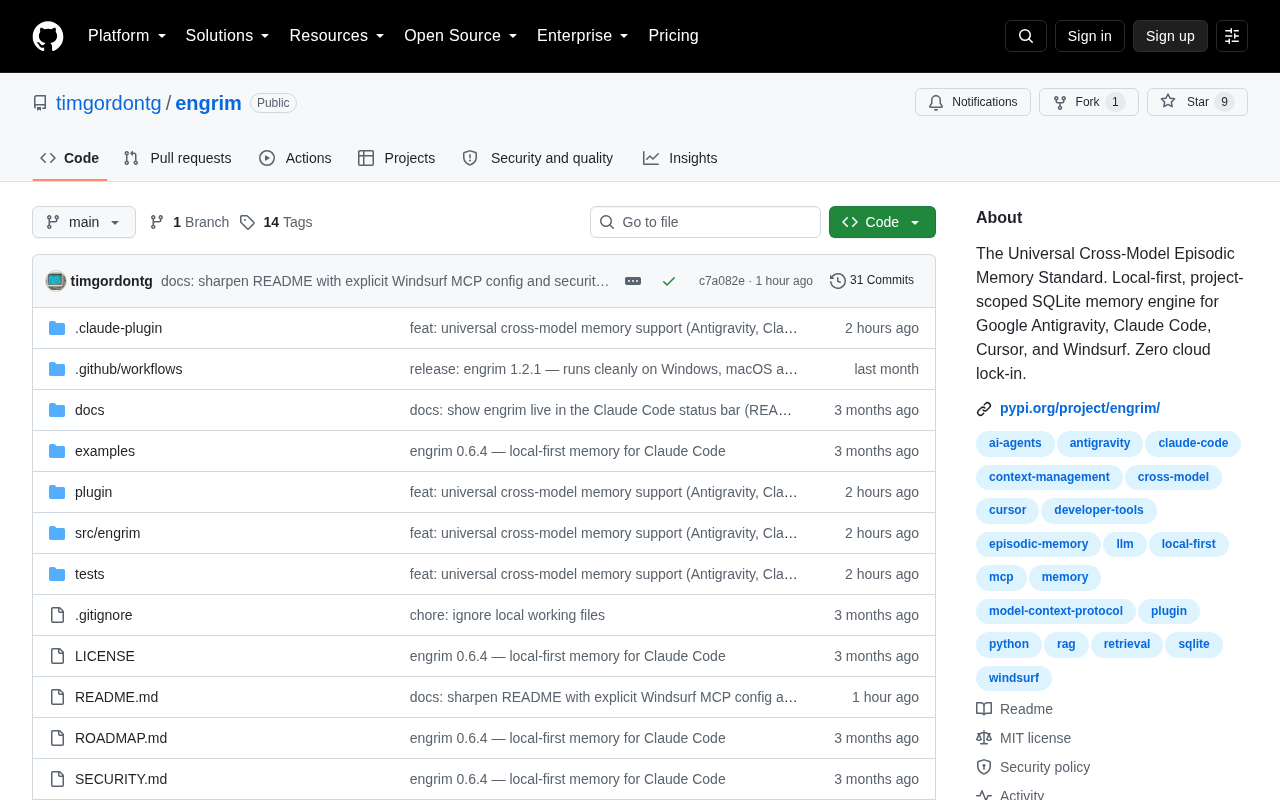
Engrim is an open-source, local-first SQLite memory engine built for AI CLI tools like Claude Code and Aider, solving context loss while keeping data private.