Subscrr: AI-Powered Subscription Management That Finds the Expenses You Should Cut

Subscrr tracks subscriptions and uses AI to surface hidden costs and suggest what to cancel.
Subscrr is a personal finance tool on Product Hunt that tracks the true cost of subscriptions and extends into financial planning via two beta features. Its Financial Plan lets users describe income and expenses in plain language to generate a month-by-month yearly plan with what-if simulations, while Subscrr AI identifies overspending and quantifies savings per item. Notably, Subscrr refuses to cancel subscriptions on your behalf, keeping final decisions with the user to reduce trust and compliance risks. It targets everyday consumers with many subscriptions but little financial planning habit, differentiating through conversational, lightweight AI planning.
Personal finance tools are a dime a dozen, but products that genuinely combine subscription tracking with financial planning are rare. Subscrr, which recently made its debut on Product Hunt, aims to fill that gap — not only tracking the true cost of every subscription you pay for, but also using AI to identify which ones are wasted money and suggesting what you should cancel.
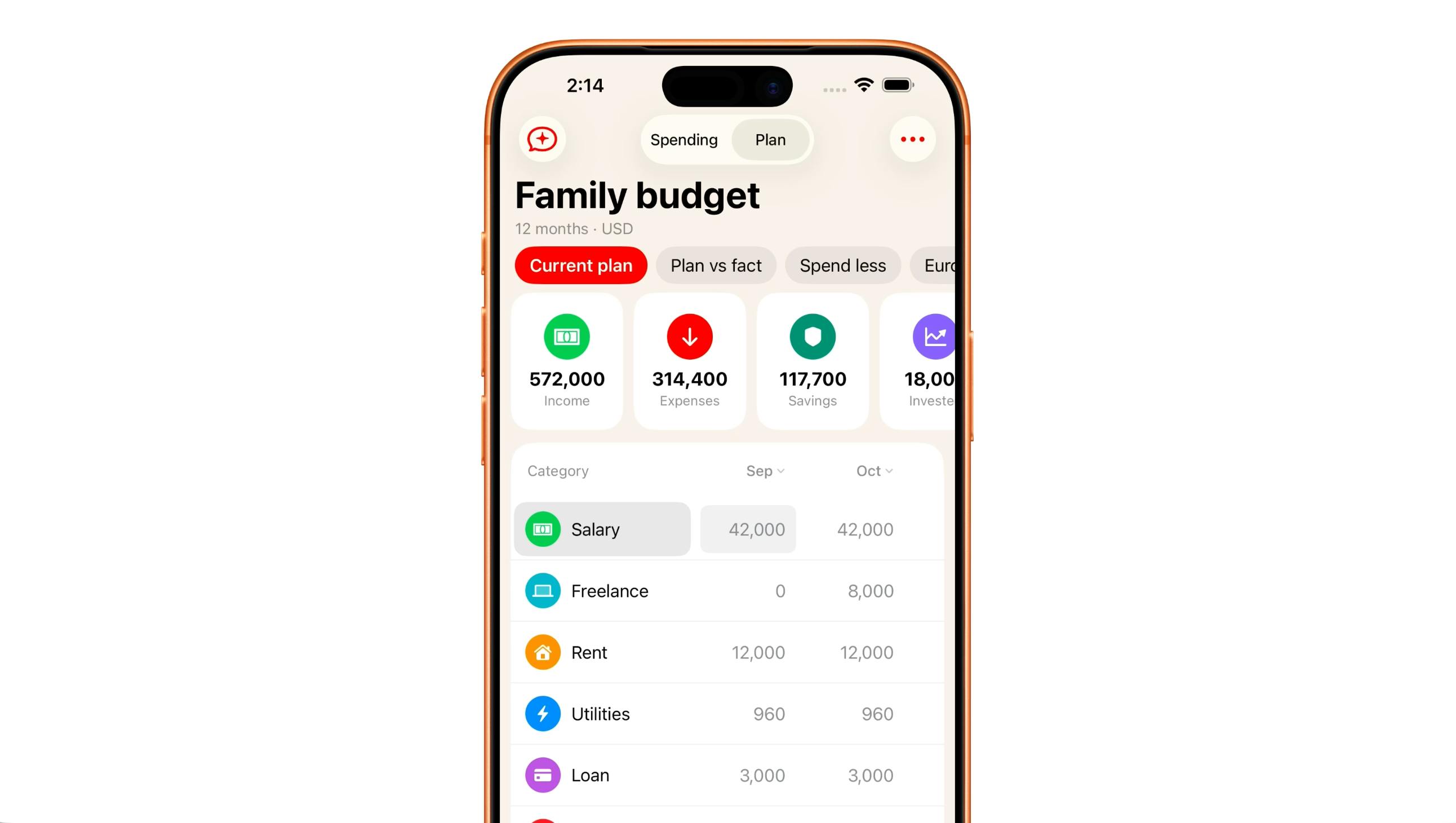
Two New Features: Financial Planning and AI Analysis
Subscrr launched on Product Hunt highlighting two new features that are still in beta — together, they form the core of what makes this product stand out.
The first is Financial Plan. Users simply describe their income and expenses in everyday language, and Subscrr maps out their financial picture month by month for the coming year. What makes it especially useful is its "what-if" simulation capability — before you actually spend money, you can test the impact of a major purchase, or even model an extreme scenario like "no income for a month." Once time has passed, you can compare the original plan against what actually happened, giving you a reality check on how well your financial expectations held up.
The second is Subscrr AI. You can ask it directly, "Where am I overspending?" and it will surface specific findings, showing exactly how much each one could save you. This design choice — quantifying the savings for each recommendation — transforms advice from abstract to actionable.
A Key Product Boundary: It Guides, It Doesn't Act
One noteworthy aspect of Subscrr is where it draws the line on automation. When it identifies a subscription worth canceling, it will open the relevant subscription management page for you — but it will never click the "Cancel" button on your behalf.
This design tradeoff is worth thinking about. Many subscription management tools market "cancel-on-your-behalf" as a headline feature, but such operations typically involve sensitive territory: account authorization, billing permissions, and the risk of accidentally canceling services without the user fully realizing it. By keeping the final decision in the user's hands, Subscrr lowers the barrier to trust while sidestepping potential liability. For a financial tool, knowing where not to overstep is itself a sign of product maturity.
The "cancel-on-your-behalf" feature has sparked considerable controversy in the subscription management space. In the U.S. market, tools like Truebill (now rebranded as Rocket Money) and Trim offer cancellation services that typically require users to grant access to their email or bank statements — and sometimes account passwords — creating real data security concerns. More complex still, certain service providers (such as gyms and insurance companies) require phone calls or written requests to cancel, which automated scripts can't reliably handle. If a cancellation fails but the user believes it succeeded, they end up getting charged indefinitely. The FTC also introduced the "Click-to-Cancel" rule in 2024, requiring subscription services to offer a cancellation process as easy as the sign-up process — a regulatory shift that makes "proxy cancellation" services an increasingly complicated compliance landscape.
Back to Basics: The True Cost of Every Subscription
Setting aside the new AI and planning features, Subscrr's core functionality remains solid — it tracks the real cost of each subscription broken down by day, month, and year.
This seemingly simple feature hits a genuine pain point. In the subscription economy, users are constantly lured by pricing like "$9.99/month" or "save more with annual billing," making it hard to intuitively grasp how spending accumulates. Breaking costs down to a daily figure reveals the true face of those small subscriptions we tend to ignore — a $15/month service is $180 a year, and five of those stacked together adds up to nearly $900 in annual spending. Subscrr's clear cost view brings these hidden expenses out into the open.
Positioning and Market Observations
Subscrr was built by Artur Mineev and is categorized on Product Hunt under Productivity, Fintech, and Artificial Intelligence. As of this writing, it has received 65 upvotes and 4 comments, ranking 19th on the day's leaderboard.
In terms of product strategy, Subscrr takes a combined approach: subscription tracking + financial planning + AI advisor. Individually, subscription managers, budgeting apps, and AI financial assistants all have established players. But bundling these three into a lightweight product with a conversational, "describe your finances in plain language" interaction model still offers meaningful differentiation. Its target user is clearly defined: everyday consumers with many subscriptions and no systematic habit of financial planning.
Of course, as a product still in beta, Subscrr's real-world performance remains to be seen — whether the AI's savings suggestions are accurate, whether the financial planning model is reliable, and whether it can cover a broad enough range of subscription services will all determine if it can stand out from the crowd. But at the level of product positioning, it has identified a real and widespread pain point of the subscription economy era.
The subscription management space already has several established players: Rocket Money and Copilot dominate the North American market with deep bank statement integration for automatic subscription detection; Bobby and Subtrack focus on manual entry and clean UI; while YNAB (You Need A Budget) represents a more systematic budgeting philosophy. Within this competitive landscape, Subscrr has chosen conversational AI as its point of differentiation — filling the gap between "lightweight planning" and "subscription tracking" rather than competing head-on with these tools on feature breadth. Whether this positioning can drive sustainable user retention will largely depend on whether its AI recommendations can achieve a level of specialized depth that goes beyond what a general-purpose LLM can offer.
Related articles

Workbuddy for Absolute Beginners: How a Desktop AI Agent Fits Into Real Workflows
A beginner's guide to the Workbuddy desktop AI agent: installation, claiming credits, file management, and building automated workflows—compared with CodeX for fit and cost, helping professionals shift from AI question-askers to AI managers.

OpenAI's New Agent Stack: Computer Use, Decisions API, and Ultra-Fast Workflows
OpenAI Dev Day unveiled a new agent stack: Computer Use outperforms humans, Decisions API delivers ultra-low-latency classification via Luna, Agents API opens the same Computer Use capabilities, and GPT-6.1 Sol costs only one-seventh of Astra. Core updates, benchmark data, and developer insights.

Liang Wenfeng Open-Sources DeepInfo Inference Framework, Takes On U.S. Ban
DeepSeek open-sources its DeepInfo inference framework after its models, featuring GPU/CPU cross-pipelining, small-model prediction with large-model verification, and full Huawei Ascend and NVIDIA chip support—facing the U.S. federal ban head-on. This article analyzes its significance for AI deployment and open-source strategy.