Swedish Government Offices Ban ChatGPT and Claude: AI Compliance Oversight Escalates Again
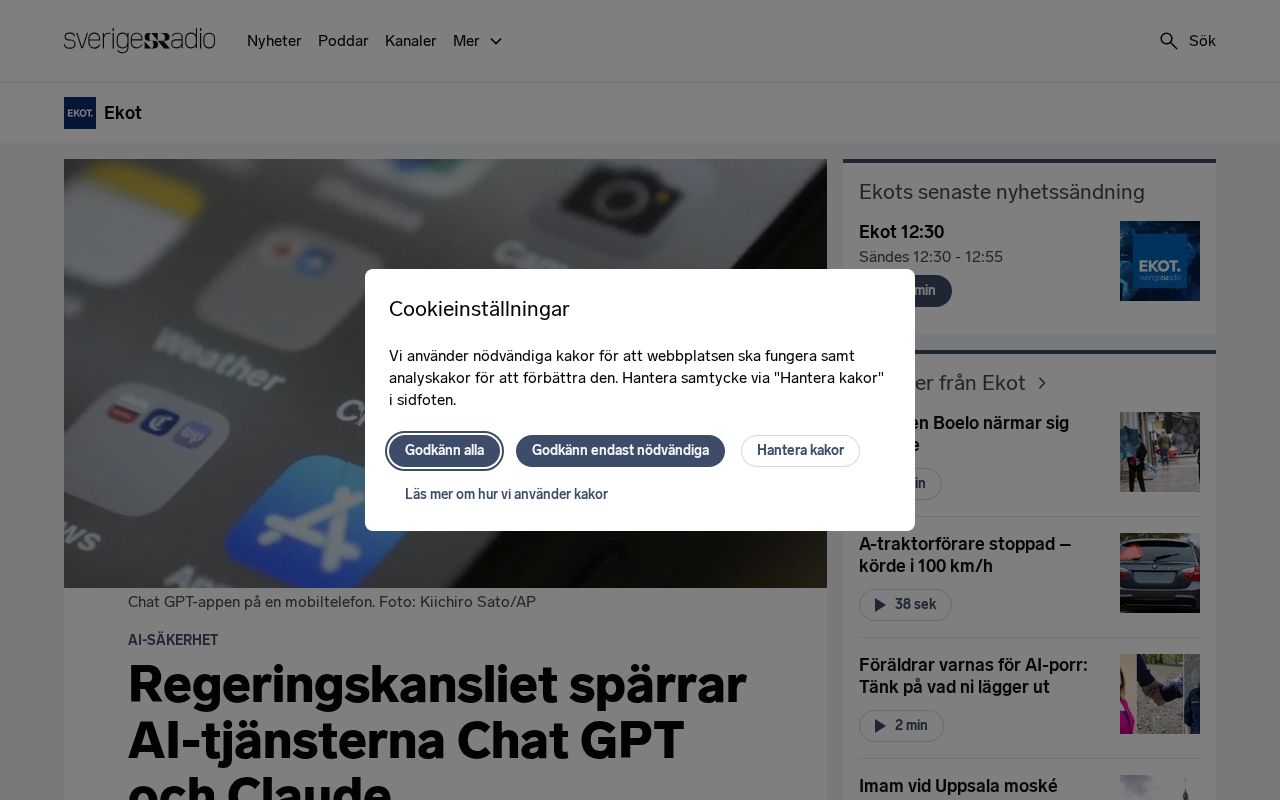
Sweden's ban on ChatGPT and Claude in government offices reflects the deep tension between AI efficiency and security in the public sector.
Swedish government offices have banned ChatGPT and Claude, sparking Hacker News discussion. The ban is not anti-AI but opposes direct use of external LLM services without data control and auditability, with key concerns around data flows and jurisdiction. It reflects public-sector AI governance lagging behind employee adoption, taking a conservative "brake first, build later" stance. The decision may set a compliance example for partner enterprises and shift vendor competition from features to compliance and auditability. Enforcement details and alternatives remain unclear.
Swedish government offices have decided to ban ChatGPT and Claude, a move that has sparked discussion on Hacker News. On the surface, it's an administrative notice, but behind it lies a deeper contradiction in public-sector AI adoption: the tug-of-war between the lure of efficiency and security risks.
The Core Thrust of the Ban: Not Against AI, but Against Losing Control
Based on public information, the ban targets the direct use of external large language model services in government office settings. As flagship general-purpose conversational AI products, ChatGPT and Claude have data flows, storage locations, and model training methods that are not directly controlled by the Swedish government. For government agencies handling citizen information, policy documents, and internal communications, this means every piece of text pasted into a chat box could leave the country's jurisdiction.
The logic behind the ban is not complex: public-sector AI use cannot be built on "trusting the vendor" but must rest on a framework that is "auditable, traceable, and controllable." This aligns with the EU's regulatory approach to data protection in recent years.
Data Residency refers to keeping data localized within the jurisdiction where it is physically stored and processed to meet regulatory requirements. For the public sector, data residency means that sensitive content such as citizen information and policy documents cannot leave the country for servers not subject to domestic law. Although the EU's General Data Protection Regulation (GDPR) does not mandate that all data remain within borders, cross-border transfers must satisfy conditions such as adequacy decisions or standard contractual clauses. Sweden's ban on ChatGPT and Claude is essentially a response to the inability to guarantee data residency—the underlying infrastructure of these services is distributed globally, the government cannot confirm where data ultimately lands, and it is difficult to respond to potential data access requests from third-country law enforcement. As a result, data residency capability has become one of the hard thresholds for AI vendors seeking to enter the public-sector market.
Why Now: The Tipping Point for Public-Sector AI Governance
Although the discussion on Hacker News was brief, it touched on a key backdrop: generative AI is entering office workflows far faster than most government agencies can establish supporting regulations. Employees spontaneously using AI tools to boost productivity is already a fait accompli in many organizations, while IT and security departments often learn about it after the fact.
Sweden's move can be understood as a "brake first, build the road later" operation. Rather than allowing uncontrolled use in the absence of governance measures, it is better to first define boundaries and then gradually open up evaluated alternatives. This conservative stance may seem overly cautious to the private sector, but the data sensitivity of the public sector inherently leaves less room for error.
Shadow AI refers to the phenomenon of employees using AI tools to handle work tasks without approval from IT or security departments. Similar to traditional "shadow IT," shadow AI is driven by efficiency—employees discover that large language models can quickly draft documents, summarize emails, or translate materials, and they bypass procurement processes to use public cloud services directly. The problem is that these usage behaviors often leave no audit trail, sensitive data may be pasted into chat boxes, and the organization knows nothing about it. The Swedish government's ban is an institutional response to the risks of shadow AI: in the absence of technical controls and alternative tools, first define boundaries through policy, then gradually build auditable internal solutions. This logic is consistent with the "ban first, govern later" path taken by many public institutions.
Knock-On Effects for Enterprises: The Compliance Demonstration Effect
Procurement and ban decisions by government agencies often serve as bellwethers. The choice by Swedish government offices may prompt partner enterprises to re-examine their own AI tool usage policies, especially in scenarios involving public projects or cross-border data flows.
For AI vendors, this is both a challenge and a signal. The challenge is that the entry threshold for the public-sector market is shifting from "does it work well" to "can it pass compliance"; the signal is that deployment solutions offering data residency, audit logs, and access controls will gain structural advantages in government and regulated industries.
Regulated Industries generally refer to sectors such as finance, healthcare, energy, and telecommunications that are subject to strict legal constraints and face higher compliance requirements for AI adoption than ordinary enterprises. When selecting AI vendors, these industries focus not only on model performance but also on whether vendors can provide data residency options, audit logs, access controls, model interpretability documentation, and incident response mechanisms. The Swedish government's ban sends a clear signal to the market: the public sector and regulated industries are prioritizing "compliance and auditability" over "functional sophistication." For AI vendors, this means building deployment forms oriented toward enterprise-grade governance, such as private deployments, regional data centers, and fine-grained permission management—otherwise it will be difficult to enter this high-barrier but high-value market.
Options Excluded by the Ban and Unanswered Questions
It remains unclear whether Swedish government offices will provide approved internal alternative tools, as well as the specific scope of enforcement and penalty mechanisms of the ban. These details determine whether the ban is a symbolic statement or substantive control.
More noteworthy is whether the ban can actually prevent usage behavior. Without technical blocking measures and alternative tools, employees may still bypass restrictions through personal devices or browser plugins. A policy ban alone, without supporting governance infrastructure, often has limited effect.
Conclusion
Sweden's ban on ChatGPT and Claude in government offices is an administrative answer to the question of "who bears AI risk." It reminds technology professionals that public-sector AI deployment is never determined unilaterally by model capability—the maturity of compliance architecture is equally critical. For those watching the direction of AI governance, the follow-up enforcement details of this event are more worth tracking than the ban itself.
One-line Summary
Sweden's ban on ChatGPT and Claude in government offices reflects the deep contradiction between AI efficiency and security in the public sector.
Paragraph Summary
Swedish government offices have decided to ban ChatGPT and Claude, sparking discussion on Hacker News. The core of the ban is not opposition to AI but opposition to direct use of external large language model services without data control and audit capabilities, with key concerns around data flows and jurisdictional risk. The decision reflects the real contradiction that public-sector AI governance lags behind spontaneous employee use, adopting a conservative "brake first, build the road later" stance. Government ban decisions may have a compliance demonstration effect on partner enterprises, pushing AI vendors to shift competitive focus from features to compliance and auditability. Enforcement details and alternatives remain unclear, and the actual effect remains to be seen.
Related articles

LangGraph Crash Course: Building Enterprise-Grade AI Agents and Workflows from Scratch
LangGraph crash course: learn its independence from LangChain, MIT license, FastAPI high-concurrency deployment, human approval, and memory storage for enterprise AI agents.
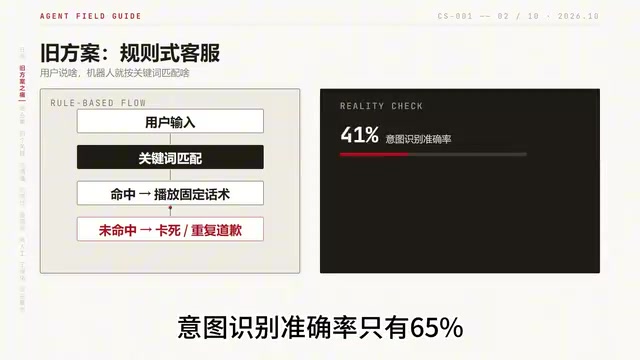
Building an AI Customer Service Agent from Scratch: A 92% Intent Recognition Case Study
A Bilibili case study: building an AI customer service agent from scratch with BERT intent recognition, dialogue state tracking, hybrid vector retrieval, and a weighted handoff model—raising intent accuracy from 65% to 92%, 78% conversation completion, handling 100K conversations daily.
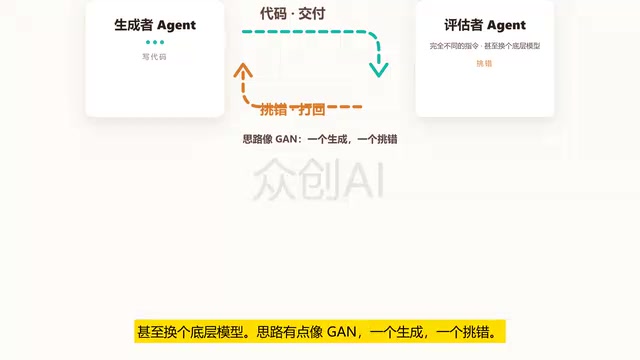
Loop Engineering: An Engineering Paradigm for AI That Writes Code and Merges PRs Autonomously
Loop Engineering is transforming AI development pipelines: Stripe's Minions system merges over 1,300 machine-generated PRs weekly. This article breaks down Loop Engineering's five core actions, six components, five failure modes, and three safety disciplines, explaining why independent evaluators, state files, and budget caps matter more than full automation.