TabPFN: The Tabular Foundation Model That Could End Hyperparameter Tuning

TabPFN beats XGBoost with synthetic data and one forward pass, ushering in the tabular foundation model era.
TabPFN is PriorLabs' tabular foundation model trained entirely on synthetic data. It uses in-context learning to perform both "training" and prediction in a single forward pass, approximating the Bayesian posterior predictive distribution with no hyperparameter tuning required. Its core innovation is identifying transferable pattern-level structure across datasets and using a position-encoding-free Transformer to achieve row-column order invariance — scaling from 1,000 rows in v1 to millions in v3. Rather than competing with LLMs, it complements them: LLMs handle feature engineering and data prep, TabPFN handles statistical inference. TabPFN 3.5 tops seven benchmarks and beat a 36-model hand-engineered ensemble on a Kaggle challenge with a single line of code.
Deep learning once failed miserably on tabular data — promising approaches like TabNet ultimately couldn't generalize to new datasets. Now, a model called TabPFN has turned the tables entirely, significantly outperforming CatBoost and XGBoost on tabular tasks. In this in-depth interview with MLST, Frank Hutter — co-CEO of PriorLabs and former ML professor — breaks down the technology behind this breakthrough and explains why it might be the "ImageNet moment for tabular data."
Why Tabular Data Is So Hard
Anyone who has worked with tabular data knows the pain: it's a nightmare. How do you handle missing values? How do you encode categorical features? Should you do feature engineering? Different columns have different scales, so you need normalization and standardization. And even after you've built a model, there's always that nagging feeling you've taken shortcuts and dirtied your data.
Frank puts it plainly: this is exactly why deep learning has struggled in the tabular domain for so long. Image data is naturally homogeneous — pixels have stable spatial relationships, and a dataset like ImageNet can cover the breadth of the visual world. Tabular data is heterogeneous: outliers, missing values, categorical values, binary values, ordinal values, missing-at-random versus missing-not-at-random. Standard deep learning methods treat everything as the same type, and that's precisely where they break down.

The key breakthrough lies in the level at which transfer happens. Between a medical table and an insurance table, the row-level information is completely unrelated — there's nothing to learn from one to the other. But at the pattern level — how features interact, whether causal relationships exist — knowledge can transfer across datasets. Through in-context learning (ICL), TabPFN finally captures this level.
A Foundation Model Trained Entirely on Synthetic Data
Unlike LLMs and vision models, TabPFN is trained entirely on synthetic data. The reason is practical: there simply aren't large volumes of tabular datasets on the internet suitable for statistical learning. Tables on Wikipedia listing a player's jersey number can't be used to train statistical models. The entire corpus of high-quality tabular datasets might number around 50,000.
So PriorLabs generates its own. The approach has a solid Bayesian theoretical foundation — they're approximating the Bayesian posterior predictive distribution under an arbitrary prior, where the chosen prior is rich in causal structure. At its core, this amounts to integrating over all structural causal models (SCMs) that could plausibly explain the data.

Training on purely synthetic data brings unexpected benefits: no data leakage, no memorization issues, precise control over data content, and no need to worry about bias. The entire generation pipeline is codified and controllable. Frank emphasizes that TabPFN is the first foundation model to "train entirely on synthetic data and achieve SOTA" — and the first tabular algorithm derived through end-to-end learning rather than human derivation, pretrained on hundreds of millions of datasets with the explicit goal of performing as well as possible on unseen test sets.
Structural Causal Models (SCMs) are a mathematical framework that uses directed acyclic graphs (DAGs) to represent causal relationships between variables. Each node represents a random variable, directed edges represent causal influence, and each variable is determined by a function of its parent nodes plus a noise term. TabPFN's prior generation process samples from the space of SCMs: randomly generating a causal graph, then sampling data node by node in topological order — producing synthetic tables with realistic statistical structure rather than relying solely on i.i.d. assumptions. The Bayesian posterior predictive distribution refers to the probability distribution over a new sample's label, integrated over all model parameters consistent with the training data. Through pretraining, TabPFN "memorizes" this integral — which would normally require expensive methods like MCMC — directly into its network weights, allowing it to approximate the full computation in a single forward pass at inference time.
Training and Prediction in a Single Forward Pass
In a traditional pipeline, both training and inference consume substantial compute. TabPFN feeds the entire dataset into the Transformer's context and produces predictions in a single forward pass. This differs from LLM chain-of-thought reasoning — language models autoregressively generate tokens one at a time, whereas tabular prediction only needs to predict one "token," with each test point independent of the others.
The architectural choices are deliberate. v1 is essentially a Transformer with positional encodings removed, because the attention mechanism is inherently order-invariant — and tabular data requires exactly this invariance to row and column order.

In v2, the architecture truly "understands" rows and columns — embedding every element of the matrix and alternating between row attention and column attention, allowing it to recognize whether a given column is categorical or numerical. However, v2 has worse complexity than v1, limiting it to roughly 10,000 data points. v3 draws on the community-developed Tabical architecture, optimizing the embedding mechanism while maintaining quadratic complexity in the row dimension and scaling to millions of rows.
Frank outlines the pace of scaling: v1 supports 1,000 rows, v2 supports 10,000 rows, v2.5 reaches 100,000 rows, and v3 handles up to a million rows — two orders of magnitude per year. The next target is 10 million rows.
In-Context Learning (ICL) refers to a model's ability to complete new tasks using only examples provided at inference time, without updating any parameters. This is exactly how TabPFN works: the entire training set (features + labels) is concatenated with the test samples to be predicted, forming an ultra-long sequence fed into the Transformer. Having seen hundreds of millions of synthetic datasets during pretraining, the model learns to "read" the statistical patterns from context and output predictions directly — no gradient descent or hyperparameter search required, unlike traditional machine learning. This mechanism makes TabPFN's inference extremely fast and fundamentally eliminates the risk of overfitting to the training set, since the model weights are completely frozen during inference.
Why LLMs Can't Handle Tabular Data
You might ask: with Claude and Codex available, why not just let an agent read the table? Frank's answer is direct. A table with one million rows and one thousand columns has a billion elements. Tokenizing each number requires roughly 3–4 tokens, meaning the context window would need to hold three to four billion tokens — far beyond what any LLM can handle. More critically, sequence models read tables as sequences row by row, unable to exploit the invariance that swapping two rows or two columns still yields the same dataset.
But the two approaches aren't in conflict. Frank is clear that LLMs excel at coding, feature engineering, exploratory analysis, and serving as user interfaces. For example, if you already have height and weight and want to predict obesity, having a coding agent compute BMI externally is far simpler than asking the network to learn it. When world knowledge is needed — such as whether a given country had a public holiday on a particular day — an agent can query an external knowledge base.
He shares an entertaining example: a friend used Claude paired with a TabPFN MCP server, letting Claude automatically build a historical match dataset and then using TabPFN to predict World Cup match results — ultimately winning the company's internal prediction contest. This embodies the vision of democratized AutoML: an extremely low barrier to entry, yet SOTA performance.
Toward Causality: From Observation to Intervention
The most forward-looking part of the interview centers on causal inference. Frank uses the classic medical example to illustrate the difference between correlation and causation: sicker patients receive more medication, so a model that looks only at drug dosage to predict disease will "learn" the association — but stopping medication on that basis would be absurd, because the causal direction runs the other way.
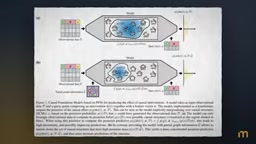
TabPFN's framework is naturally suited to handle these problems. During meta-training, the model samples causal graphs, observes variables, applies interventions, and observes the outcomes — learning to reason about intervention effects from purely observational data. PriorLabs has published work including DO-PFN, and collaborates with leading causal ML researcher Bernhard Schölkopf. Further work allows domain experts to specify priors like "A causes B," enabling more precise posteriors. Frank believes this could fundamentally transform medicine and A/B testing — achieving confidence comparable to or exceeding randomized controlled trials with shorter study periods.
DO-calculus is a formal tool for causal inference introduced by Judea Pearl. Its core idea is distinguishing between "observing X=x" and "intervening on X, forcing X=x" — the latter denoted do(X=x). Traditional machine learning can only learn the observational distribution P(Y|X), whereas causal inference is concerned with the interventional distribution P(Y|do(X)) — which can differ drastically from the observational distribution in the presence of confounding variables. This is precisely the source of spurious correlations like "sicker → more medication → sicker." DO-PFN's approach is to expose the model during meta-training to both observational data and interventional data (i.e., actual results of do operations), so that it learns to correctly estimate intervention effects even in test scenarios where only observational data is available — providing a theoretical foundation for improving sample efficiency in medical trials and A/B tests.
TabPFN 3.5: First Place on Kaggle With One Line of Code
After the interview was recorded, PriorLabs released TabPFN 3.5, which took first place on seven tabular benchmarks covering tables with text, multimodal data, relational data, and more. Compared to Google's TabFM — roughly 30 times larger — TabPFN 3.5 is 20× faster in forward passes at equivalent quality, or achieves over 100 ELO points higher while still being faster.
The most striking result comes from research scientist Nick Erickson (author of AutoGluon): faced with a historical Kaggle Auto Challenge with 3,500 competitors and a $10,000 prize pool, the winning solution at the time was a multi-layer stacked ensemble of 36 models with hand-crafted feature engineering. Nick used TabPFN 3.5 — one line of code, one RTX Pro 6000 GPU, one minute of compute — and took first place.
From AutoWeka to neural architecture search to tabular foundation models, Frank has spent more than a decade on the AutoML journey. His vision has remained constant throughout: putting SOTA machine learning in everyone's hands, freeing data scientists from the drudgery of hyperparameter tuning so they can focus on what actually matters — where the data comes from, whether there's distribution shift, fairness, causality, privacy. "That's the more fulfilling work," he says.
Related articles

How Big Can Stars Really Get? The Physical Limits of the Largest Stars
Red supergiants are the largest stars by volume, with radii up to 2,000 times the Sun, engulfing the inner solar system. But there is no precise upper limit on stellar size—models predict up to 15,000 solar radii. The most massive blue stars are far smaller than red supergiants—biggest and heaviest are two different things.

Apple HomeView Smart Display Full Feature Breakdown: Wall-Mount or Desktop, $299
Apple launches HomeView, a $299 smart display with wall-mount and desktop options, 12MP camera for facial recognition, smart home control, music playback, and recipe step-by-step cooking. Full breakdown of watch faces, apps, privacy, and cooking integration.

Where Did the Promised New Studio Go? Craft Computing Answers After Five Years
Craft Computing's host responds to viewer questions: the new studio promised five years ago was shelved as construction costs soared from $30,000 to $75,000, and was replaced by a 168-square-foot garage conversion.