TailTalk: Reimplementing the AppleTalk Protocol Stack in Rust and Tokio
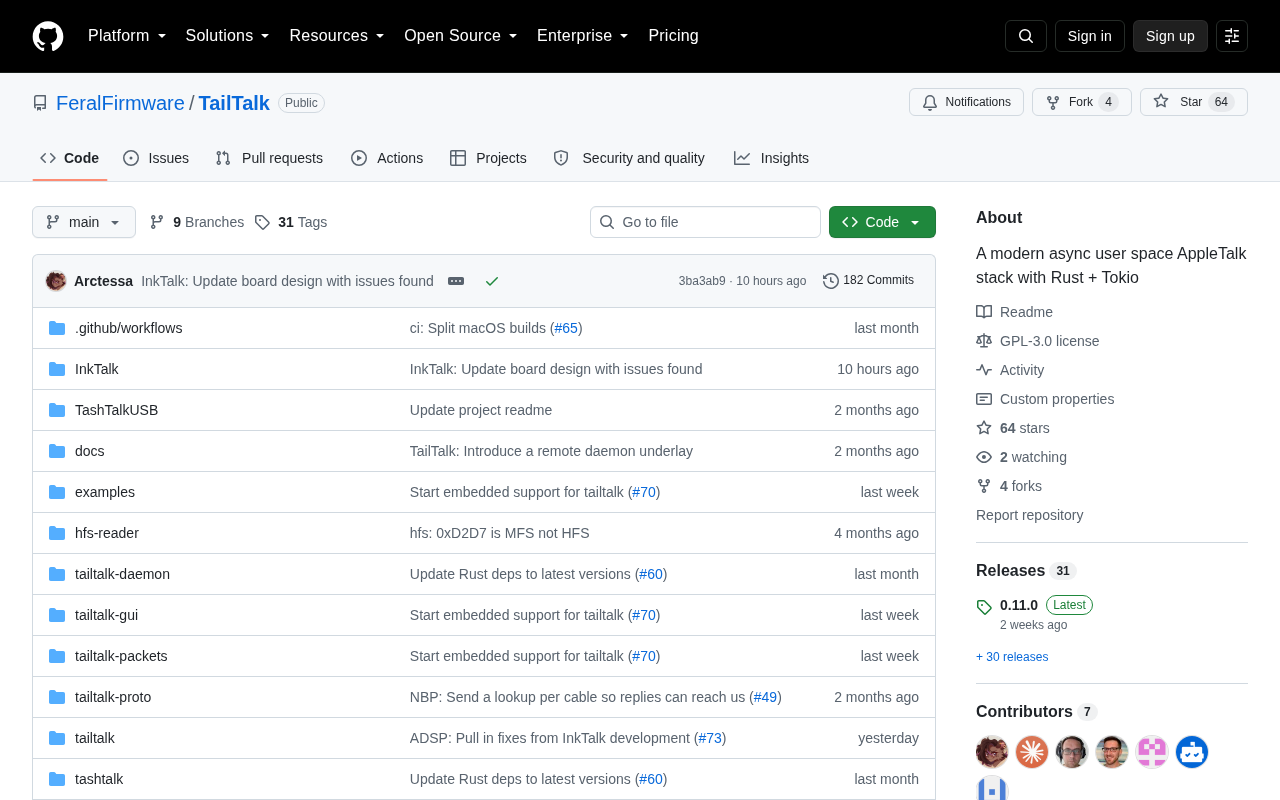
TailTalk reimplements the AppleTalk protocol stack in Rust and Tokio, bridging vintage Macs to modern networks.
TailTalk is an open-source project that reimplements Apple's classic AppleTalk protocol stack in user space using Rust and the Tokio async runtime. Its core design — user space execution plus async architecture — delivers better portability, lower debugging overhead, and faster iteration compared to kernel-level development. Rust's memory safety and expressive enum system make binary packet parsing and protocol state machines both robust and readable. The project primarily serves retrocomputing enthusiasts who need a modern AppleTalk-capable bridge to network and share files with vintage Mac hardware, making TailTalk both practically useful and an instructive example of applying contemporary engineering best practices to legacy technical heritage.
When a Classic Protocol Meets a Modern Language
AppleTalk was Apple's early local area network communication protocol suite designed for the Macintosh. For years, it handled everyday tasks like file sharing and printer networking in schools and offices. As TCP/IP became the de facto standard, AppleTalk gradually faded from the mainstream, and Apple eventually removed native support from its operating systems.
Yet the retrocomputing community built around this "old relic" protocol has remained active. TailTalk was born from exactly this context — it attempts to implement a complete AppleTalk protocol stack in user space using Rust, a modern systems programming language, paired with the async runtime Tokio.
This is more than a nostalgic port. It's an experiment in bridging a legacy protocol with contemporary engineering practices.
The AppleTalk protocol family was introduced in 1985 and comprises multiple layers of sub-protocols: AARP (AppleTalk Address Resolution Protocol) for node address assignment, DDP (Datagram Delivery Protocol) for datagram delivery, RTMP for routing, AFP (Apple Filing Protocol) for file sharing, and PAP for print services. The suite was designed around the concept of "zero configuration" — devices joining a network could automatically negotiate addresses, an idea that would later influence Bonjour/mDNS. AppleTalk was ultimately removed with Mac OS X 10.6 in 2009, but its 20+ year lifespan left behind a large installed base of devices in education and publishing.
Why User Space + Async Architecture
Traditional network protocol stacks are typically deeply embedded in the operating system kernel, making them difficult to modify and maintain. A key design decision in TailTalk is running the entire implementation in user space, meaning it can execute AppleTalk communication logic inside an ordinary process without ever touching the kernel.
This approach offers several immediate benefits:
- Better portability: No dependency on OS-specific kernel modules, making it easier in principle to run across different platforms.
- Friendlier development and debugging: A crash just kills a process rather than blue-screening or panicking an entire machine.
- Faster iteration: No need to recompile the kernel or load drivers — change the code and test immediately.
Choosing Tokio as the async runtime aligns naturally with the inherently concurrent nature of a network protocol stack. AppleTalk involves multiple sub-protocols, connections, and events that need to be handled in parallel. The async model manages large numbers of I/O waits with low resource overhead, avoiding the heavyweight approach of spawning a thread per connection.
User space network stacks aren't unique to TailTalk — projects like DPDK and user-space TCP stacks (such as mTCP) have long validated this approach in high-performance networking. Compared to kernel stacks, user space implementations typically use raw sockets or TAP/TUN virtual network devices to send and receive frames, bypassing the kernel's protocol processing layer to manipulate link-layer packets directly. This means developers must handle frame encapsulation and parsing themselves, but gain complete control unconstrained by kernel APIs. Tokio, the most mature async runtime in the Rust ecosystem, is built on OS-level I/O multiplexing mechanisms like epoll and kqueue. It efficiently schedules thousands of concurrent I/O tasks on a single thread or a small thread pool — a perfect fit for protocol stacks that need to simultaneously listen on multiple ports and manage timers.
What Rust Brings to a Legacy Protocol
The greatest value of rewriting a historical protocol in Rust lies in its memory safety and type system. Early network protocol implementations were largely written in C, where buffer overflows, null pointer dereferences, and data races were commonplace. Rust's ownership model eliminates many of these hazards at compile time.
For a protocol stack that frequently parses binary packets and handles untrusted input, Rust's safety guarantees are especially meaningful — even in an experimental project targeting a retro environment, robust parsing logic prevents crashes and vulnerabilities caused by malformed packets.
Rust's powerful enums and pattern matching are also a natural fit for expressing the various packet types and state machines found in protocols, keeping code both performant and readable.
Real-World Value for the Retrocomputing Community
One might ask: AppleTalk has been obsolete for years — what's the point of rewriting it?
The answer points squarely at the retrocomputing enthusiast community. Large numbers of devices running classic Mac OS are still being collected and actively used. Networking these machines with each other and exchanging files with modern computers requires a bridge that can speak AppleTalk. Projects like TailTalk essentially provide these old devices with a pathway into modern network environments.
Beyond that, reimplementing a historical protocol in a modern language is an excellent learning exercise. It gives developers a real, complete protocol scenario in which to practice Rust async programming, binary parsing, and network programming — far more challenging than a toy project.
The retrocomputing community already has several mature AppleTalk interoperability projects, the most well-known being Netatalk — an open-source implementation that runs on Linux/Unix and allows modern machines to act as AFP file servers accessible to old Macs. TailTalk's positioning differs from Netatalk: the former aims to build a complete protocol stack from scratch in Rust for extensibility and research purposes, while the latter is a production-ready tool built up over many years. For collectors with devices like the Macintosh Plus, SE/30, or PowerBook, getting AppleTalk running over Ethernet or LocalTalk is the difference between these machines participating in multi-device workflows versus sitting as display pieces.
A Niche but Worthwhile Endeavor
Judging by its reception on Hacker News (17 points, a handful of comments), TailTalk is a quintessentially niche technical project — it won't attract mass attention, but it precisely addresses the needs of a specific audience.
Its significance isn't in some grand narrative about "bringing AppleTalk back to life." It lies in demonstrating an engineering philosophy: using contemporary best practices to revisit and implement technologies that time has left behind. This process of pouring old wine into new bottles both preserves technical heritage and stress-tests modern toolchains in genuinely complex, real-world scenarios.
For developers interested in Rust systems programming, network protocol implementation, or retrocomputing, TailTalk is a project well worth a look.
Related articles
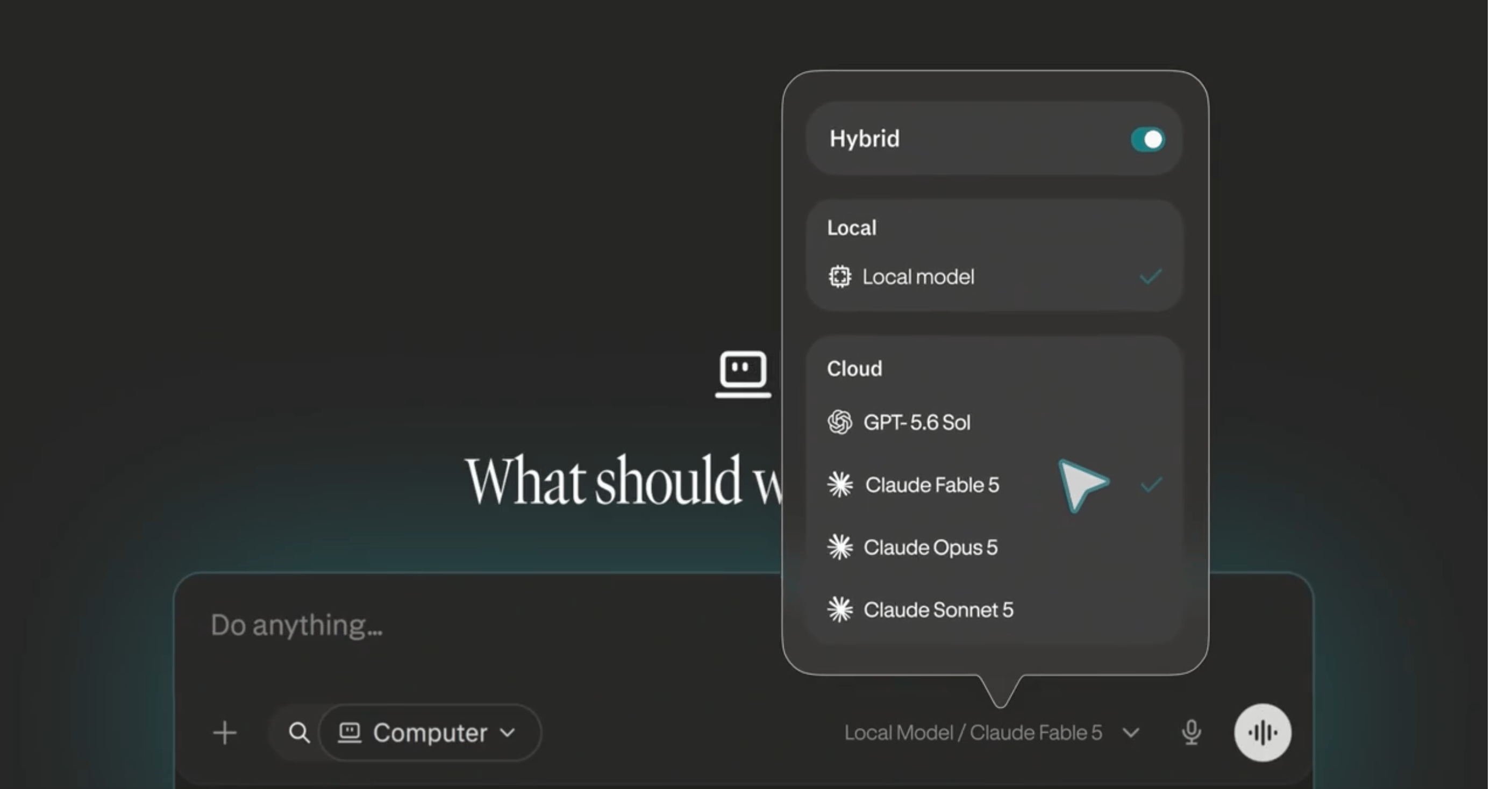
Perplexity Hybrid Compute: Cloud Research, Local Mac Privacy Protection
Perplexity's Hybrid Compute splits AI tasks by data sensitivity: cloud handles research, local Mac handles private files. Requires Apple Silicon, 24GB RAM, Pro/Max/Enterprise plan.
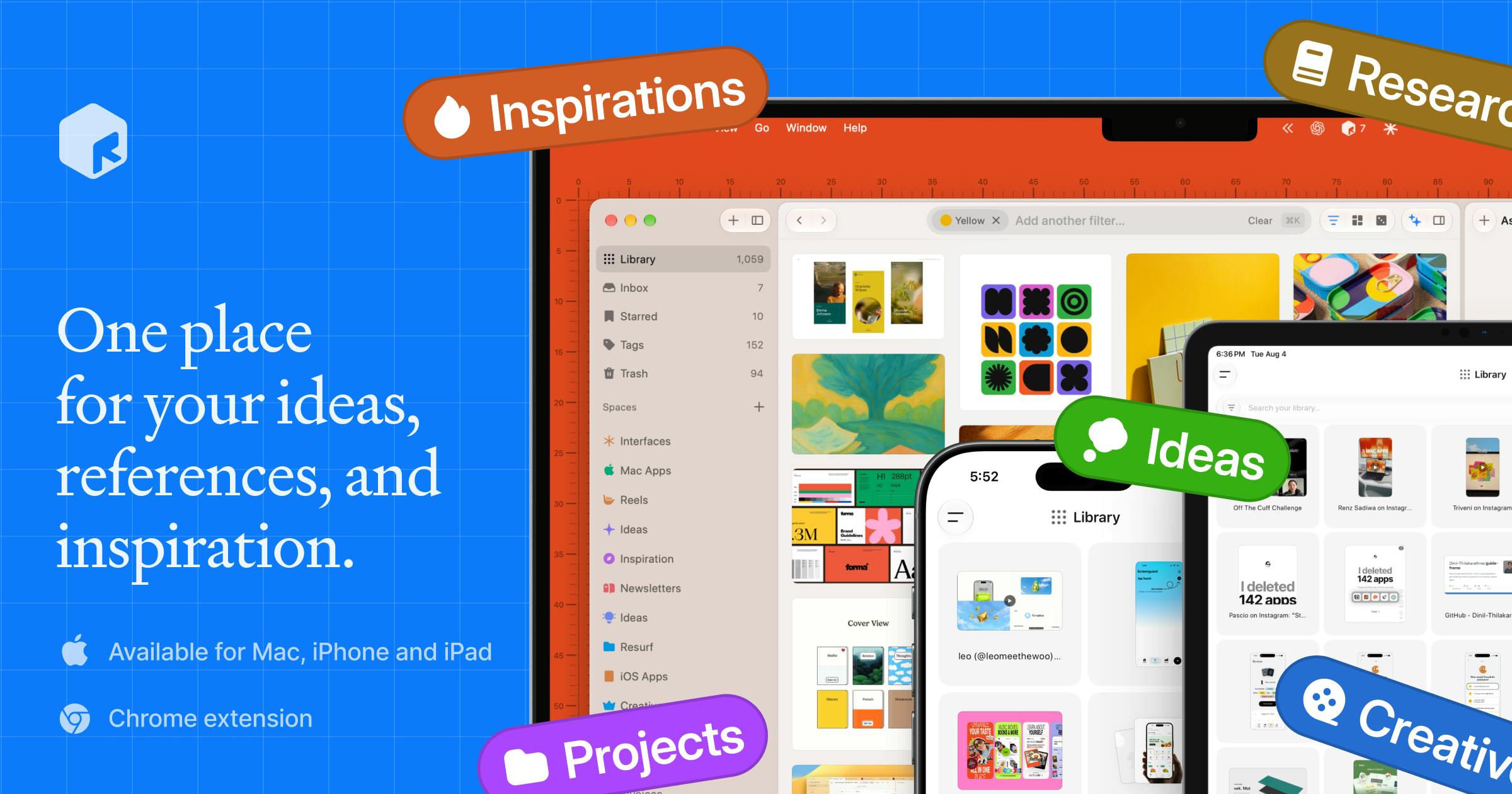
Resurf: The Personal Context Manager That Feeds Your Data to AI
Resurf is a personal context app for Apple devices that saves notes, links, images, and PDFs, then feeds them to AI via MCP and CLI. Local storage with iCloud sync keeps your data private.
Cognition Launches SWE-2 Coding Model: Near Top-Tier Performance at 64% Lower Cost
Cognition releases SWE-2, a coding model post-trained on Kimi K3 with RL. Scores 50% on FrontierCode, nearly matching Fable 5.1 at 64% lower cost and 1/4 the price of GPT-6 Astra.