TalentOS Deep Dive: How an Enterprise AI Talent Development Operating System Works

TalentOS is a platform that builds, grades, and verifies enterprise employee AI capabilities through personalized project practice.
TalentOS positions itself as the "Operating System for AI Adoption," targeting the gap between enterprise technology deployment and talent readiness. It drives learning through personalized AI projects deeply tied to employees' roles, business goals, and actual tools. Its core model is a three-pillar capability loop — Build, Grade, Verify — emphasizing quantitative assessment based on project outputs rather than traditional video courses or written exams, helping enterprises gain a true picture of their organizational AI readiness.
What Is TalentOS
TalentOS positions itself as the "Operating System for AI Adoption" — a platform dedicated to enterprise AI talent readiness. By deeply integrating with a company's goals, employees, and tools, it delivers personalized AI project training for each employee, thereby building, grading, and verifying real-world AI capabilities.
As AI rapidly permeates every industry, the core challenge enterprises face is often not the technology itself, but the fact that workforce AI literacy can't keep pace with technological iteration. A 2023 McKinsey global survey showed that over 70% of companies had deployed AI tools in at least one business unit, yet concurrent research indicated that fewer than 30% of employees felt equipped to fully leverage those tools. This chasm between "technology deployment" and "talent readiness" is known in the industry as the "AI Adoption Gap" — enterprise AI readiness encompasses not only technical infrastructure but also three dimensions of the workforce: cognitive ability, hands-on skills, and psychological acceptance. The latter two are often the real reasons enterprise AI transformations fail. TalentOS targets precisely this pain point in enterprise AI talent development.
TalentOS's Core Philosophy: From Training to Capability Verification
Personalized AI Project-Driven Learning
Unlike traditional online learning platforms such as Coursera or LinkedIn Learning, TalentOS doesn't simply serve up course videos or documentation. Its core logic drives learning through "personalized AI projects" — every learning task an employee receives is tightly linked to their job responsibilities, company business objectives, and the AI tools they actually use.
This Project-Based Learning (PBL) approach has deep theoretical roots: constructivist learning theory holds that learners actively construct knowledge systems by solving real problems, far more effectively than passively absorbing information. Research data backs this up — knowledge retention from traditional video courses is only 5%–10%, whereas hands-on practice and project work can push retention above 75%. Platforms like Coursera and Udemy Business have long struggled with course completion rates below 15%, primarily because content is disconnected from real work scenarios. By binding PBL to specific business objectives, TalentOS essentially transforms "learning costs" into "business output": learning is no longer an extra burden detached from actual work but is embedded directly into daily business processes. Employees naturally acquire AI skills as they complete projects, yielding a far higher knowledge-to-application conversion rate than traditional course models.
Build–Grade–Verify: A Three-Pillar AI Capability Framework
TalentOS constructs a complete capability development loop around three key actions:
- Build: Employees gain hands-on experience with AI tools and methods through real projects, accumulating practical operational expertise
- Grade: Completed projects are systematically scored, converting the vague notion of "can they use AI or not" into quantifiable capability metrics
- Verify: Confirmation that employees possess genuinely usable AI capabilities, rather than remaining at the level of theoretical awareness
How to quantitatively assess employees' AI capabilities is a methodological challenge facing the entire corporate training industry. Current mainstream assessment frameworks include the European Commission's DigComp digital competence framework, IBM's AI skills certification system, and the World Economic Forum's future work skills matrix. However, these frameworks generally share a limitation of being "heavy on theory, light on practice" — certifications earned through multiple-choice exams cannot truly reflect an employee's ability to apply AI in complex business scenarios. TalentOS's "Grade–Verify" module attempts to establish a scoring system based on actual project outputs, an approach similar to the Capability Maturity Model (CMM) popular in software engineering — measuring capability levels through observable behavioral outputs rather than relying on self-reporting or written test scores.
This "learn by doing + quantified verification" model is more convincing than traditional certificate-based training and better reflects employees' real AI application proficiency. For management, this means a clear view of the organization's overall AI readiness.
TalentOS's Market Positioning and Competitive Landscape
The Enterprise AI Training Space Continues to Heat Up
The enterprise AI talent development space is rapidly heating up, and the market landscape is accelerating its differentiation. From a competitive standpoint, players fall into three main tiers: The first tier consists of comprehensive learning platforms like Coursera for Business, LinkedIn Learning, and Udemy Business, which boast massive course libraries and enterprise client bases but limited customization capabilities. The second tier comprises vertical platforms specializing in AI skills, such as DataCamp and DeepLearning.AI's enterprise editions, primarily targeting technical roles. The third tier includes emerging "AI adoption" platforms — TalentOS belongs here, emphasizing deep integration with existing enterprise tool ecosystems (such as Microsoft 365, Salesforce, and Slack). Notably, AI tool vendors like Microsoft, Google, and Salesforce are also accelerating the rollout of their own training certification programs, creating potential channel competition pressure on independent training platforms.
As AI tools like ChatGPT and Microsoft Copilot accelerate their adoption across enterprises, management urgently needs answers to several key questions: Are employees actually using these tools effectively? How well are they performing? Which departments need prioritized AI training? Traditional enterprise training platforms offer generic course content that lacks deep alignment with actual business scenarios. TalentOS's differentiated competitive advantage lies in its ability to "plug into" an enterprise's existing goal systems and tool ecosystems, delivering highly customized AI learning paths for employees across different roles and levels.
Potential Challenges Facing TalentOS
As a relatively early-stage product (currently with 48 followers and 2 product launches completed), TalentOS must navigate several key challenges:
- Long enterprise procurement decision chains: According to Gartner research, a typical enterprise software purchasing decision involves an average of 6–10 stakeholders, including HR (focused on employee development and compliance), IT (focused on data security and system integration), business units (focused on actual results and ROI), and the CFO (requiring clear cost-benefit analysis). This results in an average sales cycle of 3–9 months for enterprise software. Startups typically adopt a "bottom-up" PLG (Product-Led Growth) strategy — getting individual teams to try the product first, then leveraging internal word-of-mouth to drive enterprise-wide procurement — as a common path to breaking through long decision chains.
- Impact measurement requires time to mature: Demonstrating with clear ROI metrics that the platform has genuinely improved enterprise AI readiness is critical to winning renewals
- Increasingly fierce competition: Large training platforms, management consulting firms, and emerging startups are all accelerating their moves into the enterprise AI training space
Implications for Enterprise AI Transformation
For enterprises actively pursuing AI transformation, TalentOS represents a philosophy worth adopting: AI talent development should not be a one-off action of "scheduling a few courses and calling it done," but rather a continuously iterative, deeply business-coupled systems effort.
Regardless of which AI training platform an enterprise ultimately chooses, one core question deserves serious consideration when planning an AI talent strategy: How to transform AI learning from "knowing" to "doing," and then from "doing" to "verifiable, measurable real-world capability."
Related articles
 Product Reviews
The Programmer's Desk Setup Guide: Building a Workspace That Feels Like Home
Discover how programmers build productive, comfortable workspaces. From multi-monitor setups to ergonomic design, explore the desk philosophy that drives focus and flow.
 Product Reviews
Qoder vs Cursor Real-World Comparison: Which $20/Month AI IDE Is Better?
Hands-on comparison of Qoder vs Cursor AI IDEs: Agent autonomy, human interaction count, and architecture decisions. Qoder needed only 2 interactions vs Cursor's 8.
 Product Reviews
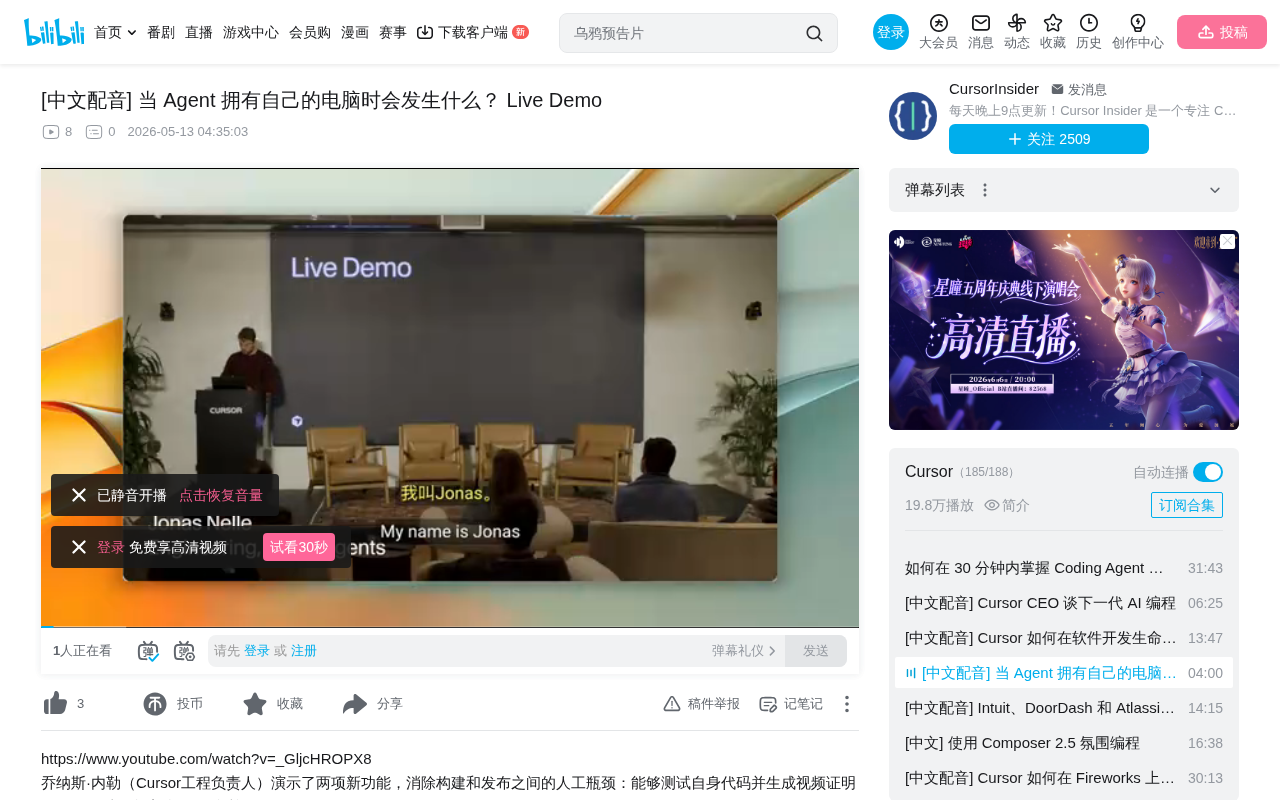
Cursor Cloud Agent Demo: Eliminating Bottlenecks Across the Entire Software Development Lifecycle
Deep analysis of Cursor's Cloud Agent demo showing how cloud VMs, automated test artifacts, and a full-chain control plane systematically eliminate human bottlenecks across the software development lifecycle.