TechCrunch Disrupt 2026: Scaling from Prototype to Production — Lessons from the Trenches

TechCrunch Disrupt 2026 brings together robotics and hardware leaders to share hard-won lessons on scaling from prototype to production.
TechCrunch Disrupt 2026 puts 'from prototype to production' at the center of its agenda, featuring scaling veterans from Foxglove, MBRYONICS, and Bedrock Robotics. The core insight: prototyping asks whether something can work, while production demands it works consistently, reliably, and economically in the real world. For hardware and robotics companies, challenges around engineering reliability, cost control, team process, and data feedback loops are especially acute. Early-bird registration closes September 25, with savings of up to $200.
From Prototype to Production: A Critical Leap for Startups
For many tech startups, building a working prototype is just the first step of a much longer journey. The real challenge lies in taking that technical breakthrough and turning it into something stable, reliable, and sustainable at production scale. TechCrunch Disrupt 2026 places this challenge at the center of its agenda, bringing together industry leaders with hands-on scaling experience to share what they've learned.
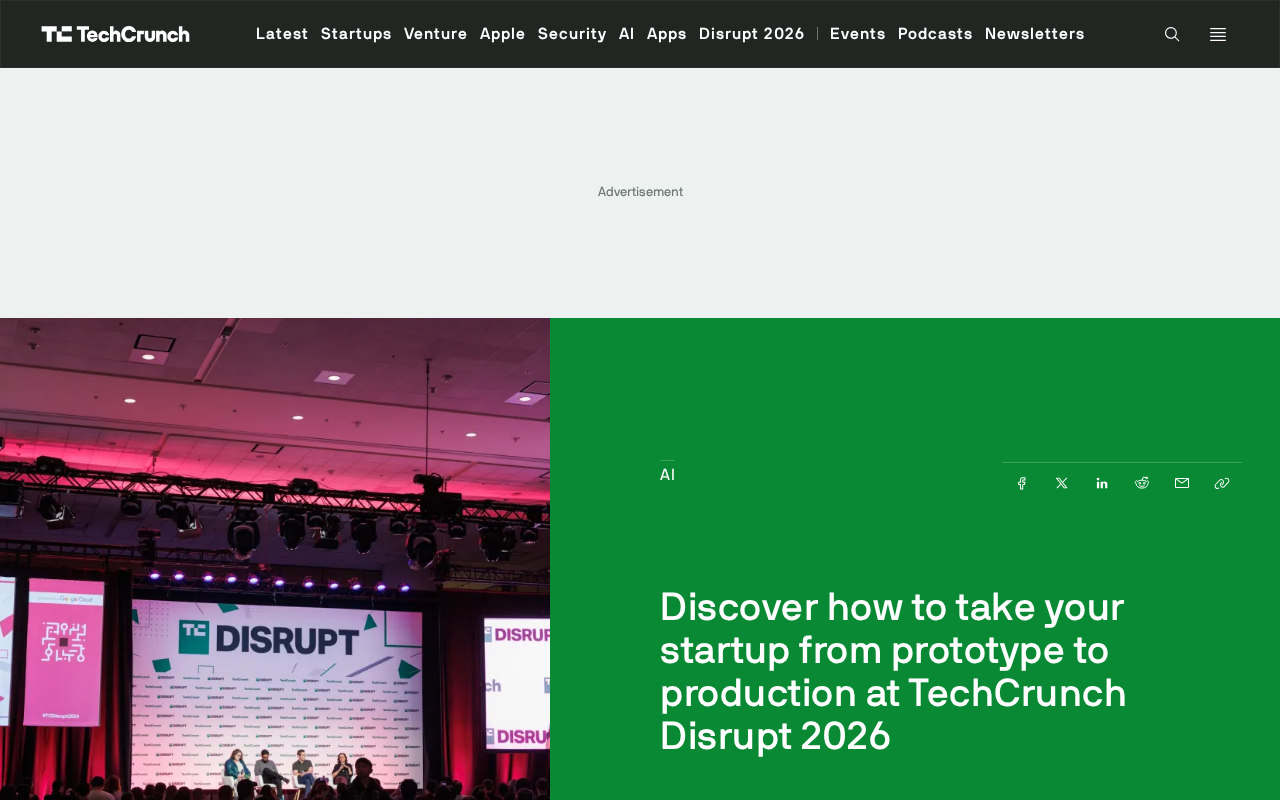
The gap between prototype and production is rarely a question of whether the technology works — it's a combined test of engineering reliability, supply chain management, team organization, and capital efficiency. A solution that performs brilliantly in a lab can look completely different when it faces millions of real-world calls, complex edge cases, and unforgiving cost constraints.
Three Practitioners Who've Done It
The speakers at this year's event span robotics, hardware, and infrastructure — high-barrier fields that each represent a distinct path to scaling a technical product.
Adrian Macneil (Foxglove)
Foxglove builds observability and data tooling for robotics development. For products that rely heavily on real-world data, the ability to reliably collect, visualize, and debug that data as you scale from prototype to production deployment is often what determines whether a product can run stably. The scaling lessons from a tooling company like this carry broad relevance for any team working with large volumes of sensor data.
Observability is a core concept in modern engineering systems, originally rooted in control theory and later widely adopted in software engineering and distributed systems. It refers to the ability to infer the internal state of a system from its external outputs — such as logs, metrics, and traces. In robotics, the observability challenge is particularly acute: robots operating in the physical world generate massive volumes of sensor data (cameras, LiDAR, IMUs, etc.) in heterogeneous formats that often need to be precisely timestamped to reconstruct what actually happened. What Foxglove builds essentially helps robotics engineers quickly pinpoint problems within enormous, high-dimensional time-series datasets — similar to how software engineers use Datadog or Grafana to monitor server health. For robotics companies, a lack of observability means that every field failure could take days to reproduce and diagnose, a cost that becomes unsustainable at scale.
John Mackey (MBRYONICS)
MBRYONICS operates in the domain of high-precision optics and communications technology. Mass-producing hardware-intensive products involves far greater complexity than software — from materials and manufacturing processes to quality consistency, every link in the chain can become a scaling bottleneck. How a deep tech company maintains performance while achieving repeatable, production-ready manufacturing is where this session will deliver real insight.
Boris Sofman (Bedrock Robotics)
Boris Sofman brings extensive experience taking robotics products from zero to one and then to scale. Robotics requires simultaneously coordinating software, hardware, and the inherent unpredictability of the real world, making it one of the hardest categories of tech products to scale. How to structure teams, allocate resources, and manage iteration cadence are questions every company in this space must answer.
The Common Challenges Behind Scaling
Despite coming from different domains, these three speakers face many of the same fundamental problems. The prototype stage asks, "Can we get this to work?" The production stage asks, "Can we get this to work consistently, reliably, and economically?" The transition between the two spans multiple dimensions:
- Engineering reliability: Prototypes can fail and be retried; production requires high availability and fault tolerance.
- Cost control: Solutions built without cost constraints in a lab must be completely re-evaluated against unit economics at scale.
- Team and process: A small team's agile experimentation must gradually evolve into an engineering system that others can collaborate on and replicate.
- Data and feedback loops: Real-world data flowing back into the product is the foundation for continuous improvement.
For hardware and robotics — products that exist in the "atoms world" — these challenges are often amplified, because unlike pure software, you can't simply iterate your way out of a design flaw.
Unit Economics is the key financial framework for evaluating whether scaling is viable. It refers to the revenue and cost structure associated with producing or delivering a single unit of a product. For hardware and robotics companies, unit costs at the prototype stage are often several times — or even tens of times — higher than the production target. An engineering sample might cost tens of thousands of dollars, while the market-acceptable price point is only a few thousand. Closing that gap requires economies of scale, supply chain leverage, manufacturing process optimization, and modular design. Unlike pure software companies where marginal costs approach zero, the marginal cost curve for hardware products is steeper and far more dependent on shipment volume — which is why deep tech companies often face severe capital pressure in the early stages of scaling. When investors evaluate these companies, they pay close attention to whether the path from engineering cost to production cost is clear and credible.
Event Details and Registration
TechCrunch Disrupt has long been a key window into global startup trends. Disrupt 2026's focus on scaling — a deeply practical theme — makes it especially relevant for growth-stage founders, engineering leads, and investors tracking the deep tech space.
According to official information, registering before September 25 saves you up to $200 on your pass. For practitioners who want to learn directly from front-line scaling veterans, that deadline is worth marking on your calendar.
Closing Thoughts
The leap from prototype to production is the moment that determines whether a tech startup can truly deliver on its technical promise. Learning from practitioners who have already made that crossing is far more efficient than figuring it out alone. Whether you're still refining your prototype or standing at the threshold of production, this discussion around scaling offers a rare, first-hand perspective you won't want to miss.
Related articles

Databricks Genie: The AI Analytics Assistant That Tripled a Marketing Team's Data Usage
Databricks' AI analytics assistant Genie tripled marketing team data usage. Discover how this conversational NL2SQL tool lowers the data access barrier and what it means for enterprise AI adoption.

How The Oregon Trail Became a Cultural Icon for Generations
How The Oregon Trail grew from educational software into a multigenerational cultural icon — through classrooms, "You have died of dysentery," and shared childhood memories.

Health Benefits Platform Thatch Hits $1B Valuation as Healthcare Costs Surge
Thatch raises $108M and hits a $1B valuation, backed by a16z, Index Ventures, and General Catalyst, as surging U.S. healthcare costs drive demand for flexible benefits platforms.