Tencent's Toast Platform Review: Generate a Standalone App from a Single Sentence — No Code Required

Tencent's Toast platform lets anyone generate a standalone Android app from a plain-language description — no coding needed.
On May 18, 2025, Tencent launched Toast, an AI-powered "exploratory Vibe Coding" platform. Users with zero programming experience can describe their needs in natural language and generate an installable, shareable Android APK in minutes. The platform supports three decentralized distribution methods — links, QR codes, and direct APK sharing — and features an Inspiration Plaza for template co-creation.
Overview
On May 18, 2025, Tencent officially launched a new AI-powered app generation platform called Toast (吐司). The Android version is available on both the Tencent MyApp store and the official website, with an iOS version coming later. Unlike traditional low-code tools, Toast is officially positioned as an "exploratory Vibe Coding" product, with the core goal of helping users with zero technical background quickly turn ideas into installable, shareable standalone apps.
Vibe Coding is a concept formally introduced by OpenAI co-founder Andrej Karpathy in early 2025, and it quickly became a buzzword in the AI development world. The core idea: developers — or even non-developers — simply describe "what they want it to feel like and what it should do," then rely entirely on AI to generate and iterate on the code, without ever directly touching the underlying logic. This stands in sharp contrast to traditional programming, which demands precise knowledge of syntax, architecture, and debugging. Vibe Coding shifts the human role from "code writer" to "requirements describer and outcome reviewer." This paradigm shift has been enabled by the dramatic leap in code generation capabilities of large language models — GPT-4, Claude, and similar models can now produce complete, functional modules of considerable quality. Toast positions itself as an "exploratory Vibe Coding" product, emphasizing its suitability for creative exploration and rapid prototyping rather than serious engineering work.

In other words, even if you know absolutely nothing about programming, you can describe your needs in plain language and have a fully functional app — complete with a home screen icon and offline support — ready in minutes. Is this a marketing gimmick or a genuine paradigm shift? Let's break it down.
Toast Platform: Four Core Features Explained
Generate a Standalone App from One Sentence: Natural Language-Driven Development
Toast's most fundamental capability is natural language-driven app generation. Users simply describe what they need in plain terms — for example, "I want a daily water intake tracker with reminders and statistics" — and the AI automatically breaks down the feature modules and designs an interface prototype.
The entire process supports real-time conversational adjustments: button placement, color schemes, and feature additions or removals can all be handled through chat. Once everything looks good, a single tap packages the result into an Android APK file ready to install on your phone. Tencent claims the whole process can take as little as 3 minutes, and the generated app comes with its own home screen icon and works offline.
It's worth noting that Toast is far from the first to explore the low-code/no-code space. Low-code and no-code platforms emerged as early as the 2010s, with notable products including Bubble, Webflow, AppSheet, and Microsoft PowerApps. These platforms use visual drag-and-drop interfaces to let non-technical users build simple web apps or automated workflows. However, traditional low-code platforms have clear limitations: steep learning curves, restricted customization flexibility, and outputs that typically only run within the platform itself rather than being independently distributable. The introduction of large language models has fundamentally changed this landscape — a new generation of products like Toast, Replit Agent, and Lovable has expanded the target audience from "people who can code" to "people who can't code at all."
Three Sharing Methods: Decentralized Distribution Lowers the Barrier to Sharing
Finished apps can be distributed in three ways: via a shareable link, a QR code, or by sending the installation package directly. Crucially, recipients don't need to register for a Toast account or download the Toast app — they can install and use the app independently.
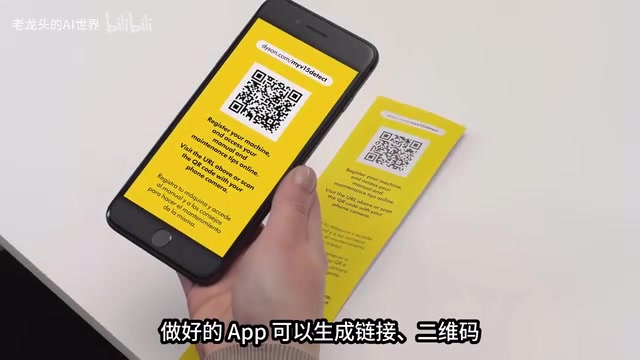
This design philosophy is clever — it treats user-created apps as truly independent software rather than content locked within a platform. This decentralized distribution model dramatically reduces the friction of sharing creative work.
From a technical standpoint, Toast outputs results as standard APK (Android Package Kit) files — the installation package format for Android, essentially a compressed archive containing code, resource files, and a configuration manifest. This choice reflects deep product logic: APKs run completely independently of the Toast platform, so users won't lose their apps if the platform shuts down or their account is suspended; APKs support offline use without requiring a persistent internet connection; and APKs can be distributed through any channel — WeChat, QQ, email, USB drives — bypassing app store review processes and dramatically lowering distribution costs for individual developers. This contrasts with Apple's iOS ecosystem, where the closed nature of the platform creates much higher distribution barriers for tools like this, which explains why Toast launched on Android first. It's worth noting that this open distribution model also introduces potential security risks from the absence of app store review; users should maintain basic security awareness when installing third-party APKs.
Inspiration Plaza: Template Co-Creation Lets Ideas Evolve
Toast includes a built-in "Inspiration Plaza" feature where users can publish their apps as public templates. Others can clone them with a single tap and then build on top of them with their own ideas.

For example, if someone creates a general-purpose habit-tracking template, other users can quickly adapt it into specialized versions for exam prep, fitness, quitting smoking, and more. A single creative idea can spawn hundreds of variations, forming a genuine co-creation ecosystem.
This co-creation model closely mirrors the product logic of platforms like Roblox, the Notion template marketplace, and the Figma community — all of which follow a UGC (user-generated content)-driven creator economy model. Roblox's success has proven a key proposition: when creation tools are easy enough to use, content generated by ordinary users can form a self-reinforcing ecosystem flywheel — creators keep creating because they have an audience, users stay because the content is rich, and the platform gains commercial value because the ecosystem thrives. Toast's template co-creation mechanism goes a step further than simple template downloads — by making creativity inheritable and iterable, it encourages the evolution of ideas rather than mere replication. From a monetization perspective, Toast could easily build a creator incentive system on top of this foundation in the future — such as paid licensing for high-quality templates or revenue sharing for creators — which is the critical path for a platform to evolve from a tool into an ecosystem.
AI-Powered Search and Smart Template Recommendations
Users can simply tell the AI what they want to build...
Related articles
 Product Reviews
The Programmer's Desk Setup Guide: Building a Workspace That Feels Like Home
Discover how programmers build productive, comfortable workspaces. From multi-monitor setups to ergonomic design, explore the desk philosophy that drives focus and flow.
 Product Reviews
Qoder vs Cursor Real-World Comparison: Which $20/Month AI IDE Is Better?
Hands-on comparison of Qoder vs Cursor AI IDEs: Agent autonomy, human interaction count, and architecture decisions. Qoder needed only 2 interactions vs Cursor's 8.
 Product Reviews
Cursor Cloud Agent Demo: Eliminating Bottlenecks Across the Entire Software Development Lifecycle
Deep analysis of Cursor's Cloud Agent demo showing how cloud VMs, automated test artifacts, and a full-chain control plane systematically eliminate human bottlenecks across the software development lifecycle.