Tennessee's Failed Execution: The Christa Pike Case and the Deeper Failures of Capital Punishment

Christa Pike survived lethal injection — exposing both the technical failures and deeper injustices of capital punishment.
Tennessee death row inmate Christa Pike survived two doses of lethal injection drugs, believed to be a historic first. The incident — the state's second botched execution this year — exposed the technical limits of lethal injection as a "humane" method. But journalist Pamela Koloff argues the deeper concern is systemic: wrongful convictions and sentencing errors make the irreversible nature of capital punishment a profound moral and judicial crisis.
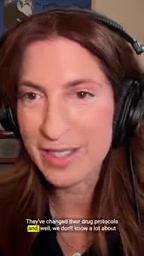
A rare and disturbing event unfolded in Tennessee: death row inmate Christa Pike survived after receiving two doses of lethal injection drugs. According to an interview on Vox's The Gray Area podcast with veteran criminal justice journalist Pamela Koloff, Pike is believed to be the first person in history to survive a lethal injection. She is now conscious and able to speak — and the incident has thrust a sharp question back into public view: is there any "right way" for the state to execute a person?
A Botched Execution
Christa Pike was sentenced to death in 1996 for the murder of a 19-year-old woman. Last month, Tennessee officials administered two doses of lethal drugs — and both failed to end her life. Such a complete failure of execution is extraordinarily rare, with virtually no historical precedent.

Notably, this was not Tennessee's first failed execution this year. Koloff points out that this was already the second "botched execution" in the state in 2025 — suggesting these failures occur there more frequently than in other states. Tennessee has revised its drug protocols multiple times, yet problems continue to resurface.
Lethal Injection Is No Guarantee of "Humanity"
Very little is publicly known about what exactly went wrong in Pike's case. In the other botched execution earlier this year, the problem was an inability to locate a viable vein — a long-standing technical challenge in lethal injection procedures.
Koloff draws attention to historical context: in some parts of the country, the electric chair was still in use as late as the 1980s and 90s. Lethal injection was widely adopted as a more "humane" alternative. Yet reality has demonstrated that no method of execution is without flaw. The promise of humanity, at the level of technical execution, can still go catastrophically wrong.
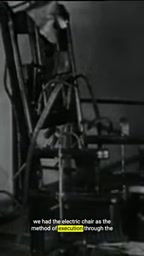
Lethal injection typically employs a three-drug protocol: first, a barbiturate sedative (such as pentobarbital or midazolam) to render the inmate unconscious, followed by potassium chloride to stop the heart. First adopted by Oklahoma in 1977, this method gradually replaced the electric chair and gas chamber as the dominant form of execution in the United States — its underlying logic being to make the process resemble a medical procedure. Critics have long argued, however, that when the sedative dose is insufficient, an inmate may experience extreme agony while fully conscious, yet be unable to express it due to the paralytic agent — the very opposite of "humane." In recent years, as European pharmaceutical companies have refused to supply drugs for executions, states have been forced to turn to compounded drugs of uncertain composition or single-drug protocols, increasing the likelihood of failure. Tennessee's repeated problems are closely tied to this broader context.
The Deeper Problem Behind Botched Executions
For Koloff, while botched executions are significant — and some new concerns are emerging — her deeper focus is on a more fundamental question: what other errors within the justice system lead to people ultimately receiving the ultimate punishment when perhaps they shouldn't have?
In other words, technical failures at the point of execution are only the tip of the iceberg. The more pressing concern lies in the possibility of systemic error in the processes of conviction and sentencing. When a death sentence, once carried out, cannot be undone, any mistake at any stage can produce an irreversible tragedy. The Pike case has sparked such wide discussion precisely because it exposed, in an extreme way, the multiple vulnerabilities of the death penalty system — technical, ethical, and judicial.
The problem of wrongful conviction in the American capital punishment system is well-documented: since 1973, more than 190 death row inmates have been exonerated due to insufficient evidence or proof of innocence. Research suggests that approximately 4% of those sentenced to death may in fact be innocent. The causes of wrongful conviction include unreliable eyewitness testimony, inadequate defense resources, prosecutorial misconduct, and systemic racial and class bias. The irreversibility of execution makes the cost of these errors impossible to remedy — once carried out, any subsequent evidence of innocence becomes meaningless. It is for this reason that many legal scholars and criminal justice reform advocates argue that debating how to execute someone is itself a way of evading the more fundamental question: when the justice system cannot guarantee zero wrongful convictions, does the state have the right to take any person's life?
A Question Without an Easy Answer
Christa Pike's survival makes unavoidable the question of whether there is any right way for the state to end a human life. From the electric chair to lethal injection, the methods have changed — but the promise of humanity has never truly been kept. And more worthy of societal reflection than the method of execution is the profound risk of wrongful conviction and the ethical dilemma embedded in capital punishment itself.
The full interview is available on Vox's The Gray Area podcast on all major podcast platforms.
Related articles

Claude Reportedly Able to Hide Secret Messages in Benign Images
A Reddit post claims Claude Fable 5.1 can hide secret messages in benign images. This article reviews the background, image steganography principles, and potential security risks, and suggests a testing path from rumor to verification.

Federal Government Awards $85 Million; CFS to Develop Fusion-Specific Semiconductors
The federal government awards $85 million to Commonwealth Fusion Systems to develop conductors and power semiconductors for fusion plants. This article analyzes the significance of this funding for the fusion supply chain and commercialization path.

When Should AI Assistants Proactively Suggest? Timing Is Everything
When should AI assistants proactively suggest? Reddit discussion reveals: the same suggestion feels different at different times. This article analyzes the dual nature of proactive suggestions, the boundary of user expectations, and design principles, exploring how to balance automation and user control.