TERMy: A Fast Terminal Assistant Without LLMs — Zero Latency, Fully Offline

TERMy delivers instant terminal assistance through rule engines and pattern matching — no LLM required.
TERMy is a terminal assistant that completely forgoes large language models, instead relying on rule engines, pattern matching, and heuristic algorithms for millisecond-level command completion and syntax correction. It's ideal for privacy-conscious teams, offline environments, and resource-constrained devices. While it can't match LLM-based tools for complex natural language tasks, it offers a compelling alternative where speed, determinism, and data privacy matter most.
A Fresh Approach to Terminal Assistants: Ditching the LLM
In an era where AI coding tools overwhelmingly rely on large language models, TERMy has taken a radically different path — building a terminal assistant that uses no LLM whatsoever. This project, which garnered 82 upvotes and 27 comments on Hacker News, challenges a mainstream assumption: do terminal assistants really need an AI large model?
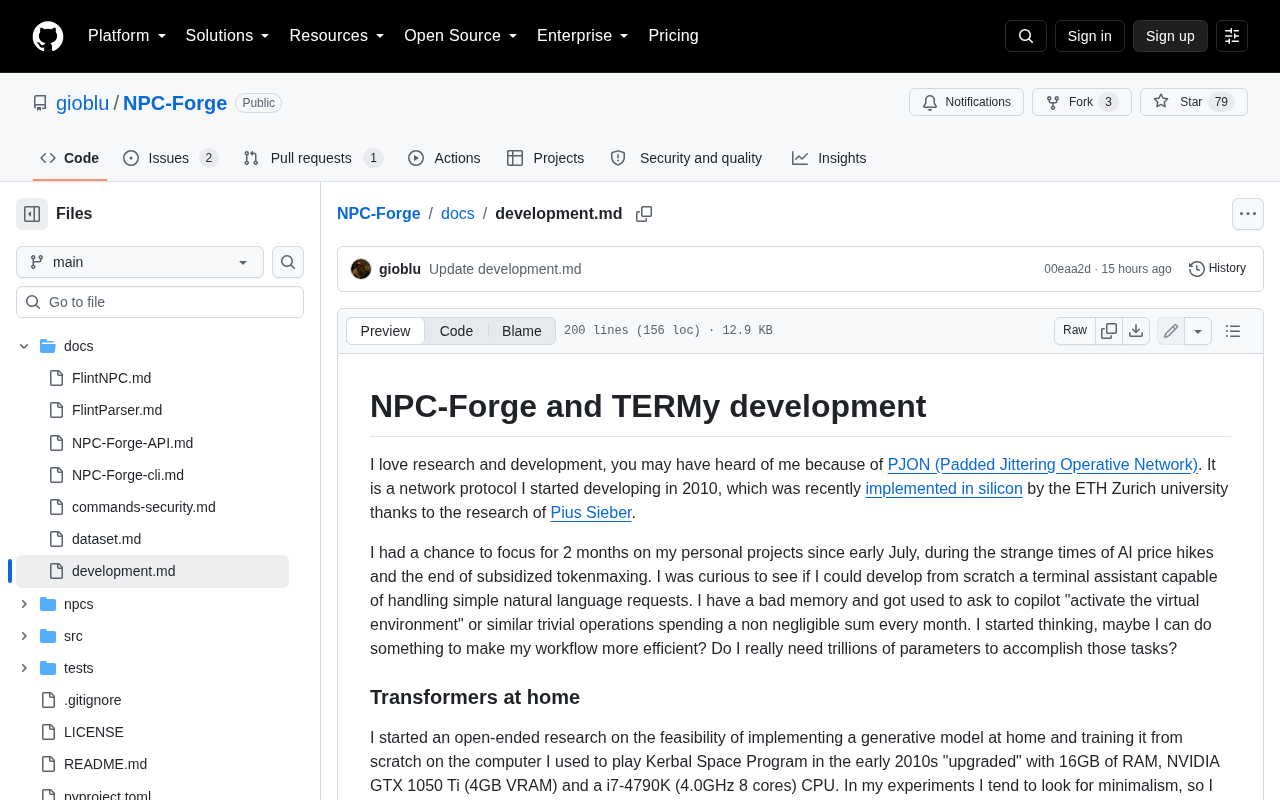
TERMy's core philosophy revolves around two words: speed and determinism. Compared to LLM-based terminal assistants, it completely eliminates model inference latency, API costs, and the unpredictability of AI-generated output. For developers who need to execute operations quickly in a local environment without relying on a network connection, this design philosophy offers tremendous practical value.
The Trade-offs Behind the Technical Choices
Without an LLM, TERMy relies on traditional rule engines, pattern matching, and heuristic algorithms to understand user intent. A Rule Engine is a software system that performs reasoning and decision-making based on predefined logical rules, with a history stretching back to the expert systems era of the 1970s. A typical rule engine uses an "if-then" production rule structure, employing forward chaining or backward chaining to match inputs and trigger corresponding actions. Pattern matching involves regular expressions, prefix trees (Tries), and fuzzy matching algorithms (such as Levenshtein distance) to identify specific patterns from user input. Heuristic algorithms, meanwhile, rely on rules of thumb to quickly provide "good enough" answers when finding the optimal solution isn't guaranteed. Combining these three techniques enables microsecond-to-millisecond response times without relying on statistical models — far faster than any LLM inference.
This approach excels in the following scenarios:
- Common command completion: Delivers precise suggestions quickly by analyzing command history and context awareness
- Syntax error correction: Performs real-time checks and corrections based on known shell syntax rules
- Offline work environments: Works out of the box with no network connection or API key required
- Low-latency responses: Millisecond-level feedback with no waiting for remote model inference
It's worth noting that terminal command completion technology itself has undergone a rich evolution. From Bash's built-in basic Tab completion (which can only complete file paths and known command names), to Zsh's context-aware completion system (which dynamically adjusts suggestion lists based on subcommands and options), to Fish shell's pioneering history-based autosuggestion. In recent years, tools like fzf (a fuzzy finder) and atuin (a shell history manager) have further enriched the interaction patterns for command search and completion. TERMy can be seen as a natural continuation of this evolutionary path — improving completion accuracy and speed through more refined context analysis and pattern recognition, all without introducing an LLM.
Of course, the limitations of this approach are equally apparent. TERMy cannot understand complex tasks described in natural language the way Warp AI or GitHub Copilot CLI can, nor can it easily handle non-standard scenarios requiring multi-step reasoning. Warp AI is an AI assistant integrated into the Warp terminal that converts natural language descriptions into shell commands, powered by OpenAI's GPT series models under the hood. GitHub Copilot CLI is the command-line extension of GitHub Copilot, allowing users to describe desired operations in English while the system automatically generates the corresponding commands. These tools typically have end-to-end latency ranging from 500 milliseconds to several seconds and require a persistent network connection and API keys. They're extremely powerful in functionality, capable of handling ambiguous natural language instructions, but they also raise concerns about data privacy, usage costs, and response reliability. TERMy is better positioned as an accelerator for high-frequency terminal operations rather than a general-purpose Q&A assistant.
Developer Community Reactions
The Hacker News discussion reflects a deeper reflection among developers about tool complexity. In a landscape saturated with AI tools, some developers have begun questioning the mindset that "every problem needs an LLM solution." TERMy's emergence speaks directly to this concern.
Some commenters pointed out that many terminal operations are fundamentally repetitive and can be handled efficiently by rule systems — there's simply no need to deploy a large model. Others noted that in corporate intranets or security-sensitive environments, not sending command history to external APIs is an important compliance requirement — something TERMy naturally satisfies.
This compliance concern is far more serious in practice than it might appear on the surface. In regulated industries such as finance, healthcare, defense, and government, the SOC 2 compliance framework requires organizations to strictly control data access and transmission, while GDPR imposes explicit restrictions on cross-border transfer of personal data. Terminal command history may seem innocuous, but it can actually contain database connection strings, server IP addresses, API keys, internal system paths, and other sensitive information. When this data is sent to third-party LLM APIs, there's a substantive risk of data leakage and compliance violations. While some enterprises can mitigate this by deploying local LLMs (such as running Llama-series models via Ollama), local deployment requires significant GPU resources, and inference speeds are typically much slower than cloud services. TERMy's purely local, zero-external-communication architecture fundamentally eliminates these compliance risks.
Skeptical voices also exist. Some developers argue that abandoning LLMs means sacrificing the tool's intelligence potential, particularly when dealing with non-standard Linux distributions or custom scripts, where rule-based systems may frequently fail.
Use Cases and Limitations
TERMy is best suited for the following types of users:
- Power command-line users who demand maximum speed, needing zero-latency completion and suggestions
- Offline or intranet development environments without access to cloud-based LLM services
- Privacy-conscious teams that don't want command history leaving the local environment
- Resource-constrained devices, such as Raspberry Pis or older laptops that can't run local large models
However, for scenarios requiring complex task understanding, TERMy falls short. Multi-step reasoning requests like "find the top 5 processes consuming the most memory and generate a report" are difficult for traditional rule engines to handle gracefully.
Lessons for Tool Selection
TERMy's value lies not in fully replacing AI terminal assistants, but in reminding developers of an easily overlooked principle: technology choices should match actual needs. Not every terminal assistance scenario requires the general-purpose capabilities of an LLM — under specific constraints, traditional approaches are often more efficient and controllable.
This project also offers a hybrid vision for the future of terminal tools — perhaps the ideal solution is to let a local rule engine handle high-frequency operations while keeping an LLM as a fallback for complex requests, achieving both speed and intelligence. The design philosophy of this Hybrid Architecture is similar to the cache hierarchy (L1/L2/L3 Cache) in computer architecture: the first layer is the local rule engine, handling all deterministically matchable high-frequency operations with millisecond-level response times; the second layer could be a lightweight local model (such as a quantized small language model), handling requests that need some semantic understanding but aren't overly complex; the third layer is a cloud-based LLM, serving as the final fallback for complex natural-language-to-command translation tasks. Layers closer to the user are faster but more limited in scope, while more distant layers are more capable but come with higher latency. With well-designed routing strategies, the system can respond with extremely low latency in the vast majority of scenarios, invoking heavier computational resources only when necessary.
For budget-constrained or privacy-focused teams, TERMy demonstrates a viable alternative path.
Key Takeaways
Related articles

Cross-App Access for AI Agents: Three Identity Vendors Converge on the Same Architecture Pattern in 8 Days
Okta, Auth0, and Descope all shipped Cross App Access within 8 days. This article breaks down the two-layer access pattern behind AI Agent identity management.

Dense Models Too Slow to Run Locally? How MoE Architecture Breaks Through the Performance Bottleneck
Dense models are slow on local hardware due to memory bandwidth limits. Learn how MoE sparse activation architecture dramatically boosts local inference speed and the future of local AI deployment.

Storm Summoner: A MIDI Controller Built Specifically for Guitar Effects Pedals
A deep dive into the Storm Summoner open-source MIDI controller for guitar effects pedals—covering design philosophy, technical architecture, and how it compares to commercial solutions.