Terry Tao: Deep Connections Between Unforced Navier-Stokes Singularities and the Generalized Riemann Hypothesis
Terry Tao: Deep Connections Between Un…
Terry Tao proposes a heuristic analogy between unforced Navier-Stokes singularities and the Generalized Riemann Hypothesis, sparking cross-domain mathematical discussion.
Terry Tao recently explored on his blog potential connections between unforced Euler singularities, unforced Navier-Stokes singularities, and the Generalized Riemann Hypothesis, sparking heated discussion on Hacker News. The article focuses on the "unforced" case, stripping away external driving to reveal the equations' intrinsic dynamics, and analogizes this to "exceptions within order" in the zero distribution of L-functions and prime biases in number theory. Community comments note that while this heuristic analogy is not a rigorous equivalence, it may guide new proof strategies and poses new challenges for cross-domain reasoning in AI-assisted theorem proving. The article emphasizes the value of heuristic analogy at the "pre-rigorous" stage of mathematics, arguing that thinking of fluid equations and number theory together can provide new imaginative space for both fields.
A Mathematical Encounter Spanning Fluid Dynamics and Number Theory
Terry Tao recently published an article on his blog exploring potential connections between unforced Euler singularities, unforced Navier-Stokes singularities, and the Generalized Riemann Hypothesis. The blog post sparked widespread discussion on Hacker News, garnering 324 points and 131 comments, demonstrating the appeal of interdisciplinary mathematics and physics topics within the tech community.
The Navier-Stokes equations are the core equations describing fluid motion, and the question of their solution existence and smoothness is one of the seven Millennium Prize Problems with a million-dollar bounty from the Clay Mathematics Institute. The Generalized Riemann Hypothesis, meanwhile, is one of the deepest unsolved problems in number theory, concerning the fine structure of prime distribution. Tao's article attempts to bridge the two — this kind of cross-domain insight is a hallmark of his style as a leading contemporary mathematician.
The Unforced Case: Profundity Behind Simplification
The "unforced" case Tao discusses refers to equations without external driving force terms. In fluid dynamics, external force terms are often used to sustain turbulence or create specific flow structures; removing them lays bare the intrinsic dynamics of the equations. The unforced Euler equations describe ideal incompressible fluids, while the unforced Navier-Stokes equations introduce viscous dissipation.
This simplification is not an evasion of difficulty but a focus on the core. Tao has previously done important work on finite-time blow-up in the Euler equations, and he excels at probing the limiting behavior of solutions by constructing specific flow fields. Using "unforced" as a common prefix here suggests he may be searching for a unified mechanism — some kind of intrinsic instability independent of external driving that could cause solutions of fluid equations to blow up in finite time, and might also correspond to some kind of "runaway" prime distribution bias in number theory.
According to discussions on Hacker News, multiple commenters noted that Tao has repeatedly established analogies between fluid equations and harmonic analysis or number theory in recent years. These analogies are not formal rigorous equivalences but heuristic "mathematical metaphors" used to guide new proof strategies.
Finite-time blow-up is a core concept in the study of partial differential equations, referring to solutions whose certain norms (such as the velocity gradient) tend to infinity within finite time, making the solution impossible to continue. For the three-dimensional Euler equations, whether finite-time blow-up exists is a long-standing open problem in fluid dynamics; for the Navier-Stokes equations, this directly relates to the Millennium Problem's "existence and smoothness of solutions" — if blow-up occurs, classical solutions fail. Tao's previous work demonstrated through constructing specific flow fields that unforced Euler equations may form singularities in finite time, a construction relying on fine control of vorticity dynamics. Understanding blow-up mechanisms is crucial for determining the global well-posedness of the equations, and is also the basis for analogy with "bad zeros" in number theory: both involve intrinsic instability of systems in the absence of external driving.
The Generalized Riemann Hypothesis: "Turbulence" in Number Theory
The Generalized Riemann Hypothesis extends the classical Riemann Hypothesis from the Riemann zeta function to a broader family of L-functions. The classical Riemann Hypothesis asserts that all non-trivial zeros of the zeta function lie on the critical line Re(s)=1/2; the generalized version makes similar assertions for Dirichlet L-functions, modular form L-functions, and others. The regularity of these zero distributions directly relates to the error in prime distribution within arithmetic progressions.
Tao's article title juxtaposes "singularities" with the "Generalized Riemann Hypothesis," suggesting they share some concept of "singularity": solution blow-up in finite time in fluid equations corresponds to divergence of physical quantities, while in the Riemann Hypothesis, zeros deviating from the critical line would correspond to anomalous biases in prime distribution. Both are "exceptions within order," and probing these exceptions becomes key to understanding the overall structure.
Commenters noted that Tao may use blow-up constructions in fluid equations to analogize the arithmetic disorder caused by hypothetical "bad zeros" in number theory. Such cross-domain analogies are not rare in mathematical history — for example, the statistical correspondence between random matrix theory and zeta function zeros also originally arose from heuristic observations.
L-functions are a class of functions defined on the complex plane that can be viewed as generalizations of the Riemann zeta function, typically constructed based on characters in number theory (such as Dirichlet characters) or automorphic forms. The Generalized Riemann Hypothesis asserts that for all L-functions, their non-trivial zeros lie on the critical line Re(s)=1/2. The importance of this conjecture lies in providing precise control over the error in prime distribution within arithmetic progressions — for example, the zero distribution of Dirichlet L-functions directly affects the uniformity of primes in arithmetic progressions. If zeros deviating from the critical line exist (i.e., "bad zeros"), they would cause anomalous biases in prime distribution, analogous to the divergence of physical quantities caused by singularities in fluids. The analytic properties of L-functions are closely connected to algebraic number theory and modular forms, making them a hub linking multiple branches of number theory and providing rich structure for cross-domain analogies.
Multi-Source Cross-Validation: Community Reactions and Academic Context
According to analysis by multiple users in the Hacker News comment section, Tao's blog post continues the thread of his previous work on Euler equation singularities. Some commenters noted that Tao had previously constructed examples of unforced Euler equations forming singularities in finite time, and that extending similar ideas to Navier-Stokes equations and the Generalized Riemann Hypothesis may be intended to propose a unified "unforced singularity" framework.
Another source (citation clues from the original blog post) shows that Tao explicitly distinguishes between singularity formation mechanisms in "forced" versus "unforced" cases. Commenters are divided on this: some believe the analogy is merely heuristic and far from rigorous proof; others believe Tao's analogies often catalyze rigorous results within a few years and deserve serious attention. This division itself reflects the typical situation of cross-domain mathematical conjectures — heuristics first, rigor later.
Implications for AI and Computational Mathematics
Such cross-domain conjectures have direct implications for AI-assisted mathematical research. In recent years, the combination of large language models and theorem provers (such as Lean) is changing how mathematicians explore conjectures. Tao himself is an active advocate of AI-assisted mathematics, having repeatedly demonstrated how to use AI tools for formal verification and conjecture exploration.
If the connection between unforced Navier-Stokes singularities and the Generalized Riemann Hypothesis could be formalized, it would provide an excellent test case for automated theorem proving: it involves knowledge from three fields — partial differential equations, harmonic analysis, and analytic number theory — requiring cross-library theorem invocation and analogical reasoning. Current AI proof systems perform reasonably well on standard lemmas within a single domain but remain weak at cross-domain analogy. Tao's blog post is, to some extent, demarcating the next frontier worth tackling for both machine and human mathematicians.
Formal verification refers to using computer programs (such as Lean, Coq, and other theorem provers) to translate mathematical proofs into machine-checkable formalized code, thereby ensuring proof rigor. In recent years, the combination of large language models and theorem provers has given rise to a new paradigm of "AI-assisted mathematics": AI can propose conjectures and search for proof strategies, while provers verify the logical correctness of each step. Tao is an active promoter of this field, having demonstrated how to formalize results in combinatorics using Lean. For cross-domain analogies (such as fluid singularities and the Riemann Hypothesis), formalization faces special challenges: different mathematical fields use different definitions, notations, and inference rules, requiring the construction of unified libraries and cross-library theorem invocation mechanisms. Current AI systems perform well within single domains but remain weak at cross-domain analogical reasoning — precisely the next frontier identified in Tao's blog post.
Conclusion: The Value of Heuristic Analogy
Tao's article does not claim to prove any conjecture; its value lies in raising questions, establishing analogies, and pointing directions. In mathematical research, insights at this "pre-rigorous" stage are often more vital than an isolated theorem. Whether a deep connection truly exists between the Navier-Stokes equations and the Generalized Riemann Hypothesis remains to be tested by time; but thinking of the two together has already provided researchers in both fields with new imaginative space.
Related articles
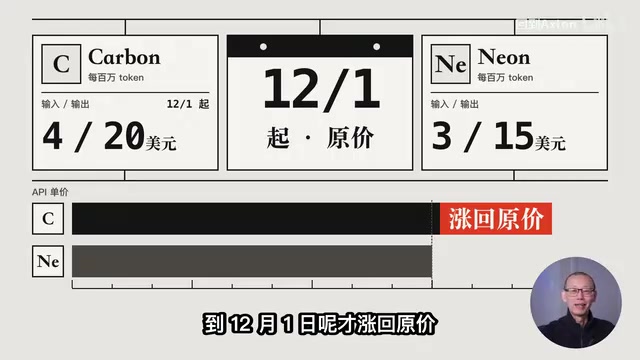
Deep Dive: Uncovering the Capabilities of the Entire Gemini 4 Model Family — Why Does the Default Tier Rank Last?
Double-blind testing of Gemini 4's four models — Argon, Carbon, Hydrogen, Neon — reveals why the default Neon High ranks last, how X High overtakes Carbon, and how Orchestrator sweeps 3-0, plus cost breakdown and four selection tips.

One Week with the Gemini 4 Family: Four Models Each Take a Crown on the Private Leaderboard, Carbon's Speed Polarizes
Bilibili creator tests the Gemini 4 family for a week: Neo, Argon, Carbon, and Hydrogen each top a private leaderboard, frontend aesthetics are weak, Carbon is strongest but slow.
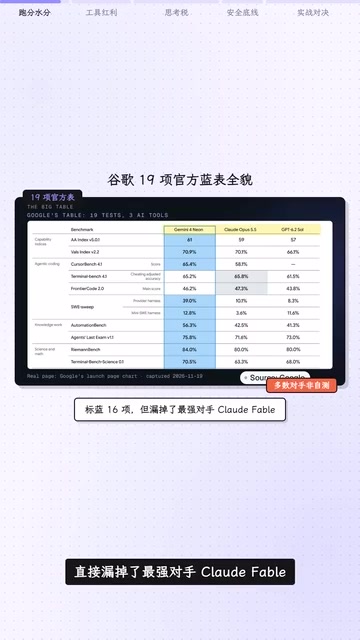
Is Gemini 4 Neon Really Better Than GPT-6.2 Sol? Breaking Down the Benchmarks
Google's Gemini 4 Neon won 16 of 19 official benchmarks, but independent testing and real-world bills reveal tool differences, thinking costs, and response speed that make GPT-6.2 Sol the better value.