Tesla Is Now Selling the Wheel-Free Cybercab? Read the Fine Print First

Tesla opens Cybercab personal purchases to select customers, limited to service areas; the wheel-free design hides liability and practical risks.
Tesla is opening Cybercab personal purchases by invitation to "select customers," marketed for personal use but with fine print limiting the vehicle to service-supported areas. The absence of a steering wheel and pedals makes the car fully dependent on its autonomous system, shifting accident liability from driver to manufacturer and raising legal risks. The invitation system controls early scale and tests market reaction while creating scarcity. The article argues that autonomous-driving commercialization remains regional and gradual, and consumers should watch the pace of service-area expansion rather than be dazzled by the tech. The Cybercab's value depends heavily on how fast Tesla rolls out local services; early buyers are effectively paying for infrastructure.
Tesla is once again pitching its autonomous-driving future to the public. This time, the move is more aggressive than ever: opening up purchases of the Cybercab to "select customers" and explicitly labeling its use as "personal use." But if you think you'll soon be able to own a two-seat autonomous vehicle with no steering wheel, you'll need to read the fine print first.
A Carefully Designed "Future Pre-Sale"
According to leaked information, Tesla is packaging the Cybercab as a product sold directly to consumers rather than a vehicle reserved solely for its Robotaxi fleet. That in itself is a signal: Tesla wants to extend the "autonomous taxi" story from the B2B side to the consumer narrative, making ordinary users feel they can participate in this mobility revolution.
The problem is that the vehicle's conditions of use are restricted to "service-supported areas." In other words, what you're paying for isn't a car you can drive anytime, but a ticket into a specific geofence. If you don't live in one of those designated service areas, the car may be nothing more than an expensive ornament to you.
This sales strategy isn't new. Tesla has used similar tactics repeatedly in promoting FSD (Full Self-Driving): sell the concept first, then deliver gradually. But what's special about the Cybercab is that it doesn't even have a steering wheel or pedals—meaning it physically lacks any fallback for "manual takeover."
What Does No Steering Wheel Mean?
Removing the steering wheel and pedals isn't just a radical design choice—it's a high-stakes gamble at the legal and liability level. Even with advanced driver assistance, a traditional vehicle always has the driver as the ultimate responsible party. The Cybercab's design logic is: the vehicle itself is the driver, and the passenger is just a passenger.
This also explains why sales are strictly limited to "service-supported areas." Within these areas, Tesla has most likely completed high-definition map collection, regulatory communication, and operational testing. Once the vehicle leaves these areas, whether the autonomous system can handle complex road conditions and how accident liability is assigned remain unresolved questions.
For consumers, this means you may be buying a car that is "conditionally usable." Its value depends heavily on how quickly Tesla advances autonomous services locally. If the service area doesn't expand for a long time, the car's practicality will be greatly diminished.
Geofencing is the key technical concept for understanding the Cybercab's usage restrictions. It refers to using GPS, Wi-Fi, or cellular positioning to define a geographic boundary on a virtual map, triggering preset behaviors (such as switching autonomous modes, limiting speed, or prohibiting startup) when a vehicle enters or leaves the area. In autonomous-driving scenarios, geofencing is often paired with high-definition maps to ensure vehicles operate only in areas that have been mapped and tested. Tesla's "service-supported areas" restriction for the Cybercab is essentially relying on geofencing technology to manage the Operational Design Domain (ODD).
ODD is the range of operating conditions set during the design of an autonomous system, including road types, weather, lighting, geographic regions, and more. Beyond the ODD, the system may not operate safely. The Cybercab has no steering wheel or pedals, meaning it relies entirely on the system working within the ODD; once it goes out of bounds, passengers cannot take over, and the risk is extremely high. Therefore, geofencing is not only a business strategy but also a safety bottom line. Consumers need to understand: the vehicle's value is directly tied to ODD coverage, and expanding the ODD requires multiple conditions to mature, including regulation, maps, and testing.
The shift in accident liability is at the core of the legal controversy surrounding the Cybercab. In traditional vehicles, the driver is always the responsible party; even when using driver assistance, the driver must monitor and be ready to take over. In L4/L5 autonomous driving (the Cybercab's design target), the system handles all dynamic driving tasks, and in the event of an accident, liability may point to the manufacturer, software provider, or operator. Regulations across countries are not yet unified: some regions require manufacturers to carry product liability insurance, while others are exploring "black box" data recording to determine liability. Tesla's restriction of the Cybercab to service-supported areas is partly to set boundaries for liability allocation—within controllable areas, Tesla can more clearly define the system's interaction with the environment and reduce legal uncertainty. For consumers, buying a wheel-free vehicle means giving up some control, and they also need to understand that liability may differ from that of traditional cars.
The Screening Logic Behind "Select Customers"
Tesla hasn't disclosed the specific criteria for "select customers," but based on its past practices, invitation-only access is often tied to factors such as user activity, FSD usage history, and geographic distribution. On one hand, this controls the early user base and reduces service pressure; on the other hand, it creates a sense of scarcity and reinforces brand buzz.
More noteworthy is that this invitation-only sales approach may become a lightweight way for Tesla to test market reaction. By opening purchases on a small scale, Tesla can collect real user usage data, feedback, and willingness to pay without bearing the risks of mass production and delivery.
But this also raises a question: if the vehicle's experience depends heavily on the coverage of external service areas, then early buyers are effectively paying for Tesla's infrastructure build-out. They pay for the car but must wait for services to gradually roll out.
Invitation-only sales are common for tech products, but rare for high-priced durable goods like cars. Tesla's invitation system may screen for highly active, highly tolerant early users based on account data (such as FSD Beta participation, mileage, and timeliness of software updates). Such users are more willing to provide feedback, accept imperfect experiences, and are highly loyal to the brand. Through small-scale openings, Tesla can control delivery pacing and avoid large-scale complaints caused by insufficient service area coverage. At the same time, invitation-only sales create a sense of scarcity and maintain topic heat. But this also means early buyers are essentially "paid testers," and their usage data will help Tesla optimize the system and expand the ODD. Consumers should view this rationally: being invited to buy is not a privilege but participation in an ongoing technology validation.
The Real Pace of Autonomous Driving Commercialization
Tesla has always been good at driving valuations with vision, but the Cybercab's sales terms remind us that the commercialization of autonomous driving remains a regional, gradual process. A car without a steering wheel can be built, but making it legal, safe, and reliable on all roads is another matter.
From an industry perspective, Tesla's move is also testing the boundaries of regulation. In different countries and regions, road permits, insurance rules, and accident liability determination for wheel-free vehicles are still evolving. Tesla's choice to enter via "personal use + limited areas" may be to first prove the model in markets with relatively relaxed regulation.
For ordinary consumers, the most rational attitude is to watch the pace of service area expansion rather than being dazzled by the tech appeal of "no steering wheel." A car's value ultimately depends on how widely and reliably it can get you from point A to point B.
Tesla's Cybercab story has only just begun, and the restrictions in the fine print are the true underlying color of this story.
Related articles
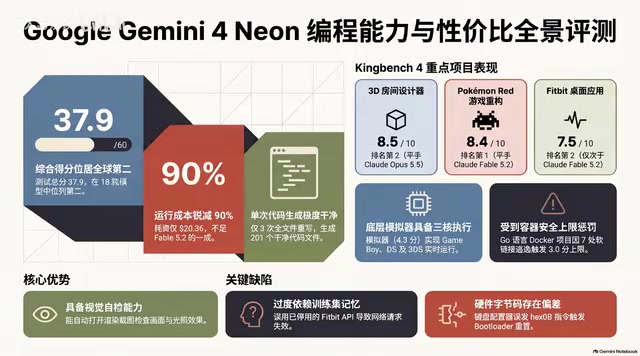
Gemini 4 Neon Hands-On: Value King or Confident Catastrophe?
Gemini 4 Neon review: 1M-token context, four thinking levels, 201 files in one KingBench4 pass at one-tenth Fable 5.2's cost—but it hallucinates fake data, leaves 7 symlink escapes, and bricks keyboards.
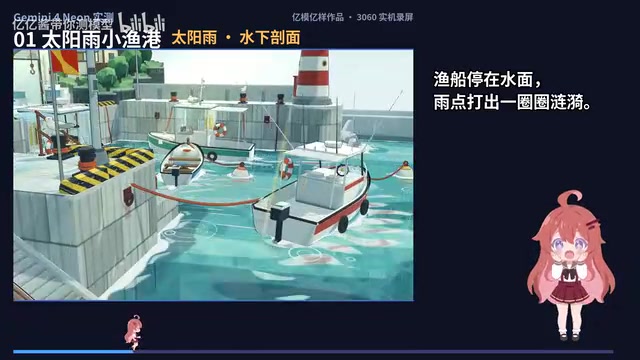
Google Gemini 4 Neon Hands-On: 6 3D Works That Impress and Fail
Hands-on with Google Gemini 4 Neon on a 3060 laptop: 6 3D works tested. Sunshower Fishing Harbor and mechanical keyboard impress; soft-body physics and faces fall short.
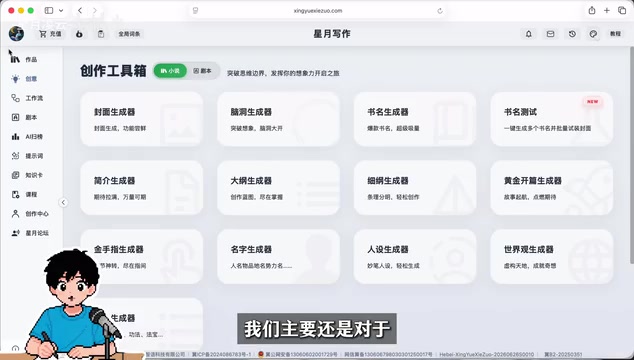
Gemini 4 Neo Web Novel Writing Test: Faint AI Flavor, Textured Dialogue
Bilibili creator's first-look review of Gemini 4 Neo for Chinese web novel writing: testing a Three Kingdoms transmigration opening with faint AI flavor, emotionally textured dialogue, and strong crisis building, plus comparison of 4A/4H/4C models and full workflow demos.