Tesla Powerwall + Electric Vehicle: A Dual Backup Power Solution for Outages

Tesla Powerwall, your EV, and Superchargers can combine to create a layered home backup power system during outages.
This article explores a home backup power strategy centered on the Tesla Powerwall, integrated with an EV and the Supercharger network. The Powerwall provides one to two days of home power during outages; when depleted, the EV can serve as a second battery for roughly another two days; and if the car runs low too, a quick Supercharger stop can restart the cycle. The article also addresses real-world limits: V2H in Tesla's ecosystem requires specific hardware and software coordination, upfront costs are high, and actual runtime varies significantly by household load.
A New Approach to Home Energy Storage During Power Outages
Frequent power outages are a daily frustration for many communities. Whether caused by extreme weather, aging grid infrastructure, or unexpected failures, power interruptions can seriously disrupt daily life — spoiling refrigerated food, taking down medical equipment, and forcing remote workers offline. Tesla's Powerwall home energy storage system offers a compelling solution worth examining.
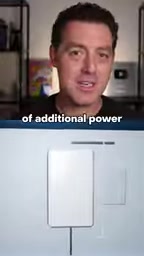
As one YouTube creator shared, his neighborhood experiences frequent outages, which is why he's installing a Tesla Powerwall. The system can provide one to two days of additional power during an outage — essentially giving your home a giant portable battery backup.

The Core Value of Powerwall: One to Two Days of Backup Power
The basic premise of the Powerwall is simple: store energy from the grid (typically paired with solar panels) during normal operation, then automatically switch to powering your home during an outage. As described in the video, a single system can sustain a household's electricity needs for one to two days after the grid goes down.
For most short-duration outages, that window is more than sufficient. But for areas that experience frequent or prolonged outages lasting several days, a single storage unit has its limits. This is precisely where Tesla's ecosystem integration approach comes into play.
Turning Your EV Into a Second Battery
One of the most intriguing ideas in the video is using the electric vehicle itself as an additional backup power source. According to the creator, when the Powerwall runs low, you can simply plug your Tesla into the system and gain roughly another two days of power.
This concept points to Vehicle-to-Home (V2H) technology — the idea that an EV isn't just a power consumer, but that its large battery pack can feed electricity back into the home. Given that an EV's battery capacity is often several times that of a residential storage unit, this approach could theoretically extend backup power significantly.

A note on V2H in practice: Vehicle-to-Home technology still faces significant barriers to widespread commercial adoption. Current Tesla models (such as the Model 3 and Model Y) do not natively support V2H discharging. Tesla's officially supported approach relies on system-level coordination between the Powerwall and the vehicle for energy management — not direct reverse power flow from the car. True V2H discharging has been implemented in vehicles like the Nissan Leaf (via CHAdeMO) and the Ford F-150 Lightning, the latter capable of exporting up to 9.6 kW. So when the video describes "plugging the car in to power the home," the more accurate interpretation within the Tesla ecosystem is: the Powerwall prioritizes its own stored energy first, then conditionally draws from the vehicle's battery — all coordinated through Tesla's proprietary energy management software, not a universal bidirectional charging standard.
Supercharger Top-Ups Close the Loop
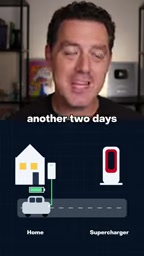
The creator goes on to describe a particularly creative use case: if both the Powerwall and the car are running low, you drive to a Supercharger station, top up in about 30 minutes, drive home, and gain another roughly two days of backup power.
This creates a "home storage + EV battery + Supercharger top-up" cycle. As long as the charging network stays operational, this loop theoretically allows a household to maintain basic power through an extended outage. The appeal lies in its flexibility — rather than relying on a single energy source, it chains together distributed storage and public charging infrastructure.
About the Supercharger network: Tesla's Supercharger network is the company's proprietary DC fast-charging infrastructure, with over 50,000 stalls worldwide. Its key advantage is that even if your home grid is completely down, as long as the charging station's own power supply and connectivity are intact, you have access to an energy source independent of your local grid. However, large-scale natural disasters — hurricanes, earthquakes — can disrupt infrastructure across wide areas, potentially taking Supercharger stations offline as well. Some stations are equipped with local battery storage or solar panels as redundant power sources, though coverage remains limited. As a result, this "drive out to recharge, drive back to power the home" loop is most reliable during localized, short-term outages — its viability during large-scale, long-duration disasters depends heavily on the actual status of nearby charging infrastructure.
A Realistic Assessment: Promise and Practical Limits
This setup demonstrates the synergistic potential of Tesla's energy ecosystem, but a few real-world factors deserve honest consideration.
First, there's the hardware barrier: enabling V2H functionality requires compatible bidirectional charging equipment and specific configurations — it's not plug-and-play for every vehicle and home electrical system. Second, the cost of entry is significant; a Powerwall plus supporting equipment represents a substantial investment, making it most sensible for households that genuinely experience frequent outages. Third, figures like "two days" in the video reflect one person's real-world experience — actual backup duration varies widely depending on household power consumption, battery capacity, and usage habits.
That said, the underlying concept — integrating home storage, EVs, and charging networks into a unified energy system — points toward a meaningful direction for future home energy management. As bidirectional charging technology becomes more widespread and storage costs continue to fall, "using your car to power your home" could evolve from a niche capability into a mainstream application.
Final Thoughts
For households that regularly deal with power outages, the combination of a Tesla Powerwall and an electric vehicle offers an appealing layered backup power strategy. Its core value isn't any single product, but the coordination between energy assets — home battery, vehicle battery, and public charging network working together to provide multi-tiered resilience. Whether it makes sense in practice still comes down to budget, hardware compatibility, and your household's actual energy needs.
Related articles

Rysh Forge in Action: One OpenAPI Spec, Automatically Turned into Claude-Callable Agent Tools
Rysh Forge converts an OpenAPI spec into Claude-callable Agent tools, an MCP server, a Python SDK, and docs with one command — with built-in write confirmation and full audit logging.

OpenAI Agents SDK in Practice: Implementing Human-in-the-Loop Approval
A complete guide to implementing Human-in-the-Loop approval with OpenAI Agents SDK: pause tool calls with needs_approval, capture interruptions, handle approve/reject decisions, and serialize RunState for async workflows.

NeurIPS SAC Ticket Transfer Policy Sparks Debate: What's Behind the Change
NeurIPS SAC ticket transfer policy sparks debate in the Reddit ML community. We break down the controversy, likely reasons behind the change, and practical advice for researchers navigating top conference ticketing.