Tesla Secures $30 Billion in New Credit Lines to Back Cybercab and Optimus Mass Production

Tesla locks in $30B credit facility as strategic reserve for Cybercab and Optimus mass production.
Tesla has confirmed $30 billion in new credit facilities, with no plans to draw on the funds this year — positioning them as strategic reserves for future large-scale capex. The company has already planned at least $25 billion in capital expenditure focused on scaling Cybercab autonomous robotaxis and Optimus humanoid robots. By locking in credit terms now rather than issuing immediate debt, Tesla hedges against future rate increases while ensuring it won't be constrained by financing timelines when these capital-intensive projects hit rapid scale-up phases. The move signals a systematic financial preparation for Tesla's strategic transition into an AI and robotics company.
Tesla's Financial Playbook: $30 Billion Credit Facility Locked In
Tesla has confirmed it secured a total of $30 billion in new credit facilities. The move is widely interpreted as a critical step in preparing the company for its next phase of large-scale capital expenditure.
Notably, Tesla made clear it has no plans to draw on this new debt capacity within the current year. In other words, this is ammunition held in reserve for the future — not an emergency response to any near-term cash flow pressure. For an automaker known for its solid cash flow, proactively expanding its financing channels looks more like a strategic stockpile than a distress signal.
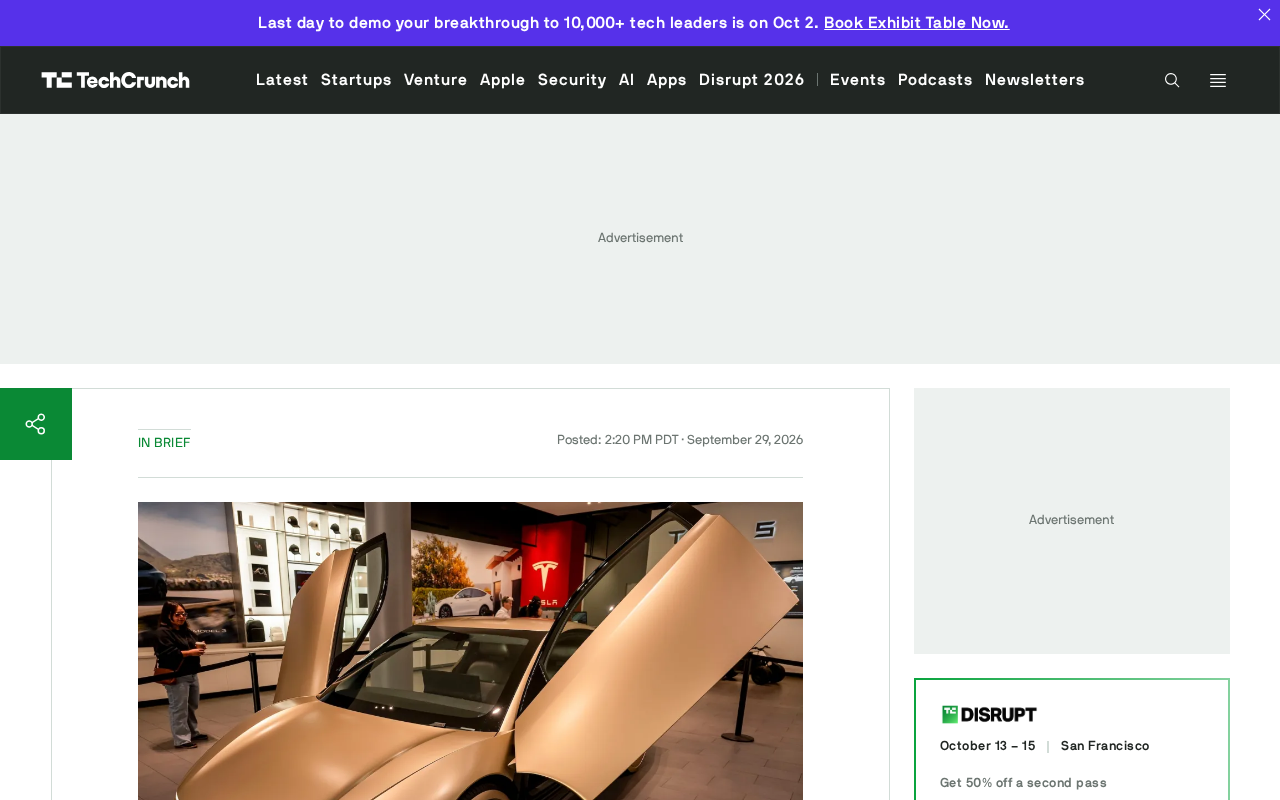
The Ambition Behind a $25 Billion Capital Expenditure Plan
According to company disclosures, Tesla has already planned at least $25 billion in capital expenditure for this year alone. That figure speaks volumes about its expansion appetite — whether in capacity buildout, AI compute investment, or bringing new product lines to market, all of it demands enormous funding.
The newly secured $30 billion credit facility complements the existing $25 billion capex plan. By expanding its credit capacity without immediately drawing on it, Tesla signals a desire to preserve maximum financial flexibility for what could be an accelerating investment pace ahead. This "load up first, deploy later" approach to capital management is especially common in capital-intensive, long-cycle industries like advanced manufacturing and robotics.
Why Reserve It Rather Than Use It Now?
There are several layers of logic behind locking in credit lines early. First, interest rate environments and financing conditions are uncertain — securing favorable terms now hedges against rising costs down the road. Second, when projects like Cybercab and Optimus enter a phase requiring rapid scale-up, having ample standby capital means Tesla won't miss its window due to financing timelines.
A credit facility is fundamentally different from issuing bonds or raising equity: companies pay only a modest commitment fee and owe no full interest until they actually draw down funds — essentially locking in an always-on capital channel at minimal cost. Tesla's free cash flow is currently positive, so there's no urgent need for external capital. But securing terms with a bank syndicate now provides a hedge against tightening credit markets or rising rates. This kind of "revolving credit + term loan" combination is a standard liquidity management tool across tech and heavy industry. Apple, Intel, and others maintain tens of billions in undrawn credit reserves as a signal of financial strength to the market.
Cybercab and Optimus: Two Growth Engines
The strategic focus of this financing round is unmistakable — paving the way for mass production of Cybercab (the autonomous robotaxi) and Optimus (the humanoid robot). These two product lines represent Tesla's pivotal pivot from traditional EV manufacturer to AI and robotics company.
Cybercab embodies Tesla's autonomous mobility vision. If its business model proves out, it could reshape urban transportation economics entirely. Optimus, meanwhile, is what Elon Musk sees as a major long-term value driver for the company — one whose mass production involves complex supply chains, deep hardware-software integration, and enormous upfront investment.
Whether it's deploying Cybercab fleets or scaling Optimus production, both are quintessentially capital-intensive projects. The $30 billion credit reserve is precisely the financial cushion designed for these two "heavy investment, long payback" businesses.
Cybercab is Tesla's planned steering wheel-free, pedal-free autonomous robotaxi, operating on Tesla's Full Self-Driving (FSD) system, with the goal of building a ride-hailing network like Uber/Lyft but without human drivers. Musk has publicly stated that Cybercab's cost per mile could be as low as $0.20 — far below traditional ride-hailing services. Optimus is Tesla's general-purpose humanoid robot, designed to take on repetitive tasks in factory lines, warehousing, and potentially household services. As of late 2024, Optimus was already being piloted on a small scale inside Tesla's own factories, with Musk predicting annual production could eventually surpass one million units. What both products share is this: high hardware manufacturing costs and long production ramp-up cycles — but once economies of scale kick in, their unit economics become extremely compelling. That's precisely why Tesla needs to pre-position significant capital.
A Signal of Disciplined Expansion
Taken together, Tesla's latest move sends a clear message: the company is making systematic preparations for the commercialization of its next generation of technology products, while maintaining financial prudence. With a robust capex budget already in place and a fully committed credit line available on demand, Tesla enters the Cybercab and Optimus era with considerably more strategic flexibility.
For investors and industry observers tracking Tesla's long-term trajectory, this credit facility is more than a financial headline — it's a vote of confidence the company is casting in its own AI and robotics future.
Related articles

Understanding DeepSeek in 3 Minutes: The Rise from a Quant Hedge Fund to an Open-Source AI Leader
DeepSeek's history in 3 minutes: from High-Flyer Quant's compute build-up to V2's MLA inference cost cuts, V3's $5.576M training bill, R1's open-source global shock, and V4 with a $7B Series A.

Local Creative Writing Model Showdown: Fine-tuned Qwen3.8 27B Wins, DeepSeek v4.1 Underwhelms
Bilibili creator tests seven local creative writing models: Hemingway and HumanLike Chat based on Qwen3.8 27B perform best, DeepSeek v4.1 is plain, Dongfang Shuo ranks last with confused characters. Includes three test prompts, scores, and usage advice.

Liang Wenfeng's Three Big Bets: Why Did DeepSeek Open-Source Its 82% Gross Margin?
Why did DeepSeek open-source DeepInfer, its 82% gross margin inference framework, and then launch a hundred-billion funding round? An analysis of Liang Wenfeng's three big bets and the open-source strategy.