Tesla to Discontinue Cybertruck Next Year to Make Way for Cybercab Robotaxi

Tesla will halt Cybertruck production by mid-next year, freeing capacity to bet on the Cybercab robotaxi.
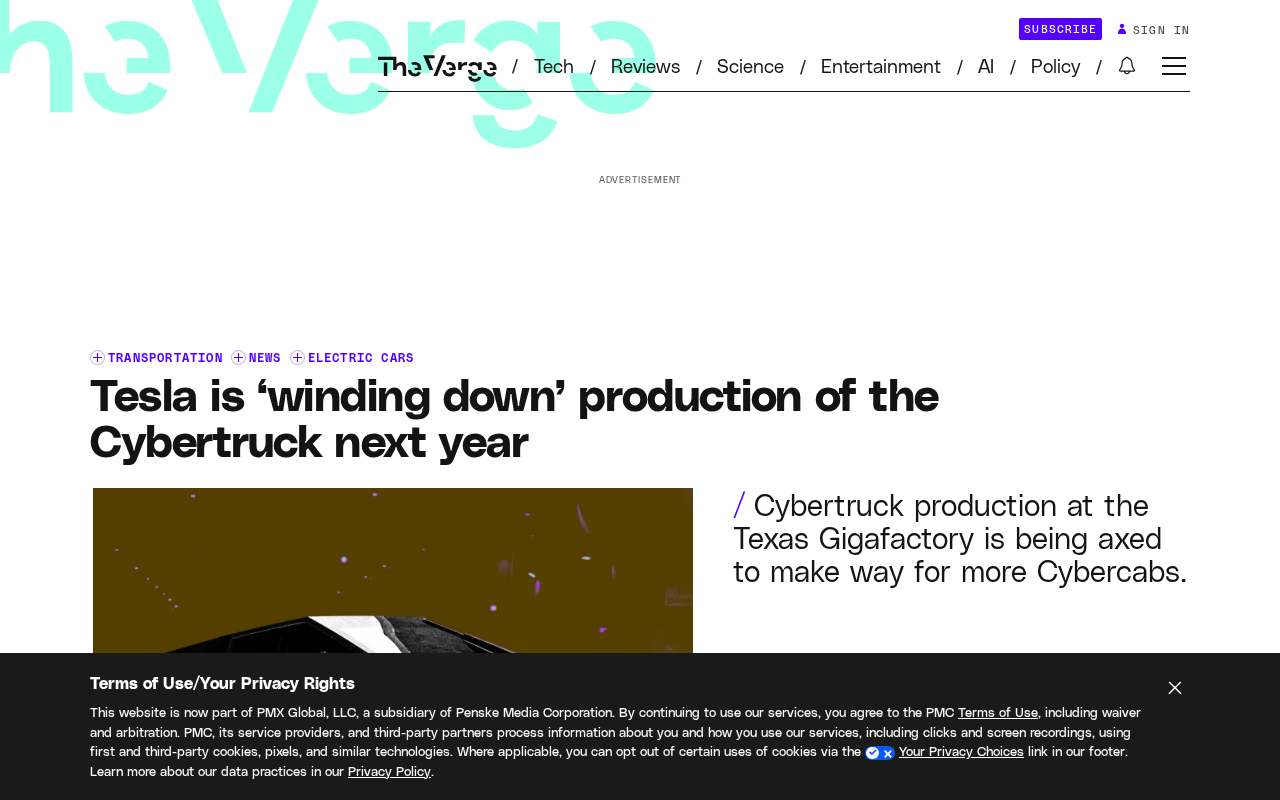
Musk announced on X that Tesla plans to wind down Cybertruck production around mid-next year to free up capacity at Gigafactory Texas for increased Cybercab output. It marks a strategic contraction and refocusing from a niche electric pickup to a dedicated robotaxi model. The Cybercab is a two-seat, fully autonomous vehicle with no steering wheel or pedals, seen as the core of future growth. But analysts are cautious about its production timeline, FSD maturity, and regulatory approval, and the impact of the Cybertruck halt on jobs and the supply chain remains unclear.
Tesla to Discontinue Cybertruck Next Year to Make Way for Cybercab Robotaxi
Tesla CEO Elon Musk recently announced on X that the company plans to "wind down" Cybertruck production around the middle of next year in order to free up capacity for increased Cybercab output. The decision comes just a few years after the Cybertruck's first deliveries, marking a major shift in Tesla's product strategy—from a distinctive electric pickup to a dedicated vehicle aimed at the autonomous ride-hailing market.
The Production Halt: Making Way for Cybercab
In his X post, Musk made it clear that Tesla's Gigafactory in Texas will be "winding down" Cybertruck production around mid-next year, with the goal of "freeing up space to increase Cybercab production." This is the first time Tesla has officially confirmed plans to discontinue the Cybertruck, following persistent market speculation about the model's performance and future.
The Cybertruck has been controversial since its debut: its distinctive stainless-steel body design, repeatedly delayed deliveries, and a price higher than originally promised have all made it a center of attention. Despite the massive buzz, its actual sales never reached Musk's original targets. The decision to halt production means Tesla is acknowledging that this "futuristic pickup" failed commercially to replicate the success of the Model 3/Y.
Gigafactory Texas is the Tesla gigafactory built in Austin, Texas, which officially began production in 2022 and is the exclusive manufacturing site for the Cybertruck. The factory also produces the Model Y and is regarded as a core hub for Tesla's future capacity expansion and technological innovation. Reconfiguring the production line means Tesla will need to reallocate stamping, welding, and final assembly resources within the factory, which typically involves hundreds of millions of dollars in restructuring costs and a timeline of several months.
Cybercab Priority Raised: Robotaxi Becomes the New Focus
Handing the Cybertruck production line over to the Cybercab clearly reflects Tesla's current strategic priority: the robotaxi business. The Cybercab is a two-seat vehicle designed specifically for Tesla's robotaxi service, with no steering wheel or pedals, relying entirely on FSD (Full Self-Driving) software. Musk has repeatedly said that the robotaxi network will be the core growth engine for Tesla's future.
Behind this shift is Tesla's restructuring of its business model. With growth in traditional car sales slowing, Tesla wants to move robotaxi from concept to scaled operation, and Cybercab production capacity is a prerequisite. As the exclusive manufacturing site for the Cybertruck, the Texas factory's production line adjustment means Tesla is concentrating resources on the more imaginative autonomous driving business.
robotaxi (autonomous ride-hailing vehicle) refers to vehicles that provide on-demand mobility services through autonomous driving systems without a human driver. The core of its business model is removing driver costs, thereby significantly lowering per-mile operating costs. Waymo (under Google parent Alphabet) has already launched commercial operations without safety drivers in cities such as Phoenix and San Francisco, and Baidu's Apollo Go has also deployed in multiple Chinese cities. Tesla's differentiated approach relies not on LiDAR and high-definition maps but on a pure vision-based solution—though large-scale driverless validation of that approach still takes time.
FSD (Full Self-Driving) is the brand name of Tesla's advanced driver-assistance system. Its current capabilities include automatic lane changes, automatic parking, and urban road assisted driving, but it still requires the driver to stay attentive and take over at any time—placing it at L2 level. Tesla's planned unsupervised FSD (L4/L5 level) is the technical prerequisite for Cybercab commercialization. FSD's evolution depends on end-to-end neural networks and training on massive fleet data, and its safety redundancy and regulatory certification are the main bottlenecks to mass deployment.
Impact on Tesla's Product Line
Discontinuing the Cybertruck will simplify Tesla's product matrix. Tesla's current lineup includes the Model 3, Model Y, Model S, Model X, and Cybertruck, with the Cybertruck positioned as a niche, higher-priced model that contributes limitedly to overall sales. After the halt, Tesla can concentrate engineering and manufacturing resources on higher-volume models and the Cybercab project.
For existing Cybertruck owners, the discontinuation may create uncertainty around resale value, but after-sales service and parts supply are expected to continue in the short term. For potential buyers, the purchase window for the Cybertruck is narrowing, which could trigger a last-chance wave of demand. However, Tesla has not yet announced a specific discontinuation date or transition arrangements.
Market Reaction and Uncertainty
After Musk's X post, the market reaction was relatively muted, but analysts remain cautious about whether the Cybercab can be mass-produced on schedule. Tesla's competitors in the robotaxi space include companies already operating commercially, such as Waymo, while Tesla's FSD technology still requires driver supervision. The Cybercab's production timeline, regulatory approval progress, and actual operating economics are all unknowns.
In addition, whether the Cybertruck halt will affect employment at the Texas factory and the local supply chain is also worth watching. Tesla has not yet disclosed how employees will be affected by the production line adjustment.
Waymo is an autonomous driving company under Alphabet and one of the largest robotaxi service providers in commercial operation globally. Waymo uses a multi-sensor fusion approach combining LiDAR, cameras, and millimeter-wave radar, and has provided paid passenger service without safety drivers in multiple U.S. cities, completing millions of trips cumulatively. Unlike Tesla's pure vision approach, Waymo places greater emphasis on hardware redundancy and safety validation within geofenced areas, and its operational data provides an important safety benchmark for the industry.
Conclusion
The Cybertruck's "retirement" plan represents a strategic contraction and refocusing by Tesla amid slowing sales growth and intensifying competition in autonomous driving. Betting resources on the Cybercab means Tesla is wagering on the future of robotaxi rather than continuing to struggle in the fiercely competitive electric pickup market. The success of this bet will depend on how quickly FSD technology matures and how the regulatory environment evolves.
Related articles
 Tech Frontiers
MuJoCo: An Analysis of DeepMind's Open-Source General-Purpose Physics Simulator
An in-depth analysis of Google DeepMind's open-source physics simulator MuJoCo: high-performance C++ kernel, MJCF modeling format, contact solving principles, MJX GPU acceleration, and robot reinforcement learning use cases.
 Tech Frontiers
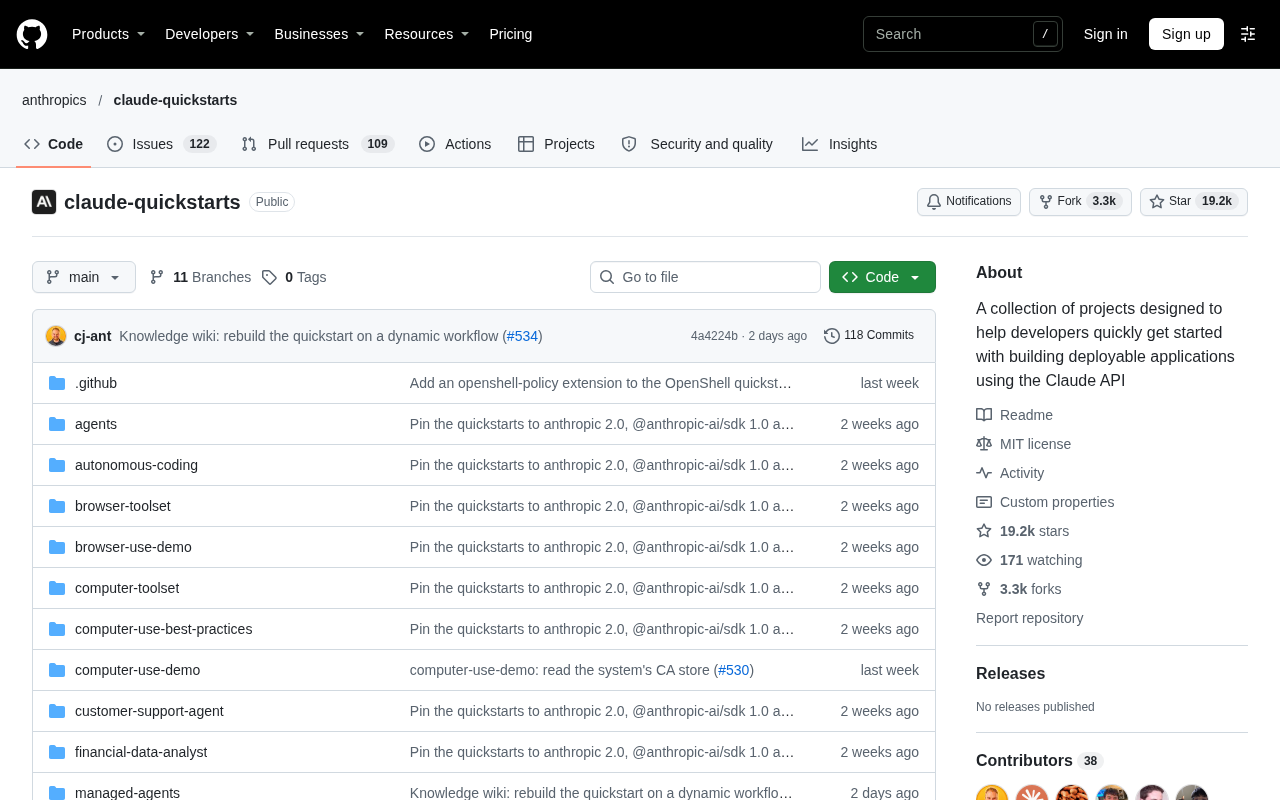
Claude API Quick Start: The Official Quickstarts Project Collection
Anthropic's official claude-quickstarts project collection helps developers quickly build deployable apps with the Claude API. Nearly 20k stars, Python-based, great for beginners and prototyping.
 Tech Frontiers
AI Agents Connecting Directly to APIs: Which Calls Can Be Safely Allowed?
AI agents can call any API, but the real challenge is deciding which calls can be safely allowed. This article analyzes allowance decisions from three dimensions—intent matching, least privilege, and controllable impact—and argues that the control layer should sit outside the agent, combined with audit traceability to build a trustworthy API call governance mechanism.