Test Report in Three Minutes? Lemon Test Report Skill Hands-On: No Fabrication, Fully Auditable
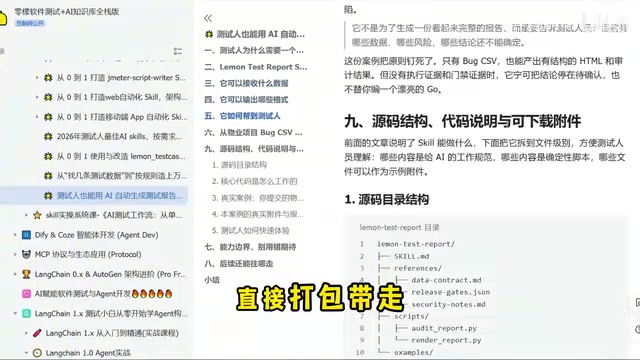
Lemon Test Report Skill turns test data into auditable reports, emphasizing auditability and anti-fabrication.
Lemon Test Report Skill is an AI-assisted test reporting tool positioned as a workflow for organizing and verifying test data into auditable reports, not a simple text generator. One input yields three outputs: a text draft, a web presentation report, and a machine-verifiable data package, with automatic formatting and categorization. Core capabilities include marking 'To Be Confirmed' instead of fabricating when data is insufficient; four conclusion types (Ready to Ship, Ship with Risk, Do Not Ship, To Be Confirmed) that require evidence; support for Test Summary, Regression Verification, and Release Acceptance modes; and flagging conflicts between manual data and recalculated results. Boundaries are clear: it can't run automated tests, discover real bugs, or replace release decisions. Its value lies in freeing testers from report assembly to focus on quality analysis.
Test execution is over, but the misery has just begun—manually tallying pass rates, cross-checking bug counts, analyzing severity, and formatting everything into a PPT the boss can understand. Every day you burn hours on end-of-day overtime just assembling reports, with no time left for real quality analysis. What you fear most is a data misalignment: you casually fill in 98%, but a quick check shows the real number is 90%. According to a Bilibili creator, an AI tool called Lemon Test Report Skill is making the rounds in testing circles, positioned as a "workflow for organizing and verifying test data into auditable reports"—not a simple text generator.
What It Actually Is: Not a Text Generator, but a Verification Workflow
Many people picture AI report writing as "input data, output pretty words." Lemon Test Report Skill takes a different stance: it strings together test data organization, conclusion determination, and evidence verification into a single workflow, with an emphasis on auditability and traceability.
According to the creator, its core value is "three reports out from the data you put in": feed it test case results, a bug list spreadsheet, and a test plan, and it directly outputs a testing trio—an editable text draft (easy to polish and send via Feishu/Lark), a polished web-based presentation report (ready to take straight into a review), and a machine-verifiable data package (anti-tampering trail, archived in the system). Formatting and categorization are fully automated.
This means testers are freed from the "spreadsheet drudge" role and can put their energy back into quality analysis itself.
Auditable in the testing domain means every conclusion in a report can be traced back to the original data, rules, or evidence, and the process can be re-checked. Traditional AI reports are often black-box generations whose conclusions can't be verified. Lemon Test Report Skill emphasizes a "machine-verifiable data package" and "anti-tampering trail," meaning it locks down data sources, calculation logic, and judgment rules so that any conclusion can be traced back to its basis. This is similar to the "audit trail" requirement in financial auditing, aimed at preventing human tampering or AI hallucination and ensuring the report holds up to scrutiny in review and compliance scenarios.
Three Core Capabilities Explained: Anti-Fabrication, Four-State Judgment, and Poka-Yoke
When Data Is Insufficient, It Dares to Say "To Be Confirmed"
This is the most highlighted integrity design of the skill. Many AIs, eager to please users, write beautiful reports and make things up even when evidence is lacking. If Lemon Test Report Skill is missing key evidence such as the pass rate, it won't fabricate data for you—it marks the conclusion as "To Be Confirmed" or "Data Missing."

In a hands-on case, when given a 34-item bug list, it directly judged the conclusion as "To Be Confirmed," pointed out the missing pass-rate evidence and unclosed high-risk defects, and refused to force a positive spin.
Four Conclusions That Spell Out "Why It Can't Ship"
Its conclusions fall into four categories: Ready to Ship, Ship with Risk, Do Not Ship, and To Be Confirmed. All release criteria must be backed by evidence—for example, if the pass rate is set below 95%, it flags Do Not Ship.
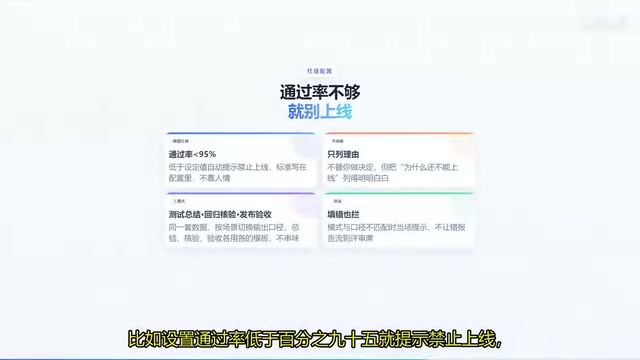
It won't make the final call for you, but it will lay out the reasons why you "still can't ship" in clear detail. For test teams that need to report upward while keeping an audit trail, that's no small value.
Release criteria usually refer to pre-defined quantitative thresholds such as pass rate, defect density, and severe-defect closure rate. Lemon Test Report Skill requires all conclusions to be evidence-backed—for instance, a pass rate below 95% triggers Do Not Ship. This is essentially automating the "quality gate": the tool doesn't make decisions for people, but it rigorously compares preset rules against measured data and lists the gaps. This approach reduces the arbitrariness of subjective judgment and is especially suited to teams that need upward reporting and audit trails, making the reasons for "can't ship" traceable.
Full-Scenario Coverage and Automatic Fraud Detection
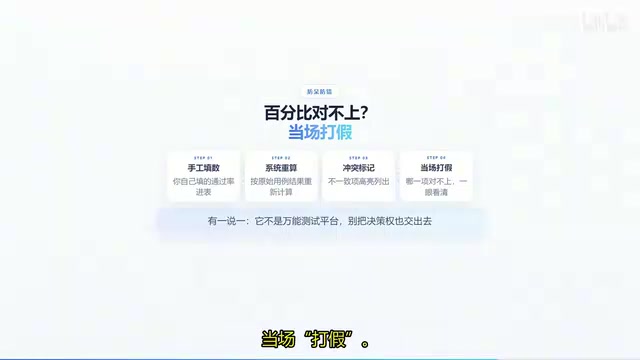
It supports three working modes: Test Summary, Regression Verification, and Release Acceptance. Even more practical is the poka-yoke (error-proofing): if a percentage you manually entered conflicts with its recalculated result, it not only recalculates but also flags the conflicting item—calling out the fraud on the spot. That "casually filled 98% when it's actually 90%" social-death scenario is exactly what this mechanism catches.
Poka-yoke (error-proofing) originates from lean manufacturing and refers to designing processes so that errors cannot occur or are immediately detected. In test reports, common errors include wrong percentages, data misalignment, and conclusions that don't match the evidence. This tool achieves "automatic fraud detection" by recalculating and flagging conflicting items: when a manually entered percentage doesn't match the recalculated result, it not only corrects the value but also highlights the conflict location, preventing the social-death scenario of "casually filled 98% when it's actually 90%." This mechanism turns after-the-fact checking into real-time verification, reducing the credibility risk of reports.
Know the Boundaries: It's Not an All-Powerful Testing Platform
To be fair, this skill can't run automated tests for you, can't automatically discover real bugs, and can't replace you in making the final release decision.
Its role is to help you complete result organization, quality analysis, and release review faster and more accurately. By saving the time spent organizing data, writing reports, and tallying bugs, it lets you genuinely analyze quality risks. The creator's suggested workflow: first prepare structured data, let it run an automatic verification pass, then generate the final report.
Why Tools Like This Are Worth Watching
The fundamental tension of test reports is this: they are simultaneously quality evidence, communication material, and a frequent source of overtime. General-purpose LLMs can write reports, but they lack a verification mindset and tend to "report only the good news." Hard-coding verification rules, conclusion grading, and conflict detection into a skill is like adding a quality gate to the AI.
This also answers a real-world question: future testers won't be replaced by AI, but they will be replaced by testers who know how to use AI to organize reports. Saving the effort of writing reports for core quality control—that's the real efficiency logic behind tools like this.
Related articles
Claude Code in Practice: Filling in Tests with Boundary Cases, Coverage, and Assertions
A practical guide to using Claude Code for unit tests: generating boundary cases with global context, locating uncovered branches to boost coverage, and writing effective assertions. Compares Cursor and Trae.

Giving a Toilet an IP Address with a Raspberry Pi: An Absurd Yet Hardcore IT Experiment
An IT blogger assigned an IP address to his toilet using a Raspberry Pi and float switch, monitoring flushes via GPIO and correlating with network disconnection logs. This article breaks down the hardware wiring, pull-up resistor principles, 0.1-second polling logic, and installation process, extending to similar approaches in AI Agent security monitoring.
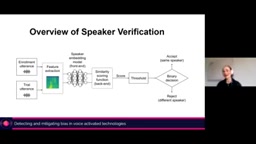
Bias in Speech Recognition: Full-Pipeline Detection and Mitigation from Data to Deployment
Based on FAccT research, this article systematically analyzes seven types of bias in voice activation and speaker verification—from historical and representation bias in the VoxCeleb dataset, to the impact of model size on bias, the evaluation trap of surging false negative rates on hard test sets, and design guidelines for building inclusive evaluation datasets plus the Fair EVA auditing project.