Testing Five Ways to Wake Up: From Splashing Water to a Smart Temperature-Controlled Mattress

Five wake-up methods tested show temperature-controlled awakening offers the best experience by mimicking natural body temperature rise, reflecting sleep tech's shift from startling to collaboration.
A YouTube creator compared five wake-up methods through firsthand testing: splashing water (F), music through speakers (D), being shouted awake (D), traditional alarm clock (C), and a mattress automatically heating up (S). The ranking logic shows that the more sudden and intense the external stimulus, the worse the waking experience; the temperature-controlled mattress simulates the natural morning rise in core body temperature through gradual heating, letting the body complete the transition to wakefulness through physiological signals and avoiding forced interruption by sound or physical shock. The product also supports independent left-right zone temperature control, resolving the conflict of different temperature needs among bed-sharers. The article also notes that the evaluation is subjective, commercially promotional, and based on a single-person sample, so conclusions should be treated with caution; nonetheless, temperature-controlled awakening does reflect sleep technology's design shift from passive monitoring to active intervention and from "being called awake" to "being awakened."
Five Ways to Wake Up, Five Experiences
Have you ever wondered, in the moment you're jolted awake by your alarm clock, whether there's a gentler, more scientific way to get up? A YouTube creator gave his answer through firsthand experimentation—from splashing water, blasting music, and being shouted awake to letting a mattress automatically heat up, five methods were scored one by one. This seemingly entertaining test unexpectedly reveals a key trend in sleep technology: awakening the body, not startling it.
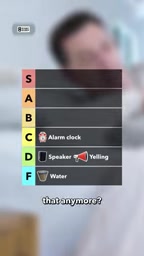
The creator graded the five wake-up methods by experience, from lowest to highest:
- Splashing water: F grade, "never trying that again"
- Playing music through speakers: D grade
- Being shouted awake: also D grade
- Traditional alarm clock: C grade, with the creator asking, "Why is anyone still using this?"
- Mattress automatically heating up: S grade, natural awakening, no startling sensation
The underlying logic of this ranking is clear: the more sudden and intense the external stimulus, the worse the waking experience. Splashing water is the extreme of physical shock, shouting is the extreme of social pressure, and the traditional alarm clock is the typical representative of auditory startlement. Their common problem is—forcibly interrupting sleep before the body is ready.

The creator's complaint about traditional alarm clocks is particularly worth savoring: "Why is anyone still using this?" This is not mere jest. From the perspective of sleep science, the shrill sound of an alarm triggers a stress response, causing a sudden spike in heart rate and blood pressure fluctuations; over time this may affect morning condition. And although music through speakers is gentler than an alarm, it is still essentially external sound interference, hence only a D grade.
Why Is the Smart Temperature-Controlled Mattress S Grade?
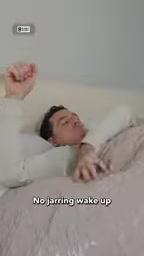
The climax of the experiment is the last method: letting the mattress slowly heat up at a scheduled time, naturally awakening the body through temperature change. The creator described the experience as "no abrupt jolt, no shock to the system—you just wake up naturally and feel great."
The principle behind this is not complicated. Human core body temperature naturally drops during sleep and begins to rise in the early morning—an important signal by which the biological clock regulates awakening. By externally heating the mattress so its temperature rises gradually, this natural process is "simulated" and reinforced, allowing the body to complete the transition from sleep to wakefulness through gentle physiological signals rather than being forcibly interrupted by sound or physical stimuli.
The creator also mentioned a practical detail: the left and right sides of the mattress can be set to completely different temperatures, so a couple can each get what they need—"no more fighting over the air-conditioning temperature." This resolves a long-standing conflict in sleep scenarios—people sharing a bed often have different temperature needs.
The product is called Eight Sleep; the creator gave it an S-grade rating and provided a discount link in the video. It should be noted that this is a video with a commercial promotional nature, and the evaluation conclusions should be viewed with this background in mind. Nevertheless, analyzing the product logic itself, temperature-controlled awakening does hit the core pain point of traditional alarm clocks.
Core Body Temperature and Sleep Wakefulness
Human core body temperature is not constant but follows a circadian rhythm of about 24 hours. Around sleep onset, core temperature gradually declines, reaching its lowest point around 4–5 a.m., then begins to rise. This warming process is synchronized with the secretion of awakening hormones such as cortisol and is an important physiological basis for the biological clock's "time to get up" signal. Research shows that during the temperature-rising phase people more easily transition from sleep to wakefulness, with less accompanying grogginess (sleep inertia). Therefore, using an external temperature-control device to gradually raise mattress temperature at a scheduled time essentially amplifies and accelerates this natural warming signal, letting the body "go with the flow" and wake up at the physiological level—rather than being forcibly interrupted by an alarm while body temperature is still low.
Sleep Inertia
Sleep inertia refers to the grogginess, slowed reactions, and reduced cognitive performance that occur for a period after waking, usually lasting from a few minutes to half an hour, and is especially severe when one is suddenly awakened during deep sleep. The shrill sound of a traditional alarm does not distinguish sleep stages; if it happens to ring during deep sleep, it exacerbates sleep inertia, causing a sudden morning spike in heart rate, blood pressure fluctuations, and even increasing the risk of cardiovascular events. The advantage of temperature-controlled awakening is that gradual temperature changes usually act during light sleep or near natural awakening windows, thereby reducing sleep inertia. However, its effects vary from person to person; those insensitive to temperature changes or with misaligned sleep stages may still have a poor experience.
From "Being Called Awake" to "Being Awakened": The Shift in Sleep Technology
This five-point experiment, though small, reflects an obvious turn in sleep technology: from "making a louder sound" to "regulating the physiological environment".
The traditional alarm's approach is "make sure you hear it," so volume keeps increasing and vibration is added. But the flaw of sound-based awakening is that it doesn't care about your sleep stage—it rings on schedule, and being forcibly pulled out of deep sleep is often accompanied by obvious grogginess. The temperature-control approach is "let the body wake itself," coordinating temperature signals with the biological clock, which in theory can reduce morning discomfort.
Of course, the limitations of this method are also obvious: the cost is far higher than an alarm clock, and it depends on the specific载体 of a mattress. The dual-zone temperature control shown in the video essentially belongs to the category of high-end smart bedding, with a not-low threshold for adoption.
From a broader perspective, sleep technology is moving from "monitoring" to "intervention." Early products mostly focused on recording sleep data, while today active intervention features such as heating, cooling, and humidity regulation are gradually becoming selling points. Temperature-controlled awakening is just one facet, but it points to a direction: the best way to wake someone may be to make them feel they weren't "woken" at all.
The "Monitoring–Intervention" Evolution of Sleep Technology
Early sleep technology products were mainly passive monitoring, such as wristbands and mattress sensors recording heart rate, respiration, toss-and-turn counts, and sleep stages to help users understand their sleep patterns. In recent years, with improved sensor accuracy and the integration of actuators (heating, cooling, humidity regulation), products have begun to shift from "telling you how you slept" to "helping you sleep better." Typical active intervention scenarios include dynamically adjusting temperature according to sleep stage, smart awakening within light-sleep windows, and simulating sunrise through lighting. The temperature-controlled mattress is a representative of this trend, aligning environmental regulation with biological rhythms and embodying a design philosophy shift from "adversarial awakening" to "collaborative awakening."
What This Experiment Didn't Tell You
It should be objectively pointed out that the video format makes this evaluation subjective and experiential, with a sample of only the creator himself and a promotional nature. Different people vary greatly in sensitivity to temperature changes; temperature-controlled awakening may be markedly effective for some and not necessarily for others. Although the traditional alarm scored lowest, in scenarios requiring absolutely punctual waking it remains the most reliable choice.
The discounts and price information mentioned in the video are commercial promotional content and are not elaborated here. What is truly worth remembering may be that simple ranking logic: the closer the waking method is to the body's natural rhythm, the better the experience. This is both the conclusion of this experiment and a direction that sleep product design can continue to explore.
Limitations of Subjective Experience Evaluation
The five-point scoring used in the video is essentially a single person's subjective experience, lacking a control group, repeated measurements, and objective physiological indicators (such as morning cortisol levels or sleep inertia scale scores). Individuals differ greatly in sensitivity to temperature changes, sleep stage distribution, and daily routines; a single creator's S-grade evaluation cannot be directly generalized to the general population. In addition, the commercial promotional nature may introduce evaluation bias. When referring to such content, readers should treat it as a "product concept demonstration" rather than a "scientific conclusion." For rigorous assessment, one should consult research literature supported by controlled experiments and physiological indicators.
Related articles

Tailscale SSH Security Incident Investigation and Remediation Update
Tailscale releases investigation and remediation update on Tailscale SSH security incident. This article covers the background, the security boundaries of keyless SSH, version upgrade and ACL audit measures users should take, and implications for zero-trust access control.

AI SDK xAI 5.0.32 Fixes Duplicate Citations in Streaming
AI SDK's xAI provider releases patch 5.0.32, fixing duplicate emission of Web and X search citations in streaming responses, and updates provider-utils dependency. Developers using search features should upgrade.
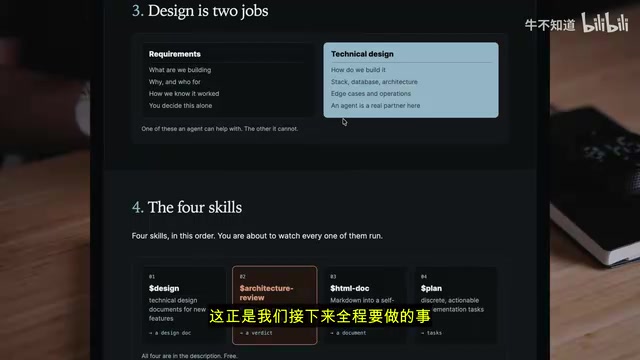
Don't Rush AI to Write Code: 4 Skills That Turn Design into Executable Tasks
A 20-year veteran engineer explains why AI coding means humans should focus on design and planning, not code. Use architecture.md to anchor architecture with four skills—design, architecture review, HTML docs, and planning—to turn technical plans into executable tasks and improve software quality.