Texas Senate Race: A Political Battle Over 'Who Is a Man'

Texas race turns masculinity into a test, with attacks serving as a political tool to stoke voter anxiety.
A Texas street interview shows that in the upcoming Senate race, 'masculinity' and 'who is man enough' have become central controversies. Voters sketch a 'good Texas man' as faithful, family-oriented, gentlemanly, and cowboy-like. Democratic candidate James Tallarico's opponent tries to imply through 'soy boy'-style labels that he lacks masculine qualities and even to hint at his sexual orientation. Analysts say the attack really targets voters' insecurities about sex and gender to stir a base that isn't excited, likened to struggling in quicksand—sinking deeper the harder you push. Respondents believe a politician can also be a good Texas man, but only if honest and diligent.
When the Election Issue Becomes a 'Masculinity' Exam
In a street-interview video from YouTube, a reporter goes to Texas to talk with voters about the upcoming Senate election. An unexpected yet unsurprising topic surfaces: in this race, 'masculinity' and 'who is man enough' have become the central points of contention. The reporter opens by stating: 'We're here talking with Texas voters about the upcoming Senate election, where ideas about masculinity and who is man enough have become a big issue.'
For Texas voters, the definition of a 'good man' is plain and concrete. Respondents' answers sketch a traditional portrait: believes in God, takes care of family, a cowboy hat paired with a cowboy on horseback, being a gentleman. One voter says bluntly: 'If you can't be a gentleman, you're not a real man.' Another adds: 'Texans are big-hearted. Everything's bigger in Texas, right?'

Respondents portray the 'Texas man' with images of a cowboy hat and horseback riding
This cultural expectation is not mere casual folk talk; once it enters the electoral context, it can be weaponized. The video shows that the opponent of Democratic candidate James Tallarico tries to cast him as a kind of 'low-tied soy boy'—an internet term often used to imply a lack of traditional masculine qualities—and even hints at his sexual orientation.
The Logic of the Attack: Targeting Voters' Anxieties
The video includes a rather sardonic response: 'I love you too, sir, completely platonically.' Immediately after, the person on screen clarifies: 'To be clear, I'm the vice president, not James Tallarico.' When asked 'So do you have a girlfriend,' the answer is yes, and they have been together for years—'She's my rock.'
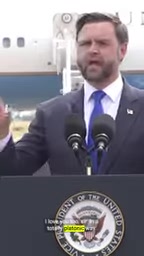
The person in the video clarifies his identity and responds to the opponent's attacks
One analyst interviewed offers a sharp reading of this attack strategy: 'You have to think about their audience. Some of their audience is very sensitive to the economic message James is delivering. So they're projecting their own insecurities and worries about sex and gender.' This analysis gets right to the point—the attack is not really about the candidate himself, but about unresolved anxieties in voters' minds.
So who exactly is this attack line designed for? The analyst puts it more bluntly: 'It's really about stirring up a base that isn't as fired up as usual. When your base isn't excited, you try to use extreme measures to provoke them—it's a bit like thrashing around in quicksand: you accidentally sink deeper and faster.'

The analyst points out that the attack aims to provoke anxiety rather than persuade
This metaphor precisely captures the political risk of the 'masculinity attack': it may briefly activate the base, but it can also backfire, making the candidate appear unfocused and extreme to a broader electorate.
'Soy boy' is a derogatory term popular in recent years in online right-wing communities in Europe and America. Literally it refers to men who consume soy products and are believed to have elevated estrogen levels; in practice it is used to mock young men who lack traditional masculine qualities, are thin, and lean liberal politically. Along with words like 'cuck' and 'beta male,' it belongs to a set of internet gender insults often used in online political flame wars.
The spread of this label is itself a product of the algorithmic media environment: personal-attack labels are short, easy to spread, and quickly trigger emotional reactions, so they gain more exposure on social platforms than policy discussion. Understanding the social meaning of such internet slang helps make clear that the 'masculinity attack' is not traditional political rhetoric, but a new tool rooted in internet subculture that uses gender stereotypes for political mobilization.
Can a Politician Also Be a 'Good Texas Man'?
The video poses a more philosophical question to respondents: is it possible to be both a politician and a good Texas man? The answer is yes, but with conditions—'But you have to be honest, you have to work for it, because there are a lot of crooked people out there who want you to do things that are bad for this country.'
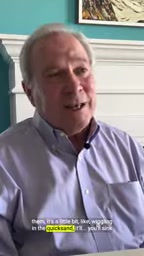
Respondents discuss the compatibility of being a politician and a Texas man
What is intriguing about this interview is that respondents pull the standard of a 'good man' away from gender performance and back to character: honesty, diligence, resisting bad influences. This stands in contrast to the opponent's 'masculinity' attack—the former appeals to a moral core, while the latter consumes stereotypes and anxiety.
Conclusion: Why Gender Issues Keep Permeating Elections
This snippet from the Texas race reveals a broader political phenomenon: when economic issues struggle to fully mobilize voters, identity politics—especially gender and masculinity—is often used as a tool. The analyst in the video acknowledges that James's economic message itself can attract some audiences, and it is precisely this that makes the attackers uneasy enough to turn to a gender offensive. And the quicksand metaphor reminds us: a strategy fueled by anxiety sinks deeper the harder you push.
For readers interested in technology and the media ecosystem, this real political scene offers a sample for observing 'how issues are produced and spread'—information warfare is not only between algorithms and platforms, but also in every question-and-answer exchange on the street, in word of mouth, and in front of the camera.
Background Notes
The stereotypical image of the 'Texas man' has specific historical and cultural sources: 19th-century cowboy ranching culture, the frontier pioneering myth, and the silent, resolute, family-protecting male image long shaped by Hollywood Westerns together constitute this symbol. Images such as the cowboy hat, horseback riding, and vast land are the visual distillation of this mythology.
In contemporary American politics, this image is repeatedly invoked. Texas politicians often reinforce their own 'down-to-earth' masculine persona with symbols such as farms, pickup trucks, and guns, while opponents are implied to be outsiders detached from that culture. Precisely for this reason, the 'who is man enough' dispute in the election is in essence a struggle over cultural belonging and legitimacy: whoever is recognized as a 'real Texan' is more likely to gain trust. This also explains why respondents ground the standard of a 'good man' back in honesty and diligence—a kind of correction to symbolic politics.
Related articles

DeepSeek Harness Quick Start Guide: From Installation to 5 Real-World Cases
What is DeepSeek Harness? Based on a Bilibili tutorial, this article covers how this AI Agents software works, installation and setup, four working modes, and five real-world cases: a 3D racing game, official website, music player, science animation, and self-developed plugin—plus token money-saving tips.

Breaking Down DeepSeek's Super-agent Architecture: How Router+Worker Solves the Multi-Session Management Bottleneck
An analysis of DeepSeek's Super-agent paper: how the Router+Worker two-tier architecture uses Fast Pass, Chain of Recall, and storage-compute separation to solve multi-AI-session management bottlenecks, and how much it truly alleviates the human attention bottleneck and what engineering trade-offs it makes.

19K Stars in 5 Days: Why DeepSeek's Open-Source AI Programmer Went Viral
DeepSeek's open-source AI programmer hit 19K GitHub stars in 5 days. Why it went viral: the agent boom, AI writing its own code, and the shift from Q&A tools to AI employees.