The AI Coding Terminal Built for DeepSeek: A Deep Dive into the 38K-Star Open Source Project
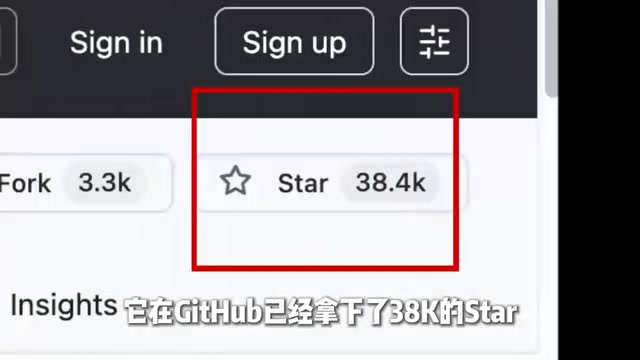
An open source terminal AI coding agent deeply optimized for DeepSeek, featuring 20 parallel agents and three security modes.
This article introduces an open source AI coding terminal with 38K stars on GitHub that abandons multi-model compatibility to focus exclusively on DeepSeek, earning the nickname "DeepSeek's Claude Code." Its core capability is a closed-loop task execution: users input a natural language requirement, and the agent automatically reads files, modifies code, runs commands, manages Git, and searches the web. It supports up to 20 parallel agents for decomposing complex tasks and offers three security modes—ignore (read-only), manual confirmation, and dragon (fully automatic)—backed by automatic snapshot rollback and OS-level sandbox isolation. It also has low resource usage and can be deployed directly on servers for CI/CD or remote development. The article also notes the iteration risks of single-model binding and that conflict handling and sandbox strength still need practical verification.
When DeepSeek Meets the Terminal: A Vertically Optimized AI Coding Agent
With AI coding tools booming, most products choose to support multiple models. But one open source project goes the opposite way—it's built specifically for DeepSeekAd and has already hit 38K stars on GitHub. Dubbed the "DeepSeek version of Cloud Code" by industry insiders, this tool has recently sparked plenty of discussion on Bilibili. According to the UP host, it's not a simple API wrapper but has been deeply optimized for DeepSeek's model characteristics.
This "single-model deep binding" strategy hits a real need for a certain type of developer: those who don't want to fiddle with model routing and compatibility layers, and just want an out-of-the-box coding terminal tuned for a specific model.
AI Coding Agent is a form of development tool that has emerged in recent years. Unlike traditional code completion (such as GitHub Copilot) or conversational coding assistants, an agent has a closed-loop capability of "perceive—decide—execute": it can autonomously call tools like the file system, terminal commands, and version control, plan multi-step operations based on task goals, and iteratively correct itself. Representative products include Claude Code, Cursor Agent, and Aider. The core challenge of agents lies in reliability and security—LLM hallucinations can lead to erroneous modifications, so engineering designs typically require sandbox isolation, operation auditing, and rollback mechanisms. The DeepSeek-specific terminal introduced in this article is a practice of the "single-model deep optimization" route in this track.
Core Capability: One-Sentence Requirement, Fully Automated End-to-End Execution
The most attractive part of this terminal is its closed-loop task execution. You only need to input a single natural language requirement, and it will automatically read files, modify code, run commands, manage Git, search the web, and more. From the screenshots, the entire process requires no manual intervention—the agent autonomously decides the next action.

This design philosophy is in line with terminal AI agents like Cloud Code: upgrading the LLM from a "conversational assistant" to an "executor." For repetitive tasks like daily code refactoring, bug fixing, and dependency upgrades, the agent mode can significantly reduce context-switching costs.
20 Agents in Parallel: Decomposition and Synchronization of Complex Tasks
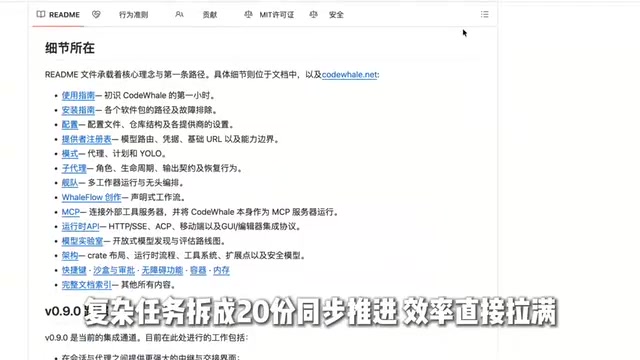
What really sets it apart is its parallel capability. According to the UP host, the tool supports 20 agents working in parallel simultaneously, breaking complex tasks into 20 parts to advance synchronously. This means a large refactor involving multiple files and modules can be completed in one round instead of waiting serially.
It should be noted that the actual effectiveness of 20 parallel agents depends heavily on task decomposability. For low-coupling batch modifications (such as uniformly replacing API calls or adding type annotations in bulk), the parallel advantage is obvious; for strongly dependent chain tasks, parallelism may instead introduce conflicts. This is a boundary you need to judge for yourself when using such tools.
Multi-Agent Parallelism refers to launching multiple AI agent instances simultaneously to handle subsets of the same task. Its technical premise is that the task can be effectively decomposed into low-coupling subtasks, with each agent assigned an independent working context. Implementation difficulties mainly lie in three areas: first, task decomposition itself requires the LLM to have good planning capabilities; second, parallel modifications to the same codebase may produce file-level or semantic-level conflicts, requiring merge strategies or lock mechanisms; third, result aggregation and consistency verification. Common industry practices include assigning each agent an independent branch/worktree, using file locks to avoid write conflicts, and performing test verification during the merge phase. Higher parallelism is not always better—increasing the number of agents brings simultaneous rises in token consumption, coordination overhead, and conflict probability.
Three Security Modes: From Read-Only Reconnaissance to Fully Automatic Hands-Off
The biggest risk of AI agents is "breaking the code." This project addresses it with three security modes, as described by the Bilibili UP host:
- Ignore mode (read-only reconnaissance): The agent only reads and analyzes, without modifying any files. Suitable for first understanding the code structure before deciding on a plan.
- Manual confirmation mode: Every operation waits for manual confirmation. Suitable for cautious modifications to critical codebases.
- Dragon mode (fully automatic): Complete hands-off—the agent autonomously executes all operations.
Dragon mode is not without safeguards—it automatically takes snapshots at every step, and if something breaks, it's a one-click rollback. Combined with OS-level sandbox isolation, reliability has a safety net.
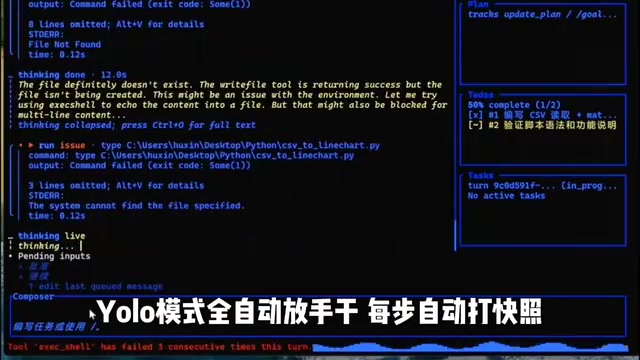
This combination of "snapshot + rollback + sandbox" essentially pushes the version control mindset down to the agent execution layer. Compared to relying solely on prompt constraints, engineered security mechanisms are more reliable.
OS-level Sandboxing is a solution that uses isolation mechanisms provided by the operating system to restrict process behavior. Common technologies include Linux namespaces and cgroups (the foundation of containers), seccomp system call filtering, macOS sandbox-exec, and the lighter-weight chroot. Compared to virtual machines, OS-level sandboxes have low overhead and fast startup, making them suitable for agent execution scenarios that frequently create and destroy environments. They can constrain the agent's file system access scope, network egress, and executable system calls. Even if the agent is subjected to prompt injection attacks or hallucinations, the blast radius can be limited within the sandbox. However, sandbox strength depends on configuration granularity—too loose and it's practically useless; too strict and it may block normal build commands. In actual deployment, policy templates usually need to be preset for different task types.
Lightweight Operation and Server Deployment
Another noteworthy point is resource consumption. According to the UP host, the terminal uses very few resources when running and can be used directly on a server. This opens up space for scenarios like CI/CD pipeline integration and remote development environments—developers don't have to run agents on high-spec local machines; throwing batch tasks onto a server is equally feasible.
A Bit of Calm Observation
38K stars indicate no small amount of community recognition, but a tool optimized specifically for a single model also implies binding risk: DeepSeek model iterations and API changes could affect the tool's stability. In addition, details like conflict handling in parallel agents and the isolation strength of the sandbox still need practical use to verify. For DeepSeek users seeking out-of-the-box convenience, this is undoubtedly an option worth adding to the toolbox; for teams mixing multiple models, they need to weigh the trade-off between the efficiency and flexibility brought by specialization.
Related articles

OpenAI Breaks ETH? P=NP Could Upend the Cryptography World
OpenAI reportedly disproved ETH with a sub-exponential algorithm, sparking P=NP speculation. What it means for RSA, blockchain, and protein folding.
When an Anti-Fingerprinting Script Is …
When an Anti-Fingerprinting Script Is Flagged as a Bioweapon: The Detection Dilemma of Security Tools
An anti-fingerprinting script was flagged as a bioweapon by security scanning, sparking Hacker News debate. This analysis covers the causes of keyword-matching false positives, how developers respond, and the long-term imbalance between automation and precision in security tools.
41,000 DHS Employee Records Leaked, Including Undercover ICE Agents
Data breach exposes 41,000 DHS employees, including undercover ICE agents. Analysis of sensitive data risks, law enforcement security gaps, and protection measures like access control and auditing.