The AI Model Release Frenzy: The Industry Logic Behind the Tech Arms Race

Why AI giants are releasing models at a relentless pace — and what it means for everyone.
The AI industry has entered an era of back-to-back model releases, with OpenAI, Google, Anthropic, and Meta shipping updates at a near-overwhelming pace. This article examines the competitive dynamics fueling the frenzy, weighs the benefits of accelerated progress against risks like rushed safety testing and developer lock-in, and explores how the landscape may evolve toward quality over quantity — while human creativity finds renewed value.
Introduction: The Era of Back-to-Back Model Releases
Recently, a Reddit user posted a hand-drawn illustration with the caption "They really dropped these back to back huh," sparking a wave of recognition across the AI enthusiast community. That half-joking observation perfectly captures a defining trend in today's AI industry: the pace of large model releases has accelerated to a near-overwhelming rate.
This "back to back" release strategy has evolved from an occasional move by individual companies into a new industry-wide norm. For developers and everyday users alike, it's both a blessing and a source of genuine frustration. This article analyzes the phenomenon, exploring the industry logic behind it and its far-reaching implications.
What's Driving the Dense Release Cycle?
Looking back at AI industry developments over the past year or so, the gap between major releases from leading players has been shrinking steadily. OpenAI, Google, Anthropic, Meta, and other top-tier companies have been rolling out new models or major updates within weeks — sometimes days — of each other. The moment one company drops a flagship product, competitors swiftly follow, creating a visible cycle of one-upmanship.
Understanding this phenomenon requires tracing the technical evolution of generative AI. The foundational architecture behind today's mainstream large language models (LLMs) largely traces back to the Transformer model introduced by Google in 2017 — a revolutionary design that enabled efficient long-text modeling through self-attention mechanisms. Since ChatGPT burst onto the scene in late 2022, the entire industry entered an explosive growth phase. Companies like OpenAI, Google DeepMind, Anthropic, Meta AI, and Mistral have been competing across dimensions including model parameter scale, reasoning capability, and multimodal support — creating the multi-polar race that fuels today's dense release cadence.
Worth noting: the Reddit user specifically labeled the illustration as "human created by me." This detail carries a certain irony — in an era flooded with AI-generated content, human creation has become something that needs to be explicitly flagged as a rarity. It's a telling sign of how rapid AI iteration has already reshaped the broader content creation ecosystem.
Competition-Driven Acceleration
At its core, the intensification of model releases is a direct result of white-hot market competition. In the generative AI race, the window of competitive advantage has been compressed dramatically. Any company that falls even slightly behind risks rapid erosion of both user mindshare and market share. This compels every player to ship research results as quickly as possible, even when products aren't fully polished.
This dynamic also breeds "preemptive release" tactics: when one company announces or launches a new model, competitors often reshuffle their own release schedules — either to avoid being overshadowed or to strategically ride the wave of attention. It's also worth noting that model capability is heavily evaluated through benchmarks like MMLU, HumanEval, and GPQA. The race to top these leaderboards has objectively intensified the competitive pressure around release cadence.
A Double-Edged Sword: The Effects of Rapid Releases
The Upside for the Industry
From a technological progress standpoint, rapid releases undeniably accelerate the entire field's evolution. Users gain access to more capable, more cost-efficient models faster. The open-source community benefits especially — Meta's Llama series is a prime example. The successive releases of Llama 2 and Llama 3 have enabled developers to deploy locally, fine-tune freely, and build private applications that don't depend on cloud APIs, dramatically lowering the marginal cost of AI development. The open-source ecosystem that has grown around Llama on platforms like Hugging Face — including tens of thousands of derivative fine-tuned models — forms a parallel technical ecosystem alongside closed commercial models, putting frontier capabilities within reach of small teams and individual developers.
Furthermore, high-frequency releases create richer market feedback loops. Vendors can iterate quickly based on real-world usage, and this "move fast in small steps" approach has long been validated as an effective product strategy in the software industry.
The Risks and Challenges
The flip side, however, deserves serious attention. A release pace that's too aggressive may sacrifice product stability and safety. Models rushed to market may carry insufficiently tested risks around AI alignment, hallucination control, and bias mitigation.
AI alignment — ensuring model behavior conforms to human values and intended use — is primarily achieved today through techniques like RLHF (Reinforcement Learning from Human Feedback). Hallucination — where models generate plausible-sounding but factually wrong or fabricated content — remains one of the most stubborn unsolved problems in LLMs. Cutting corners on testing these two dimensions under competitive pressure effectively transfers risk to end users, with potentially serious consequences in high-stakes domains like healthcare, law, and finance.
For developers, rapid model turnover introduces real adaptation costs. This problem manifests architecturally as vendor lock-in: developers building applications often become deeply dependent on a specific model's API interface, output format, and behavioral characteristics. When an underlying model is deprecated or undergoes significant capability changes, applications built on top of it may face systemic refactoring pressure. Some engineering teams have begun adopting abstraction-layer tools like LangChain and LiteLLM to reduce dependence on any single model provider — but this itself adds complexity to the technology stack.
For ordinary users, information overload is a real challenge. When the names, version numbers, and capability comparisons of new models come flooding in from every direction, figuring out which one actually fits your needs becomes a cognitive burden in itself. This explains why that simple, wry observation resonated so widely — it articulated the shared anxiety of "not being able to keep up" that many people quietly feel.
Looking Ahead: A Return to Rationality After the Frenzy
From Quantity Racing to Quality Depth
The dense release cadence is unlikely to slow down in the short term, as the competitive landscape hasn't yet stabilized. But as the market matures, companies will likely shift from a pure "release volume race" toward deeper investment in real-world application value and user retention.
Historically, software industry maturation tends to bring standardization and consolidation. The AI model space may undergo a similar evolution: the foundation model layer gradually stabilizes, and the competitive battleground moves upward — toward fine-tuned specialization for vertical industries, reliability guarantees for enterprise deployment, and complete product experiences built around models. The companies that stay at the table won't be those with the highest release frequency, but those that consistently deliver stable, reliable models that genuinely solve user problems. Users will ultimately vote with their feet, choosing products that stand the test of time.
Reappraising the Value of Human Creation
The Reddit user's deliberate labeling of "human-drawn" artwork signals another trend worth watching. As AI capabilities continue to expand, human originality, authenticity, and emotional expression are acquiring new dimensions of value. When machine-generated content becomes cheap and abundant, work with a distinctly human touch grows more precious.
This phenomenon has a deep logic in content economics: scarcity determines value. When AI can instantly generate vast quantities of visual content, text, and code, works that can prove "human involvement" — whether hand-drawn illustrations, first-person narratives, or deeply personal emotional expression — will command a premium on the dimension of authenticity. This may foreshadow a dual-track content ecosystem: "AI-assisted industrial production" running in parallel with "human-original artisanal work."
It's a reminder that however exhilarating AI's rapid advance may be, the ultimate purpose of technology remains to serve human creativity and genuine needs — not to replace them.
Conclusion
The "back to back" release phenomenon is a defining marker of AI's entry into a high-velocity development era. It reflects the vibrant energy of technological progress while also exposing the risks that unchecked competition can bring. For everyone navigating this landscape — developers, creators, and everyday users alike — staying rational and anchored to real needs may matter more than chasing every new model announcement.
In this AI arms race, the true winners won't be those who run the fastest. They'll be the ones who go the furthest — steadily and sustainably.
Key Takeaways
- The dense AI model release cycle is driven by compressed competitive advantage windows and benchmark-driven rivalry among major players
- Open-source releases like Meta's Llama series democratize access but the overall pace creates adaptation burdens for developers
- Key risks include rushed safety alignment, unresolved hallucination issues, and vendor lock-in for application developers
- Market maturation will likely shift competition from release volume toward application-layer depth and enterprise reliability
- Human-created content is gaining new value as a scarce, authentic counterpoint to abundant AI-generated output
Related articles
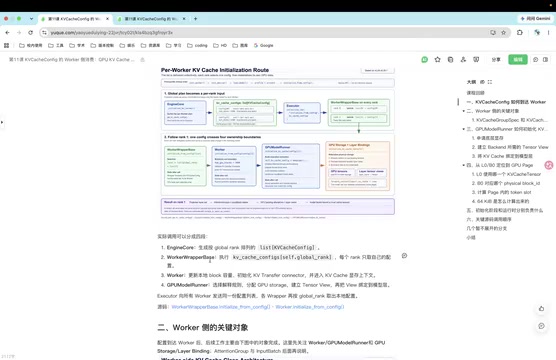
Deep Dive into vLLM Worker-Side GPU KV Cache Initialization
Deep dive into vLLM's Worker-side KV Cache GPU memory allocation, covering the full pipeline from KVCacheConfig generation to physical memory binding via ModelRunner.
Zepto Builds AI Customer Service with MLflow: An Evaluation-Driven Practice Guide
Deep dive into how Zepto built an evaluation-driven AI customer service system using MLflow and Databricks, achieving 60% faster responses and 40% less manual handling. From technical architecture to practical insights.

Iran Captures U.S. Underwater Drone in Strait of Hormuz: A Comprehensive Analysis
Iran announces capture of U.S. Navy underwater drone in Strait of Hormuz. In-depth analysis of the incident, strategic value of UUVs, U.S.-Iran geopolitical competition, and implications for global energy security and military dynamics.