The CIA's First Female Agent in Moscow: Inside the Cold War's Riskiest Operation

How CIA officer Marty Peterson exploited the KGB's gender blind spot to run top Soviet asset Trigon in Moscow.
This article tells the story of Marty Peterson, the first female CIA case officer to run a high-risk intelligence operation in Moscow. In 1975, the CIA exploited the KGB's blind spot against using women for dangerous missions and sent the inexperienced Peterson to Moscow to handle a Soviet Foreign Ministry asset codenamed "Trigon." Disguised as "Party Marty," she used an SR-100 receiver to confirm she wasn't followed and delivered cameras, money, and a poison pen via dead drops. Trigon provided high-value intelligence on arms control and foreign policy, but was exposed after CIA translator Karl Kocher spied for Czechoslovak intelligence. Peterson was arrested by the KGB but released under diplomatic immunity.
How a "grandmotherly woman" rewrote CIA history
Marty Peterson looked like anyone's grandmother. When she appeared in the National Geographic documentary Inside the CIA, she laughed at herself: "People are always surprised, because I now look like somebody's grandmother."
But her next line was more telling—"People who work at CIA eventually look like grandmothers."
The woman who spent 32 years at the CIA was the first female case officer to run a high-risk intelligence operation in Moscow during the Cold War. She handled one of the most valuable Soviet assets in CIA history—Alexander Ogorodnik, codenamed "Trigon." The full story only came to light in recent years.
Why a woman? The KGB's blind spot
In November 1975, Marty Peterson arrived in Moscow. At the time, the Soviet Union was the top target of American intelligence, and the KGB's surveillance apparatus was regarded as "the elite of the elite."
Former KGB intelligence officer Alexander Vasiliev said bluntly in the film: "We were trained to believe we were fighting the CIA. KGB surveillance was the best."
Because of this, the CIA faced a deadlock: every male officer stationed in Moscow was under constant KGB surveillance and simply couldn't meet an asset safely. Yet Trigon's intelligence kept flowing from the Soviet Foreign Ministry to the CIA—information on arms control negotiations and foreign policy, delivered directly to the President's desk.
CIA counterintelligence noticed a key vulnerability. As former CIA case officer James Olson recalled: "We said to ourselves, we know the KGB won't use women for high-risk operations."
The KGB didn't use women for high-risk missions—and that became the CIA's opening. Marty Peterson had just finished training when she was sent to Moscow. She later admitted: "I had no experience at all. Moscow was the primary target of American intelligence. I knew it was the big leagues."
Case Officer is a core position in the CIA's intelligence operations system, responsible for recruiting, training, and handling assets and managing the collection and transmission of intelligence. Case officers are typically deployed overseas under diplomatic cover (such as embassy secretary or cultural attaché); if their identity is exposed, the host country can declare them persona non grata under the Vienna Convention on Diplomatic Relations and expel them. During the Cold War, virtually all male case officers at the CIA's Moscow station were under 24-hour KGB surveillance, because they were placed on a priority watch list from the moment they arrived. Methods for case officers to meet assets include face-to-face meetings, dead drops, and signal-site contacts. Dead drops are the safest because both parties need not appear at the same location at the same time, but they demand the highest level of counter-surveillance skill.
Hiding behind "Party Marty"
After arriving in Moscow, Peterson's core task was to determine whether she was being followed. A colleague gave her a strategy: act frivolous and social.
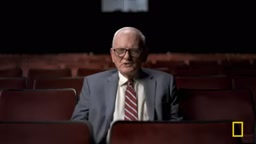
She attended parties all over Moscow and earned the nickname "Party Marty." To her embassy colleagues, she was just a secretary doing low-level work, stopping by the CIA station at noon and before quitting time. No one thought she was worth noticing.
Peterson began testing surveillance alone on Moscow's streets. She invited other secretaries along on outings, creating natural reasons to glance back. The result was unexpected: no one was following her.
When she reported to the station that she had detected no surveillance, her male colleagues refused to believe it. "Some of the old male chauvinists," Peterson said, "doubted my ability to identify surveillance."
Headquarters also initially assumed "she just didn't see it—the surveillance must be there."
One receiver changed everything
A turning point came from the CIA's Office of Technical Service. Then-director Robert Wallace revealed a key technical breakthrough: KGB surveillance teams used a specific type of radio communication with each other, and the CIA could intercept it.
They equipped Peterson with an SR-100 receiver. When male colleagues went out, they could hear the surveillance team's communications through an earpiece. When Peterson went out—nothing.
She truly wasn't being followed.
Marty became the CIA's "ace" in Moscow. Olson said: "Marty became Trigon's contact—it was historic. It was the first time an asset was handled inside Moscow, and the first time a woman carried out a high-risk, dangerous intelligence operation."
The SR-100 receiver was a concealed radio receiving device specially modified by the CIA's Technical Services Staff (TSS) for the Moscow station. Its core principle was not codebreaking but exploiting a weakness: KGB surveillance teams used specific frequency bands for voice communications—often unencrypted or using simple codes—and CIA technicians had learned their frequencies and patterns through long-term monitoring. The receiver was small enough to be hidden in clothing or personal items, and was used with a concealed earpiece, allowing the case officer to listen in real time to nearby surveillance teams' dispatch instructions while out. If clear communications came through the earpiece, the surveillance team was active nearby; if there was silence, she wasn't being followed. This technological tool turned "am I being followed?" from a subjective judgment into a verifiable, objective signal, dramatically lowering operational risk.
Dead drops: a game with no way back
Dead drops are a classic spycraft technique—leaving a disguised package at a specific location for an asset to pick up later. The package could contain instructions, money, medicine, a camera, or anything the asset needed to carry out the mission.
Peterson's first dead drop was to deliver Trigon a miniature camera concealed in a pen.
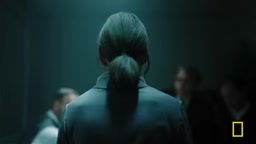
The original plan was to toss the package from a car window, but the technical team wasn't sure the camera's delicate mechanism could survive the impact. The station decided on the spot that she would deliver it on foot.
She drove for two hours confirming she wasn't being followed, then entered the Moscow metro, changed lines three times, and walked to the drop site. "My heart was racing—I was hyper-alert and terrified at the same time," she recalled.
Approaching the dead drop, she pretended to blow her nose with a tissue while taking the package from her bag and setting it down, then walked for an hour. When she returned—the package was still there.
A few blocks away, a man sat in a car.
In that moment she thought she'd been exposed. But it turned out the man was just waiting for a ride and hadn't noticed her.
The poison pen: a choice framed as a "moral responsibility"
The photographic intelligence Trigon provided was of extremely high quality. His department was the communications center of the Soviet Foreign Ministry; all cables sent back to Moscow by Soviet ambassadors abroad passed through it. That meant the CIA could see directly the policy recommendations Ambassador Anatoly Dobrynin sent back from Washington—and the Soviet side's real interpretation after Kissinger met Dobrynin.
But the pressure was destroying Trigon. By spring 1977, his photography had become erratic. He developed stomach problems and breathing issues. He began repeatedly asking the CIA for a means of suicide in case of arrest.
The CIA initially refused. But as Trigon persisted, they eventually concluded it was a moral responsibility. The technical team modified the same pen that had concealed the camera, placing a poison ampoule inside the barrel—biting it would cause instant death.
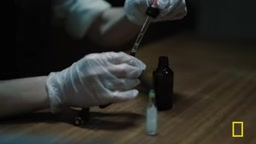
Peterson successfully delivered the pen to Trigon. "I just hoped he would never need to use it."
Diplomatic immunity is a principle of international law established by the Vienna Convention on Diplomatic Relations (1961), providing that diplomatic personnel enjoy immunity from criminal jurisdiction in the host country and cannot be arrested or prosecuted. During the Cold War, both the U.S. and the USSR used this rule to provide legal protection for intelligence personnel—CIA case officers were stationed in Moscow under diplomatic cover, and even if caught red-handed by the KGB conducting espionage, they could usually only be declared persona non grata and expelled, not tried or imprisoned. This was also the legal basis on which Peterson could leave Lubyanka prison after being arrested and interrogated for hours by the KGB. But diplomatic immunity was not an absolute safety net: the KGB could obtain intelligence through interrogation, damage an officer's future operational capability through public exposure, and in extreme cases take measures outside the legal framework.
June 28, 1977: everything collapses
That day Peterson left a package in a park. An hour later, she saw a van that had never appeared in that park before—lights on, windows fogged.
She sensed something was wrong and decided to leave without retrieving what Trigon had left. The next morning, she found that Trigon had left a mark at the signal site—but it was completely different from his usual one: bright red, finely drawn, as if someone had deliberately made sure she wouldn't miss it.
It was a clear anomaly. But the CIA's principle was: when an asset's life is in danger, you must confirm his safety status.
In July 1977, Peterson again headed to a dead drop carrying a package with a camera, documents, and rubles. As she came down the stairs from a railway bridge—three men rushed at her from across the street, and a van pulled up beneath the bridge.
She was arrested by the KGB.
Confirmation in the interrogation room: Trigon was already dead
Peterson was taken to Lubyanka prison. The interrogator opened her package and took out the items one by one. When he saw the pen, he suddenly said: "Don't touch it. Put it aside. Nobody touch it."
In that moment, Peterson understood everything. The interrogator was afraid the pen contained poison—which meant he had seen Trigon use it with his own eyes. Trigon had been exposed.
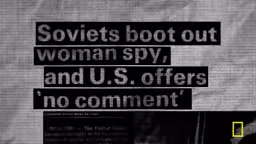
But Peterson had diplomatic immunity. After hours of interrogation, the interrogator said: "You can go."
She returned to the embassy, walked into the CIA station office, and the new chief said: "Oh, you're back—great." On the blackboard in his office were the words "our little girl."
Peterson told him: "I am nobody's little girl."
The traitor and the ending
On the day the KGB broke into his home, Trigon bit down on the poison ampoule. He had written half of a "confession," and in the moment he put the pen in his mouth and bit it—he was dead before the KGB could try to revive him. That was a week before Peterson saw the van in the park.
What exposed Trigon was a CIA translator named Karl Kocher. He secretly worked for Czechoslovak intelligence and passed information back to the KGB through them. When the KGB learned that someone inside the Soviet embassy had been turned by the CIA, it began screening all diplomatic personnel who had ever served abroad.
Kocher was arrested in 1984. Olson's assessment was merciless: "Kocher was unquestionably not only a traitor but a murderer. By giving information to the KGB, he murdered Trigon."
"I'd do it all over again"
Until Marty Peterson's death in 2023, her children had never known their mother's true identity. She had made up a story for them about an ordinary career. Then one day, she brought her children to CIA headquarters and pointed to the Memorial Wall—where one star belonged to John Peterson, her late husband.
"My mom was a spy," her child recalled blurting out, and then everyone started laughing—a nervous laugh.
Peterson later served as an instructor at the CIA and became a mentor to many women in intelligence. As one younger colleague said in the documentary: "If women want to build careers in these fields—and they absolutely should—it's because of people like Marty, and the women before her, that the path has become more mainstream."
Looking back on everything, Peterson's summary was simple and firm: "Despite all the difficult moments in my life—tragedy, disappointment, fear, worrying I'd made mistakes—all of it, I'd do it all over again."
Related articles

Workbuddy for Absolute Beginners: How a Desktop AI Agent Fits Into Real Workflows
A beginner's guide to the Workbuddy desktop AI agent: installation, claiming credits, file management, and building automated workflows—compared with CodeX for fit and cost, helping professionals shift from AI question-askers to AI managers.

OpenAI's New Agent Stack: Computer Use, Decisions API, and Ultra-Fast Workflows
OpenAI Dev Day unveiled a new agent stack: Computer Use outperforms humans, Decisions API delivers ultra-low-latency classification via Luna, Agents API opens the same Computer Use capabilities, and GPT-6.1 Sol costs only one-seventh of Astra. Core updates, benchmark data, and developer insights.

Liang Wenfeng Open-Sources DeepInfo Inference Framework, Takes On U.S. Ban
DeepSeek open-sources its DeepInfo inference framework after its models, featuring GPU/CPU cross-pipelining, small-model prediction with large-model verification, and full Huawei Ascend and NVIDIA chip support—facing the U.S. federal ban head-on. This article analyzes its significance for AI deployment and open-source strategy.