The Complete AI Agent Development Workflow: A Seven-Step Guide from Requirements Analysis to Deployment

A complete seven-step guide to AI Agent development, from requirements analysis to deployment.
This article systematically walks through the complete seven-step workflow for building an AI Agent: requirements analysis, platform and model selection, prompt engineering, data storage, UI building, testing/evaluation, and deployment. It compares mainstream platforms like Coze, Dify, and FastGPT, and offers LLM selection advice to help you build your own AI Agent.
The Complete AI Agent Development Workflow: A Seven-Step Guide from Requirements Analysis to Deployment
As the capabilities of large language models rapidly advance, AI Agents are becoming a vital tool for individuals and enterprises to boost efficiency. An AI Agent is an AI system that can autonomously perceive its environment, formulate plans, and take actions to accomplish goals. Unlike simple question-answering LLMs, an Agent possesses Tool Use, Memory management, Planning and reasoning, and multi-step execution capabilities. Its core architecture includes a perception layer, an LLM reasoning core, a tool layer, and a memory layer, enabling it to handle ambiguous, complex, and cross-system tasks that traditional software struggles with. But many people feel lost when they first start building: Where do I begin? Which platform should I use? Which model should I choose? This article systematically walks through the complete seven-step workflow, from requirements analysis to deployment, to help you build your own AI Agent.
Step 1: Clarify Requirements and Identify Repetitive Work
The starting point for developing an AI Agent isn't technology—it's requirements. There's only one core question: What problem do you want this Agent to solve for you?
Different roles have vastly different needs. A content creator might want an Agent to help find benchmark accounts, capture trending topics, perform data analysis, and write first drafts—freeing up energy for genuine content creation. A trading company owner, on the other hand, might need an Agent to consolidate orders from different brands and platforms, automatically comparing product categories and prices.
Focus on identifying repetitive, mechanical work that doesn't require much thought—and be as detailed as possible. You can use AI tools to draft an initial version, then gradually refine and expand it. Once you've mapped out your workflow, list the tools needed to complete these tasks—for example, web scraping tools for collecting data, or platform API integrations for publishing articles. Tool selection directly determines whether the Agent can automate tasks across systems.
Step 2: Choose Your Development Platform and Large Language Model
This step determines whether your project can actually get off the ground, involving choices across three dimensions: platform, model, and tools.
How to Choose a Development Platform
Coze, Dify, and FastGPT represent the mainstream paradigms of no-code Agent development, and their underlying technical differences are worth understanding in depth. Dify is built on the LLMOps concept and supports visual orchestration of RAG (Retrieval-Augmented Generation) pipelines. Its open-source nature means it can be fully self-hosted, making it suitable for enterprises with strict data security requirements. FastGPT focuses on knowledge base Q&A scenarios, using vector databases to store and retrieve documents, and achieves higher Q&A accuracy through hybrid retrieval (vector retrieval + keyword retrieval). Coze, developed by ByteDance, is deeply integrated with the Doubao ecosystem and is well-suited for rapid deployment targeting consumer-facing users. Each of the current mainstream no-code AI Agent development platforms involves trade-offs:
- Coze: Cloud-only, cannot be deployed locally;
- Dify: Fully open-source and unrestricted, but its knowledge-answering capability is relatively weak;
- FastGPT: Has certain usage limitations, but offers strong knowledge Q&A capabilities.
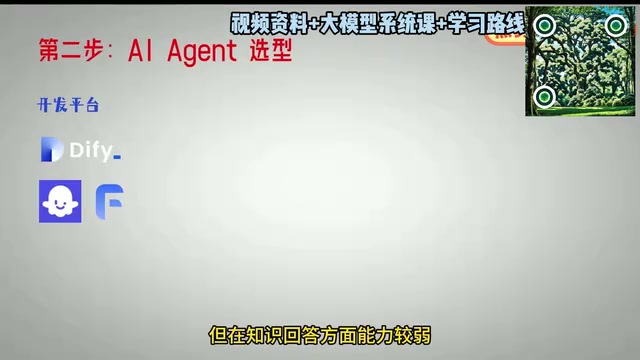
If you need an AI to autonomously plan and execute complex tasks, you can choose frameworks like LangGraph or CrewAI. The two represent different multi-Agent collaboration paradigms: LangGraph is based on workflow orchestration using directed acyclic graphs (DAGs), modeling the Agent execution process as a graph structure of nodes and edges. It supports conditional branching, loops, and state persistence, making it suitable for complex business scenarios requiring precise control over execution flow. CrewAI, on the other hand, uses a "role-playing" multi-agent framework—defining different roles such as researcher, writer, and reviewer to enable multiple Agents to collaborate, more closely resembling how human teams work. This makes it well-suited for content production and research/analysis tasks. Such platforms require writing code and can also be used in combination with no-code platforms. The prerequisite is that you deeply understand each platform's strengths, limitations, and potential pitfalls.
How to Choose a Large Language Model
Model selection should be tailored to specific scenarios, and it helps to understand several key technical parameters. The Context Window determines how much text the model can process at once: 8K is about 6,000 words, 32K about 24,000 words, and 128K can handle the content of an entire book—directly affecting long-document processing and multi-turn conversation capabilities. Reasoning ability is related to the model's parameter scale, but not linearly—DeepSeek-R1 significantly improved reasoning performance through reinforcement learning, offering far better value than comparably sized competitors. For local deployment, a 7B-parameter model can run on consumer-grade GPUs (such as the RTX 3060 12G), while a 70B-parameter model requires a cluster of professional GPUs. Cloud billing is calculated by Token—1,000 Tokens is roughly 750 Chinese characters—so well-designed prompts can significantly reduce costs.
Overseas options include OpenAI, Claude, and Gemini; domestic Chinese options include Kimi, Tongyi Qianwen, and DeepSeek. There are also open-source models like Llama and lightweight models like Mistral. Basic selection principles:
- No privacy data concerns: Prioritize top-tier models like OpenAI and Claude;
- Translation and summarization tasks: Domestic Chinese LLMs are already good enough, with DeepSeek offering standout value;
- Involves privacy-sensitive data: Consider a local deployment solution.
A hybrid invocation strategy (e.g., using a small model for simple classification and a large model for complex reasoning) is an effective way to control costs and is worth considering during the project design phase.
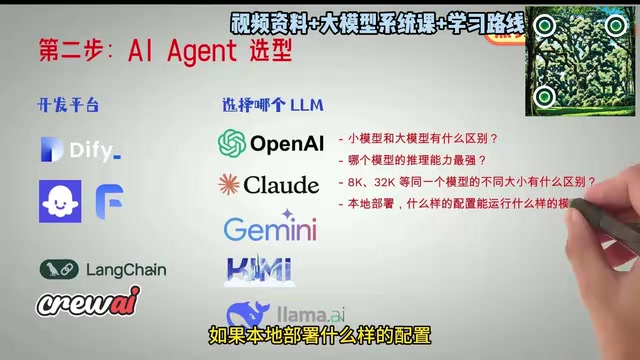
Before making a selection, it's advisable to understand: the difference between small and large models, which models have the strongest reasoning abilities, the difference between 8K and 32K context windows, the hardware configuration required for local deployment, the billing logic of cloud-based models, and whether you can mix and match different models.
Choosing Tools
Tools are the bridge between the Agent and the external world. OpenAI's Function Calling and Tool Use mechanisms enable LLMs to intelligently decide "when to call which tool"—a key breakthrough in modern Agent architecture. Tools generally fall into two categories:
- Tools with API interfaces: An API is a standardized data channel that a software system exposes externally. API calls are stable, fast, and support batch processing, making them the preferred method for Agent tool integration. Platforms like Coze and Dify already integrate many ready-made tools that can be configured directly;
- Tools without API interfaces: These require RPA (Robotic Process Automation) to simulate browser operations to accomplish automation tasks. RPA controls software interfaces by simulating mouse clicks, keyboard inputs, and UI element recognition. Representative tools include UiPath, YingDao RPA, and Dolphin RPA. Note that RPA's downsides are high fragility—it can break whenever an interface updates—and its inability to run concurrently. Requirements that can be solved via API should prioritize APIs, with RPA as a fallback option.
Step 3: Prompt Engineering—The Agent's Core Competitive Advantage
The quality of the Prompt directly determines the accuracy of the LLM's output. A well-crafted prompt helps the Agent accurately understand tasks, improves output quality, reduces Token consumption (thereby lowering costs), and maintains conversational context coherence.

Mastering common prompt frameworks is essential. The ICIO framework includes: Instruction, Context, Input (input data), and Output (the desired output format). The BROKE framework is suited for complex tasks: Background, Role (role setting), Objectives, Key Results, and Evolve (iterative optimization). Few-shot prompting lets the model understand patterns by providing 2-5 examples, typically achieving 20%-40% higher accuracy than pure text descriptions. Chain-of-Thought significantly improves performance on reasoning tasks by asking the model to "think step by step"—this is also one of the core technical principles behind current mainstream reasoning models (such as o1 and R1). In addition, here are a few practical rules for interacting with LLMs:
- Output long content across multiple passes—the quality is usually better than generating it all at once;
- Use different symbols to separate different pieces of information, enhancing the model's comprehension;
- Provide examples (few-shot) to help the model quickly understand requirements;
- Break complex tasks into several steps, guiding the model to execute step by step;
- Clearly specify output constraints such as word count, format, style, language, and difficulty level.
Note that overly verbose prompt descriptions not only increase Token costs but may also dilute the weight of key instructions. Prompt design requires finding a balance between completeness and conciseness.
Step 4: Choose the Right Data Storage Solution
Running an Agent generates content such as chat records and collected data. Knowledge bases are typically built on RAG (Retrieval-Augmented Generation) technology—documents are split into small chunks, an Embedding model converts the text into high-dimensional vectors stored in a vector database, and when a user asks a question, the most relevant fragments are retrieved and fed into the LLM to generate an answer. This effectively addresses the LLM's knowledge cutoff date and hallucination issues. The choice of storage solution varies depending on your technical background:
- Non-technical users: Feishu Bitable is recommended—it's highly visual, easy to operate, and can be integrated into a RAG pipeline via API to serve as a lightweight structured knowledge source. The downside is that reads slow down with large data volumes, and it struggles to handle complex business logic;
- Technical users: Directly use mature databases like MySQL or NoSQL, or professional vector databases like Chroma, Pinecone, or Weaviate, which handle complex scenarios more comfortably.
Step 5: Build a Custom UI
The interface directly affects the user experience. Coze supports custom interfaces, while Dify provides a ready-made interface that cannot be modified. Both platforms support publishing as a service API, meaning you can bypass their built-in interfaces and independently develop a front end to connect with them.

Building your own interface can be done quickly with AI coding tools like Cursor. When you've defined multiple Agents on Coze or Dify, calling them through a unified custom interface makes operations more cohesive and delivers a more professional experience.
Step 6: Testing and Performance Evaluation
Testing and evaluation are two distinct but equally important steps:
- Testing: Ensures the Agent doesn't throw errors and that the LLM can properly handle user requests;
- Evaluation: Ensures the Agent's output content is accurate.
During evaluation, you need to continuously optimize the Agent—ensuring output quality while controlling Token consumption. Tools like LangSmith are recommended—they solve the "black box" problem of AI systems. Through its Tracing feature, you can track the input, output, latency, and Token consumption of every LLM call, build a standard test set to automatically evaluate the Agent's performance across various scenarios, and precisely tally the Token consumption of each workflow to help identify redundant prompts. In multi-step Agents (which may involve 5-10 LLM calls), it's nearly impossible to pinpoint which step an error occurs at without monitoring tools. LangSmith helps you locate program issues and provides solutions, create test cases to verify Agent performance, monitor request speed and cost, and comprehensively log questions, responses, and call parameters for easier analysis and improvement.
Step 7: Deployment and Launch
Different platforms correspond to different deployment paths:
- Coze: Can be published directly to platforms like Doubao and Mini Programs;
- Dify: Can be published directly as a web application;
- Independently developed Agents: Purchase a server for self-hosted deployment.
Summary
From clarifying requirements, selecting platforms and models, prompt engineering, data storage, and interface building, to testing, evaluation, and deployment—these seven steps form the complete chain of AI Agent development. For beginners, the combination of a no-code platform plus a domestic Chinese LLM offers the lowest barrier to entry. For those with development skills, LangGraph plus a custom interface plus self-hosted server deployment is a more flexible, advanced route.
The real key, always, is to return to Step 1—get crystal clear on what problem you want the Agent to solve. Technology is merely the means; requirements are the direction.
Related articles
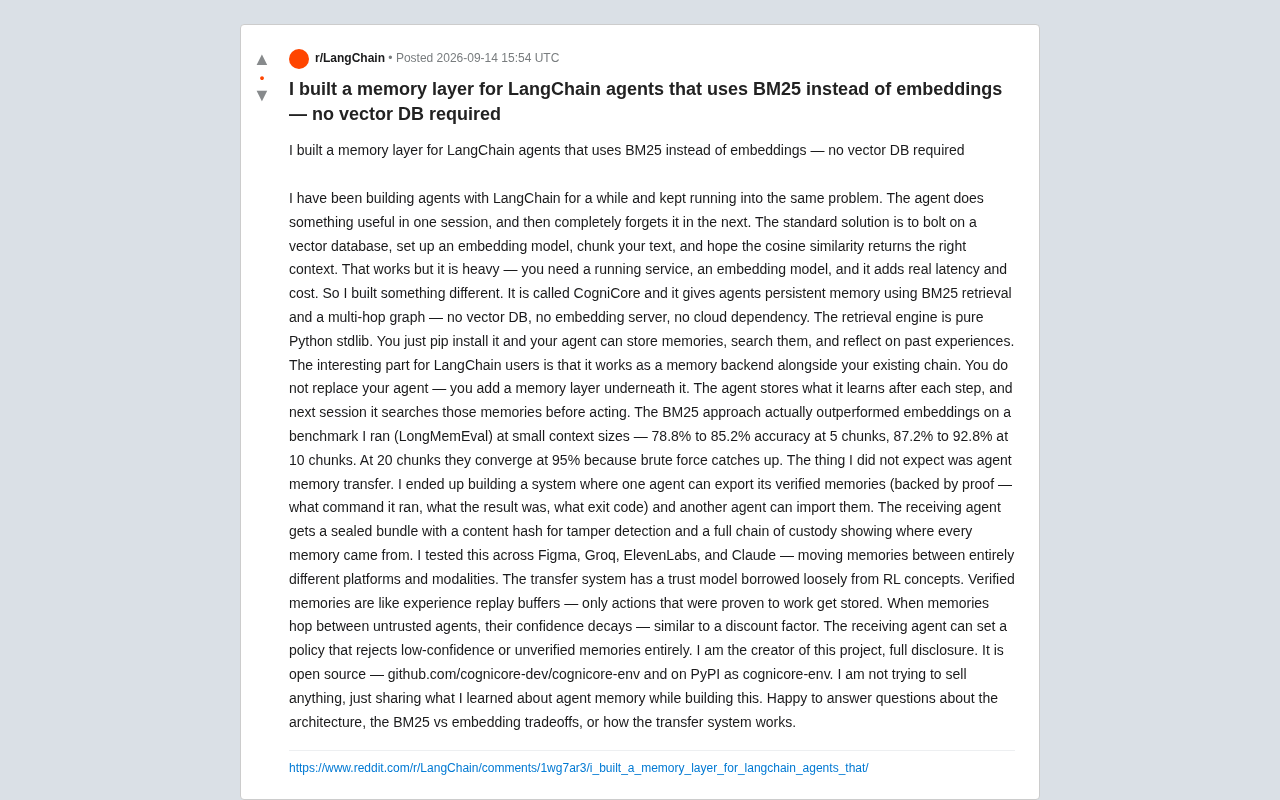
Ditch the Vector Database: Building a Memory Layer for LangChain Agents with BM25
CogniCore replaces vector databases with BM25 retrieval for LangChain agent memory, outperforming embeddings in small-context benchmarks with zero external dependencies.
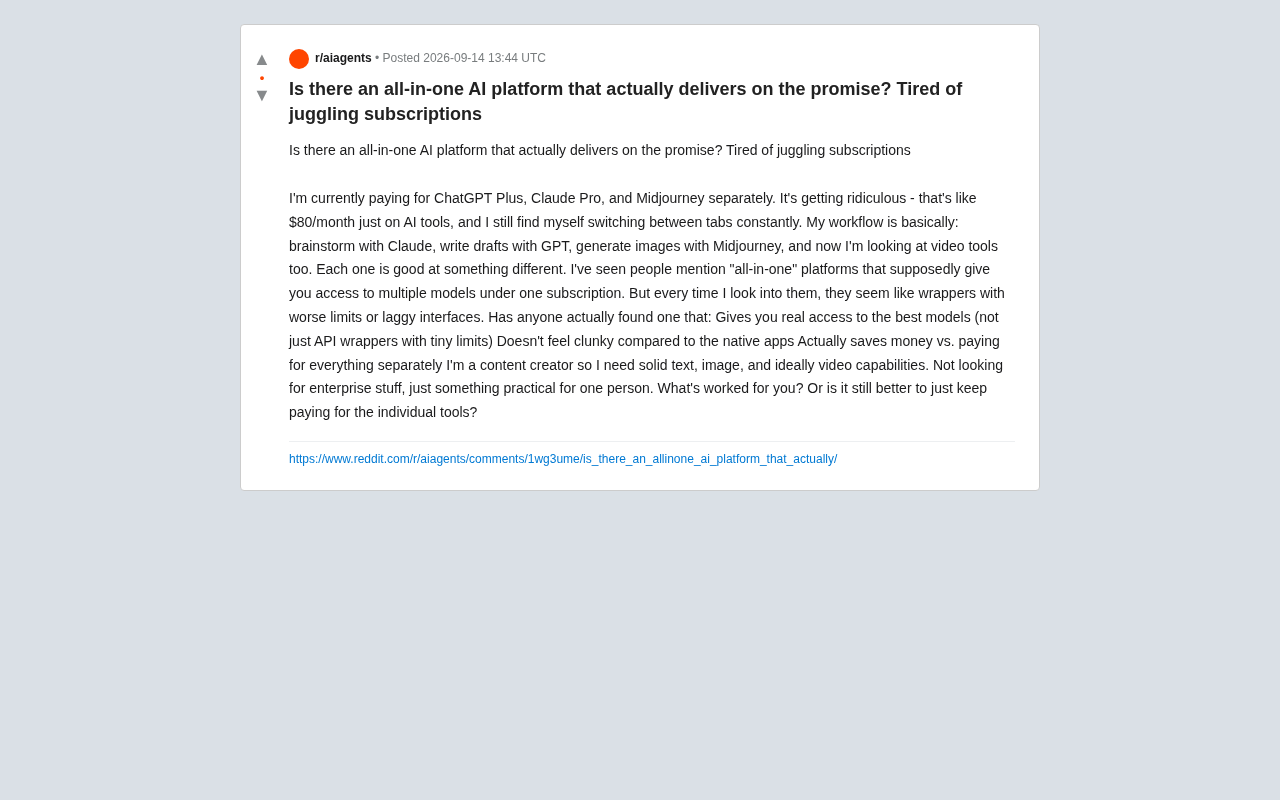
Are All-in-One AI Platforms Actually Worth It? A Practical Guide to Escaping Subscription Overload
Tired of paying for ChatGPT, Claude, and Midjourney separately? We break down whether all-in-one AI platforms are actually worth it — and what a smarter subscription stack looks like.
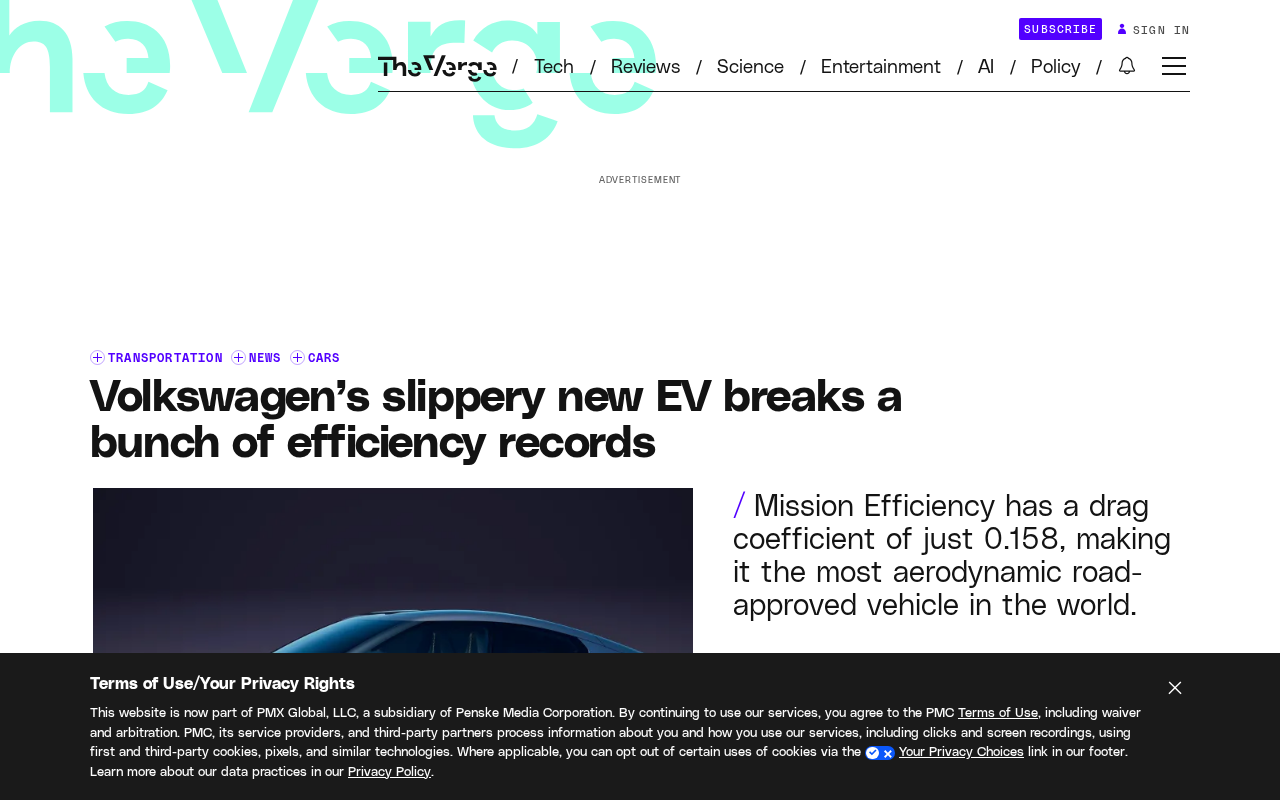
Volkswagen Mission Efficiency: The World's Lowest-Drag EV Breaks Multiple Efficiency Records
Volkswagen's Mission Efficiency prototype claims the world's lowest drag coefficient, built on MEB+ platform with ID. Polo and ID. Cross components. Here's what it means for EV efficiency.