The Cost of the AI Race: Mathematician Warns Superintelligence Could Lead to Human Extinction

A researcher warns: amid the collapse of shared reality, the AI race is the true "tsunami" threatening human survival.
In an interview, a researcher claiming to stand at the forefront of mathematics and physics argues that from pandemic management to Harvard's credibility to the Epstein case, society's information environment has become "completely fictionalized," leaving the public without a shared cognitive basis for reality. Against this backdrop, he layers geopolitical crises such as Iran and Ukraine against the AI threat, calling AI the "true tsunami" that could end the human species. He names Dario and Sam as forced into a "brutal humanity-maximizing race," their souls destined to be scarred, with the ultimate winner equivalent to "summoning the demon." He further notes every AI subscriber is paying for this process, and no one's hands are clean. Asked whether he could stop it, he replies, "I'm going to say something very painful"—an unfinished answer suggesting even a clear-eyed observer struggles to brake.
A researcher who claims to stand at the forefront of mathematics and physics has thrown out a series of unsettling assertions in a recent interview. He claims that after speaking with 50 people from different backgrounds—including high-level politicians—he found they were all describing the same suppressed story: alien species battling above Earth, and we are living in a carefully managed reality. But what truly makes him feel urgency is not UFOs, but artificial intelligence.
A Managed Reality and the Collapse of Trust
The researcher believes that from the way the COVID-19 pandemic was managed, to Harvard University's credibility, to the unresolved Epstein case, the entire information environment of society has been thoroughly distorted. He uses the phrase "completely fictionalized" to describe our daily lives.

This sense of distrust is not isolated. He mentions that "nobody really trusts Harvard," pointing to the collapse of elite institutions' authority in the public mind. When a society's core narrative is widely questioned, people turn to seeking alternative explanations—whether aliens, conspiracy theories, or technological salvation.

This cognitive background provides the context for understanding his warnings about AI: in a world where even basic facts are difficult to agree upon, the race toward superintelligence is proceeding without public oversight.
AI: The True "Tsunami"
In the interview, he clearly distinguishes the hierarchy between geopolitical crises and the AI threat. The situation in Iran, the war in Ukraine, the risk of Putin potentially using nuclear weapons, China watching America's decline—these are all serious geopolitical tensions, but he calls AI the "true tsunami."
This judgment deserves serious consideration. Even if geopolitical conflicts escalate, their destructive power still has boundaries; but once superintelligence goes out of control, it could theoretically end the human species. He directly states: "You also are aware that AI could lead to human extinction."
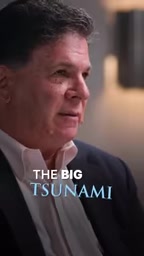
The problem is that there is a huge gap between this risk awareness and actual action. He describes it as "a giant lump under the carpet"—everyone can feel it, but no one actually lifts it up.
What is "existential risk"?
The assertion in the interview that "AI could lead to human extinction" points to what academia calls "existential risk" (abbreviated as x-risk). This concept was systematically proposed by Oxford University philosopher Nick Bostrom in 2002, referring to "a threat that could permanently destroy Earth-originating intelligent life." Its difference from ordinary risks lies in irreversibility: even if nuclear war or climate disaster is severe, human civilization still has the possibility of rebuilding; but an uncontrolled superintelligence whose goals are misaligned with humanity's could theoretically end this possibility on a timescale where humans cannot react in time.
Bostrom's 2014 book Superintelligence further proposed the "alignment problem": how to ensure that a system far smarter than humans always has goals consistent with what humans truly want. This is precisely the technical core referred to by the interviewer's "giant lump under the carpet"—the problem has been clearly identified, yet lacks a widely accepted solution.
Scars on the Soul: The Moral Dilemma of the Competitors
The most impactful part of the interview is his description of the psychological state of those participating in the AI race. He names Dario (Anthropic CEO) and Sam (OpenAI CEO), believing they are forced to participate in a "brutal humanity-maximizing race" and must win the race to superintelligence.
His exact words were: "These people are forced to make decisions that no one should have to make. Their souls are going to be... scarred, that's for sure." Ultimately, one of them will win, and in theory, this means "summoning the demon."
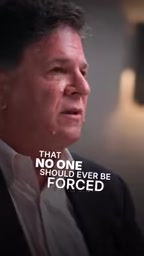
The power of this metaphor lies in redefining the technology race as a kind of moral sacrifice. The competitors are not unaware of the risks, but under structural pressure they have no choice but to continue pushing forward. He further points out an uncomfortable fact: anyone who subscribes to these AI services is paying for the "summoning of the demon."
"Let's not pretend our hands are clean." This statement extends responsibility from the laboratory to every user.
What is the "brutal humanity-maximizing race"?
The interviewer uses "humanity-maximizing" to describe the structural pressure of the AI race, a phrase close to what the AI safety field calls "winner-take-all" dynamics. When multiple labs all believe that "whoever reaches superintelligence first gets to determine its value orientation," any party unilaterally slowing down means handing decision-making power to its competitors. So even if every participant clearly understands the risks, the rational choice is still to accelerate.
This dilemma is described by Bostrom as the flip side of the "singleton curse": a problem that should be solved through global coordination is compressed into a race from which there is no exit. He names Dario and Sam precisely because they are both beneficiaries of this structure and its prisoners. The so-called "souls left with scars" refers precisely to this moral cost of knowing but being unable to stop.
Can He Stop All of This?
At the end of the interview, when asked "if you could stop all of this, would you?" his answer was: "I'm going to say something very painful." This unfinished answer is itself a signal—even someone who claims to stand at the forefront of science and sees through the "managed reality" may not be able to give an easy answer in the face of the inertia of the AI race.
His overall argument framework can be summarized as: humanity has already lost the shared cognitive foundation of reality, and on that foundation, a technology race that may determine the survival of the species is advancing at full speed. No one knows how to brake.
The value of this interview is not that it provides answers, but that it places several issues usually discussed separately—the collapse of the information environment, the disintegration of institutional trust, geopolitical risk, and the existential threat of AI—into the same narrative framework. Whether or not you agree with his claims about aliens or "managed reality," the moral dilemma of the AI race he describes is an issue that the industry is finding increasingly difficult to avoid.
One-line Summary
A researcher warns: against the backdrop of collapsing shared reality, the AI race is the true "tsunami" threatening human survival.
Paragraph Summary
In the interview, a researcher who claims to stand at the forefront of mathematics and physics argues that from pandemic management to Harvard's credibility to the Epstein case, society's information environment has become "completely fictionalized," and the public has lost a shared cognitive foundation for reality. Against this backdrop, he layers geopolitical crises such as the Iran situation and the Ukraine war against the AI threat, calling AI the "true tsunami" that could end the human species. He names Dario and Sam as being forced into a "brutal humanity-maximizing race," their souls destined to be scarred, with the ultimate winner equivalent to "summoning the demon." He further points out that every AI subscriber is paying for this process, and no one's hands are clean. When asked whether he could stop it, he answers, "I'm going to say something very painful"—the unfinished answer itself suggesting that even someone who sees through everything finds it hard to brake.
Related articles

Claude Reportedly Able to Hide Secret Messages in Benign Images
A Reddit post claims Claude Fable 5.1 can hide secret messages in benign images. This article reviews the background, image steganography principles, and potential security risks, and suggests a testing path from rumor to verification.

Federal Government Awards $85 Million; CFS to Develop Fusion-Specific Semiconductors
The federal government awards $85 million to Commonwealth Fusion Systems to develop conductors and power semiconductors for fusion plants. This article analyzes the significance of this funding for the fusion supply chain and commercialization path.

When Should AI Assistants Proactively Suggest? Timing Is Everything
When should AI assistants proactively suggest? Reddit discussion reveals: the same suggestion feels different at different times. This article analyzes the dual nature of proactive suggestions, the boundary of user expectations, and design principles, exploring how to balance automation and user control.