The Cult of Jensen Huang: Nvidia's Key to Success and Hidden Risks

Nvidia's success is deeply tied to the cult of Jensen Huang; his departure could have an impact second only to Zuckerberg leaving Meta.
The Vergecast podcast discussed how much of Nvidia's success relies on the cult of personality around Jensen Huang. While chip leadership matters, his elevation to "the face and brain of the industry" has intensified the company's dependence on one individual. If Jensen Huang resigned due to scandal, Nvidia's stock could suffer severely, with an impact in the tech industry second only to Zuckerberg leaving Meta. A cult of personality builds consensus short-term but increases fragility long-term—the higher the pedestal, the more dramatic the fall. Nvidia has tried strengthening team leadership and expanding its ecosystem moat to decouple moderately, but capital markets are used to equating a face with a tech revolution, and any personnel change can trigger chain reactions. The ultimate question: how can tech companies balance CEO personal branding with organizational capability building, avoiding over-dependence on one person?
In the tech industry, it's nothing new for a CEO's personal charisma to be deeply intertwined with a company's fate—but few figures are seen by so many as "the face and brain of the industry" quite like Nvidia founder Jensen Huang. On a recent episode of the Vergecast podcast, the hosts raised a thought-provoking question: how much of Nvidia's success is built on the cult of personality surrounding Jensen Huang? And what happens when this visionary leader departs?
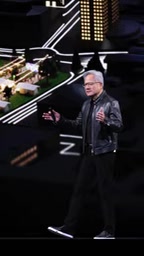
Nvidia's Success: Chips and Technology, or Personal Charisma?
The Vergecast hosts acknowledged that Nvidia's rise is, of course, inseparable from its chip and technological leadership—"to some extent, of course it is." But what truly piqued their curiosity was where Nvidia would go once the man who has been elevated to a pedestal—viewed as the industry's face and mastermind—leaves.
This cult of personality didn't happen overnight. Over the years, Jensen Huang has built a public image bordering on "tech prophet" through his signature leather jacket, electrifying keynote speeches, and sharp judgments on AI trends. Investors, developers, and the entire industry have grown accustomed to equating Nvidia's vision with Jensen Huang's personal will.
Cult of Personality in a business context refers to an overly idealized public image built around a leader, whose influence exceeds their actual positional power. In the tech industry, this image is often tied to a technological vision, leading investors and developers to equate company strategy with the leader's personal will. A cult of personality can reduce communication costs and build consensus, but it also exposes corporate governance to "Key Person Risk"—the organization's over-reliance on a single decision-maker. Jensen Huang's case exemplifies this double-edged sword: his "tech prophet" image is both the glue of Nvidia's ecosystem and a potential amplifier of market sentiment swings.
The Butterfly Effect of a CEO's Collapse: How High Is Jensen Huang's "Throne"?
The podcast posed an even more striking hypothetical: if Jensen Huang were suddenly embroiled in a scandal and resigned, how would Nvidia's stock price react? The host admitted this could be the most impactful CEO collapse in the tech industry, but ranked Jensen Huang second—behind Mark Zuckerberg.
"If Zuckerberg were suddenly caught in a scandal and resigned from Meta, I think Meta's stock would actually go up." This bold assertion reveals the varying degrees of CEO dependence across companies. For Nvidia, the situation could be the exact opposite: losing a "brain of the industry" like Jensen Huang could deal a severe blow to market confidence.
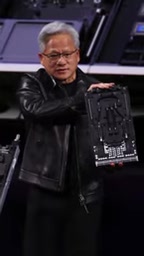
CEO collapse event in capital markets typically refers to sharp stock price volatility caused by scandal, health issues, or unexpected resignation. The impact depends on the market's dependence on the CEO: if the CEO is seen as the sole brain behind strategy, their departure directly triggers a "key person risk" premium, leading to valuation discounts. Take Steve Jobs' resignation in 2011—Apple's stock came under short-term pressure, but the long-term impact was limited thanks to organizational maturity. Zuckerberg, with Meta's dual-class share structure granting him absolute control, might see his departure interpreted by the market as governance improvement. The podcast ranking Jensen Huang after Zuckerberg precisely reflects that Nvidia's dependence on a single leader is higher than Meta's but lower than that of traditional family businesses.
Uneasy Lies the Head: The Backlash of a Cult of Personality
The host further analyzed that the higher Jensen Huang is pushed, the more dramatic and rapid his fall would be. "I think that's part of his downfall." This view points to a paradox: a cult of personality can build consensus and amplify influence in the short term, but in the long run it binds the company's fate tightly to one individual, increasing fragility.

Nvidia is not oblivious to this. In recent years, the company has been strengthening team leadership and expanding its ecosystem moat, attempting to moderately decouple "Jensen Huang" from "Nvidia." But capital markets tend to react irrationally—when investors are used to equating a certain face with a technological revolution, any personnel change can trigger a chain reaction.
Ecosystem moat refers to competitive barriers built through non-hardware assets such as software, developer communities, and partner networks. Nvidia's CUDA platform is a prime example: millions of developers worldwide write AI applications on it, making migration costs extremely high. This moat exists independently of the CEO, but Jensen Huang's personal image is often seen by the market as a symbol of ecosystem cohesion. The company's recent efforts to strengthen team leadership (such as promoting multiple executives to share business lines) are precisely an attempt to decouple "Jensen Huang" from "Nvidia" and reduce the fragility brought by the cult of personality. However, the irrationality of capital markets lies in their tendency to conflate symbolic figures with substantive competitiveness.
Industry Lessons: The Double-Edged Sword of CEO Personal Branding
The Vergecast discussion ultimately landed on a broader question: in the tech industry, is a CEO's personal brand an asset or a potential liability?

From Steve Jobs to Elon Musk, charismatic CEOs often lead companies through cycles, but they also put corporate governance structures to the test. Jensen Huang's case is special because he happens to stand at the center of the AI computing demand explosion, with his personal image resonating with industry trends.
For Nvidia, the real challenge may not be the hypothetical "losing Jensen Huang," but how to build organizational capabilities independent of any individual while enjoying the benefits of the cult of personality. After all, chips can be iterated, technology can be caught up with, but the vacuum left by a deified leader often takes much longer to fill.
The Vergecast discussion offered no answers, but it raised a question every tech company should consider: when "the face and brain" depart, what remains?
One-line Summary
Nvidia's success is deeply tied to the cult of Jensen Huang; his departure could have an impact second only to Zuckerberg leaving Meta.
Paragraph Summary
The Vergecast podcast discussed how much of Nvidia's success relies on the cult of personality around Jensen Huang. While chip leadership matters, his elevation to "the face and brain of the industry" has intensified the company's dependence on one individual. If Jensen Huang resigned due to scandal, Nvidia's stock could suffer severely, with an impact in the tech industry second only to Zuckerberg leaving Meta. A cult of personality builds consensus short-term but increases fragility long-term—the higher the pedestal, the more dramatic the fall. Nvidia has tried strengthening team leadership and expanding its ecosystem moat to decouple moderately, but capital markets are used to equating a face with a tech revolution, and any personnel change can trigger chain reactions. The ultimate question: how can tech companies balance CEO personal branding with organizational capability building, avoiding over-dependence on one person?
Related articles

English Version of 'Thank You for Your Love' Gains Traction on Bilibili: A Cross-Cultural Rendition of a Classic Love Song
The English version of 'Thank You for Your Love,' titled 'I'll give you all my love,' trends on Bilibili with rewritten lyrics about giving all your love. This article analyzes its emotional expression, cross-cultural adaptation strategy, and differences from the Chinese original.

Claude Code vs Cursor vs GitHub Copilot: How to Choose Among the Three Major AI Coding Tools
A clear explanation of Claude Code, Cursor, and GitHub Copilot through the lens of 'degree of delegation': Copilot embeds in your editor for autocomplete, Cursor is an AI-first full editor with multi-file batch editing, and Claude Code executes tasks end-to-end in the terminal. Includes selection advice.

Behind the Viral Dynamic Comic Commentary: Deconstructing the Narrative of Family Finance and Emotional Conflict
Deconstructing a Bilibili dynamic comic episode on family financial conflict: how dense dialogue and emotional hooks retain viewers, and where AI script generation falls short in narrative coherence.