The Dismantling of Windsurf: How an AI Coding Unicorn's Moat Collapsed Overnight

AI coding unicorn Windsurf's $3B deal collapsed, exposing how fragile AI startup moats truly are.
Windsurf, an AI coding company valued at $3 billion, experienced a dramatic week-long unraveling: OpenAI acquisition talks collapsed, Anthropic cut API access causing ARR to drop from $100M to $82M, Google aquihired the founders, and competitor Cognition picked up the remaining employees at a discount. The saga reveals how AI coding tools are trapped in a 'sandwich dilemma' — dependent on foundational models with no defensible moat — while the rise of aquihires is fracturing Silicon Valley's startup talent covenant.
In July 2025, Silicon Valley's AI scene witnessed what may be the most dramatic acquisition saga of the year. Windsurf, once a shining AI coding unicorn valued at $3 billion, experienced a complete unraveling within a single week — a failed acquisition, the exodus of its core team, and the abandonment of remaining employees, who were ultimately picked up by a competitor at a steep discount. The episode not only exposed the fragile moats of AI startups but also tore open a deep fissure in Silicon Valley's entrepreneurial ecosystem.
A Deal That Flipped Twice in Three Days
The story began promisingly enough. In May this year, news broke that OpenAI was in acquisition talks with Windsurf at a $3 billion valuation. Windsurf boasted over $100 million in Annual Recurring Revenue (ARR), 350 enterprise clients, and hundreds of thousands of daily active users — making it one of the brightest stars in the AI coding space.
It's worth noting that ARR (Annual Recurring Revenue) is the core metric for measuring SaaS company health, representing the total subscription revenue a company can expect over the next 12 months. In the SaaS industry, company valuations are typically calculated as multiples of ARR — high-growth companies can command 30-50x ARR, while mature companies usually trade at 10-15x. Windsurf's $3 billion valuation corresponded to roughly 30x ARR, which isn't unusual given the high-growth expectations in AI, but it also meant that any decline in ARR would deliver a multiplied blow to its valuation.
The entire company was waiting for the official announcement. The marketing team had already started preparing promotional materials, and equity-holding employees were dreaming of the financial freedom soon to come.

Then, on Friday, July 11, breaking news hit like a bucket of cold water: OpenAI's talks with Windsurf had collapsed. Immediately after, Google signed a $2.4 billion non-exclusive licensing deal for Windsurf's technology and brought CEO Varemo, co-founder Douglas Chen, and a small core R&D team under its wing — yet another classic "Aquihire."
Aquihire is a portmanteau of "Acquisition" and "Hire," referring to when a large company nominally acquires a startup but is actually after its key talent rather than its product or business. This model has a long history in Silicon Valley but has become increasingly common in recent years as antitrust scrutiny has intensified. Traditional full acquisitions must pass antitrust review by the FTC (Federal Trade Commission) or DOJ (Department of Justice), and regulatory bodies are particularly vigilant about Big Tech mergers in the AI space. Aquihires cleverly circumvent merger review thresholds by packaging deals as "technology licensing + talent recruitment" combinations. But the cost of this model is steep: remaining employees and minority shareholders often receive no fair compensation.
The 250 remaining employees lost both the potential upside of OpenAI equity and any share of Google's $2.4 billion. According to The Wall Street Journal, "some employees began to cry."
But the reversal came just as swiftly. On Friday afternoon, business lead Jeff Van was promoted to interim CEO in an attempt to stabilize morale. Just as the day was ending, he received an email from the CEO of Cognition (the parent company of AI coding product Devin). The subject line was simple and direct: "Let's chat." By Saturday afternoon the two CEOs had reached an agreement, Sunday they finalized details, and Monday they signed the contract. Cognition acquired Windsurf's remaining equity for a nine-figure sum (all cash), allowing all employees to cash out their options. While the amount was far less than previously expected, it was considerably better than Friday's devastating news.
The Moat Around AI Coding Tools Is Eroding
Throughout this entire acquisition drama, Windsurf remained in an extremely passive position. The fundamental reason: the moat around AI coding tools is far shallower than imagined.

The technical architecture of AI coding tools (also called AI Code Assistants) typically has three layers: the foundational large language model (such as GPT-4, Claude) provides code generation and comprehension capabilities; the middle layer is Context Engineering, responsible for effectively organizing and passing the user's codebase, documentation, conversation history, and other information to the model; the top layer handles IDE integration and user interaction. Cursor, Windsurf, GitHub Copilot, and similar products primarily compete at the middle and top layers. However, when foundational model providers begin serving end users directly, the middle layer's value gets dramatically compressed — creating what's known as the "sandwich dilemma" — squeezed from above by Big Tech IDEs (like VS Code) and from below by model providers, the middle layer's survival space is continuously shrinking.
As an AI coding tool, Windsurf's core capabilities depended on foundational models like OpenAI's GPT and Anthropic's Claude. Its differentiation manifested across three dimensions: developer experience (Dev UX), a model-neutral strategy that flexibly calls multiple LLMs, and accumulated user data.
However, these three defensive lines are collapsing one by one:
Model Layer: Upstream Providers Become Competitors
Claude Sonnet 4.0 has already dominated the AI coding space, with most developers and enterprises preferring this model. When Anthropic launched Claude Code as a direct-to-user product, it transformed from Windsurf's supplier into a direct competitor. Several unicorn-level tech companies have already switched from Windsurf or Cursor to Claude Code.
Data Layer: No Exclusive Advantage
Accumulated user data might seem like a moat, but foundational model providers also possess a copy of user data. Middle-layer companies like Cursor and Windsurf have no true exclusive advantage when it comes to data.
Experience Layer: Price Crushes Experience
Developer experience is the last differentiation barrier, but the reality is that price often trumps experience. When Cursor recently changed its pricing model and bills skyrocketed, developers quickly migrated to cheaper alternatives, even if the experience was slightly inferior.
More critically, when a partner becomes a competitor, the consequences are devastating. When news of Windsurf's acquisition talks with OpenAI leaked, Anthropic directly cut off Windsurf's access to Claude, causing its ARR to plummet from $100 million to $82 million.
This event is an extreme manifestation of "Platform Risk" in the AI industry. In software history, similar incidents are not uncommon: Twitter (now X) severely restricted third-party client API access in 2012, directly destroying apps like Tweetbot that depended on its ecosystem; Apple has also repeatedly used App Store policy changes to suppress third-party apps competing with its own services. But in AI, this risk is amplified to unprecedented levels because AI applications' dependence on foundational models is far deeper and more irreplaceable than traditional software's dependence on platform APIs. Windsurf's 18% ARR decline after the API cutoff clearly demonstrates that AI coding tools dependent on third-party LLMs have their commercial lifeline perpetually in someone else's hands.
A Chain of Dilemmas Caught Between Giants
Windsurf's predicament wasn't just about having a shallow moat — it simultaneously antagonized multiple giants, falling into a nearly unsolvable chain of dilemmas.
First, acquisition talks with OpenAI were obstructed by Microsoft. The relationship between Microsoft and OpenAI is one of the most complex partnerships in tech history. Since 2019, Microsoft has invested over $13 billion in OpenAI and secured exclusive commercial hosting rights for OpenAI's models on the Azure cloud platform. This means that enterprise customers wanting to use GPT-series models via API primarily go through Microsoft's Azure OpenAI Service. This deep integration makes any major commercial decision by OpenAI inevitably involve Microsoft's interests.
Microsoft's GitHub Copilot is itself a direct competitor to Windsurf, with over 15 million monthly active users as the world's largest AI coding tool. If OpenAI spent $3 billion to acquire Windsurf, the resulting technology could indirectly benefit Microsoft — something neither OpenAI nor Windsurf wanted. But simultaneously, OpenAI acquiring Windsurf would mean supporting a direct competitor to Copilot, creating a serious conflict of interest from a business logic standpoint. The negotiation stalemate dragged on.
The result: Windsurf alienated Anthropic (API cut off) and the OpenAI deal fell through — offending two giants at once. Even worse, Windsurf hadn't even secured a breakup fee from OpenAI. Landmines everywhere, danger at every step.
Ultimately, the founders had no choice but to accept Google's Aquihire terms and join the giant, simultaneously abandoning their 200-plus remaining employees.
Aquihire Becomes the Norm: Silicon Valley's Startup Consensus Is Fracturing

The Windsurf incident is not an isolated case but an accelerating trend. To circumvent antitrust review, Silicon Valley giants have invented the "Aquihire" strategy: poach executives and core talent, pay a technology licensing fee, but leave remaining employees stranded in a shell company. 99% of the money flows to 1% of the people, while the employees who did the hard work get nothing.
Since 2024, such cases have played out in rapid succession:
- Character.ai — Aquihired by Google
- Inflection.ai — Aquihired by Microsoft
- Adept — Aquihired by Amazon
- Scale.ai — 49% stake acquired by Meta to recruit CEO Alexander Wang, followed by layoffs of 200 full-time employees and 500 contractors
What remains of these companies is layoffs, restructuring, and downsizing — they may never return to the spotlight.
For the past several decades, an implicit consensus existed in Silicon Valley's startup ecosystem: talented people leave the stability of big-company salaries to join startups, expecting to achieve financial freedom when the company gets acquired at a high price or goes public. Innovation changes the world while also creating wealth — this is the core covenant of the Silicon Valley spirit. But when CEOs so easily abandon their employees, this covenant is unraveling.
As one industry insider put it: "This has become purely a Big Player game — essentially OpenAI, Google, Anthropic, xAI, and Meta. In the end, it may just be these five players."
One Person Unicorn: An Optimistic but Distant Vision

Facing this landscape, some have proposed an optimistic hypothesis: perhaps future startups won't need to build massive teams. The rapid advancement of AI capabilities means 5 to 10 people can accomplish what previously required 50 to 500. Sam Altman's frequently mentioned concept of the "One Person Unicorn" was pure fantasy five years ago, but within the next 5 to 10 years, we may genuinely see a single person or tiny team build a company approaching a billion-dollar valuation.
The technical foundation for this concept lies in the rapid evolution of AI Agent capabilities. Current AI Agents can already autonomously handle code writing, testing, deployment, customer support, data analysis, and many other tasks — theoretically, one person working with multiple AI Agents could operate a complete company. Y Combinator's Winter 2025 batch already includes several companies with teams of just 1-3 people. However, real-world challenges remain enormous: legal compliance, enterprise sales, fundraising negotiations, and crisis communications still heavily depend on human relationships and judgment. Furthermore, once a company grows beyond a certain scale, single-person decision-making bottlenecks quickly emerge. The more fundamental question is: if AI tools dramatically lower the barrier to starting a company, competition will intensify in parallel — "one person unicorns" may face "ten thousand people competing in the same lane."
"It's not that every company needs to reach Google's scale — it's about how much energy a small team can unleash and how big they can go. From this perspective, we're at a historical turning point."
But before the One Person Unicorn becomes a widespread reality, AI startups still need to navigate survival carefully in the gaps between giants.
Conclusion
It's worth noting that Windsurf's own development trajectory has been inherently dramatic — from its origins as GPU optimization company X-Function, to AI-assisted coding tool Codeon, to the launch of its AI-native development environment Windsurf Editor in 2024. The name "Windsurf" itself embodied the ambition to ride the winds and break through waves.
But when the AI tsunami hits, even the youngest surfer can barely hold on. Windsurf's story reminds us: in the AI era, technical barriers can be erased overnight by foundational model providers, commercial moats can collapse from a single API cutoff, and the power asymmetry between startups and giants has never been this stark.
Related articles
Meta Muse Hits 900K Downloads in Six D…
Meta Muse Hits 900K Downloads in Six Days: The AI Agent Era Has Officially Arrived
Meta's AI agent Muse hit 902K downloads in 6 days, topping US App Store and Google Play charts above ChatGPT and Claude. A deep dive into Muse's capabilities and the AI Agent race.
 Industry Insights
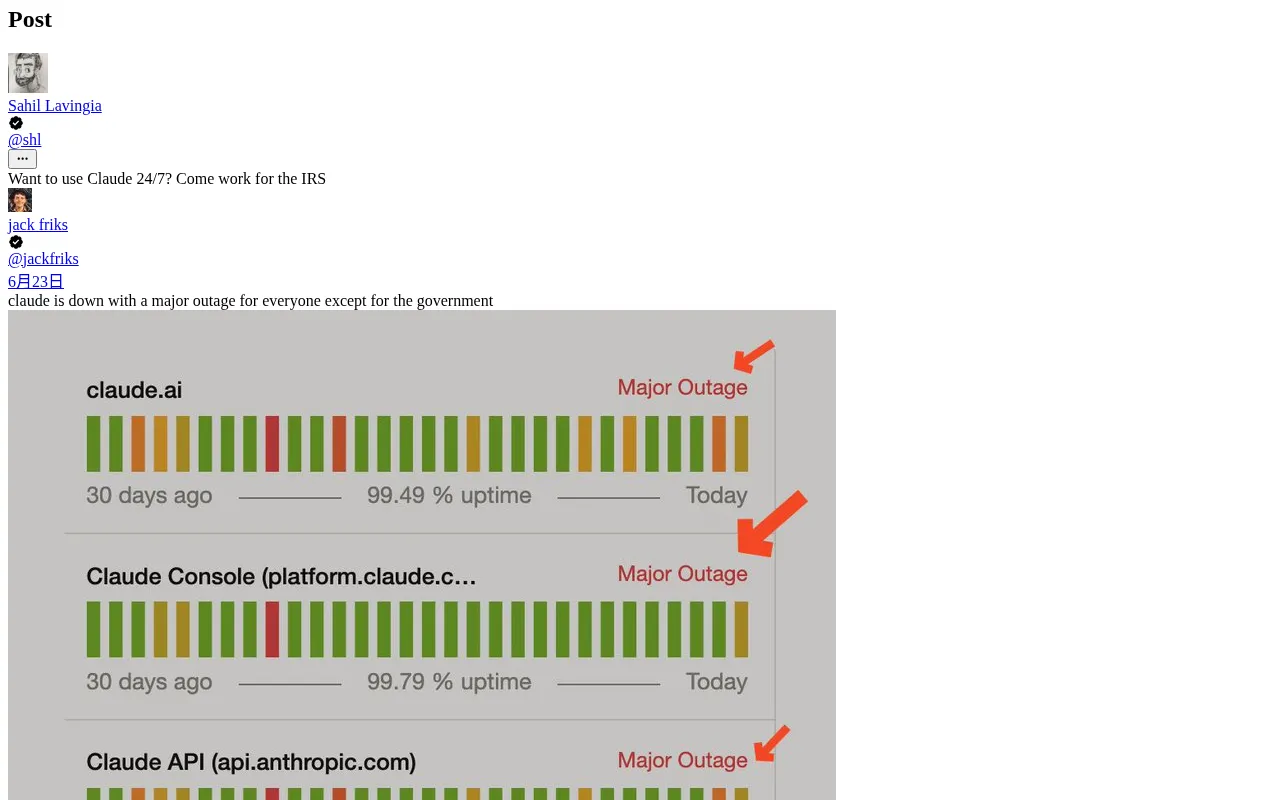
IRS Fully Embraces Claude AI, Accelerating Federal Government's AI Adoption
The IRS is recruiting staff with 24/7 Claude AI access, marking Anthropic's breakthrough into the federal government. Explore the strategic implications and tax use cases.
 Industry Insights
The IRS Mobile App Debate: A Trust Crisis in Government Digital Transformation
The IRS's proposed mobile app has sparked heated debate. This article analyzes the core arguments, exploring data security, privacy, and the trust crisis in government digital transformation.