The Doorway Effect: Why Do You Forget What You Came For the Moment You Enter a Room?

Walking through a doorway triggers the brain's "event update," clearing short-term memory as an occasional side effect of efficient memory management.
Forgetting why you walked into a room is driven by the brain's active segmentation of continuous experience into discrete "events" — known as the Doorway Effect. Significant context changes like crossing a doorway prompt the Default Mode Network and hippocampus to archive recent memories and clear short-term working memory for the new context. This can be triggered not just by physical doors, but by transparent walls, topic switches, or even tab changes. Multitasking and multiple doorways worsen forgetting, while deliberate room-switching can actually strengthen compartmentalized memory. Strategies include retracing your steps, repeating your goal aloud at the doorway, and minimizing distractions.
You walk into the living room and suddenly stop. You can feel the urge to do something, but the goal has vanished. What just happened? Why does this keep occurring?
You're not alone. This is a phenomenon scientists call the Doorway Effect (also known as the Location Updating Effect). Research by cognitive psychologist Gabriel Radvansky reveals that this seemingly absurd everyday forgetfulness is driven by a sophisticated mechanism the brain uses to organize memory.
How the Brain Slices Life into Discrete "Events"
According to psychological models, the brain continuously segments the uninterrupted flow of time and activity into distinct "events." As a situation unfolds, the brain constructs a "working model" of the current event. The structure most likely responsible for this is the Default Mode Network (DMN) — a set of brain regions that work together during rest to process inner thought.
When a change is significant enough, the brain recognizes an "event boundary." At that moment, it archives the previous event model and begins building a new working model. This switching process is called an event update.
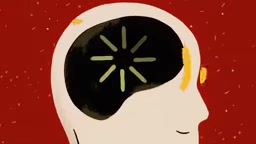
During an event update, certain regions of the Default Mode Network appear to interact with the hippocampus — the structure responsible for storing memories — possibly transferring recent experiences into long-term memory. In the process, the brain clears short-term memory to make room for incoming new information. And sometimes, what gets cleared is precisely what you hadn't finished dealing with yet.
The Default Mode Network (DMN) is a group of brain regions that become more active when the brain is "off task." Key areas include the medial prefrontal cortex, posterior cingulate cortex, and inferior parietal lobule. Once thought of as the brain's "standby mode," subsequent research has shown it plays a central role in self-referential thinking, episodic memory retrieval, imagination, and narrative integration. The hippocampus is the brain's key structure for converting short-term memories into long-term ones — a process called memory consolidation — and it also participates in spatial navigation and context recognition. Their collaboration is no coincidence: whenever the brain needs to timestamp and archive an experience, the DMN works closely with the hippocampus. The "clearing" that happens at event boundaries is essentially the brain performing a rapid memory dump and workspace reset, freeing up resources to fully process what comes next.
Beyond Physical Doorways: What Else Triggers an Event Update
Whether the Doorway Effect hits some people harder than others remains unclear. However, one study found that age has minimal impact on it — meaning it isn't simply a matter of "getting older and more forgetful."
Scientists have used a series of experiments to pinpoint the triggers. In one study, college students were asked to pick up objects in both real and virtual environments, carry them a fixed distance (with the objects out of sight), and then recall what they were holding. Time and distance were held constant — the only variable was whether participants had to pass through a doorway.
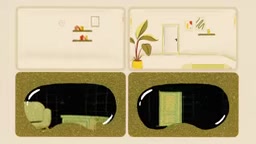
The results were clear: those who walked through a door responded more slowly and forgot more often. Walking through multiple doors compounded the memory impairment further. Multitasking made things even worse — in a separate VR experiment, participants first memorized the colors and shapes of various objects, then either moved within the same room or walked into a different one. When they also had to complete a counting task simultaneously, the group that crossed a doorway had significantly more trouble recalling the original objects. A doorway combined with a distraction task appeared to overwhelm the memory system.
Doorways Are Just One Form of "Event Boundary"
Importantly, this effect goes far beyond actual door frames. Research has found that looking into an adjacent room through a transparent wall can trigger the same effect.
In fact, anything capable of triggering an event update is thought to have the same power: an alarm going off, a friend abruptly changing the subject, a change of location, the passage of time, a shift in motivation, or even switching browser tabs.
The phenomenon can also be observed in reading. When people encounter sentences describing a large time jump in a narrative — effectively an "event boundary" — researchers find they read more slowly, show heightened neural activity, and have more difficulty answering questions about what a character was just doing. The brain "reloads" at boundaries, and that comes at a cognitive cost.
From a cognitive science perspective, Event Segmentation Theory (EST), systematically developed by psychologist Jeffrey Zacks and his team, is the core framework for understanding this phenomenon. The theory holds that the brain does not perceive continuous experience as a linear flow, but actively parses it into meaningful "event units." Boundary detection depends on the magnitude of change in perceptual input — when changes exceed a certain threshold (including shifts in space, time, goals, causality, or the main actor), the brain automatically draws a boundary. This mechanism was originally designed to boost processing efficiency, allowing us to quickly grasp "what is happening now," but the trade-off is a brief window of memory vulnerability at each boundary. The slowing of reading speed and the increase in neural activity are outward signs of this real-time segmentation computation.
Sometimes a Doorway Can Actually Help You Remember Better
That said, event updates aren't always a bad thing. In certain contexts, a doorway can actually strengthen memory.

In one study, participants were given several word lists. Between lists, they either moved to a different spot within the same room or walked into a different room. The result: the group that changed rooms recalled the words more accurately.
The key difference determining whether a doorway disrupts or enhances memory may be whether information is separated into discrete, independent events or lumped together in a shared context. Clean "compartmentalization" helps reduce competition and interference during recall. In other words, when you deliberately want to remember and distinguish between several groups of information, physical separation can actually work in your favor.
How to Recover Your Train of Thought When Memory Drops Out
At its core, event updating is the brain's way of efficiently adapting to new contexts — a smart memory management strategy. It just occasionally has side effects that leave us at a loss.
Fortunately, the confusion usually resolves on its own. If you want to actively recover your train of thought, try these approaches:
- Retrace your steps: Walking back the way you came reconstructs the contextual cues from the original moment, which often brings the memory back.
- Resist consciously: When passing through a doorway, make a deliberate effort to hold your goal in mind — you can even say out loud what you're about to do.
- Stay focused: Avoid multitasking mid-task whenever possible.
Ultimately, any small habit that keeps you "in sync with yourself" — stopping your thoughts from racing ahead of your actions — is worth trying. Your brain will thank you.
Related articles

Hands-On with the Gemini 4 Argon API: Thinking Levels and Background Mode Explained
A Free Code Camp crash course on the Gemini 4 Argon API: from getting a key and sending your first request to controlling reasoning costs with thinking levels, enabling multi-turn chat with previous_interaction_id, and generating a Breakout game in background mode—plus a Google engineer's take on the model's capabilities.

Reinforcement Learning Takes On Getting Over It: Distributed Training Strategies Behind 63% Progress
A developer uses deep reinforcement learning to tackle Getting Over It. The agent climbs from the bottom to 63% progress but gets stuck at the anvil. The project is open-sourced, using divide-and-conquer training and CPU-only training, seeking community collaboration to break the bottleneck.

Sigma FP2 Released: The World's Smallest Full-Frame Camera Gets Sensor and Screen Upgrades
Sigma launches the FP2 full-frame camera, retaining its smallest-and-lightest design with three key upgrades: improved sensor, articulating LCD screen, and longer battery life—built for portable video creators.