The Era of Programming by Talking Has Arrived: How Programmers Can Adapt to the AI Coding Revolution

AI coding makes "programming by talking" a reality, putting traditional programmers at risk of mass displacement.
AI coding has evolved from demo-level output to production-deployable code, with roughly 90% of front-end jobs and 30% of back-end roles already displaced by AI — and growing fast. As token costs plummet, even non-technical people can build complete products through natural language iteration. Future programmers must master AI tools, business communication skills, and foundational programming logic. Full-stack engineers will become the standard, and personalized software will see explosive growth.
Programming by Talking Is Now Reality: How Big Is the AI Coding Disruption?
If you haven't yet realized how severely AI coding is disrupting the industry, these numbers might be a wake-up call: companies now require at least 80% of production code to be generated by large language models, an estimated 90% of front-end positions have been replaced by AI, roughly 30% of back-end roles have been displaced — and that figure is expected to hit 70% within a year.
So-called "programming by talking" means describing requirements in natural language and having AI directly generate production-ready code. Six months ago, AI-generated code was still at demo level — it required manual reading, comprehension, and modification before it could be used. But today, numerous companies have demonstrated that AI-generated code can pass engineering validation and be deployed directly to production environments without human review.
What does this mean? If you're still a traditional programmer who only knows how to write code by hand and doesn't use AI-assisted programming, you've already lost your competitive edge in the job market.
Lessons from a Sheep Farmer: Building Products Without Knowing Code
There's a widely circulated case study: an Australian farmer needed a program to manage his farm. He knew nothing about programming, but through conversation with AI, he described his needs — feeding sheep, raising sheep, selling sheep. After AI generated the first version, he said he wasn't satisfied and pointed out what needed changing. After AI made the changes, he still wasn't satisfied and continued providing feedback. After nearly 100 iterations, he actually built an application perfectly suited to his needs.
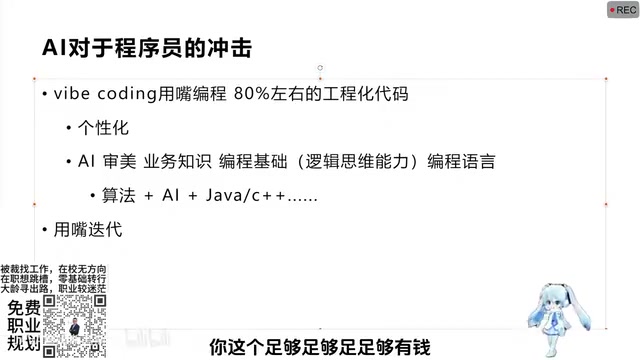
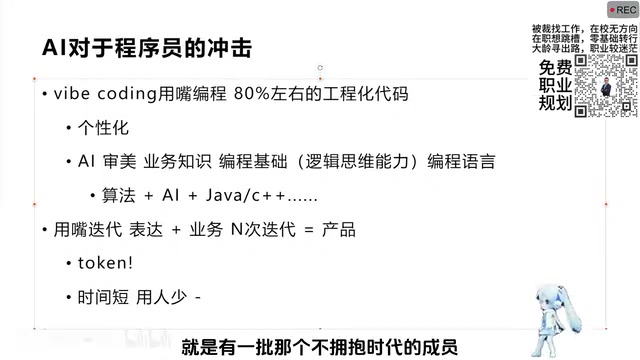
The terrifying implication of this story is: all those limitations — "you still need to read code," "there's still 20% you need to write yourself," "the generated output has bugs that need fixing" — these constraints exist only because you're "poor." If tokens are cheap enough (and models like DeepSeekAd are indeed driving costs down dramatically), you can complete an entire product through hundreds or thousands of natural language iterations without reading a single line of code.
Token Costs and LLM Economics
A token is the basic unit of text processing for large language models, roughly corresponding to one English word or 1-2 Chinese characters. Model API costs are priced per thousand or per million tokens. When GPT-4 first launched, input tokens cost approximately $30 per million; domestic models like DeepSeek-V3 have compressed this cost to under $1 — a reduction of over 95%. This "token deflation" effect directly changes the economics of AI applications. Scenarios that were previously infeasible due to high costs — like "hundreds of iterations" — can now be achieved for just a few dozen RMB, fundamentally reshaping the cost structure of software development.
Take a complete website with front-end, back-end, and live-streaming features as an example: the estimated token cost to build it is under 10,000 RMB. Previously, such a project would require an entire team and costs far exceeding that number. Now it only takes one person who understands the business, iterating through conversation, completing it in roughly one month.
The Programming Language Debate Is Already Outdated
"Will Java be obsolete? Will C/C++ be obsolete?" — the logic behind this question has fundamentally changed. In the programming-by-talking paradigm, whether you ask AI to generate code in Java or C++ is no longer that important. In the future, you might not even need to tell AI which language to use — just describe the functionality, and AI will choose the most appropriate language itself.
This also explains why Silicon Valley companies like Salesforce are no longer mass-hiring traditional programmers — they just need to use models effectively.
What Skills Will Future Programmers Need?
In the AI coding era, people who "program by talking" need to master the following core capabilities:
First Pillar: AI Tools and Prompt Engineering
At minimum, you need to know how to use AI coding tools like Claude Code and Trae, understand how large models work, and master prompt engineering techniques. This is the most basic threshold for programmer transformation.
Prompt Engineering Background
Prompt engineering refers to carefully designing natural language instructions fed to AI models to obtain more accurate, expectation-aligned outputs. This field rapidly emerged as an independent technical discipline after ChatGPT's explosion in 2022. Effective prompt engineering includes: clear task descriptions, providing contextual examples (few-shot learning), role setting, chain-of-thought guidance, and other techniques. Institutions like Stanford and OpenAI have listed it as a formal research direction, and some companies have even established dedicated "Prompt Engineer" positions with salaries reaching hundreds of thousands of dollars. In programming scenarios, high-quality prompts can boost the usability rate of AI-generated code from 60% to over 90%, making it the key variable determining whether "programming by talking" can successfully be implemented.
The AI Coding Tool Ecosystem
The current AI coding tool landscape has formed a complete ecosystem. GitHub Copilot was the earliest commercialized AI code completion tool with over a million monthly active users; Cursor is a deeply modified AI-native IDE based on VS Code that supports multi-file context understanding; Claude Code is Anthropic's command-line AI programming assistant, excelling at handling large codebases; Trae is a domestic AI IDE launched by ByteDance; and Windsurf (formerly Codeium) focuses on an "Agentic" programming mode that can autonomously plan and execute multi-step programming tasks. The common trend across these tools is evolution from "code completion" to "autonomous programming Agents" — AI is no longer just assisting but can independently complete entire feature modules, which is the technical foundation that makes "programming by talking" possible.
Second Pillar: Business Knowledge and Communication Skills
So-called "business knowledge" is essentially traditional requirements analysis capability. You need to deeply understand the business logic of specific industries and clearly, accurately communicate requirements to AI. This is why some say "the age of liberal arts graduates has arrived" — communication ability and business comprehension have become unprecedentedly important.
Third Pillar: Programming Fundamentals and Logical Thinking
Currently, AI still can't 100% replace human work. The remaining 10%-20% of code that needs modification requires you to have a foundation in algorithms and data structures, along with logical thinking ability. As AI develops, this percentage may drop to 2% or even 1%, but it remains necessary in the short term.
Advanced Capability: Architecture and System Design
When business requirements are highly complex, architecture-level challenges like high concurrency, high availability, and high scalability are areas AI still can't fully cover. This becomes the core competitive advantage of senior programmers — but no one knows when AI will "consume" this part too.
Profound Changes in Industry Landscape
Explosion of Personalized Software
Future software will become extremely personalized. Even within manufacturing, even with ERP systems, every factory can have a fully customized version. Because code can be generated just by talking, customization costs approach zero, and the era of "one system fits all customers" will end.
Full-Stack Engineers Become the Standard
The programmers who remain will become increasingly busy — one person handling front-end, back-end, and testing, one person doing the work of six or seven. If you don't embrace this change, you won't be competitive. In the future, there will likely only be full-stack engineers, with no purely front-end or back-end specialists.
Full-Stack Engineers and the Evolution of Software Engineering
A Full-Stack Engineer is a developer who masters front-end (user interface), back-end (server logic), database, and deployment/operations capabilities. Traditional software engineering, due to high tech stack complexity, was highly specialized — large internet companies often split front-end, back-end, testing, and operations into separate teams. AI coding tools are breaking this division of labor: when AI can automatically generate code across all layers, the communication and coordination costs between teams far exceed the cost of one person learning cross-layer technologies, making "one-person full-stack" more efficient than "multi-person specialization." This echoes the early internet era when "one person could build an entire website."
Related articles
Meta Muse Hits 900K Downloads in Six D…
Meta Muse Hits 900K Downloads in Six Days: The AI Agent Era Has Officially Arrived
Meta's AI agent Muse hit 902K downloads in 6 days, topping US App Store and Google Play charts above ChatGPT and Claude. A deep dive into Muse's capabilities and the AI Agent race.
 Industry Insights
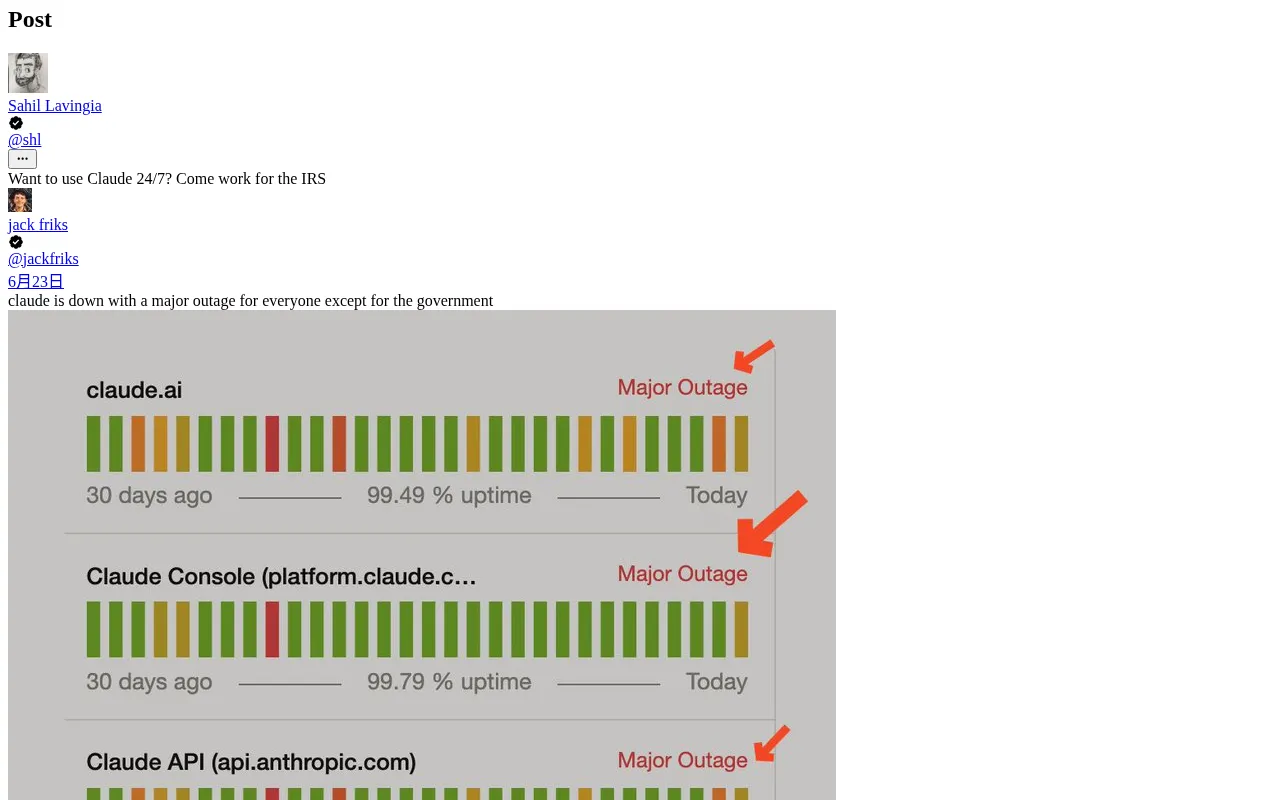
IRS Fully Embraces Claude AI, Accelerating Federal Government's AI Adoption
The IRS is recruiting staff with 24/7 Claude AI access, marking Anthropic's breakthrough into the federal government. Explore the strategic implications and tax use cases.
 Industry Insights
The IRS Mobile App Debate: A Trust Crisis in Government Digital Transformation
The IRS's proposed mobile app has sparked heated debate. This article analyzes the core arguments, exploring data security, privacy, and the trust crisis in government digital transformation.