The Fingerprints of Export-Controlled GPUs: The Hidden Imprint on China's Frontier AI Models
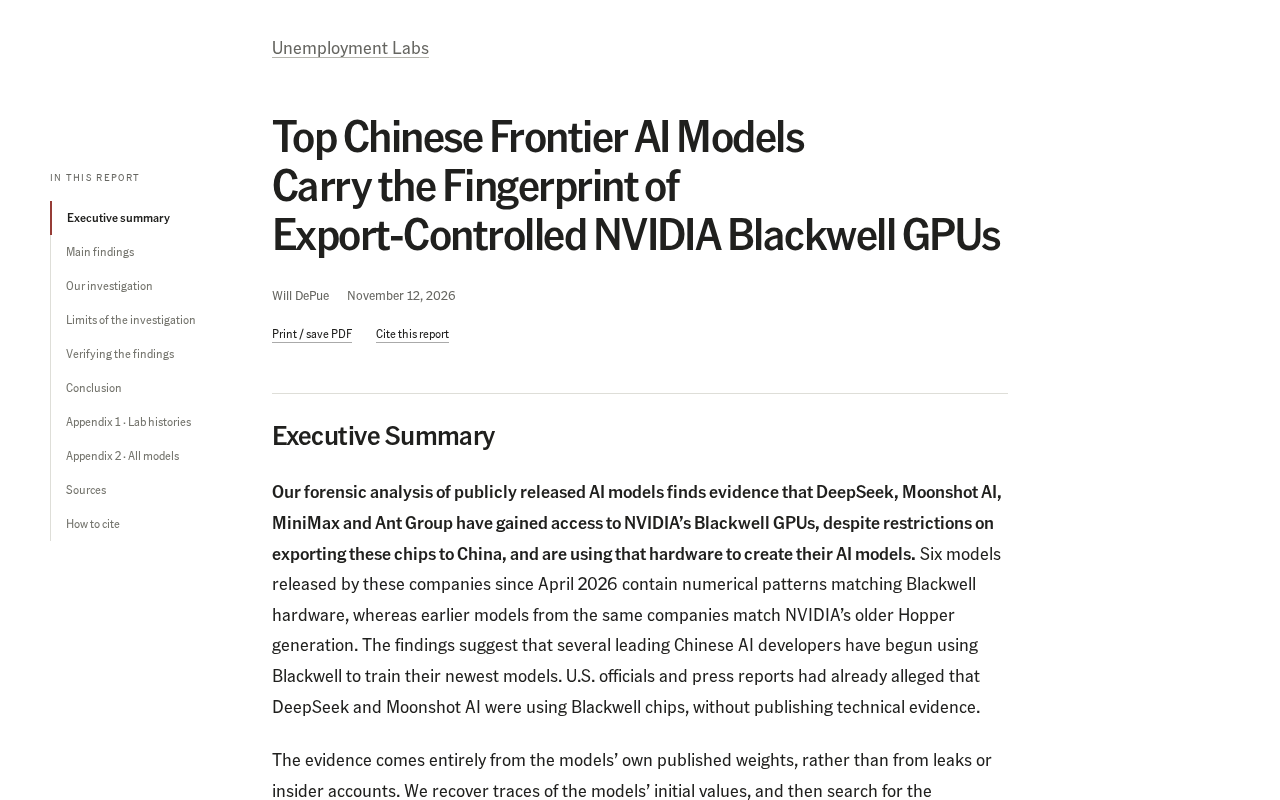
Hardware fingerprints from export-controlled GPUs are settling into the behavioral traits of Chinese AI models, with far-reaching effects.
The article discusses a Hacker News view that the behavioral traits of China's frontier AI models reveal the "fingerprints" of export-controlled GPUs. These fingerprints are not physical serial numbers but statistical patterns in inference efficiency, training stability, and task performance correlated with specific restricted GPU models. Hardware constraints—through degraded special editions, third-party channels, or domestic accelerators—affect training parallel strategies, software stacks, and numerical precision, ultimately reflecting in model capability distributions. The article also notes that fingerprint identification is ambiguous and should be treated as a statistical tendency rather than deterministic evidence, and not as a basis for enforcement. Finally, it suggests that export controls may force algorithmic and engineering innovation, changing rather than merely delaying the direction of China's AI development.
When Model Performance Meets Hardware Provenance
A post sparking discussion on Hacker News points out that China's frontier AI models are showing the "fingerprints" of export-controlled GPUs. This judgment is not unfounded—when training compute becomes a scarce resource, differences in hardware configuration settle into a model's behavioral characteristics in certain ways.
The so-called "fingerprint" is not physical serial-number tracking, but rather patterns in a model's inference efficiency, training stability, and even performance on specific tasks that are highly correlated with GPU models subject to export controls. This offers a new angle for observing the geopolitical impact of the AI supply chain: without opening up the servers, clues about hardware provenance can be read from model outputs.
Export-controlled GPUs generally refer to high-performance computing chips subject to the Export Administration Regulations (EAR) of the U.S. Bureau of Industry and Security (BIS), typically NVIDIA's A100, H100, and subsequent models. Since October 2022, the United States has imposed export restrictions on advanced computing chips to China, tightening performance-density and interconnect-bandwidth thresholds multiple times. To comply, NVIDIA introduced special versions such as the A800 and H800, circumventing controls by reducing parameters such as NVLink bandwidth; the October 2023 rules further brought such special models under restriction. These policies directly changed the hardware performance boundaries available to Chinese AI teams.
How Hardware Constraints Shape Model Characteristics
Export controls restrict the flow of specific high-end GPUs into the Chinese market, forcing Chinese AI teams to seek alternatives under limited compute conditions. Possible paths include: using performance-degraded special editions, obtaining restricted models through third-party channels, or turning to domestic accelerators.
Each choice leaves traces in the training process. Degraded GPUs mean longer training times and different parallel strategies, which affect the model's convergence path; the software stacks of domestic accelerators differ from the CUDA ecosystem, potentially causing subtle changes in operator implementation and numerical precision; and hardware obtained through informal channels may have cluster interconnect topologies that affect communication efficiency in large-scale training. These factors stack up and ultimately reflect in the model's capability distribution and inference performance.
The CUDA ecosystem refers to the parallel computing platform and programming model NVIDIA built around its GPUs, including compilers, operator libraries (such as cuBLAS and cuDNN), communication libraries (NCCL), and developer toolchains. After more than a decade of accumulation, mainstream deep learning frameworks (PyTorch, TensorFlow) all use CUDA as their primary backend, and a large number of operators have been tuned for its numerical behavior. Domestic accelerators such as Ascend and Cambricon use self-developed software stacks (such as CANN); although they provide CUDA compatibility layers, they differ in operator implementation, floating-point accumulation order, and mixed-precision strategies, potentially causing numerical deviations and changes in convergence paths during training—this is precisely the technical basis for hardware signals to settle into model behavior.
The Practical Significance and Limits of Fingerprint Identification
Inferring hardware provenance from the model side is technically reasonable, but there are obvious gray areas. Different hardware configurations may produce similar behavioral characteristics, and differences in training data and algorithm architecture can obscure hardware signals. Therefore, "fingerprints" are closer to a statistical tendency than deterministic evidence.
According to views in the Hacker News discussion, this kind of fingerprint analysis has reference value for policymakers and supply-chain researchers, but it should not be treated as a basis for enforcement. Model behavioral interpretability is still developing, and directly equating performance characteristics with hardware provenance carries the risk of over-inference.
Mechanistic interpretability aims to understand a model's internal computation at the level of neurons, attention heads, or circuits. It is still in an early stage, and complete interpretation of large-scale models is not yet feasible. Against this backdrop, inferring training hardware from external behavioral characteristics is indirect inference that relies on correlation rather than causal mechanisms. A more reliable approach is to combine multiple signals—such as communication patterns in training logs, operator time distributions, and error-accumulation characteristics under specific numerical precisions—for cross-validation, rather than relying on a single performance metric. This also explains why fingerprint analysis can currently only serve as reference evidence.
The Deeper Impact on the AI Industry Landscape
The original intent of export controls is to slow the development of China's frontier AI, but the fingerprint phenomenon suggests a more complex picture: hardware constraints are forcing innovation at the algorithmic and engineering levels. In a compute-constrained environment, Chinese teams may be more inclined to explore training-efficiency optimization, model-architecture improvements, and adaptation to domestic hardware.
This adaptation process itself will shape technological paths different from those in compute-abundant environments. In the long run, export controls may inadvertently give rise to a more diverse AI technology ecosystem—whether this delays development or changes its direction remains undetermined, but the existence of model fingerprints at least shows that the impact of hardware geopolitics has penetrated down to the level of model behavior.
Related articles
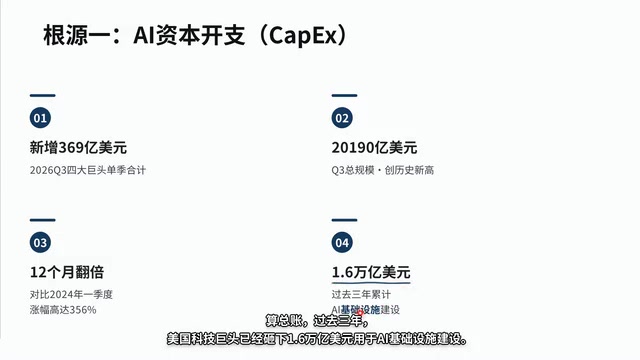
Has the AI Bubble Burst? A 45-Day, $6 Trillion Loss Post-Mortem
US stocks shed $6 trillion in 45 days—averaging $225B daily for 31 sessions. Has the AI bubble burst? A deep-dive post-mortem of six converging headwinds and what's already priced in.

AI Historical Comic Drama Goes Viral: Why the Zhu Yuanzhang Theme Outperforms Real Actors
An AI-generated historical comic drama went viral on Bilibili, with viewers saying its acting beats real people. We analyze its tech pipeline, narrative logic, and industry impact.

Bin's Live Stream Highlights: Hilarious Interactions from "You Came at the Right Time" to "I'll Support You From Now On"
Bin's hilarious live stream highlights: from "You came at the right time" to "I'll support you from now on," featuring Championship skins, wigs, and other game memes that showcase Bilibili's unique streaming culture.