The First Transatlantic Telegraph Cable: A Magnificent Failure That Changed Communication History

How the 1858 transatlantic cable's spectacular failure paved the way for modern global communication.
In 1858, engineers achieved the first transatlantic telegraph connection, only to see it fail within weeks due to signal degradation and insulation breakdown. Though a costly failure, the project exposed critical technical challenges and inspired scientific advances by figures like William Thomson, ultimately enabling the successful 1866 cable that launched the era of instant transoceanic communication.
A World-Changing Gamble
In the mid-19th century, transmitting information across the Atlantic relied on steamships, with a letter traveling between London and New York taking weeks for a round trip. Against this backdrop, a group of idealistic engineers and capitalists decided to take on an unprecedented engineering feat — laying a telegraph cable along the ocean floor to connect Europe and North America.
The idea seemed almost fantastical at the time. People knew very little about the seabed's terrain and lacked mature theoretical understanding of how signals could travel through thousands of kilometers of copper wire. Yet it was precisely this fearless exploration of the unknown that produced one of the most legendary chapters in the history of human communication.
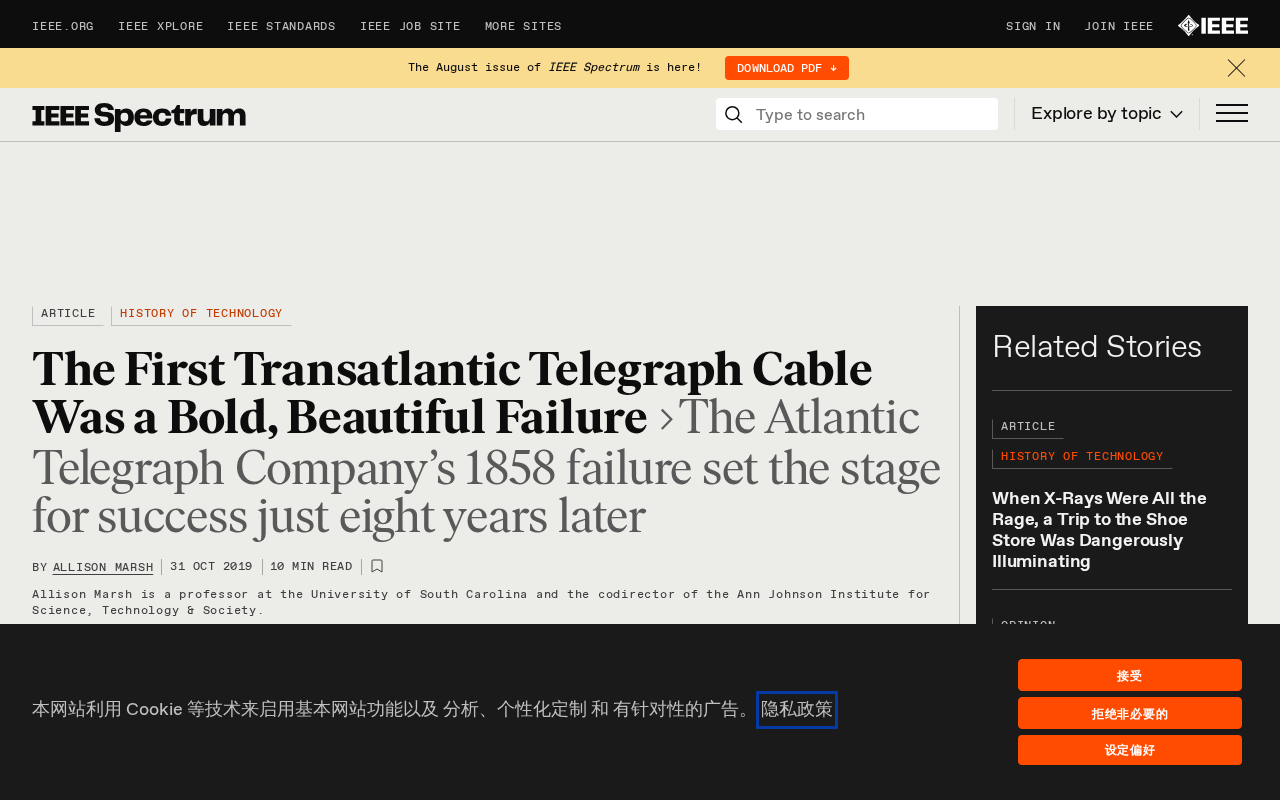
Laying the Transatlantic Cable: A Test of Both Technology and Courage
The Immense Challenges of Deep-Sea Installation
Laying a submarine cable across the Atlantic meant placing a continuous conductor across thousands of kilometers of deep ocean. The cable had to withstand seawater corrosion, immense deep-sea pressure, and the tension caused by ship movements during installation. A single break at any point would render the entire project a failure.
The engineering team used the most advanced steamships of the era to carry enormous quantities of cable, deploying it into the ocean depths while underway. Across multiple attempts, the cable snapped and sank, forcing the team to repeatedly recover, reconnect, and restart. These setbacks not only consumed vast sums of money but also tested the faith and patience of everyone involved.
The Physics Problem of Long-Distance Signal Transmission
Beyond the mechanical challenges lay a deeper difficulty — an insufficient understanding of electrical signals themselves. Over such vast distances, signals suffered severe attenuation and delay due to capacitance effects, with characters interfering with one another and becoming unreadable at the receiving end. Engineers of the time had not yet fully grasped these electrical principles, and the high-voltage approach they adopted actually accelerated the deterioration of the cable's insulation.
1858: Brief Success and Rapid Failure
In 1858, the transatlantic telegraph cable was finally connected successfully, enabling near-instantaneous communication between the two continents for the first time. Queen Victoria and the American President exchanged congratulatory messages, and the entire Western world erupted in celebration. People took to the streets, hailing it as a great symbol of civilizational progress.
However, the joy was fleeting. Transmission quality was abysmal — a brief congratulatory message took over ten hours to send. Worse still, due to insulation failure and the ongoing damage from excessive voltage, the cable went completely dead after only a few weeks of operation. This enormously expensive project ultimately ended as a "magnificent failure."
The Profound Significance Behind the Failure
Paving the Way for the 1866 Transatlantic Success
Although the first transatlantic cable did not achieve lasting operation, it was far from worthless. The attempt exposed numerous critical issues — from cable material selection and insulation techniques to signal transmission theory. Engineers drew lessons from the failure, and scientists such as William Thomson (later Lord Kelvin) conducted in-depth research into signal behavior in long-distance cables, establishing a solid theoretical foundation for subsequent technical improvements.
By 1866, a new cable with a far superior design was successfully laid and operated reliably, truly inaugurating the era of instantaneous transoceanic communication. The invaluable experience accumulated from the first failure was an indispensable cornerstone of this success.
Lessons for the Spirit of Technological Innovation
This history still carries profound lessons for today's technological innovation. Any disruptive technological breakthrough is typically built upon a series of failed explorations. The story of the first transatlantic telegraph cable reminds us that failure is not the same as futility — those pioneers who dared to push the boundaries of the unknown, even if they never witnessed the ultimate success, contributed an indelible force to human progress.
Today, as frontiers like AI, quantum computing, and deep-space exploration advance at breakneck speed, we will similarly experience countless attempts that seem to lead nowhere. It is precisely these "beautiful failures" that form the stairway to the future.
Conclusion
The first transatlantic telegraph cable was a bold and magnificent failure. It embodied the bravest dreams and most advanced technology of its era. Though its outcome was imperfect, it is forever inscribed as a milestone in the history of human communication. This story tells us: true innovation never fears failure, because every failure quietly nurtures the next success.
Related articles
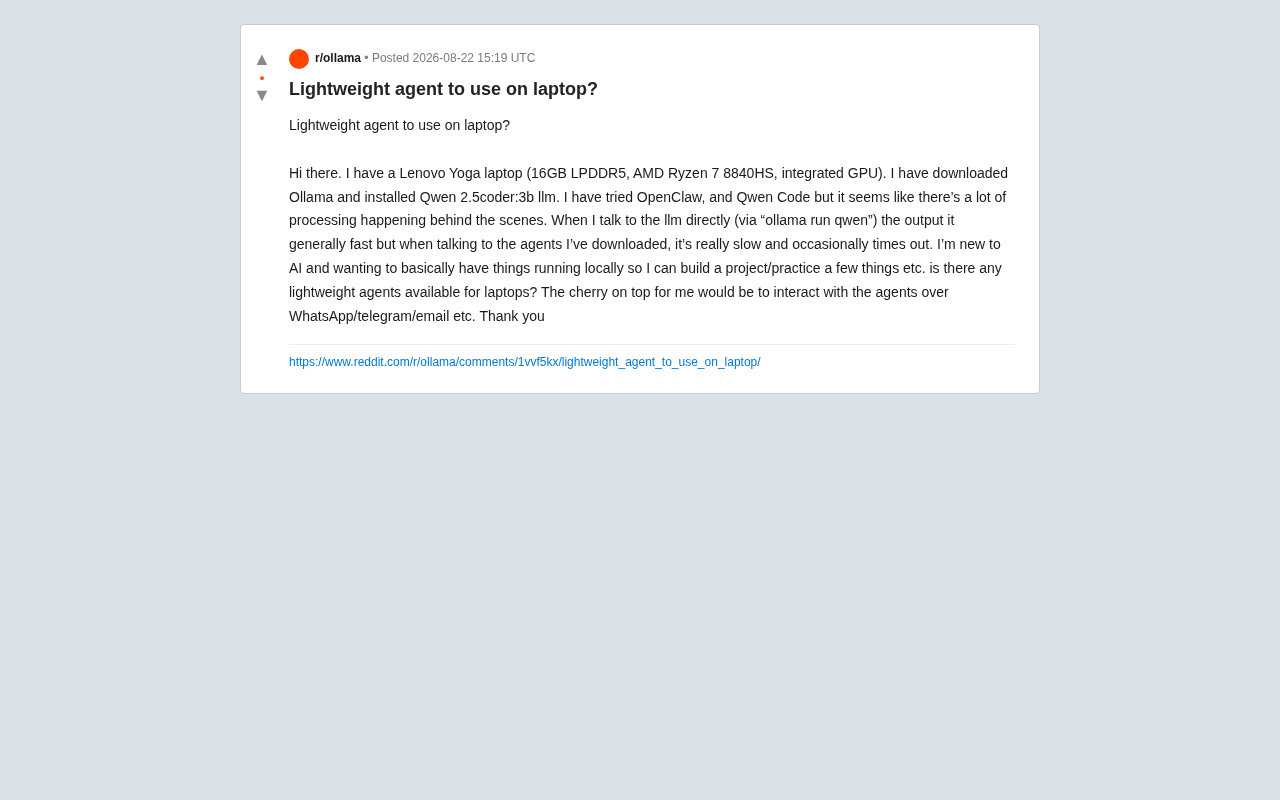
Local AI Agent Deployment Too Slow? A Lightweight Optimization Practical Guide
Local AI Agent deployment slow and timing out? This guide covers Agent framework overhead, hardware bottlenecks, and practical optimizations including context trimming, quantization, and Telegram Bot integration.

Choosing a Laptop for AI Studies: MacBook vs NVIDIA Laptop — An In-Depth Comparison Guide
In-depth analysis for AI students choosing laptops: MacBook Air M5 with remote GPU vs NVIDIA laptop, comparing CUDA support, portability, battery life, and value.

Self-Hosted LLM Tech Stack: A Complete Guide to Managing Your Local AI Cluster from the Terminal
A deep dive into self-hosting LLM tech stacks: inference engines, model management, vector databases, and how to manage your local AI cluster from the terminal.