The Full Story of OpenAI Cutting Off Cursor: From Lead Investor to Adversary in Just Three Years

OpenAI cuts off Cursor after SpaceX acquires Anysphere, turning a former investment into a competitive threat.
OpenAI has formally notified Cursor of API termination effective November 12, just three years after leading its seed round. The trigger: SpaceX's $60 billion acquisition of Anysphere brought Cursor into Musk's camp. Combined with the Musk-OpenAI feud and a prior Claude cutoff by Anthropic, this event highlights the extreme fragility of AI's API economy and the industry's accelerating shift toward vertical integration.
A Termination Notice Shatters a Fragile Alliance
According to analysis from relevant content creators on Bilibili, OpenAI has officially issued a termination notice to Cursor: starting November 12, Cursor users will lose access to all OpenAI models, and all future model releases will be permanently absent from this AI coding tool.
The turning point came on the night of August 28, 2026. OpenAI notified SpaceX that it was terminating its contract to provide models to Cursor, citing a single reason: it could not be confident that SpaceX would use its technology within the bounds of OpenAI's terms of service. The wording appeared restrained, but behind it lay a long-simmering collapse of trust.
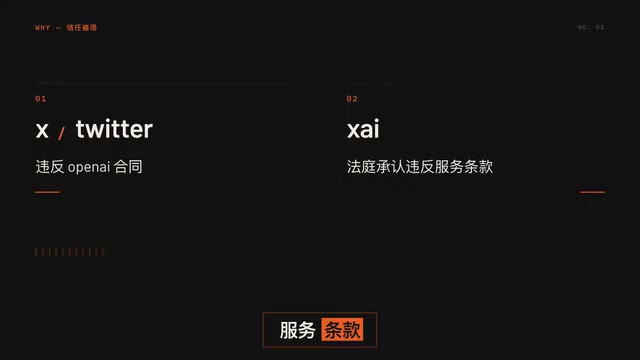
In its notice, OpenAI dredged up old grievances: after Musk's acquisition of Twitter, the X platform had violated OpenAI contracts; xAI had even admitted in court to violating terms of service. When a company's technology is believed to potentially fall into uncontrolled use, cutting off API access becomes the only option. Trust had long since evaporated — all that remained was going through the motions.
In truth, the feud between OpenAI and Musk runs far deeper than this termination event itself. Musk was one of OpenAI's co-founders. When he helped establish it in 2015, the organization was a nonprofit with the mission of ensuring artificial general intelligence (AGI) benefits all of humanity. In 2018, Musk stepped down from the board due to conflicts of interest with Tesla's autonomous driving business. OpenAI subsequently restructured as a "capped-profit" company in 2019 and established a deep partnership with Microsoft — a move that deeply frustrated Musk. Starting in 2023, Musk publicly criticized OpenAI multiple times for straying from its original mission, and in early 2024, he filed a formal lawsuit. Simultaneously, he founded xAI and launched the Grok large language model, directly competing with OpenAI. This complete transformation from ally to adversary made any business collaboration involving both camps extremely sensitive — and Cursor found itself standing right in the crossfire.
From Leading the Seed Round to Breaking Up — in Just Three Years
To understand the absurdity of this cutoff, we need to rewind three years. In 2022, four MIT students founded Anysphere. The following March, Cursor burst onto the scene powered by GPT-4, quickly becoming a star product in the AI coding space.
Cursor is not just another code editor plugin — it's an AI-native IDE (Integrated Development Environment) deeply customized on top of VS Code's open-source codebase. It embeds large language model capabilities directly into the programming workflow, supporting code generation, intelligent autocomplete, code refactoring, and natural language conversational programming. Unlike AI coding assistants like GitHub Copilot that function as plugins within existing editors, Cursor was redesigned from the ground up around AI interaction. Its core competitive advantage lies in multi-model support — users can freely switch between GPT-4, Claude, Gemini, and other large models, choosing the optimal one for each task. This "model-neutral" positioning is both its greatest strength and the source of its most critical structural risk.
What makes this particularly ironic: in October 2023, it was OpenAI's Startup Fund that personally led Cursor's $8 million seed round. In other words, the OpenAI cutting off Cursor today was once one of its earliest investors.
In 2024, A16Z led a $60 million Series A, valuing Cursor at $400 million. In April 2025, OpenAI briefly attempted to acquire Cursor outright, but after negotiations fell through, it pivoted to approach another competitor, Windsurf. This failed acquisition may have already planted the seeds of the relationship's deterioration.
From leading the seed round to a formal breakup — barely three years. The alliance between capital and technology proves remarkably fragile amid the AI industry's rapid iteration.
Cursor's Cutoff Wasn't the First: Anthropic Also Pulled Claude
In fact, this isn't the first time Cursor has faced a model supplier cutoff. In July 2025, Anthropic had already cut off Cursor's access to the Claude model. For an application-layer product heavily dependent on third-party large models, this kind of "chokepoint" risk is an ever-present sword hanging overhead.
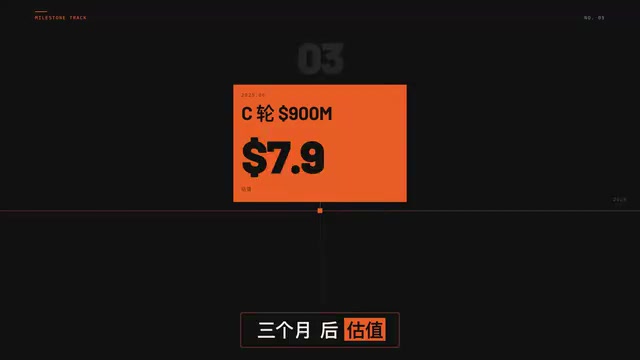
Anthropic was founded in 2021 by former OpenAI Research VP Dario Amodei and his sister Daniela Amodei, and is currently one of OpenAI's strongest competitors. Its flagship Claude model series is renowned for its safety features and long-context processing capabilities — Claude 3.5 Sonnet was at one point considered by the developer community to outperform GPT-4 on coding tasks. Anthropic employs a "Constitutional AI" training methodology, using AI self-critique and correction to improve safety. Anthropic's decision to cut off Cursor's Claude access similarly reflects model suppliers' growing desire to control downstream applications — when an application product becomes sufficiently successful, suppliers have strong incentives to redirect traffic and users toward their own product ecosystem.
Facing this structural risk, Cursor released its self-developed model Composer in October 2025, attempting to reduce dependence on external suppliers. That December, its annualized revenue crossed $1 billion, commercially proving its value. But revenue growth cannot mask a passive position at the technology foundation — as long as core capabilities still depend on someone else's API, the initiative isn't in your own hands.
This requires understanding the unique fragility of AI's API economy. The API (Application Programming Interface) economy has been one of the most important business paradigms in the software industry over the past decade. Companies like Stripe and Twilio proved that providing foundational capabilities via APIs and letting developers build on top can create enormous value. However, the AI API economy has a fundamental difference: traditional APIs (payments, communications, etc.) provide standardized infrastructure services with relatively low switching costs, while AI model API output quality is highly differentiated, and the application layer is often deeply optimized around specific model capabilities. This means that when a model supplier decides to cut off access, migration costs are far higher than in traditional API scenarios, and product experience degradation is virtually inevitable. Cursor's consecutive cutoffs by two major suppliers is an extreme manifestation of this fragility.
SpaceX's $60 Billion Acquisition of Anysphere Completely Changed the Game
What truly reversed the situation was a series of capital moves in 2026. In February, xAI merged into SpaceX. On June 16, SpaceX announced a $60 billion all-stock acquisition of Anysphere — officially bringing Cursor into Musk's business empire.
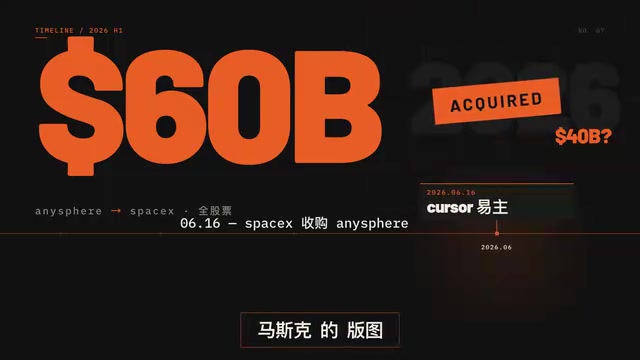
The decision to merge xAI into SpaceX was itself deeply strategic. Founded by Musk in 2023, xAI had within just two years built the supercomputing cluster known as Colossus — deploying over 100,000 NVIDIA H100 GPUs, making it one of the largest AI training clusters in the world at the time. SpaceX, meanwhile, not only operates the world's largest satellite internet constellation Starlink (serving over 4 million users), but also controls critical infrastructure including space launch and interstellar communications. This integration signaled that Musk was building a complete AI ecosystem loop — from foundational compute (Colossus supercomputer) to base models (Grok series) to communications networks (Starlink) to end-user applications. After the Anysphere acquisition, Cursor became the critical gateway in this loop reaching millions of developers worldwide.
After the deal closed on August 14, the pace accelerated dramatically: Grok 4.5 and 4.6 launched first on Cursor in succession, and Colossus supercomputer resources were fully integrated. Everything moved as if preparing for some larger objective. It was against this backdrop that OpenAI issued its termination notice on August 28.
From OpenAI's perspective, once Cursor transformed from a neutral application platform into part of competitor Musk's camp, continuing to supply models was tantamount to feeding the enemy. Cutting off supply became the inevitable choice under business logic.
Who's Feeling the Pain, and Who's Benefiting?
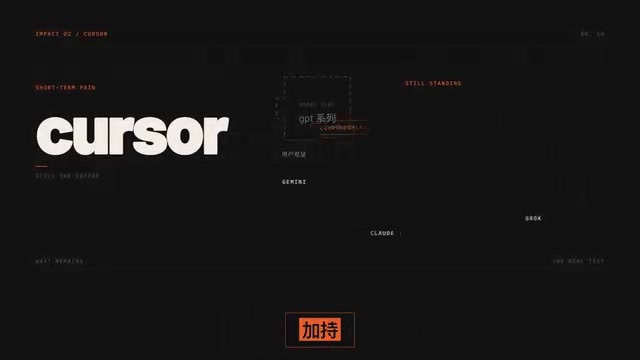
For Cursor, this is a short-term pain. After GPT series models are removed, some users may take a wait-and-see approach, but Grok, Claude, and Gemini remain available, and with its self-developed Composer model, the product won't be paralyzed. The real test is this: as part of the SpaceX empire, can Cursor continue to function as an open, neutral coding platform?
For OpenAI, it loses one of the industry's hottest AI coding entry points — effectively voluntarily giving up an important distribution channel. And for the industry as a whole, this event sends a clear and sobering signal: When a supplier becomes a competitor, an API can transform overnight from a tool into a weapon.
Behind this lies a deeper shift in AI industry logic — vertical integration is overtaking open collaboration. This trend echoes the semiconductor industry's historical experience: just as Apple achieved full-stack control from hardware to software through its self-developed M-series chips, AI giants are pursuing similar closed-loop capabilities. Microsoft, through its investment in OpenAI and integration of its models into Azure cloud services, GitHub Copilot, and Microsoft 365, has already built a complete value chain; Google has achieved a similar layout through its self-developed TPU chips, Gemini models, and Workspace suite. The core logic of vertical integration is clear: controlling every link from compute to application not only reduces costs and improves performance, but more critically eliminates "chokepoint" risks in the supply chain. The flip side, however, is the shrinking of open ecosystems — when every giant tends toward using its own models and its own channels, independent middleware applications face continuously compressed survival space.
As giants rush to build full-stack closed loops from compute to models to applications through acquisitions and self-development, companies sitting at the application layer and relying on others' technology stacks will find it increasingly difficult to maintain independence. The countdown to November 12 has begun. Whether Cursor can weather this test is also an examination of the resilience of the entire AI application-layer ecosystem.
Related articles

AI-Written Code Is Still Your Code: Are You Ready to Take Responsibility?
AI-generated code is still your responsibility. This article examines review fatigue, vibe coding risks, knowledge hollowing, and how to maintain accountability when using Copilot and other AI tools.

Can GPT Generate a AAA Game with One Click? A Deep Dive into the Real Boundaries of AI Game Development
Can GPT-7 one-shot a AAA game better than Star Citizen? This article analyzes AI's real capabilities in game development and why one-click AAA generation remains fantasy.

Practical Guide to Building an AI Visibility Detection Tool with Claude Code
Learn how to build an AI visibility detection tool with Claude Code and SERP API to monitor brand mentions in Google AI Overview and AI Mode results.