The "Hansi rok kar dikhao" Meme Among Bilibili Creators: Interaction Codes and Lessons for AI Content Creation

A Bilibili clickbait video with Hindi text reveals short-video interaction tactics, warning AI creators against prioritizing form over substance.
Using a Bilibili video titled "Hansi rok kar dikhao" with random Hindi text as an example, the article analyzes common short-video interaction strategies: titles create curiosity, content provides emotional value, and endings prompt interaction, forming a traffic loop. The Hindi text creates exoticism but lacks logical coherence, limiting long-term effectiveness. Explicit interaction prompts can boost short-term data but need to be tied to content value. The article argues that AI content creators should avoid imitating the clickbait trio and instead leverage AI's scaling advantages to produce high-information-density, cross-lingual quality content, building long-term trust and account weight.
Why Can a Seemingly Meaningless Title Become an Interaction Code?
On Bilibili, a video titled "Hansi rok kar dikhao" has Hindi text as its body: "अब तुम लोग क्या बता रहे हो वह तो मुझे बहुत पहले से पता है कि मेरे पास पता का है" (What are you telling me now—I've known that for a long time, because I know the address), ending with the usual plea for likes and comments. This mismatch between title and content precisely reflects a typical interaction strategy on today's short-video platforms. The Hindi subtitles in the screenshots (/media/screenshots/22339_000.jpg, /media/screenshots/22339_001.jpg) further confirm this cross-lingual, cross-cultural randomness.
From the perspective of AI content creation, this "meaningless but eye-catching" pattern is actually a naive adaptation to platform recommendation algorithms. The title creates curiosity, the content provides emotional value (or at least doesn't drive viewers away), and the ending prompts interaction—three steps completing a traffic loop. For AI-generated content, this structure can be quantified and imitated, but it also easily falls into homogenization.
Platform recommendation algorithms typically use click-through rate, completion rate, and interaction rate (likes, comments, shares) as core ranking signals. The title-content mismatch is essentially a "curiosity gap" design: the title creates an information gap, users click to fill it, and the algorithm gives more exposure as the click-through rate rises. This strategy is especially common during the cold-start phase of short videos, because the algorithm is highly sensitive to initial interaction data—a small amount of genuine interaction can trigger the next tier of traffic pool recommendation.
The Cross-Cultural Communication Phenomenon Behind the Hindi Text
The Hindi in the original text is not complex; it roughly means "I already knew what you're saying, because I have the address," and it is not logically coherent. This is very likely text the creator randomly generated using a translation tool or material library, intended not to convey information but to create a sense of "exoticism" or "mystery." On Bilibili, such cross-lingual content often sparks viewer curiosity, and comments frequently include interactions like "please translate" or "what does it mean."

The limitations of this strategy are also obvious: once viewers see through the "clickbait" trick, the interaction rate drops rapidly. For AI creators, cross-cultural elements should serve the content itself, not simply act as gimmicks. For example, in AI commentary or AI voiceover videos, appropriate use of multiple languages can enhance immersion, but only if the text is logically coherent.
Cross-lingual content on Chinese platforms often relies on the defamiliarizing effect of "exoticism" for its spread. When viewers encounter text they cannot directly interpret, they have two reactions: one is curiosity-driven interaction (asking for translation, guessing the meaning), and the other is quickly swiping away. The former boosts the comment rate, while the latter lowers the completion rate—the two have opposite effects on algorithmic signals. Therefore, whether cross-lingual elements work depends on whether they form a meaningful connection with other parts of the video, rather than existing in isolation.
The Tricks and Boundaries of Short-Video Interaction Prompts
"If you like it, please like and comment" is the most commonly used closing sentence among Bilibili creators. In this material, the Hindi version of the prompt also appears. From the data perspective, explicit interaction prompts can indeed raise the comment rate, but overuse will trigger viewer annoyance. AI content creators need to weigh: pursue short-term interaction data, or build long-term trust?
A viable approach is to bind interaction prompts to content value. For example, in AI tutorial videos, guiding viewers to "leave the prompt you want to generate in the comments" both completes the interaction and accumulates material for the next episode. This design is more sustainable than simply "begging for likes."
Interaction prompts (CTAs) play a dual role in platform algorithms: on one hand, they directly boost explicit metrics such as comments and likes; on the other hand, through the chain reaction of "comment → reply → comment again," they extend user dwell time. But platforms are also continuously cracking down on induced interaction behavior, and excessive or mechanical CTAs may trigger traffic limiting. Effective CTA design usually follows the "low threshold + high relevance" principle: the task is simple (such as typing a word), directly related to the content, and can bring immediate feedback (such as being replied to by the creator).
Lessons for AI-Generated Content: Avoid "Form Over Substance"
This material is essentially a low-information-density sample of short-video interaction. It reminds AI content creators: algorithms can amplify form, but cannot replace content. If AI-generated videos merely imitate the trio of clickbait titles, random text, and begging for likes, they may gain traffic in the short term, but in the long run they will damage account weight and user retention.
Conversely, AI's advantage lies in producing high-quality information at scale. For example, using AI translation and voiceover to export high-quality Chinese technical content to multilingual markets; or using AI to analyze comments and automatically generate interactive replies. These applications are far more valuable than "random Hindi + begging for likes."
Conclusion
The "Hansi rok kar dikhao" case, on the surface a combination of a meaningless title and Hindi text, actually reflects the universal logic of interaction strategies on short-video platforms. For AI content creators, while borrowing its interaction design, they should be even more alert to the trap of form over substance. True competitiveness still lies in whether AI tools can continuously produce content with informational value and emotional resonance.
Related articles

Bilibili Creator Teases Fireworks Vlog: A New Trend in AI Tech Content Creation?
A Bilibili creator posts an Urdu dialogue clip teasing an upcoming fireworks vlog. The material lacks substantive AI tech content; this article honestly analyzes its informational limits and explores content creation teaser strategies.
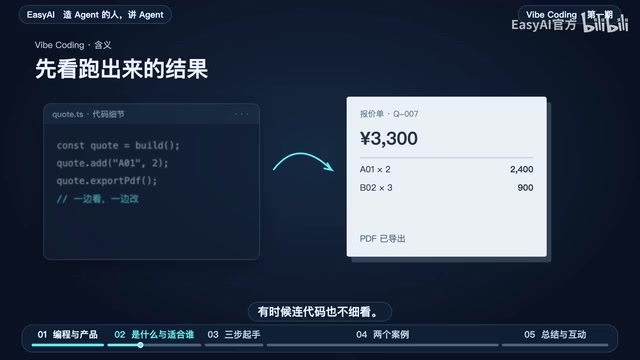
Nobody Uses What Vibe Coding Builds? Coding Is Easy, Products Are Hard
Vibe Coding makes AI coding easy, but a working demo isn't a usable product. From quote tools to one-handed Agent Hub operation, here's why coding is easy and products are hard—plus a three-step method for building usable tools without technical skills.
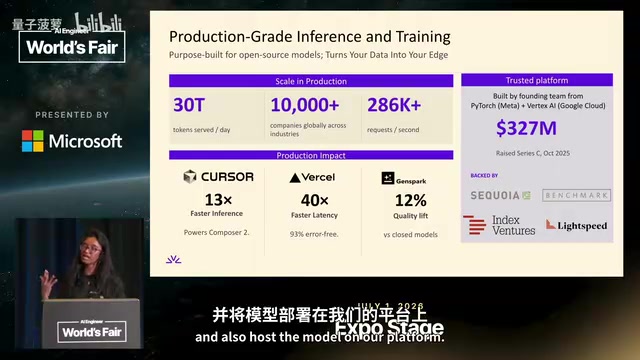
Fireworks AI: How Open-Source Models Rival Closed-Source Through a Training-Deployment Flywheel
Fireworks AI's Jet explains how open-source models rival closed-source via a custom inference engine, three training modes, and a same-platform data flywheel.