The Hidden Side of AI Training: Your High-Value Conversations May Be Getting 'Rewritten and Reused'
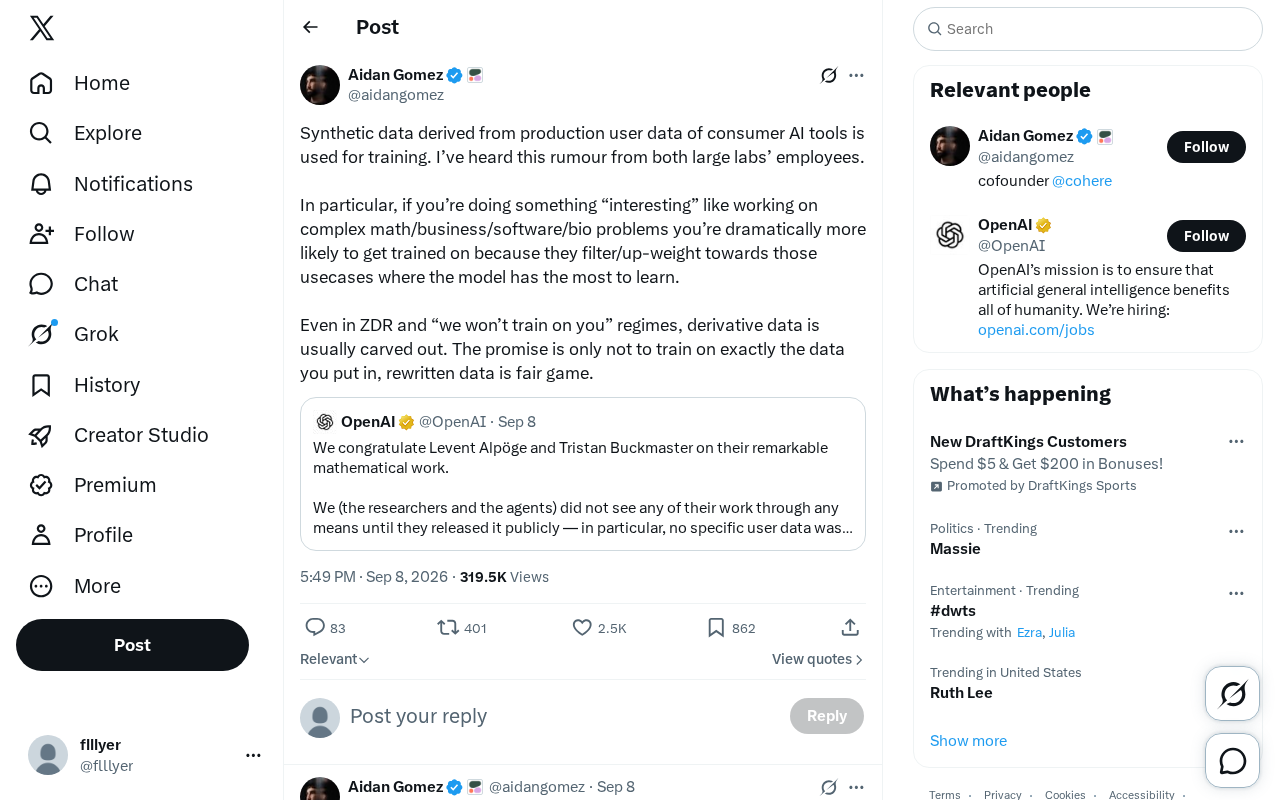
Insider claims consumer AI tools rewrite user data as synthetic training data, even under zero-retention policies.
A tech observer on Twitter, citing multiple major lab employees, claims consumer AI tools are converting user data into synthetic data for model training—with high-complexity conversations around math, business, and engineering being prioritized. Even under "zero data retention" or "no training" promises, rewritten derivative data is reportedly still considered fair use, since most privacy policies only protect data in its original literal form. Though unverified, the technical and legal logic is internally consistent. Experts advise professionals to scrutinize how privacy terms define derivative data and consider enterprise or self-hosted solutions for sensitive work.
A Rumor From Inside the Big Labs
A tech observer recently sparked discussion on Twitter with a provocative claim: user data from production environments of consumer-facing AI tools is being used for model training through "synthetic data." According to the post, this claim has been independently corroborated by employees at multiple large AI laboratories.
The key term here is synthetic data — rather than using raw user inputs directly, this approach derives, rewrites, and reconstructs new data from those inputs. This subtle distinction creates a technical loophole that allows companies to sidestep privacy promises like "we won't train on your data."
The More "Interesting" the Conversation, the More Likely It Gets Trained On
One of the most notable claims in the leak concerns how data is selected. Apparently, if users are doing something "interesting" — tackling complex math problems, business analysis, software engineering, or challenging biology questions — the likelihood of that data being included in training increases significantly.
The logic isn't hard to follow: these are the scenarios where models have the most to learn. Labs reportedly filter and up-weight these high-complexity, information-dense use cases because they're most valuable for improving a model's reasoning and domain expertise.
In other words, casual chitchat or simple Q&A may hold limited value, but a rigorous technical deep-dive or a careful business analysis becomes "premium raw material" in the training pipeline. For professionals using AI to handle core business tasks or intellectual property, this is a warning worth taking seriously.
The Fine Print Behind ZDR and "No Training" Promises
Perhaps even more thought-provoking is the discussion around privacy terms. Many AI services offer so-called ZDR (Zero Data Retention) policies, or explicitly promise not to use your data to train their models.
Yet according to the source, even under these seemingly strict privacy frameworks, derivative data is typically carved out and treated separately. The promise often only covers: not training on your data in its original, unaltered form. Once that data has been rewritten or restructured into a new form, it's considered "fair game."
This is a legally and technically sophisticated distinction. The line between raw data and "rewritten data" gives vendors considerable room to maneuver. Users may believe they're fully protected, when in reality the protection may only cover the literal form of their data — not the information and ideas it contains.
From a contract law and privacy law perspective, the boundaries around "derivative data" have always been contested territory. The EU's General Data Protection Regulation (GDPR) excludes data that has been sufficiently anonymized or synthetically processed — to the point where it can no longer be traced back to a natural person — from the scope of personal data protection. U.S. state privacy laws (such as CCPA) are even more permissive on this front. This means that as long as a vendor can demonstrate the synthetic data has "severed its connection" to the original user's identity, that data is legally usable for virtually any purpose in most jurisdictions — including model training. This legal exemption is the institutional foundation that allows "we don't train on raw data" promises and "derivative data is fair use" practices to coexist. When evaluating the strength of privacy protections, users should pay close attention to how service agreements specifically define "anonymization" and "de-identification," since the threshold varies enormously from vendor to vendor.
How to Evaluate This Claim
It's worth emphasizing that this information currently comes from a single social media source. While the author claims it was corroborated by multiple employees at major labs, there are no official documents or publicly verifiable evidence to directly confirm it. It's best treated as a possible signal about industry practice, not a definitive conclusion.
That said, the technical logic is internally consistent:
- Synthetic data is already one of the dominant directions in modern training. Deriving training material from high-quality real-world data is a well-established method for alleviating data scarcity and improving specialized model capabilities.
- Privacy policy language almost universally leaves room for interpretation. "Not training on raw data" and "not using any derived information" are entirely different things.
- Up-weighting high-value use cases aligns with the basic economics of training resource optimization.
The rise of synthetic data has a clear technical backdrop. As high-quality publicly available text on the internet approaches saturation, researchers have broadly predicted that "publicly available data suitable for pre-training will be exhausted around 2026" (Epoch AI and similar organizations have made comparable estimates). Synthetic data has thus become a critical pathway for continuing to improve model capabilities: by having existing powerful models rewrite, expand upon, or reason about real-world use cases, researchers can generate large volumes of well-formatted, verifiable training samples. Notable examples include Meta's Self-Instruct methodology, DeepMind's AlphaCode training pipeline, and the RLHF data augmentation techniques referenced in OpenAI's GPT-4 technical report. This is precisely why high-quality user interactions — especially multi-turn conversations with complete problem context, detailed reasoning chains, and clear feedback signals — serve an irreplaceable role as "seed data" for generating high-value synthetic data. It's the underlying logic that makes the claim about "high-value use cases being up-weighted" technically plausible.
Practical Implications for Professional Users
If you're using consumer-grade AI tools to work on sensitive or high-value professional content, this rumor at minimum offers a few points worth keeping in mind:
- Read the exact wording of privacy policies carefully, and pay particular attention to whether "derivative data," "rewritten data," or "synthetic data" are excluded from "no training" promises.
- For genuinely sensitive core business work, consider enterprise-grade or self-hosted deployment options, which typically offer stronger data isolation guarantees.
- Understand that "zero retention" does not equal "zero learning" — the fact that data isn't stored doesn't mean patterns and information extracted from it won't influence the model in some form.
In an era of rapidly evolving AI capabilities, data is the most critical fuel. The ongoing negotiation between users and vendors over "what should be used and what should be protected" is destined to be a long-running debate. Whether or not this insider rumor is ultimately verified, it's worth careful reflection for any serious AI user.
Related articles
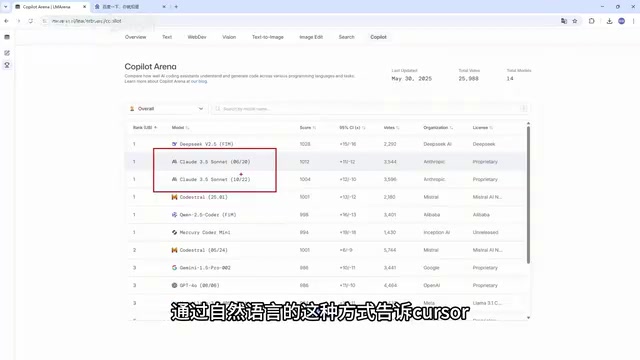
What Is Cursor? Core Differences Between This AI Coding Tool and Traditional IDEs
What is Cursor? This guide explains the AI-native code editor built on VS Code, how it compares to traditional IDEs, and its integration with Claude, DeepSeek, and Gemini.

Coze 3.0 Beginner's Guide: A Complete Overview of Agents and AI Applications
A beginner's guide to Coze 3.0: covering agents, AI applications, workflows, and plugins on ByteDance's AI platform, plus a comparison with Dify.
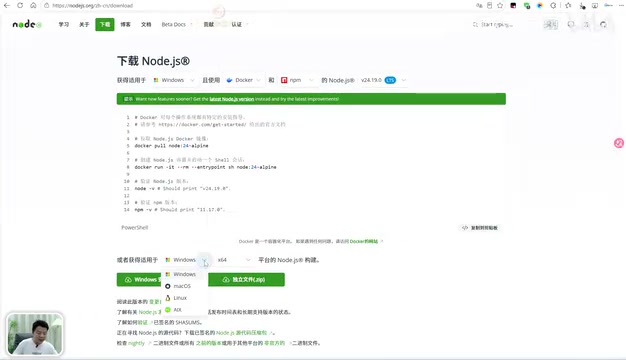
Setting Up the DeepSeek Harness Environment: A Complete Guide to Node.js Installation and Configuration
A beginner-friendly guide to setting up the DeepSeek Harness environment: Node.js installation, Add to PATH, redirecting npm global and cache directories, and configuring system environment variables.