The Hunt for Cleopatra's Tomb: How a Lawyer Rewrote Archaeological History Over Twenty Years

Lawyer-turned-archaeologist Kathleen Martinez spent 20 years using criminal-case logic to track down Cleopatra's tomb.
This National Geographic documentary chronicles lawyer Kathleen Martinez's twenty-year forensic-style quest to locate Cleopatra's tomb. Starting from logical gaps in Roman historical accounts, she zeroed in on the Isis temple at Taposiris Magna, building her case through foundation plaques, a Ptolemaic stele, and hundreds of datable coins. Ground-penetrating radar revealed a nearly three-kilometer tunnel leading to the Mediterranean seafloor, where deep-sea exploration uncovered a sunken ancient port. The temple also yielded what is believed to be the eighth known bust of Cleopatra. The film simultaneously restores the reputation of a queen systematically defamed by Roman propaganda — a polyglot stateswoman whose negative image was simply history written by the victors.
A Lawyer's Obsession That Changed Egyptian Archaeology
Cleopatra, Egypt's last queen, has been a focal point of human imagination for two thousand years. Revered by some and vilified by others, her true historical identity remains shrouded in mystery. This National Geographic documentary follows archaeologist Kathleen Martinez on a twenty-year quest to find the queen's final resting place.
What makes Martinez's story remarkable is that she never trained as an archaeologist. She ran her own law firm from the age of 21, and her father warned her not to gamble her career on the "crazy plan" of searching for Cleopatra's tomb. But it was precisely her legal training that allowed her to re-examine historical evidence the way a criminal lawyer would build a case. "We encounter many errors and assumptions at crime scenes," she has said. She approached this mystery like an unsolved case — systematically eliminating possibilities and constructing her argument layer by layer.
A Queen Defamed by Rome
Almost everything we think we know about Cleopatra comes from the Romans who defeated her. History is written by the victors, and nowhere is this more apparent than in her story. The Romans painted her as "the great seductress" and "Eastern sorceress" — fake news that persisted for centuries without a shred of supporting evidence.
The real Cleopatra was crowned at eighteen, born into the Ptolemaic dynasty — the Macedonian-Greek pharaonic lineage established by Alexander the Great. She spoke nine languages and was a master of statecraft, mathematics, and economics. In three thousand years of Egyptian history, truly powerful female rulers were extraordinarily rare. Martinez argues that the Romans smeared her precisely because a woman in power represented a profound threat to their worldview.
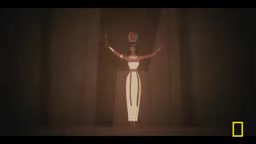
Egyptian women in the ancient world enjoyed a status that far exceeded that of women in other civilizations — they could own property, buy and sell, inherit, run businesses, and even divorce. Roman and Greek society, by contrast, was deeply restrictive toward women. When Mark Antony declared Cleopatra "Queen of Kings," it struck at the heart of Roman values and ultimately sealed her fate.
The Ptolemaic Dynasty was founded by Ptolemy I, one of Alexander the Great's generals, in 305 BC. It ruled Egypt for nearly three centuries until the death of Cleopatra VII — the Cleopatra — in 30 BC. Although ethnically Macedonian-Greek, the dynasty's rulers deeply embraced Egyptian culture in politics and religion: they worshipped Egyptian gods, adopted pharaonic titles, and built temples. Cleopatra VII was one of the very few Ptolemaic rulers who actually learned to speak Egyptian, which was seen as an important political gesture for connecting with the native population. Her command of language and local culture allowed her to present herself as a Hellenistic monarch to the elite while gaining the loyalty of Egyptian priests and commoners as a pharaoh.
The Key Clue: The Temple of Isis
Martinez's breakthrough came from her reinterpretation of the mystery surrounding the queen's death. Roman accounts state that Cleopatra was buried in the royal necropolis of Alexandria, yet no historian ever recorded visiting her tomb, and its location has remained unknown ever since.
Applying a lawyer's logic, she concluded that this account simply "didn't add up." By the customs of the time, defeated leaders were taken to Rome to be paraded through the streets. But the Romans only marched an effigy of Cleopatra — as though she were present in spirit — which suggests her actual body never fell into Roman hands. Martinez deduced that the queen had arranged in advance for her remains to be secretly transported out of Alexandria.

Combing through the writings of Roman historian Plutarch, she found a crucial line: Cleopatra had built her tomb near a temple of Isis. Isis was Cleopatra's patron goddess — a symbol of power, motherhood, and magic — and the queen frequently presented herself as Isis incarnate. This sacred bond became the key to unlocking the tomb's location.
Martinez systematically investigated every temple near the queen's place of death, eventually zeroing in on a temple of Isis that barely appeared on ancient maps: Taposiris Magna. The temple's walls bore no inscriptions whatsoever, and two hundred years of investigation had failed to determine who built it or what it was used for. It was a mystery in its own right.
Isis was one of the most important goddesses in ancient Egypt, and her cult spread widely throughout the Mediterranean world, attracting a large following even during the Roman Imperial period. She was revered as the protector of magic, fertility, kingship, and resurrection — the mythology recounts how she reassembled the body of her husband Osiris, torn into fourteen pieces, and restored him to life. The Ptolemaic rulers deliberately tied themselves to the Isis cult to reinforce their legitimacy: queens were sculpted or presented themselves as embodiments of Isis, wearing specific headdresses and carrying scepters — both religious declarations and political symbols. Cleopatra's self-presentation as the "New Isis" resonated with the native Egyptian population while also granting her a divine aura in dealings with Rome. This context gives deep religious and political logic to her choosing a site near an Isis temple as her final resting place.
From Skepticism to Evidence: Inscriptions, Coins, and the Temple's Identity
To obtain excavation permits, Martinez had to convince Zahi Hawass, the Egyptian archaeological authority who was the sole person authorized to grant them at the time. She was initially given only two months — practically nothing in archaeological terms. The team fell into despair; they couldn't even find pottery shards, and members began to doubt and challenge her.
The turning point came in the final week. A burial chamber began to emerge, and the permit was extended. The following year, the team unearthed a piece of blue glass — the temple's foundation plaque. Martinez compared the foundation plaque to a "flight recorder": inscribed in both Greek and hieroglyphics, it recorded the temple's builder and date of construction, and clearly identified the goddess it honored as Isis.

More discoveries followed in quick succession: hundreds of bronze coins engraved with Cleopatra's portrait and name, and a massive stone stele that rewrote the temple's history. This Ptolemaic-era stele was virtually identical to one found at the Temple of Philae — a site known to be connected to Cleopatra — establishing Taposiris Magna as the most important center of Isis worship in northern Egypt.
A Tunnel to the Sea and Deep-Water Exploration
Using ground-penetrating radar, the team discovered a massive shaft and tunnel beneath the temple ruins. The tunnel descends twenty-five meters and extends north and south for nearly two to three kilometers, making it one of the longest ancient tunnels ever found in Egypt. Its trajectory points toward the Mediterranean — but why would a tunnel lead to the sea?
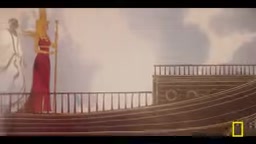
Martinez brought in legendary deep-sea explorer Bob Ballard — the man who discovered the wreck of the Titanic. The team theorized that the tunnel passed beneath a modern highway and resort hotels, continuing all the way to the seafloor. History records that a massive earthquake and tsunami in the fourth century AD devastated Alexandria and submerged large stretches of coastline; ancient maps also confirm that the temple once connected to a peninsula and island.
The maritime search nearly stalled. Four weeks in, the team had found only natural reef formations and was on the verge of returning empty-handed before the dry season ended. Martinez ordered a recalibration of the tunnel's precise trajectory to narrow the search area. Finally, sonar swept a new target zone and revealed rows of perfectly rectangular stone columns standing more than six meters tall — too geometrically precise to be natural formations. Ballard remarked that in fifty years of work, he had never seen anything like it. The team went on to discover polished floors, amphoras, and multiple anchors — an ancient sunken port of Taposiris Magna had risen from the deep.
The 365 AD earthquake centered near Crete was one of the most destructive geological events in the recorded history of the ancient Mediterranean world. The resulting tsunami swept coastlines from Greece to North Africa, and the coastal region near Alexandria suffered severe damage. Geological research indicates that tectonic movement and rising sea levels have permanently submerged large amounts of ancient architecture and land several meters beneath the Mediterranean. This is why Alexandria's ancient harbor, palace district, and coastal structures remain important subjects of underwater archaeology. This geological context gives plausibility to the hypothesis that the tunnel at Taposiris Magna may extend to the seafloor — the coastline the temple faced when it was built looks nothing like the landscape of today.
Face to Face: The Eighth Bust of Cleopatra
After the maritime exploration, the team turned its attention back to the temple. Radar flagged an anomaly near a section of wall, and excavation revealed an extraordinarily rare foundation deposit — believed to be the remains of a ritual ceremony performed during the temple's construction. It yielded more than 230 coins, most of which could be precisely dated to Cleopatra's era, along with one believed to depict her father, Ptolemy XII — whose name means "Cleopatra," or "glory of the father" — lending a personal resonance to the find.
The most significant discovery was a small but richly detailed bust of Cleopatra. Until that moment, only seven images believed to depict Cleopatra were known to exist anywhere in the world, because the Romans had deliberately destroyed every likeness of her in an attempt to erase her from history. This was the eighth.
While some scholars remain cautious and call for independent expert verification, Martinez is convinced — based on the statue's features, crown, findspot, and the datable coins — that this is Cleopatra. "I finally came face to face with my heroine," she said.
A Search That Is Not Yet Over
How Cleopatra actually died remains unresolved; the death-by-snake-bite story is yet another stubborn legend with little to support it. Martinez's theory is that after the queen's death, her body was transported to Taposiris Magna, carried through the tunnel, and buried within the temple walls — hidden away beyond the reach of Rome. She continues to search for definitive proof.
What makes this story so compelling is not just the archaeological discoveries themselves, but the fact that an "outsider," through a near-obsessive persistence, has steadily shaken the consensus of mainstream scholarship. As Martinez herself has said, Cleopatra lost her life and lost Egypt — yet in another sense she won a kind of immortality, because she has never been forgotten. And Martinez, through twenty years of determination, has proven that the queen once lived and breathed on this very soil.
Related articles

PPO Algorithm Cracks the Moving Sofa Problem, Reconstructing Gerver's Optimal Solution
Developer uses PPO reinforcement learning to reconstruct Gerver's optimal solution to the Moving Sofa Problem, showcasing AI's potential in geometric optimization and its limitations.

PPO Algorithm Cracks the Moving Sofa Problem, Reconstructing the Classic Gerver Sofa
Explore how the PPO algorithm uses reinforcement learning to reconstruct the classic Gerver sofa solution to the moving sofa problem, showcasing AI's potential and limits in geometric optimization and mathematical discovery.

Qwen4-27B Accidentally Exposed: vLLM PR Leaks Clues About New Model
Reddit community discovers vLLM XPU repository PR #22 potentially leaking clues about Qwen4-27B, involving KV cache specs and Intel platform adaptation; this article reviews PR information, community reaction, and reference value for developers.