The King Returns: Marc Márquez's Long Battle with Injury and the MotoGP Czech Grand Prix

Márquez survives four surgeries and relentless injury to win a ninth title and sign with Ducati through 2028.
From a 2018 shoulder reconstruction through right humerus fractures, three reoperations, bone necrosis, infection, and repeated diplopia, Márquez returned at the Sachsenring after 581 days to win again. He claimed a record ninth world title in 2025, only for old injuries to resurface. A loose screw in 2026 cost him the Catalan GP, yet he bounced back with a perfect 37-point haul in Hungary and a sprint podium in the Czech Republic, cutting a 102-point deficit to 40. Ducati confirmed his contract through 2028 — a story long beyond wins and losses.
A Body Rebuilt Over and Over
In 2018, a team of surgeons opened up Marc Márquez's arm. Their mission: fix a shoulder that kept dislocating. The procedure went far beyond ligament reconstruction — it required rebuilding an entire bone socket. Surgeons removed a piece of bone from the back of his shoulder and secured it in a new position with titanium screws, all to stabilize that unruly joint.
What followed was a long rehabilitation: machine work first, then go-karts, then a comically small motorcycle. By the time he was cleared, he made it back for the 2019 season opener — and went on to claim the world title that year. That was the beginning of Márquez's war with injury, and the key to understanding every comeback that followed.
From the Summit to the Abyss
In 2020, a crash at Jerez changed everything. Surgeons inserted a titanium plate into his right arm. Within a day of surgery, he was on the floor, pushing himself up on the freshly operated limb. Three days later, he was back on track for free practice — then the pain became unbearable. He didn't race again for the rest of the 2020 season.
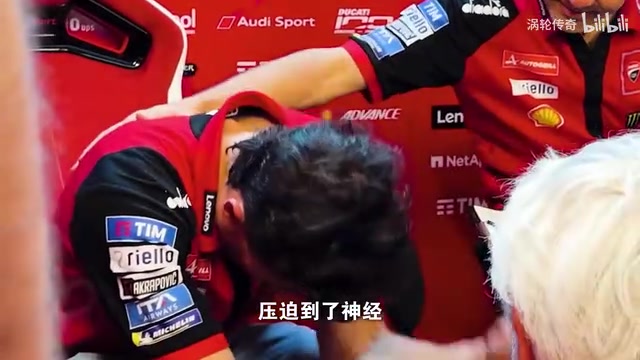
In August, the plate fractured under pressure, requiring a second surgery. In December, a third surgery for a bone graft was followed by a post-operative infection that triggered further complications. A rider who had stood at the very top of the sport suddenly found himself staring into the void.
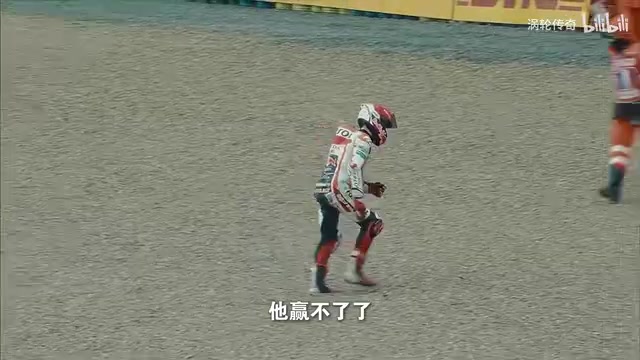
At the 2021 Portuguese Grand Prix — 265 days after his last race — Márquez returned, finishing seventh. Three consecutive DNFs came right after. "He'll never win again" became a recurring refrain.
A right humerus (upper arm bone) fracture is among the most serious injuries in motorcycle racing. In Márquez's case, the fracture was severe enough to cause signs of bone necrosis — the root cause behind the repeated surgeries. A "bone graft" involves transplanting autologous or donor bone tissue to fill necrotic areas and stimulate new bone growth; infection dramatically slows healing and, in severe cases, forces surgeons to remove implants altogether. Diplopia (double vision) was another persistent adversary for Márquez, resulting from damage to the ocular motor nerves sustained in high-speed impacts — a near-fatal condition for a rider who depends on millisecond-level spatial judgment. He first experienced diplopia in 2011, with multiple recurrences since, each requiring months of neurological recovery. This context made the stakes of that fourth right humerus surgery so extraordinarily high: failure would mean permanent loss of arm function and the end of his career.
A Lone Charge Through the Sachsenring
But what people remember is a particular day at the Sachsenring, under a brooding, overcast sky. He rode alone into the grey, building a lead, extending it, crossing the line — dreamlike in its totality. Five hundred and eighty-one days of waiting, finally over.
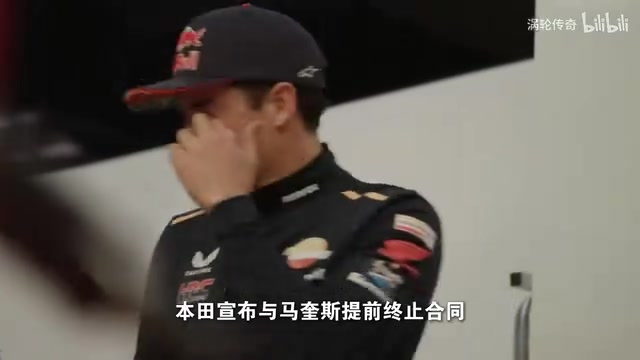
In 2022, another serious crash. A third episode of diplopia. After qualifying at Mugello, he calmly announced he would undergo a fourth operation on his right humerus — succeed and continue, fail and retire. On October 4, 2023, Honda announced the early termination of his contract. A long era had ended.
The Sachsenring in Germany is one of MotoGP's traditional venues, famous for its unusually high proportion of left-hand corners — 10 of 12 turns bend left. For Márquez, this was deeply significant: after his right arm injury, the right arm bore the most strain in left-hand corners, where it balances the bike's lean. The Sachsenring's left-heavy layout actually reduced that burden, which partly explains why he chose this circuit as a key comeback battlefield despite being far from fully recovered — and why he won there with such commanding authority. His record at the Sachsenring is nothing short of legendary, and fans have long called it "Márquez's home track."
After the Ninth Title, the Story Wasn't Over
The 2025 season defied easy description. His ninth world championship was sealed at the Japanese Grand Prix, and everyone assumed this turbulent story had finally earned its happy ending.
It hadn't. The injury that started in 2018 came back alongside the title — his shoulder gave out again, and he withdrew from the rest of the season. In 2026, he returned once more, only to find that a loose screw in his shoulder was pressing on a nerve. He was forced to miss the Catalan Grand Prix and went back under the knife.
The season looked lost: points far behind, three consecutive race DNFs. Then Hungary arrived — sprint race victory, main race victory, 37 points in a single weekend. He was back. He said that to get back to this point, he had done countless hours of rehabilitation at home and paid an enormous price.
Márquez left Honda at the end of 2023 and joined the Gresini Ducati satellite team, before moving to the factory Ducati squad for the 2025 season. His ninth world title broke his tie with Valentino Rossi, making him one of the most decorated riders in MotoGP history. Under MotoGP's points system, a main race win earns 25 points and a sprint win earns 12 — a perfect 37-point haul from a single weekend. Against the backdrop of ongoing injury and a heavy championship deficit, the Hungary double underscored just how explosive his form can still be.
Czech Grand Prix: A Brutal Battle with Himself
There was barely time to marvel before the Czech Grand Prix arrived. He finished third in the sprint, but the main race was twice as long. For a body no longer young, repeatedly ravaged by injury, every lap in the second half was a brutal internal war.
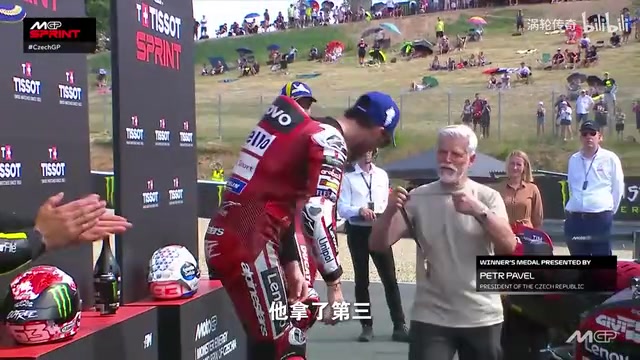
From eighth in the standings at the Italian Grand Prix — 102 points off the lead — he has clawed his way back to fourth, now just 40 points behind the championship leader. If injury is a blade, it's been dulled from overuse. Yet he's still here. That is Márquez.
The Era Is Not Over
On June 23, 2026, Ducati announced that Márquez would extend his contract with the team through 2028. For fans, there is no better news. After four surgeries on his right humerus, countless crashes, and multiple bouts of diplopia, this man still refuses to stop. Márquez's story has long since transcended wins and losses — it is about how a person can be shattered, and then put himself back together, again and again.
Related articles

Apple iPhone Duo Foldable Unboxing: Is This $5,000 CAD New Species Worth It?
Apple's first foldable iPhone Duo unboxing: top-spec near $5,000 CAD, matte inner display as the biggest highlight, excellent crease control, passport-style wide-short ratio. Full review of screen, hinge, feel, and price.

Open-Source Agent Messaging Network Lets Claude Code Talk Directly to Other AI Assistants
Developer builds an open-source messaging layer letting Claude Code, Grok Bot, and other AI agents communicate directly, using handles and handshakes for permission control—but waking dormant agents is the biggest technical challenge.

Beyond Context Soup: How Multi-Agent Pipelines Can Strictly Bound State and Handoffs
Context soup in multi-agent pipelines causes state bloat and ambiguous handoffs. This article summarizes engineering practices for strictly bounding state and handoffs — explicit I/O schemas, immutable state, layered state — and analyzes key trade-offs in handoff protocol design.