The Millennial Midlife Crisis: Chasing the Milestones They Never Got

Millennials' midlife crisis isn't about recapturing youth — it's about reclaiming the autonomy their era took from them.
This article explores how millennials — the oldest of whom are now 45 — are experiencing midlife crisis in a fundamentally different way. Rather than buying sports cars to chase lost youth, their anxiety points in another direction: recovering the adult milestones that economic instability, high housing costs, and uncertain career paths put out of reach. The piece presents two contrasting perspectives: those who took on family responsibilities early and now long for personal space they never had, and those who had plenty of time alone but couldn't afford the independence they craved. Both experiences trace back to the same root — a generation that lost control of its own autonomy at the moments that mattered most.
When the Midlife Crisis Gets a New Face
When people think of a midlife crisis, a familiar image comes to mind: someone impulsively buying an expensive sports car, or doing something embarrassing in a desperate attempt to recapture their youth. It's a stereotype that has persisted across generations. But as the oldest millennials turn 45, that crisis is taking on a very different shape.
According to a discussion on the YouTube channel The Gray Area, millennials aren't chasing the ghost of their youth — they're trying to claim the adult milestones they never got to experience in the first place. It's a striking shift: they don't want to go back. They want to fill in the gaps of an adulthood they never quite had.
Why Millennials Are Always "Killing" Everything
If you're a millennial, you probably remember how this generation was talked about — blamed for the decline of everything from chain restaurants to homeownership rates, as if they'd collectively broken the world. Now, they're apparently upending another concept: the midlife crisis.
But behind that "disruption" lies a much more serious social reality. Millennials came of age during a period repeatedly described as unprecedented — economic instability, soaring housing costs, and deeply uncertain career paths. These external forces fundamentally shaped how they entered adulthood, and put traditional markers of "growing up" further and further out of reach.

"Millennials are killing the [insert industry here]" was a dominant media narrative throughout the 2010s in the West. From Olive Garden to golf, from wedding venues to department stores, the decline of countless industries was attributed to this generation's changing consumer habits. The framing was fundamentally misleading — it packaged structural economic shifts (the internet's disruption of retail, the long shadow of the 2008 financial crisis, inflation) as a matter of personal generational choice.
Millennials, roughly defined as those born between 1981 and 1996, reached key adulthood milestones right as the global financial crisis hit. They graduated into a collapsed job market, and the damage to their early career trajectories had lasting effects on long-term earnings — what economists call the "scarring effect." It was this structural disadvantage, not a lack of desire, that drove down homeownership rates and pushed marriage and parenthood later into life — trends that the outside world misread as generational rebellion.
Two Sides of the Same Coin
In the conversation with Emil Niazi, two perspectives emerge that seem opposed but are actually complementary — two sides of the same coin.
Side One: Wishing for More Time Alone
One voice comes from those who took on family responsibilities relatively early. As the discussion notes, you hear it from many older women: "I wish I'd waited longer to have kids," or "I wish I'd only had one."
To be clear, this isn't about regretting motherhood or regretting the children themselves. The real feeling is an unmet longing — "I just wanted more time for myself." The chance to be a little selfish, to have a stretch of solitude. Life kept pushing forward, and personal space kept getting compressed under the weight of responsibility.

Side Two: Having Too Much Time Alone, but Never True Independence
The opposing voice tells a completely different story: "I had so much time to myself, and all I ever wanted was the chance to actually be independent."
That independence was out of reach not by choice, but because of real economic constraints. Some had to live at home longer than they wanted. Many had to put off major life plans indefinitely. One line from the conversation captures it perfectly: "I could have had kids earlier, but I couldn't afford to." Solitude became something imposed, not chosen.

Two Different Losses, One Shared Era
What makes these two perspectives two sides of the same coin is that they point to the same root cause: the unique conditions this generation faced at the exact moments that mattered most. Some people lost themselves too early. Others were trapped with too much self, unable to move forward into the life they wanted.
Whether the longing is for more solitude or for more independence, both ultimately circle back to the same thing: the pursuit of autonomy over one's own life. The classic midlife crisis is rooted in anxiety over a youth that's slipping away. The millennial version is something different — a compensatory search for the adult choices they were never actually given.
This may explain why this generation's middle age looks so unlike anything we've seen before. They're not splurging; they're making up for lost time. They're not running from maturity — they're redefining what a fully-lived adult life actually means.
On a psychological note: the concept of the "midlife crisis" was first introduced by Canadian psychologist Elliott Jaques in 1965, describing the existential anxiety that arises when a person becomes acutely aware of their own mortality — typically triggering deep reflection on past choices and an impulse to reconstruct one's sense of self. The traditional model assumed a linear adult trajectory: education → career → marriage → parenthood → peak achievement, with the crisis arriving at the midpoint as a look back at the road already traveled. But when that assumed trajectory is fractured or delayed by economic forces, the psychological content of the crisis changes fundamentally. It's no longer a mourning of what has been lost — it becomes a search for what was never obtained. This shift makes the millennial midlife experience genuinely difficult to describe or address through existing theoretical frameworks, whether clinical or sociological.
Related articles
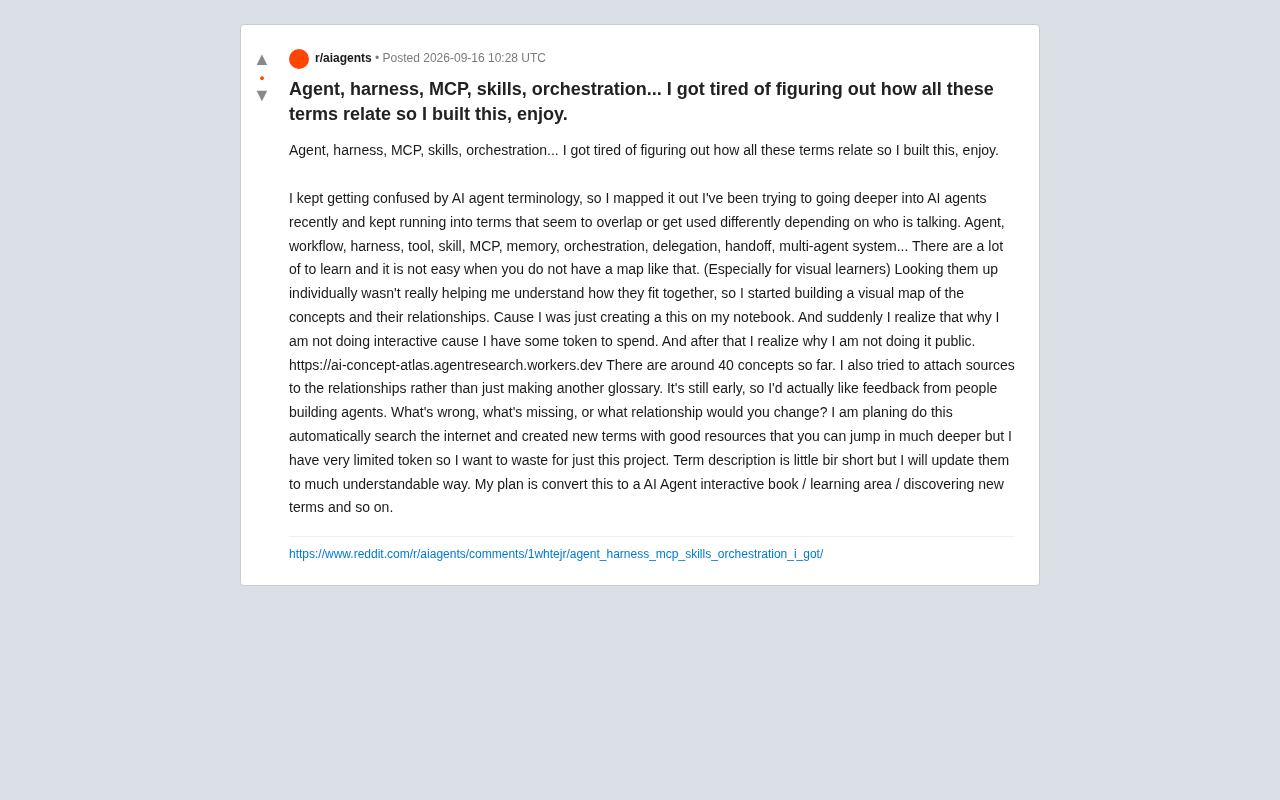
AI Agent Terminology Too Confusing? One Interactive Concept Map to Untangle 40+ Core Terms
Confused by AI Agent terms like MCP, harness, orchestration, and skills? AI Concept Atlas is an interactive map visualizing 40+ concepts and their relationships, with cited sources.

Meta's Broken Promise: Community Demands to Know Where the Muse Spark Weights Are
Meta promised to open-source Muse Spark model weights over a month ago, but still hasn't delivered. The community questions how this squares with Zuckerberg's "can't delay even a month" stance.
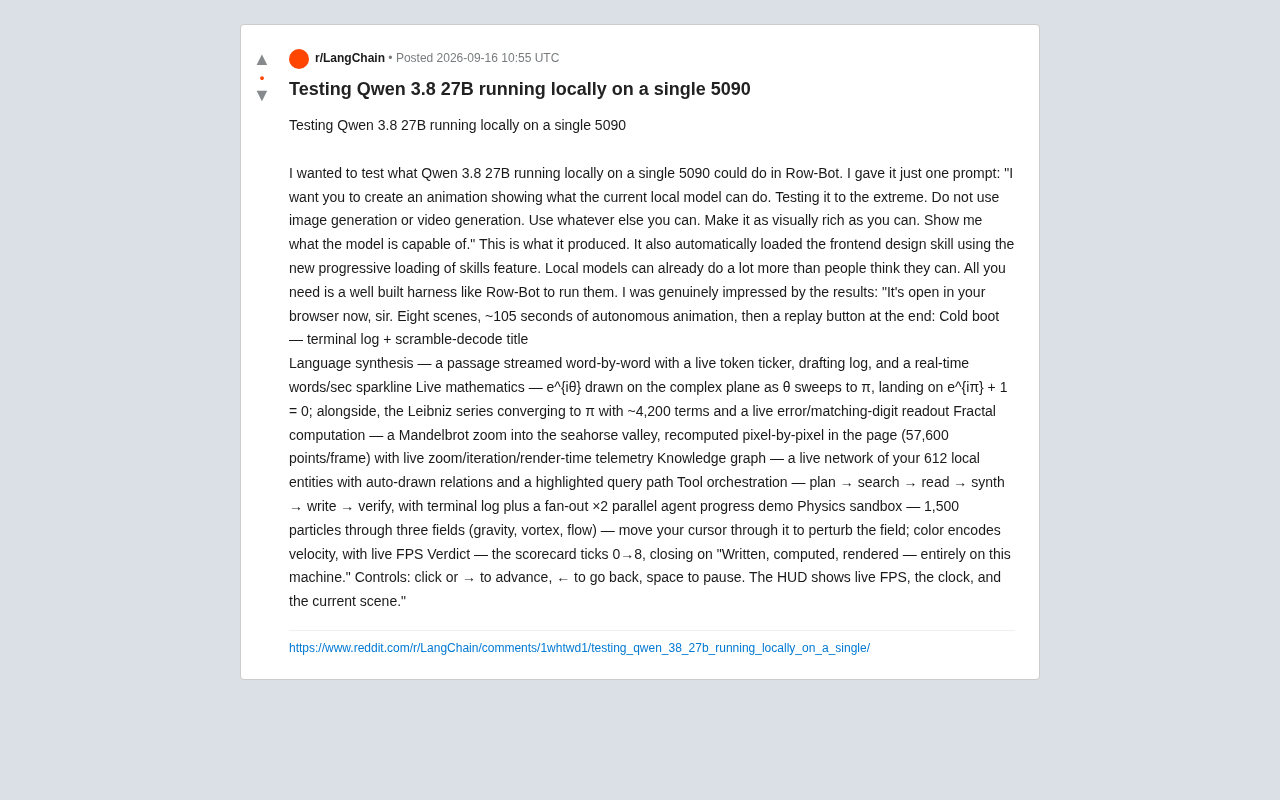
Running Qwen3 27B Locally on a Single RTX 5090: What Can It Actually Do?
A developer runs Qwen3 27B locally on a single RTX 5090 via the Row-Bot Agent framework, generating an 8-scene, 105-second interactive animation from one prompt — including real-time math, fractals, and physics.