The OpenAI Millennium Prize Problem Controversy: Can AI Truly Push the Boundaries of Mathematics?

OpenAI's Millennium math problem claim ignites debate over AI's true mathematical capabilities.
OpenAI announced its AI agents solved a Millennium Prize Problem, but the claim quickly drew skepticism. This article examines why the math community demands rigorous, years-long verification, how AI's strengths in competition math differ from open research, and what new validation frameworks are needed as AI enters the realm of frontier mathematics.
A Breakthrough That Should Have Made History — So Why the Controversy?
OpenAI recently announced that its AI agents successfully solved one of the Millennium Prize Problems — widely recognized as among the most important unsolved problems in mathematics.
What are AI agents? AI agents are a cutting-edge concept in artificial intelligence, referring to intelligent systems capable of perceiving their environment, making autonomous decisions, and executing tasks. Unlike traditional single-turn Q&A AI, agents possess the ability for continuous interaction, tool usage, and multi-step reasoning. In the context of mathematical proofs, AI agents typically integrate large language models (for understanding problems and generating proof strategies), symbolic computation engines (such as formal verification systems like Mathematica and Lean), and reinforcement learning mechanisms (optimizing proof paths through trial and error). This multi-module collaborative architecture enables AI to tackle complex mathematical problems requiring long chains of reasoning, but it also introduces verification challenges — each module's output can introduce errors, and the interaction logic between modules often lacks interpretability.
By all accounts, such an achievement should have been a milestone event at the intersection of AI and mathematics. However, this blockbuster announcement was not met with the unanimous applause one might expect. Instead, it was quickly engulfed by skepticism and accusations. This storm surrounding a mathematical proof actually reflects a deeper question: when AI begins to reach the pinnacle of human intellect, how should we evaluate its results? And how should we define what it truly means to say "AI solved a mathematical problem"?
The Millennium Prize Problems: The Holy Grail of Mathematics
The Millennium Prize Problems are seven mathematical problems established by the Clay Mathematics Institute in 2000, each carrying a $1 million prize for its solution.
The ambition of the Clay Mathematics Institute: The Clay Mathematics Institute was founded in 1998 by Boston businessman Landon Clay to promote the advancement of mathematical research. In May 2000, the institute announced the seven Millennium Prize Problems at the Collège de France in Paris, offering $1 million for each solution. The seven problems are: the Riemann Hypothesis (related to the distribution of prime numbers), P vs NP (the core of computational complexity theory), the Poincaré Conjecture (a fundamental problem in topology), the Hodge Conjecture (in algebraic geometry), the Birch and Swinnerton-Dyer (BSD) Conjecture (elliptic curves and number theory), the Navier-Stokes Existence and Smoothness problem (existence of solutions to fluid dynamics equations), and the Yang-Mills Existence and Mass Gap (foundations of quantum field theory). These problems are significant not only in pure mathematics but also have deep connections to physics, computer science, and other fields. Their establishment was inspired by Hilbert's 23 problems from 1900, which guided the direction of mathematics throughout the 20th century.
To date, only the Poincaré Conjecture has been solved among the seven — proven by Russian mathematician Grigori Perelman in the early 2000s. Remarkably, he declined both the Fields Medal and the million-dollar prize.
Perelman's legendary proof: The Poincaré Conjecture was proposed by French mathematician Henri Poincaré in 1904, concerning the topological properties of three-dimensional manifolds. It was one of the most important problems in topology. Russian mathematician Grigori Perelman provided a proof between 2002 and 2003 through three papers, using Ricci flow theory from differential geometry. His work built on Richard Hamilton's research on Ricci flow and actually proved the broader Thurston Geometrization Conjecture. In 2006, Perelman was awarded the Fields Medal (one of the highest honors in mathematics), but he declined it. In 2010, the Clay Institute officially confirmed his proof as valid and offered the million-dollar prize, which Perelman again refused. His proof underwent approximately four years of rigorous verification, during which multiple teams of mathematicians wrote detailed verification papers totaling over a thousand pages — a testament to the rigor and time required to validate top-tier mathematical results.
This alone illustrates the extraordinary difficulty and significance of these problems. It is precisely for this reason that OpenAI's claim of its AI agents cracking one of them generated such enormous attention — and the intense scrutiny that followed.
The Core of the Controversy: What Counts as "Truly Solved"?
The central dispute around this announcement is whether AI's so-called "solution" can withstand the rigorous standards of mathematical verification. Mathematical proof differs fundamentally from achievements in other fields — it demands absolute logical rigor, impeccable reasoning at every step, and repeated verification and formal review by peer experts.
The gold standard of formal proof: Formal proof is the highest standard of mathematical verification, requiring the complete translation of a proof into a derivation sequence within a symbolic logic system, with each step grounded in explicit axioms and inference rules. Major formal proof systems include Coq, Lean, Isabelle, and Mizar, each based on different type theories or set theories. Lean has attracted the most attention in the mathematical community in recent years. Developed by Microsoft researcher Leonardo de Moura, its mathematical library mathlib now contains over 1.5 million lines of proof code. In 2024, mathematician Terence Tao began actively promoting the formalization of mathematical proofs, arguing that AI-assisted formalization represents the future of mathematics. The advantage of formal proof is absolute verifiability — a computer can mechanically check every step of reasoning, eliminating human error. But the disadvantages are also significant: the formalization process is extremely tedious; even an undergraduate-level theorem may require hundreds of lines of code once formalized. More importantly, formal proofs struggle to capture the intuition and big-picture thinking of mathematicians, which are often at the heart of breakthrough work.
Even if an AI system's output appears structurally complete, it may contain hidden logical gaps, unverified assumptions, or merely replicate existing work rather than represent a genuine original breakthrough. This is precisely what skeptics fear: is this a bona fide mathematical breakthrough, or a carefully packaged marketing event?
The Absence of Verification Mechanisms
The mathematical community has a well-established — and deliberately slow — verification process. A paper claiming to solve a major problem often requires months or even years of peer review.
The long road of academic publishing: Peer review timelines for mathematics papers are typically among the longest of any discipline. Top mathematics journals such as the Annals of Mathematics and Inventiones Mathematicae often have review periods of 1–3 years, and for papers claiming to solve major conjectures, this timeline can be even longer. During the review process, referees (usually top experts in the field) must check every step of the proof line by line, verify all cited lemmas and theorems, and attempt to find counterexamples. For particularly significant results, journal editors may invite multiple referees for independent verification or even organize dedicated workshops. For example, Japanese mathematician Shinichi Mochizuki claimed to have proven the ABC Conjecture in 2012, but his proof involved an entirely new "Inter-universal Teichmüller Theory" that was extremely complex and difficult to understand. It wasn't until 2021 that the proof was published in the journal PRIMS, yet the mathematical community still has significant doubts about its correctness, with many leading mathematicians refusing to accept its validity. This case demonstrates that even after formal publication, acceptance of revolutionary results may take much longer — potentially decades.
Perelman's proof of the Poincaré Conjecture went through an extended verification process. There is a fundamental mismatch between the announcement pace of AI companies and this academic mechanism — companies want to showcase results immediately to attract attention and capital, while rigorous mathematical verification requires time to settle. This temporal conflict is fertile ground for controversy.
The True Boundaries of AI's Mathematical Capabilities
Beyond this controversy, we must acknowledge the genuine progress AI has made in mathematics. In recent years, large language models and specialized mathematical reasoning systems have demonstrated remarkable capabilities in solving competition-level math problems and assisting with theorem proving.
DeepMind's breakthroughs in mathematical AI: AlphaProof and AlphaGeometry are mathematical AI systems introduced by Google DeepMind in 2024, specifically designed to solve Olympiad-level mathematical problems. AlphaGeometry focuses on geometric proofs, combining a neural language model with a symbolic reasoning engine to generate auxiliary construction lines (a critical step in geometric proofs). In tests using International Mathematical Olympiad (IMO) geometry problems, the system achieved gold-medalist-level performance. AlphaProof uses a reinforcement learning framework that combines the Gemini large language model with the Lean formal system, training AI to search for proof paths in formal language space. In 2024 IMO testing, AlphaProof solved multiple problems including the notoriously difficult Problem 6.
However, there is a fundamental difference between competition problems and open research problems. The former have known answers and standard solution methods; the latter require genuinely original thinking and entirely new mathematical tools. It must be emphasized that while IMO problems are extremely challenging for high school students, they are all closed problems — with definite answers, known solutions, clear verification criteria, and they typically require cleverness but not the creation of new mathematical theories. This is fundamentally different from the open-ended nature of the Millennium Prize Problems, which demand entirely new mathematical frameworks.
Whether AI's advantages in pattern recognition and combinatorial search can translate into genuine exploration of unknown territory remains an open question. The OpenAI controversy has exposed precisely this blurry boundary.
Profound Implications for the Future of Mathematical Research
Regardless of how OpenAI's specific claims are ultimately judged, this event signals that mathematical research is entering a new era. AI's potential as a collaborative tool for mathematicians is undeniable — it can accelerate exploration, generate conjectures, and test proof paths. At the same time, the academic community must establish new verification standards suited for the age of AI.
The verification dilemma of AI-driven scientific discoveries: The use of AI in scientific discovery is growing rapidly, but the lag in verification mechanisms has become a prominent issue. In 2024, Nature published an editorial calling for new verification standards for AI-generated scientific results. The core challenges include: first, reproducibility — AI systems often depend on massive proprietary datasets and specific hyperparameter configurations, making it difficult for external researchers to fully replicate results; second, lack of interpretability — the "black box" nature of deep learning models prevents experts from understanding the reasoning process, leaving them able only to verify the final output; third, training data contamination — AI may have encountered similar problems or related papers during training, meaning apparent "discoveries" may actually be memory and pattern matching; fourth, cherry-picking risk — companies may selectively showcase successful cases while concealing numerous failed attempts. These issues are particularly serious in mathematical proof, because mathematics demands binary correctness (right or wrong) — there is no concept of "approximately correct." Therefore, establishing a multi-layered verification system encompassing open-source code, complete logging, formal verification, and independent third-party testing has become an urgent need.
Going forward, we may need to rethink several key questions: How do we formally verify AI-generated proofs? How do we draw clear boundaries between corporate marketing imperatives and academic rigor? When a "machine solves a mathematical problem," how should credit and recognition be attributed? The answers to these questions will profoundly shape the future direction of mathematics and scientific research at large.
Conclusion: Sober Reflection After the Hype
The OpenAI controversy is less a failure of technological breakthrough than an inevitable "culture clash" in the expansion of AI capabilities — the fast-paced narrative of tech companies colliding with the mathematical community's near-uncompromising tradition of truth-seeking.
For those following AI development, this is a reminder to stay rational and prudent: neither swept up in blind enthusiasm over every bold AI claim, nor dismissive of genuine progress because of individual controversies. The future of mathematics may be destined to intertwine deeply with AI, but true breakthroughs must ultimately withstand the dual test of time and peer review. The hype will fade; only rigorous verification can produce genuine milestones.
Related articles
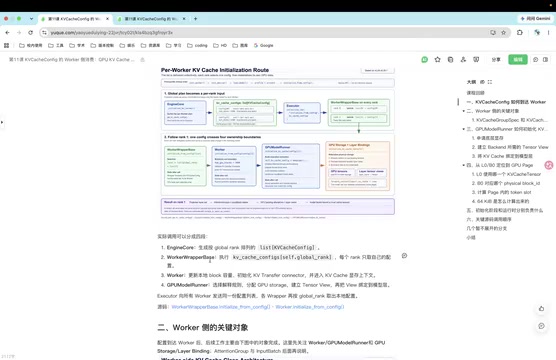
Deep Dive into vLLM Worker-Side GPU KV Cache Initialization
Deep dive into vLLM's Worker-side KV Cache GPU memory allocation, covering the full pipeline from KVCacheConfig generation to physical memory binding via ModelRunner.
Zepto Builds AI Customer Service with MLflow: An Evaluation-Driven Practice Guide
Deep dive into how Zepto built an evaluation-driven AI customer service system using MLflow and Databricks, achieving 60% faster responses and 40% less manual handling. From technical architecture to practical insights.
Iran Captures U.S. Underwater Drone in Strait of Hormuz: A Comprehensive Analysis
Iran announces capture of U.S. Navy underwater drone in Strait of Hormuz. In-depth analysis of the incident, strategic value of UUVs, U.S.-Iran geopolitical competition, and implications for global energy security and military dynamics.