The Other Side of the Agricultural Revolution: How Disease Helped Farmers Defeat Hunter-Gatherers

Agriculture replaced hunter-gatherers not only through energy advantages, but also because settled life created pathogens and an immunity gap.
Traditional narratives credit agriculture's triumph to productivity. Historian Kyle Harper offers a colder explanation: early farmers displaced hunter-gatherers not only by extracting more energy per unit of land, but also because settled village life inadvertently bred deadly pathogens. Growing up in denser populations, children were continuously exposed to pathogens, and over generations agricultural groups developed partial immunity. When they migrated, they may have carried these pathogens, inflicting extra mortality on indigenous foragers with no exposure history. The disease mechanism stacked with the energy advantage rather than acting alone. Harper acknowledges uncertainty but considers it a reasonable inference, offering a more complex bio-energetic framework for the decline of European hunter-gatherers than "advanced replaces backward."
The Other Side of the Agricultural Revolution: How Disease Helped Farmers Defeat Hunter-Gatherers
Traditional narratives credit agriculture's triumph to productivity advantages. But historian Kyle Harper, in a discussion, offers a colder explanation: early farmers were able to displace hunter-gatherers not only because they could extract more energy from a unit of land, but also because their settled way of life inadvertently created deadly pathogens and carried disease into Europe.
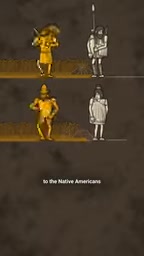
Energy Competition: Why Farmers Ran Faster
Harper first affirms a seemingly mundane yet fundamental mechanism: agricultural societies extracted energy far more efficiently than foraging societies. Hunter-gatherers needed vast territories to obtain enough energy to survive and reproduce, while farmers could achieve a higher energy return per unit of land.

This translated directly into a gap in population growth. Farming groups expanded faster and gradually out-competed hunter-gatherer groups. Harper uses "out-compete" to describe this process, but stresses that it was not simply cultural superiority—it was an inevitable result of energy constraints.
This explanation itself is not new. What carries real impact is the second factor he discusses next.
Settlement and Pathogens: An Overlooked Secondary Advantage
James Scott, in Against the Grain, advanced a more controversial view: the expansion of early agriculture bears some comparability to the European conquest of Native Americans—disease played a key role. Harper partially agrees, arguing that farmers indeed had population-level differences in disease exposure and immunity.
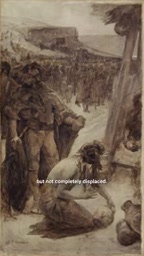
The logic is not complicated: agricultural societies settled into villages (Harper specifically emphasizes village-scale settlements, not cities), with population densities far exceeding those of small hunter-gatherer bands. Children growing up in such environments were continuously exposed to a range of pathogens.
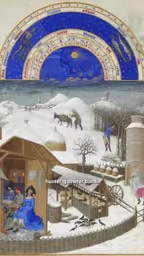
Over generations, these agricultural populations developed some degree of adaptation to various infectious diseases. When they migrated toward Europe, they very likely carried these pathogens with them. For indigenous foraging populations with no similar exposure history, these pathogens dealt an additional mortality blow.
James C. Scott and Against the Grain
James Scott is Professor Emeritus of Political Science and Anthropology at Yale University, known for his work on peasant societies, anarchism, and the origins of the state. Against the Grain: A Deep History of the Earliest States (2017) challenges the traditional narrative that agriculture was a staircase of progress toward state civilization. Scott's core argument is that early states depended on grain agriculture because grain was easy to tax and store; while hunting-gathering, pastoralism, and other "non-state" ways of life coexisted with early states for a long time and were not rapidly replaced. He particularly emphasizes that early agricultural settlements were closely tied to infectious disease—dense populations, cohabitation with animals, and fecal contamination of water sources made villages breeding grounds for pathogens. Scott even suggests that the health of early state residents may have been worse than that of surrounding foragers. Harper cites Scott precisely to borrow his "agriculture–disease" link in discussing population replacement.
Population Immunity and Pathogen Co-evolution
When a small population is exposed to a pathogen over a long period, it undergoes "pathogen–host co-evolution": repeated infection gives survivors partial immunity, and a degree of resistance forms at the population level. This resistance often comes at the cost of high child mortality—many die before adulthood, while survivors carry immunological memory. Agricultural villages had population densities sufficient to sustain the continuous transmission of certain infectious diseases (such as measles and smallpox, which require a certain host population size), whereas small hunter-gatherer bands could hardly maintain such pathogens long-term. Therefore, when agricultural groups migrated and came into contact with populations with no exposure history, the former could be asymptomatic or mildly symptomatic carriers, while the latter faced extremely high mortality. This is the biological basis of "disease as a weapon of conquest," and the mechanism Harper describes is consistent with it.
How the Dual Mechanisms Stack
Harper's argument does not claim that disease was the sole reason agriculture replaced foraging. He explicitly describes the disease mechanism as being "on top of" the energy competition advantage—the two stack. Farming groups held advantages in energy acquisition and population growth, and also inflicted additional mortality pressure on their rivals at the biological level.
This dual advantage helps explain an archaeological observation: the decline of European hunter-gatherers was not entirely accomplished through violent conflict or cultural replacement; there may have been substantial differential mortality from disease. Harper acknowledges uncertainty remains about whether early farmers actually carried effective pathogens and how large their specific impact was. He describes this explanation as "probably" valid, indicating it is a reasonable inference based on existing evidence rather than a settled conclusion.
A Grayer Historical Narrative
Describing the agricultural transition as a story of progress is common practice. Harper and Scott's discussion points to another side: settled agricultural life was both an energy triumph and the birth of a pathogen incubator. Early farmers paid costs including a higher burden of infectious disease and possibly worse nutritional status, but their population growth rate and expansion capacity ultimately overwhelmed hunter-gatherers.
This explanatory framework also reminds us that large-scale replacements in human history are often not the result of a single factor. Energy extraction efficiency, population density, and pathogen exposure history together form a more complex picture than "advanced replaces backward."
One-line Summary
Agriculture replaced hunter-gatherers not only through energy advantages, but also because settled life created pathogens and an immunity gap.
Paragraph Summary
Traditional narratives credit agriculture's triumph to productivity advantages, but historian Kyle Harper offers a colder explanation: early farmers were able to displace hunter-gatherers not only because they could extract more energy from a unit of land, but also because settled village life inadvertently created deadly pathogens. Agricultural populations grew up in denser environments where children were continuously exposed to various pathogens, and over generations they developed partial adaptation to infectious diseases. When they migrated, they may have carried these pathogens, inflicting additional mortality pressure on indigenous foraging populations with no exposure history. The disease mechanism stacked with the energy competition advantage rather than acting alone. Harper acknowledges uncertainty remains, but considers it a reasonable inference based on existing evidence, offering a more complex bio-energetic dual framework for the decline of European hunter-gatherers than "advanced replaces backward."
Related articles

Zero-Code AI God Sandbox: Is This Reddit User's Wild Idea Feasible?
A Reddit user wants 3-4 AI agents to play gods in a sandbox world for friends to interact with. Is this zero-code idea technically feasible? We break down the barriers.

Is Claude the AI That Refuses to Be a "Yes-Man"? A Reddit Discussion
Reddit discusses whether Claude is the least "yes-man" LLM. This article analyzes Claude's honesty design, comparisons with other models, and users' real attitudes toward AI people-pleasing.

What Security Teams Need to Know: Risks of Abliterated Models in Agents
Abliterated models strip alignment constraints at the weight level. When used in AI Agents with tool-calling capabilities, risk escalates from content to operations. This article offers security teams four directions: model provenance auditing, behavioral baseline detection, runtime protection, and supply chain admission.