The Pearl Club: An Anti-Efficiency Haven on the Internet
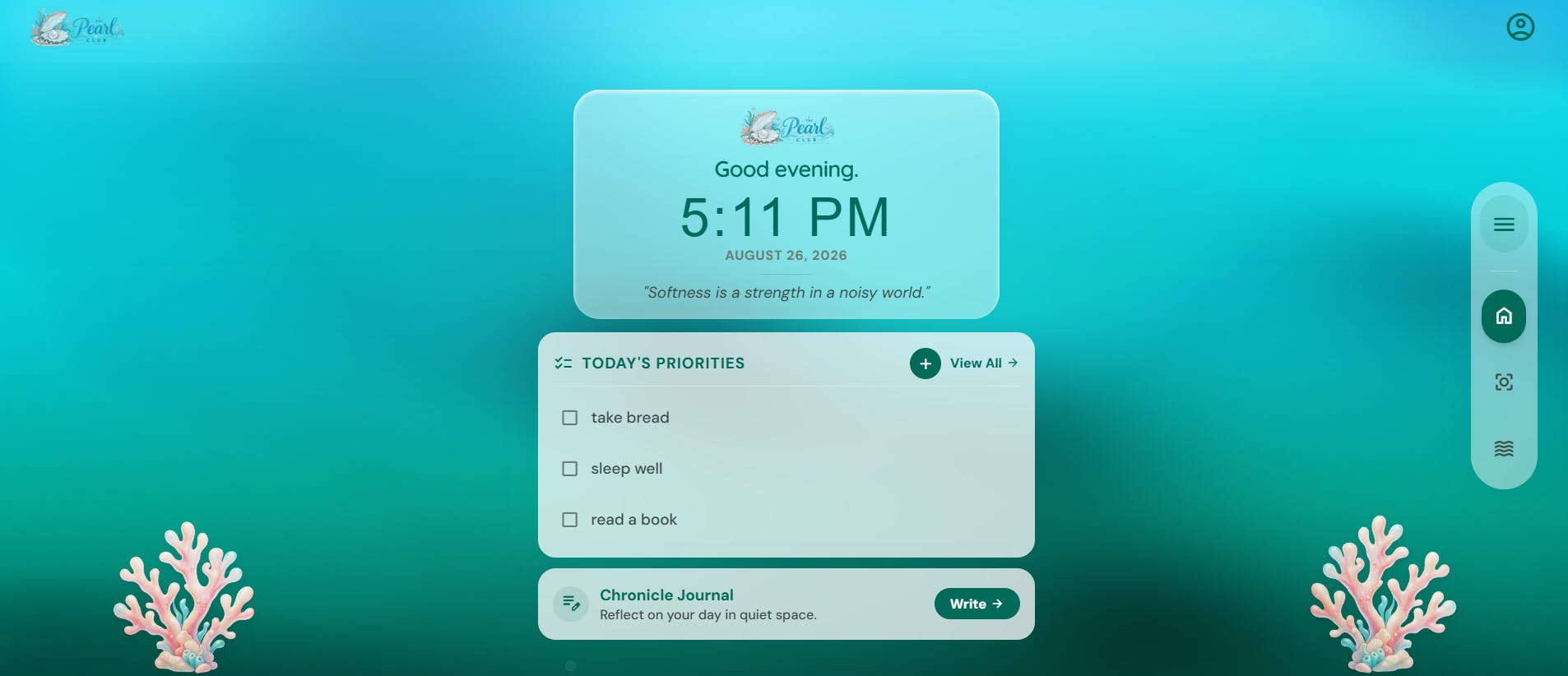
The Pearl Club: A Product Hunt app that dares users to slow down in the fast-paced digital world
The Pearl Club takes a counterintuitive approach in today's efficiency-obsessed digital landscape, offering a 'quiet corner on the internet' where users can journal, play casual games, and collect virtual marine creatures without pressure. Featuring anti-efficiency design and possible Web3 elements through Dora DAO, it represents a growing trend of emotional products that prioritize healing over productivity.
When the Internet Needs a Corner to 'Slow Down'
In this digital age saturated with algorithmic recommendations, infinite scrolling, and the anxiety of "falling behind," a product called The Pearl Club 🐚 quietly launched on Product Hunt, attracting considerable attention with its counterintuitive approach.
Algorithmic recommendation is one of the core technologies of modern internet platforms. Through machine learning analysis of user behavior data (clicks, dwell time, interactions, etc.), it predicts and pushes content users might be interested in. This technology was first deployed at scale by Netflix and YouTube, and has now become the traffic engine for platforms like TikTok and Xiaohongshu. Infinite scroll, on the other hand, is an interface design pattern where content automatically loads as users scroll down, eliminating the need to click "next page." This design borrows from the "variable reward" principle in gambling mechanics—users never know if the next piece of content will be exciting, so they keep scrolling. Research from Stanford's Persuasive Technology Lab shows this design activates the brain's dopamine circuits, forming addiction-like behavioral patterns. Together, these elements form the underlying logic that makes modern social media "impossible to stop."
The Pearl Club's tagline is simple—"A quiet corner on the internet." Without the ambition of growth hacking or the obsession with retention rates, The Pearl Club positions itself as a gentle space to slow down.
Product Hunt is the world's largest new product discovery community, founded in 2013 and acquired by AngelList in 2016. It uses a Reddit-like voting mechanism, showcasing dozens of new products daily, with rankings determined by user votes. For entrepreneurs, achieving a high ranking on Product Hunt (typically Daily Top 5) means massive exposure: homepage features can bring tens of thousands of visits, hundreds of user feedback comments, and attention from investors and media. But competition is fierce—products typically launch at 12:01 AM Pacific Time to get a full 24-hour exposure window, with teams preparing copy, visual materials, and "hunter" (recommender) resources weeks in advance.
Here, you can write something, play mini-games, share scattered thoughts in a feed, collect cute marine creatures, or just wander aimlessly. In the official words: "No pressure to be productive, no need to worry about keeping up."
Product Core: Positioning 'Uselessness' as a Selling Point
A Deliberately 'Unambitious' Anti-Efficiency Design Philosophy
The most intriguing aspect of The Pearl Club is its open rejection of mainstream product design logic. Most applications do everything possible to increase user engagement, time spent, and return frequency, yet The Pearl Club explicitly tells you: "No need to stay productive, no need to keep up with trends, just enjoy at your own pace."
This "anti-efficiency" stance is essentially a response to modern digital burnout. Digital burnout is a new mental health issue of the information age, referring to fatigue, anxiety, and cognitive overload from excessive use of digital devices and social media. The World Health Organization included "occupational burnout" in the International Classification of Diseases in 2019, and digital burnout can be seen as its extension into the internet era. Its core mechanisms include: attention fragmentation (interrupted on average every 11 minutes), social comparison anxiety (constant exposure to others' "highlight reels"), and FOMO (Fear of Missing Out—the fear of missing important information). UC research found that young people who use social media more than 3 hours daily face double the risk of depression and anxiety. This has spawned the "Digital Detox" movement and numerous "slow-paced" applications.
The Pearl Club combines imagery of the ocean, pearls, and sea turtles to create a lazy, healing atmosphere, making the product feel more like a spiritual sanctuary than a to-do list manager.
A Feature Medley: Journaling, Mini-Games, and Marine Life Collection
Functionally, The Pearl Club is a hybrid:
- Writing & Journaling: Provides a private space for self-expression
- Feed Sharing: Allows publishing fragmented thoughts
- Mini-Games: Lightweight casual gameplay for passing time
- Collection System: Collect sea turtles and other marine "friends," with nurturing and companionship overtones
- Free Roaming: Exploratory experience without clear objectives
Interestingly, it's categorized under Productivity, Games, and Lifestyle simultaneously. This ambiguous positioning is both its distinctive feature and potential challenge—is it ultimately a tool, a toy, or an emotional product?
The Pearl Club's Market Response by the Numbers
As of now, The Pearl Club has received 17 votes, 10 comments, and ranks #20 on Product Hunt. This isn't breakout success, but for a niche emotional value product, it shows it has genuinely resonated with some users.
You might not have noticed that its team includes Dora DAO. Web3 is a next-generation internet architecture concept, with core characteristics of decentralization, user data ownership, and blockchain technology. DAO (Decentralized Autonomous Organization) is an important organizational form in Web3, achieving decentralized management through smart contracts and token voting. Members gain governance rights by holding tokens, voting on major decisions like project direction and fund allocation. Famous examples include ConstitutionDAO (crowdfunding to purchase an original US Constitution) and PleasrDAO (collecting NFT artworks).
Dora DAO's involvement hints the product may carry Web3 or decentralized community DNA—features like "collecting marine creatures" naturally lend themselves to associations with digital collectibles and NFTs. Some decision-making power or revenue distribution might be jointly determined by community members, or the collected "marine creatures" might exist as NFTs (non-fungible tokens), letting users truly "own" these digital assets. This is entirely different from traditional apps where virtual items are merely platform data. Of course, the official description doesn't emphasize this—the product presents a de-technologized, experience-focused gentle exterior.
The Rise and Concerns of Emotional Products
Why Healing Apps Are Increasingly Popular
The Pearl Club isn't alone. In recent years, apps like Finch (self-care pet nurturing), Forest (focus through tree planting), and various meditation and journaling apps have continuously emerged, all pointing to one trend: users are paying for 'emotions' and 'companionship,' not just 'features.'
Emotional value is a hot concept in consumer psychology in recent years, referring to psychological satisfaction provided by products or services that exceeds their functional value. Harvard Business School Professor Gerald Zaltman's research shows that 95% of purchase decisions occur at the subconscious level, with emotion as the core driver. In digital products, this manifests as users' willingness to pay for abstract experiences like "healing," "companionship," and "sense of control." Typical cases include Calm and Headspace (meditation apps with $70-90 annual subscriptions, core selling point being "anxiety relief"), Forest (packaging the painful process of "focus" as an achievement-filled nurturing game through virtual tree planting), and Animal Crossing (which exploded during the pandemic, fulfilling people's emotional projection onto slow-paced pastoral life).
In an information-overloaded environment, a space that doesn't rush you, judge you, or push red notification dots becomes a scarce resource. The Pearl Club precisely hits this psychological gap.
The Monetization and Sustainability Dilemma of Anti-Efficiency Products
However, "anti-efficiency" products also face a real paradox. On one hand, they encourage users to "not use frequently," while on the other hand, they need sufficient engagement to sustain operations and monetization. How to achieve profitability without destroying the "healing atmosphere" is a universal challenge for these emotional products.
Retention rate is a core metric for measuring product health, indicating the proportion of users who continue using a product after a specific time period. The industry typically focuses on Day 1, Day 7, and Day 30 retention. Early Facebook established "adding 7 friends within 10 days" as a magic number—users who met this condition showed significantly higher retention. Growth hacking is a growth methodology that emerged in Silicon Valley, coined by Sean Ellis in 2010. Its core philosophy is achieving user growth through data-driven, rapid experimentation, and product mechanisms (rather than advertising). Classic cases include Dropbox's referral reward mechanism (both referrer and referee get 500MB for registration, growing users from 100k to 4 million in 15 months), Hotmail's email signature viral spread, and Airbnb scraping Craigslist users.
The Pearl Club deliberately rejects this playbook, avoiding daily missions, consecutive login rewards, and other common retention mechanisms—a bold and even "counterintuitive" commercial choice. The collection system might be its answer—gently retaining users through cute marine creature nurturing, possibly introducing paid content or digital collectibles. But this requires careful balancing—once collection becomes a "check-in task," the product's original "no pressure" promise collapses.
In Closing
The Pearl Club is a small but beautiful attempt, representing an undercurrent in product design worth noting: in an era where everyone pursues efficiency and growth, actively creating 'the right to do nothing' for users.
It may not become the next phenomenon-level application, but it raises an important question—do we really need every piece of software to make us more "efficient"? Perhaps occasionally, in some quiet corner of the internet, collecting a sea turtle and jotting down a few feelings is already enough. 🐚
Related articles
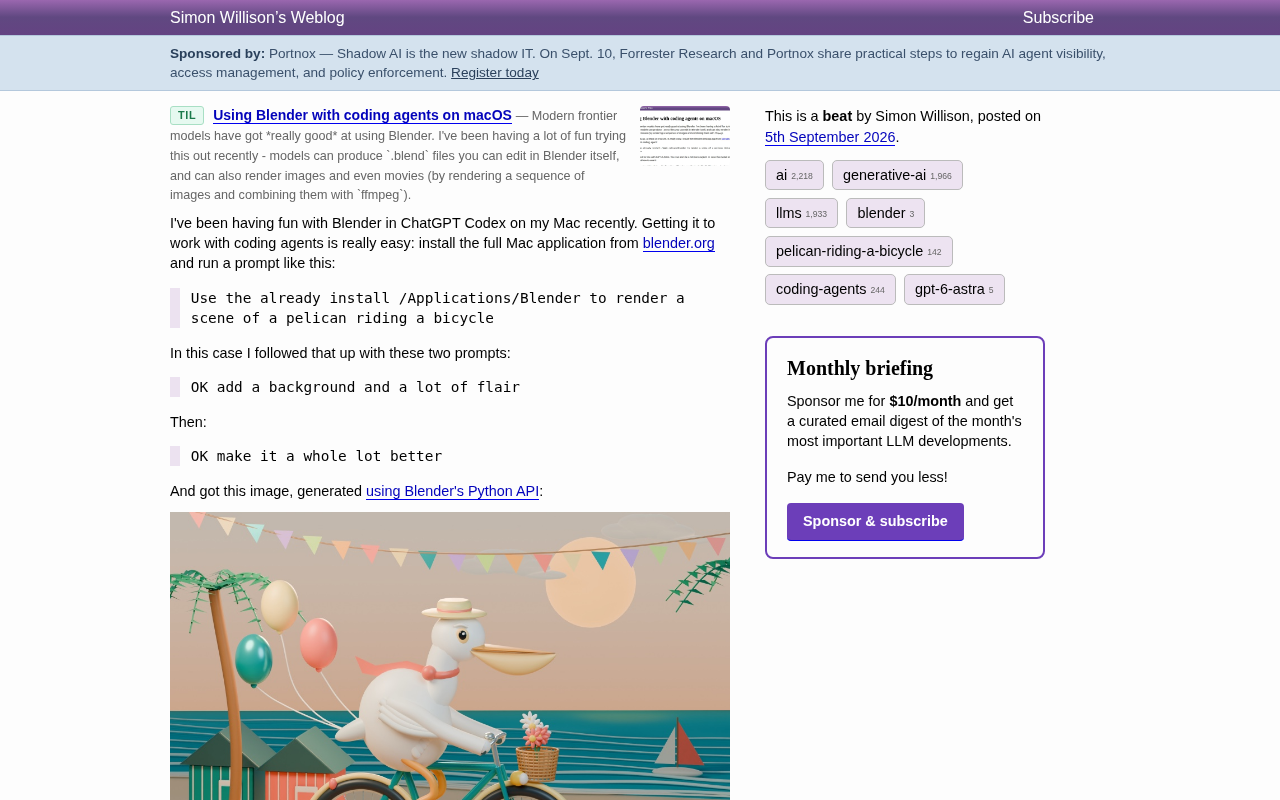
Natural Language Drives Blender: Generating 3D Scenes with AI Coding Assistants
Use AI coding assistants like ChatGPT Codex to drive Blender's Python API and generate stunning 3D scenes with just a few natural language prompts.
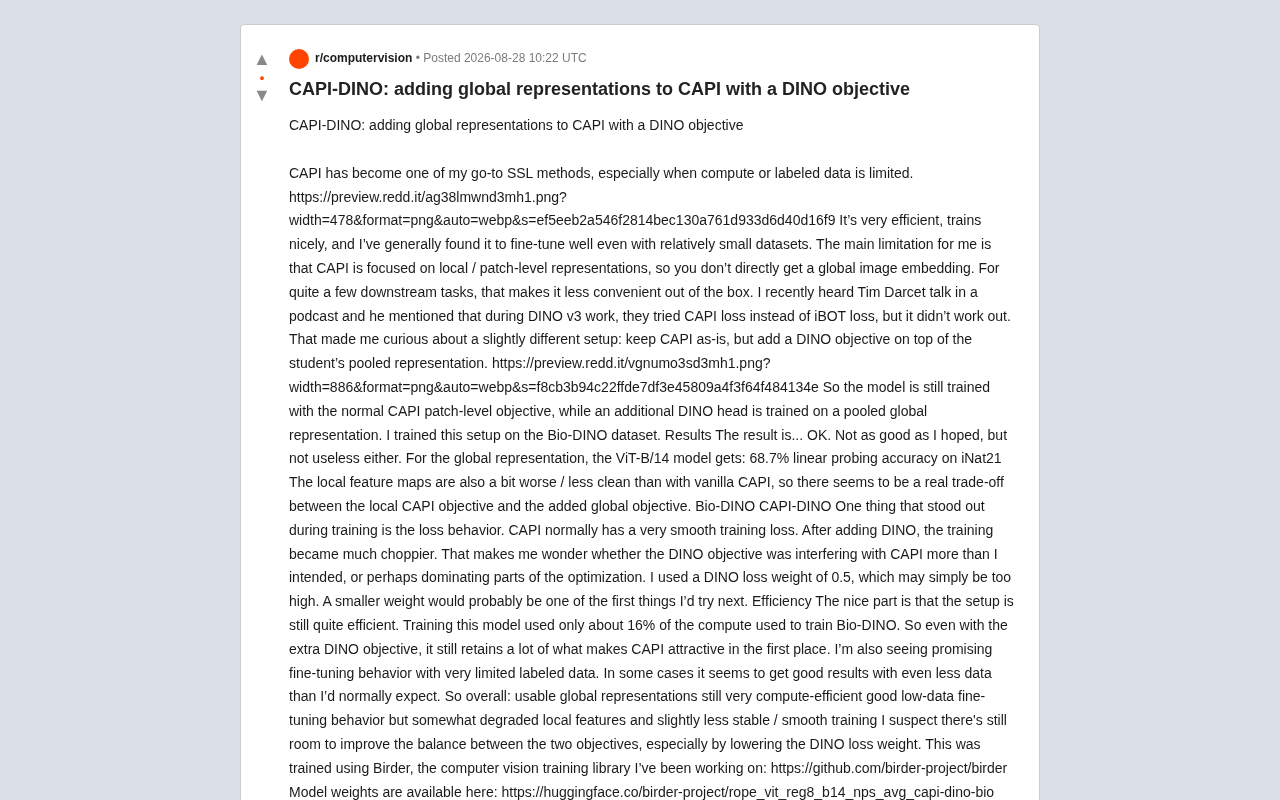
CAPI-DINO: A Combinatorial Approach to Adding Global Representations to Self-Supervised Learning
CAPI-DINO stacks DINO's global objective onto CAPI's local representations, achieving 68.7% linear probing accuracy on ViT-B/14 at only 16% compute cost.
Google Teams Up with AMD to Build Next-Gen TPU Hybrid AI Chip: CPU Cores Integrated On-Package
Google is reportedly partnering with AMD to design a next-gen hybrid TPU with on-package CPU cores, optimized for reinforcement learning and emerging AI workloads.