The Power of Security Collaboration: Why Vulnerability Discovery Cannot Do Without Human Intelligence
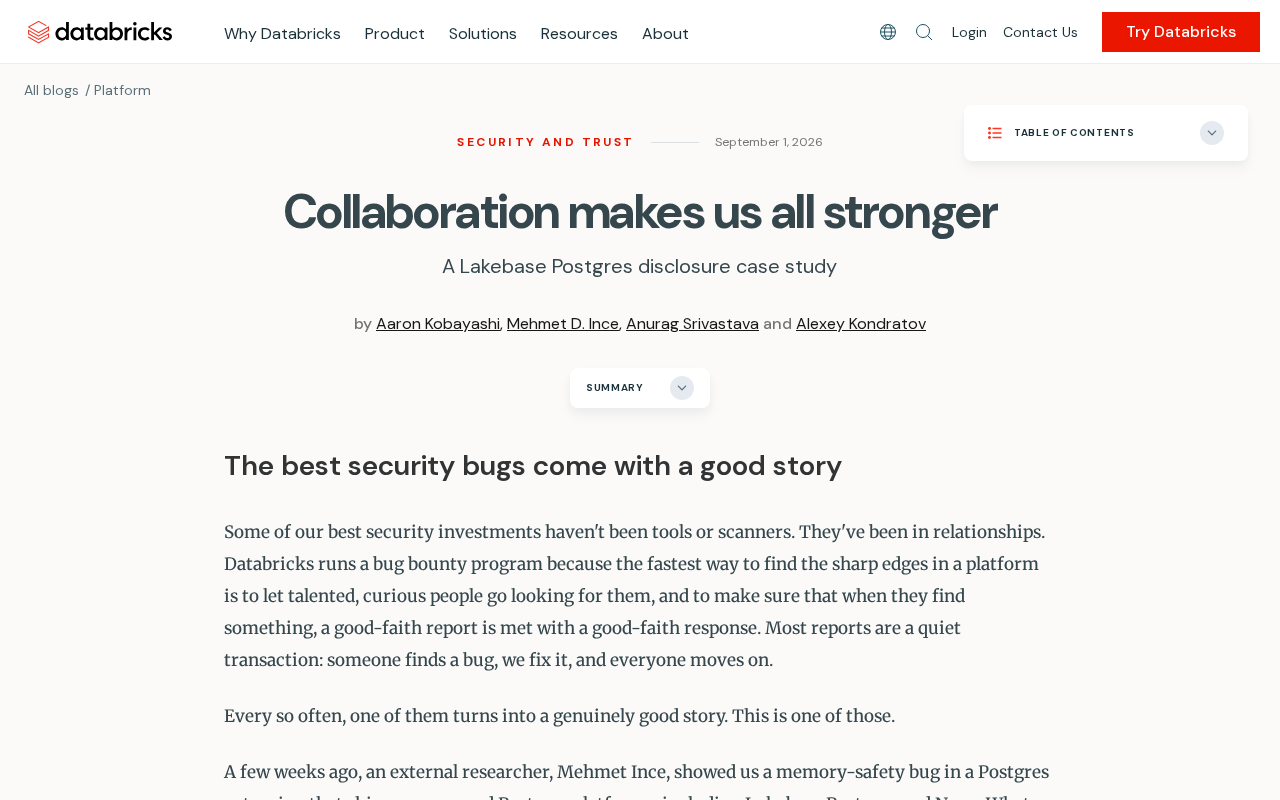
Security collaboration and human intelligence outperform automated tools in discovering and preventing vulnerabilities.
The most valuable security investments lie in human collaboration, not expensive tools. While automated scanners identify known patterns, complex vulnerabilities require human experience, threat modeling, and adversarial thinking. Building a blame-free culture, sharing security stories with rich context, and leveraging collective intelligence through red-blue teams and bug bounty programs create stronger defenses than any tool alone.
Introduction: The Best Security Vulnerabilities Often Come with a Good Story
In the cybersecurity field, we often focus our attention on tools, scanners, and automated systems. However, a repeatedly validated truth is emerging: The most valuable security investments are often not those expensive technical tools, but collaboration between people.
As an industry consensus goes, "The best security bugs come with a good story." This statement carries profound industry insight—truly impactful security discoveries stem from deep exchanges and collaboration among researchers, engineers, and the security community, rather than cold automated detection results.
Why Security Collaboration Outperforms Tool Dependency
Natural Limitations of Automated Tools
In modern security defense systems, automated scanners and detection tools play an indispensable role. They can quickly cover large amounts of code, identify known vulnerability patterns, and provide instant feedback in continuous integration pipelines. Currently, mainstream automated security tools in the industry can be roughly divided into three categories: SAST (Static Application Security Testing) analyzes security flaws in source code without running the program; DAST (Dynamic Application Security Testing) detects vulnerabilities in running applications by simulating attacks; SCA (Software Composition Analysis) focuses on identifying known vulnerabilities in third-party dependency libraries. These tools each serve their purpose, collectively forming the automated security defense line in the DevSecOps pipeline.
But these tools have natural limitations: they can only discover "known unknowns"—problems that have already been defined and can be pattern-matched. This concept borrows from former U.S. Defense Secretary Donald Rumsfeld's famous epistemological framework: in the security field, "known unknowns" refer to vulnerability types we know might exist but haven't confirmed yet, such as SQL injection, XSS, and other problems with clear pattern characteristics; what's truly dangerous are the "unknown unknowns"—problems we don't even know to look for. Tools often fall short when facing complex vulnerabilities that require deep understanding of business logic, system architecture, and attacker thinking. Typical examples include: business logic vulnerabilities (such as price manipulation in e-commerce systems, privilege bypass chains), multi-step attack chains (requiring the combination of multiple seemingly harmless behaviors to achieve an attack), and design-level security flaws (such as insecure trust boundary delineation). These problems cannot be simply identified through regular expressions or signature matching; they require understanding "why the system is designed this way" and "how an attacker would think."
The Irreplaceable Value of Humans in Security Research
Some of the most productive security investments come not from tools or scanners, but from human experience and judgment. This viewpoint goes straight to the industry's core: True security wisdom comes from human experience, intuition, and collaboration.
The core capabilities possessed by excellent security researchers are largely difficult to replicate with automated tools. Threat Modeling is one of the key skills—it requires researchers to identify assets, enumerate threats, assess risks, and determine priorities from a system-wide perspective. Microsoft's STRIDE model and OWASP's threat modeling methodology are classic frameworks in this field. Another core capability is Adversarial Thinking, where researchers can switch to the attacker's perspective and think "if I wanted to breach this system, how would I do it?" This thinking pattern enables researchers to discover attack paths that system designers never anticipated. Additionally, Attack Surface Analysis helps researchers systematically assess all externally exposed interfaces and entry points that can be exploited in a system.
When a security researcher discovers a vulnerability, its value lies not only in the vulnerability itself, but also in the thinking, methodology, and contextual knowledge accumulated during the discovery process. The security field calls this Contextual Knowledge—it includes the business context in which the vulnerability exists, other potentially affected components in the system, the real-world conditions for attackers to exploit this vulnerability, and the cascading impacts that remediation solutions might bring. These "stories" can help the entire team understand the system's weak points, thereby preventing similar issues in the future. A vulnerability report with rich context is far more valuable than a single CVE number output by a scanner—because it not only tells you "where it's broken," but also "why it broke" and "how to fundamentally prevent it from happening again."
Practical Paths for Security Collaboration
Establishing an Open and Transparent Security Communication Culture
Effective security collaboration first requires an open, blame-free cultural atmosphere. When engineers and researchers can honestly share failures, vulnerabilities, and lessons learned, the entire organization's security posture can truly improve.
This cultural philosophy has a mature practice paradigm in the engineering field: Blameless Postmortem. This concept was first systematically promoted in Google's SRE (Site Reliability Engineering) practices, and companies like Etsy were early active advocates. Its core principle is: when security incidents or system failures occur, the focus of retrospective meetings should be on "what factors in the system and processes led to the problem," rather than "who made a mistake." This methodology is based on a key insight—if people fear punishment for reporting problems, they will choose to conceal them, and concealment is precisely security's greatest enemy. Google detailed this practice in its publicly released book "SRE: How Google Runs Production Systems" and considers it the cultural cornerstone of building highly reliable systems. Today, this philosophy has expanded from operations to security, with more and more organizations adopting blame-free culture as a core principle of their security response processes.
In such a culture, reporting a vulnerability is not "exposing flaws" but making a contribution. Every problem discovered and fixed becomes part of the team's collective knowledge base.
Cross-Team and Cross-Organization Security Knowledge Sharing
Collaboration should not be limited to within a single team. The core value of the security community lies precisely in cross-organizational knowledge flow—vulnerability disclosure, security research reports, and collaborative fixes in open source projects are all concrete manifestations of this collaborative spirit.
This cross-organizational collaboration relies on a mature industry infrastructure. The CVE (Common Vulnerabilities and Exposures) system is maintained by MITRE Corporation and assigns a unique identifier to each publicly confirmed security vulnerability, enabling the global security community to discuss the same issue using a unified language. In vulnerability disclosure practices, the industry has gradually formed two main modes: Responsible Disclosure requires researchers to notify vendors before publicly disclosing vulnerabilities and allow reasonable time for fixes; Coordinated Disclosure goes further, emphasizing multi-party collaboration among researchers, vendors, users, and coordination agencies (such as CERT/CC) to ensure vulnerability information is disclosed at the appropriate time in the appropriate manner. Additionally, the security community has developed several structured knowledge-sharing frameworks—MITRE ATT&CK systematically categorizes known attack techniques, providing defenders with an "encyclopedia of attacker behavior"; FIRST (Forum of Incident Response and Security Teams) serves as the world's largest alliance of security response teams, facilitating intelligence sharing and coordinated response among security teams across countries.
When researchers share their findings in the form of "stories," others can learn from them about attack thinking, defense strategies, and lessons learned in system design. The compounding effect of this knowledge far exceeds the value any single tool can provide.
From Individual to Collective: Building a Stronger Security Defense
Collective Intelligence Against Complex Threats
"Collaboration makes us all stronger"—this philosophy reveals the essence of modern security defense: No single individual or tool can independently cope with increasingly complex security threats.
Whether it's internal red-blue team exercises or external bug bounty programs, they are essentially leveraging collective intelligence to strengthen overall defenses. Red Team/Blue Team is a security practice mode originating from military exercises: the red team plays the attacker role, simulating real-world threat actors and attempting to breach the organization's security defenses; the blue team is the defender, responsible for detecting, responding to, and containing the red team's attacks. In recent years, the industry has evolved the concept of Purple Team—the purple team is not an independent third party, but a collaboration mode that emphasizes real-time communication and knowledge sharing between red and blue teams, enabling attack discoveries to be immediately converted into defensive capability improvements rather than waiting until after exercises to conduct reviews.
Bug Bounty Programs represent an important practice of extending security collaboration from within organizations to the global community. In 2004, the Mozilla Foundation pioneered a bug bounty program for the Firefox browser, inaugurating the practice of tech companies paying external security researchers for vulnerability discoveries. Subsequently, tech giants like Google, Microsoft, and Apple followed suit. As this model became widespread, third-party bug bounty platforms like HackerOne (founded in 2012) and Bugcrowd (founded in 2012) emerged, serving as bridges between enterprises and hundreds of thousands of security researchers worldwide, enabling even small and medium-sized enterprises to leverage the collective intelligence of the global security community to discover security vulnerabilities in their own systems. According to HackerOne's 2023 report, its platform has cumulatively processed over 300,000 valid vulnerabilities and paid out over $300 million in bounties to researchers.
The collision of diverse perspectives often reveals security blind spots that single perspectives find difficult to detect.
Why Telling Good Security Stories Matters
Why are "good stories" so important? Because stories carry context, motivation, and methodology. A dry vulnerability list is easily shelved, while a vivid vulnerability discovery story can be deeply memorable and become valuable teaching material for teams to learn from repeatedly.
From a technical perspective, the value of security narratives is most fully demonstrated in the Threat Intelligence field. Threat intelligence is not just a data collection about malicious IP addresses or file hashes—these belong to low-level "Tactical Intelligence," which has a short shelf life and lacks context. What has lasting value is Strategic Intelligence and Operational Intelligence, which answer deeper questions like "who are the attackers," "what are their motivations," and "what are their behavioral patterns." The security industry uses the TTPs (Tactics, Techniques, and Procedures) framework to structurally describe attacker behavior patterns—tactics describe the attacker's phased objectives (such as initial access, lateral movement), techniques describe the specific means to achieve those objectives, and procedures are the detailed implementation steps of techniques. TTPs are essentially structured security stories, making individual discoveries encodable into searchable, reusable, and shareable defensive knowledge. When a researcher writes a detailed vulnerability analysis report, they are actually converting a unique security story into a defensive asset for the entire community.
Through telling and listening to these security stories, knowledge is passed down and disseminated within organizations, forming a continuously evolving defensive capability.
Conclusion: Invest in People, Invest in Collaboration
For any organization that values security, the core message is clear and powerful: Don't over-rely on tools; instead, invest resources in people and collaboration.
Technical tools are necessary infrastructure, but what truly makes a security system strong are those people willing to share, happy to collaborate, and skilled at telling security stories. When the entire security community moves forward together, every participant becomes stronger as a result.
In today's age of increasingly prevalent AI and automation, this people-centered security collaboration philosophy seems especially precious. Large language models (LLM) have begun to be applied in scenarios such as code auditing, vulnerability detection, and security operations, demonstrating astonishing efficiency in handling pattern-based tasks. But as this article explains, the most challenging problems in the security field—understanding attacker intent, prioritizing business risks, making judgments under uncertainty—still require human intelligence. The proliferation of AI tools is not meant to replace security researchers, but to free them from repetitive labor so they can devote more energy to creative research, deep collaboration, and the telling of security stories. It reminds us that no matter how technology evolves, human intelligence, experience, and the spirit of collaboration will always be the irreplaceable core force in security defense.
Key Takeaways
- The best security vulnerabilities come with good stories—discoveries with context and methodology have far greater value than automated scan results
- Automated tools can only find "known unknowns," while complex vulnerabilities require human experience, threat modeling, and adversarial thinking
- Establish a blame-free postmortem culture that encourages open sharing of vulnerabilities and lessons learned
- Cross-organizational collaboration through CVE systems, responsible disclosure, and frameworks like MITRE ATT&CK amplifies security knowledge
- Red-blue team exercises and bug bounty programs leverage collective intelligence to strengthen defenses
- Security narratives that capture TTPs convert individual discoveries into reusable defensive assets for the entire community
- In the age of AI, invest in people and collaboration—human intelligence remains the irreplaceable core of security defense
Related articles

Tesla Opens Cybercab Fleet Purchases, Moving Robotaxi Commercialization Toward a Platform Model
Tesla published a Cybercab fleet purchasing interest form, opening Robotaxi fleet buying and operations to third parties — signaling a shift toward a platform model.

AI Plans an Interstellar Voyage: An 80,000-Year Expedition to Alpha Centauri
The Fermi Explorer Mission plans to launch a spacecraft to Alpha Centauri on an 80,000-year journey. Explore how AI drives trajectory optimization, autonomous navigation, and data prioritization for interstellar exploration.
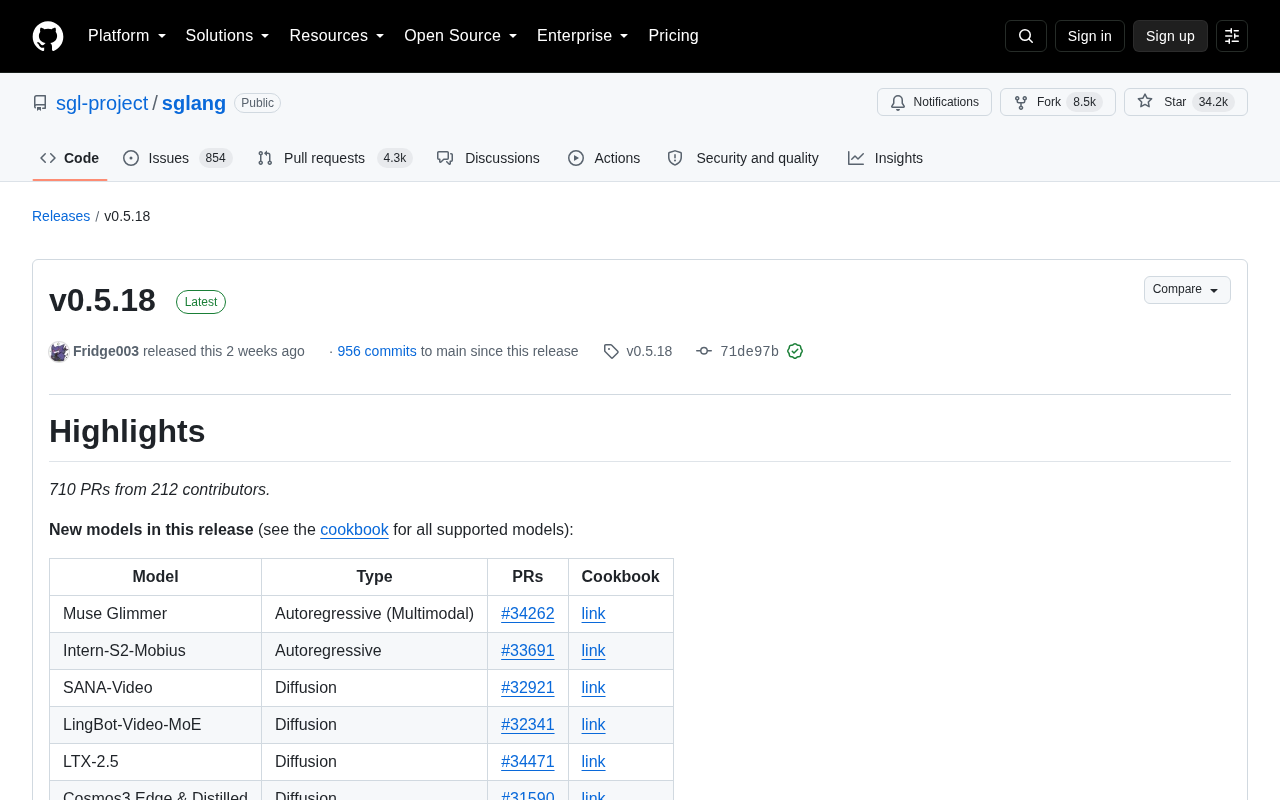
SGLang v0.5.18 Released: Performance Breakthroughs Across 710 PRs
SGLang v0.5.18 brings 710 PRs from 212 contributors, featuring 2.38x startup speedup, tensor parallel optimizations, AMD MXFP4 quantization, and Kimi K3 tuning.