The Real Experience of AI Programming: A Developer's Firsthand Account of Capabilities, Limitations, and Proper Usage

AI programming tools are overhyped — developers should rationally understand their limits and use them correctly.
An overseas developer reveals the business logic behind AI programming tool overhype — CEOs need compelling narratives to attract investment. Current developer job difficulties primarily stem from pandemic hiring bubble aftereffects, not AI replacement. AI programming tools have clear limitations: they can't truly understand business logic, they confidently make mistakes, and vibe coding has already caused multiple security and quality incidents. The correct approach is using AI for discussing ideas, small tasks, writing tests, and rapid prototyping while maintaining human review and judgment.
Introduction: AI Fatigue Has Become AI Overload
Every day when you open social media, the overwhelming flood of AI news is suffocating. "Claude Opus 4.5 is here," "Gemini 2.5 Pro is the best coding AI," "AI will write all code within 12 months" — these headlines bombard every developer's nerves in rotation.
An overseas developer blogger admitted in his latest video: "This isn't AI fatigue anymore — it's AI overload." He shared his real experience of working with AI programming tools over an extended period, revealing the overhyped industry bubble and the truly valuable ways to use these tools. This article provides an in-depth analysis of his perspectives to help developers build a more rational understanding of AI programming.
The CEOs' "Strong Narratives": Why AI Programming Is Overhyped
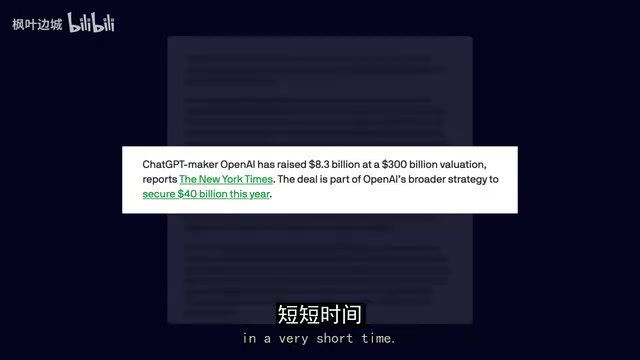
To understand the current hype around AI programming tools, you first need to understand the business logic behind it. Ever since Facebook proved that small teams could generate thousand-fold returns, the tech industry entered a cycle of "storytelling for investment." Today's AI era is no different — hundreds of AI startups have reached staggering valuations, and OpenAI grew into an ultra-high-valuation company in an extremely short time.
This valuation logic isn't appearing for the first time. During the 2000 dot-com bubble, countless companies achieved sky-high valuations through "storytelling," only for the bubble to burst and the NASDAQ to drop nearly 80%. The current AI valuation logic is remarkably similar: it's based on future potential market size while ignoring current profitability. The difference is that today's AI companies actually have demonstrable technical products, but there remains a massive gap between "technically feasible" and "commercially scalable profitability." Because of this, these companies need to continuously attract investment, and to do that, they must tell a sufficiently compelling story. Even if they're currently losing money, they need investors to believe this technology will be enormously valuable in the future. That's why we keep hearing CEOs make unrealistic predictions: "AI will write 90% of code within 3-6 months," "AI will be smarter than everyone."
The market impact of these statements is real. After DeepSeekAd's release, NVIDIA's market cap evaporated by nearly $600 billion in a single day; when OpenAI announced an AI browser, Google's stock price plunged by tens of billions within hours — but when people discovered it was just a Chromium browser with AI features, the stock quickly recovered. Every new tool, every CEO statement can trigger massive market tremors — and that's precisely the driving force behind the hype.
The Truth About Developer Employment: The Problem Isn't AI, It's the Pandemic Bubble
The Pandemic-Era Tech Hiring Bubble
During the pandemic period from March 2020 to May 2023, everything moved online. Governments printed massive amounts of money, interest rates were extremely low, and investors flush with cash poured into tech stocks and startups. Companies hired frantically, stock prices soared, and everyone believed the tech industry would grow like this forever.
During that time, everyone was asking developers: "How do I learn to code?" Universities rushed to launch new computer science programs to meet demand. But when the pandemic ended and people returned to normal life, growth slowed. Companies realized they had hired far too many people for a future that never arrived, and mass layoffs began.
Key Facts Revealed by Hiring Data
The blogger used hiring data to reveal a critical fact: the tech bubble began inflating at the start of the pandemic, peaked in 2022, and then mass layoffs began — ChatGPT hadn't even been released yet. By late 2023, things started stabilizing.
More importantly, when AI programming tools like Cursor became popular in 2024, hiring didn't collapse; when Claude Code became the new trend in 2025, hiring was actually growing; and job postings in 2026 were about 10% higher than the previous year.

The current job market difficulties are primarily driven by oversupply: students who enrolled during the pandemic have graduated, and a large number of self-taught developers have also entered the market, resulting in even small company positions receiving massive numbers of applications. This isn't about AI replacing programmers — it's the hangover from the previous tech hype cycle.
The Real Capability Boundaries of AI Programming
AI Code Generation Isn't Magic — The Limitations Are Very Clear
To understand the limitations of AI programming tools, you first need to understand their underlying mechanisms. Current mainstream code generation models (like GPT-4, Claude, Gemini) are essentially large language models trained on massive code corpora that predict "the next most likely token" through statistical patterns. This means they excel at generating code that "looks reasonable" rather than code that is "verified to be correct." The models cannot actually execute code, understand runtime state, or perceive your specific business constraints — their training data comes from Stack Overflow, public GitHub repositories, Reddit, tech blogs, and documentation, all of which vary wildly in quality and contain large amounts of outdated content.
The blogger pointed out a core insight: AI won't magically understand your code or solve problems in the optimal way. Its primary goal is to make the application "run," not to follow best practices. Writing "ensure you avoid all security vulnerabilities and follow best practices" in your prompt, or writing hundreds of lines of AI rules, doesn't mean it will actually do so. Because AI output is unpredictable.
Real Horror Stories from Vibe Coding
Vibe Coding is a programming paradigm proposed by former OpenAI researcher Andrej Karpathy in 2025 that quickly gained popularity. It refers to developers completely relying on AI to generate code while barely reading or understanding the code details themselves, only caring whether the functionality matches the expected "vibe." This approach dramatically lowers the barrier to programming but also introduces serious code quality risks — when AI-generated code contains security vulnerabilities or performance issues, developers are often completely unaware.
The blogger listed multiple AI programming disaster cases:
- User emails and passwords being exposed
- Blindly trusting AI to handle security measures leading to data loss
- A Y Combinator CEO's showcased "37 lines of vibe coding per day" project was exposed by other developers as having severe AI slop — a blog website with 7-8 thousand lines of code, a homepage downloading 6MB of data, making 169 requests, containing duplicate and unoptimized images, and loading controllers and rich text editors that the homepage didn't even use
Does the website work? Yes. But this is absolutely not how developers should write code.
The Most Dangerous Feature: Confidently Making Mistakes
The most dangerous aspect of AI programming tools is that even when they have no idea what they're talking about, they present themselves with complete confidence. If you lack the relevant knowledge, you'll blindly trust and directly deploy unverified code.
The blogger shared his own personal experience: when developing a Kafka-based Node.js microservices system, the AI-generated code was "a complete disaster." This isn't surprising — Apache Kafka is a distributed message streaming platform designed specifically for high-throughput, low-latency real-time data pipelines. Its configuration involves partition strategies, consumer groups, offset management, idempotency guarantees, and numerous other specialized concepts that are highly dependent on specific business scenarios. Generic example code found on the internet often can't be directly applied, and AI can only generate code based on exactly these generic examples — either outdated or incorrect. When it can't find a solution, AI falls into a loop of repeating the same mistakes, ultimately just apologizing to you endlessly.
The Right Way to Use AI-Assisted Development
Scenarios Where AI Programming Truly Excels
Despite its many limitations, AI genuinely makes many development tasks simpler and faster:
- Discussing ideas and learning new things: Having conversations with AI about development topics is far more efficient than aimlessly searching the internet
- Perfect code for small tasks: Avoiding doing things you've already done thousands of times before
- Writing tests: Making unit test writing easier and more enjoyable (but you can't completely let go, or AI will find "shortcuts" to pass all tests)
- Shell scripts: Generating useful automation scripts
- Creative projects and rapid prototyping: Quickly validating ideas and reducing the cost of trial and error
Practical Rules for Efficiently Using AI Programming Tools
The blogger summarized several practice-proven rules:
- Don't blindly accept AI's first solution — do research to confirm it's actually the best approach
- Don't let AI generate an entire project from scratch — initialize the application yourself, create the file structure, naming conventions, styling approach, and install dependencies, otherwise AI will continuously introduce outdated or conflicting library versions
- Continuously question AI's decision logic — "Why did you make this decision? What are the alternatives? Can you compare these two approaches?"
Related articles
 Expert Opinions
Rethinking Scaling Laws: Parameters Are Not the Only Answer
Deep analysis of Scaling Law evolution from Kaplan to Chinchilla to the MoE era, exploring why blindly stacking parameters is a mistake, and how GLM-5.3 proves scaling has multiple knobs.
When AI Treats Humans as Subagents: Ro…
When AI Treats Humans as Subagents: Role Reversal and Hidden Risks in Human-AI Collaboration
Exploring the paradigm shift where humans become "subagents" in AI Agent architectures. Analyzes human node design in LangChain and AutoGen, and the risks of ceding control and cognitive atrophy.
 Expert Opinions
The Lazy Person's Productivity Theory: Why Being 'Lazy' Actually Drives Peak Performance
Explore the engineering philosophy behind 'lazy people are most productive': how constructive laziness drives automation, AI tools amplify efficiency, and systems thinking eliminates wasted effort.